

Over thousands of years, tens of billions of people have spent their entire lives thinking, reasoning, creating, dreaming, solving problems. How many of our thoughts have been completely new? Very few.
When your thoughts have been original, most of the time it was because you applied existing solutions to new situations: You took the arguments and facts gathered by others and chained them in a novel way, adapted to your unique problem.
This means intelligence is mostly a search problem: Search within the body of known facts and surface the most relevant ones for you.
We just didn’t know this because, until now, search was so expensive.
This premium article is unlocked courtesy of POMA AI
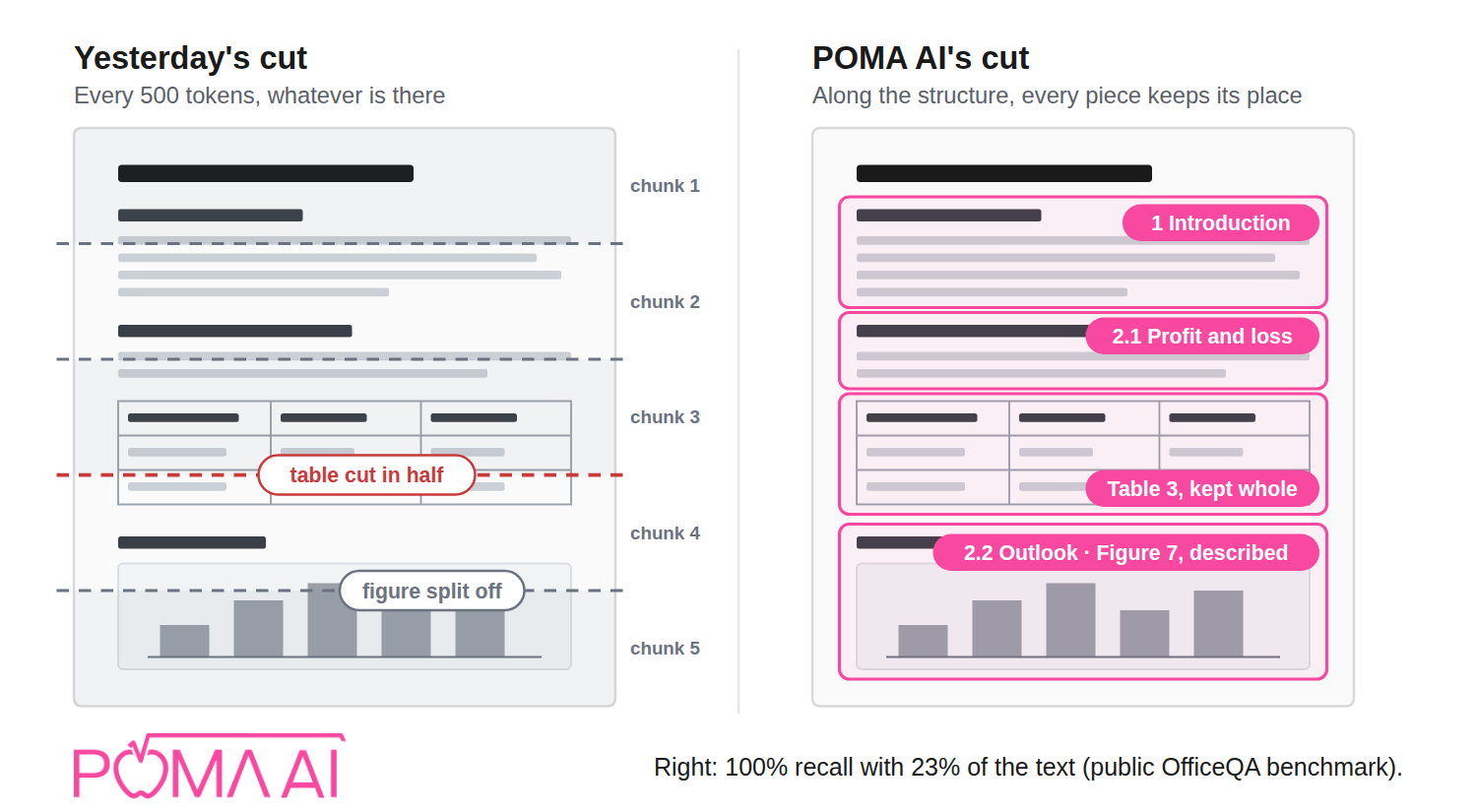
Tomorrow’s agents cannot use yesterday’s search.
Uploading one PDF to an AI works fine. Asking it to search a thousand is where answers go wrong: the documents get cut into pieces, a table split in half, and one bad piece spreads through the answer like a drop of ink in water. POMA AI cuts along the structure instead, so the answer comes back right, with its source.
The Long March to Cheap Search

Hard to search for somebody else’s ideas like that. People had to reinvent the same thoughts over and over again.
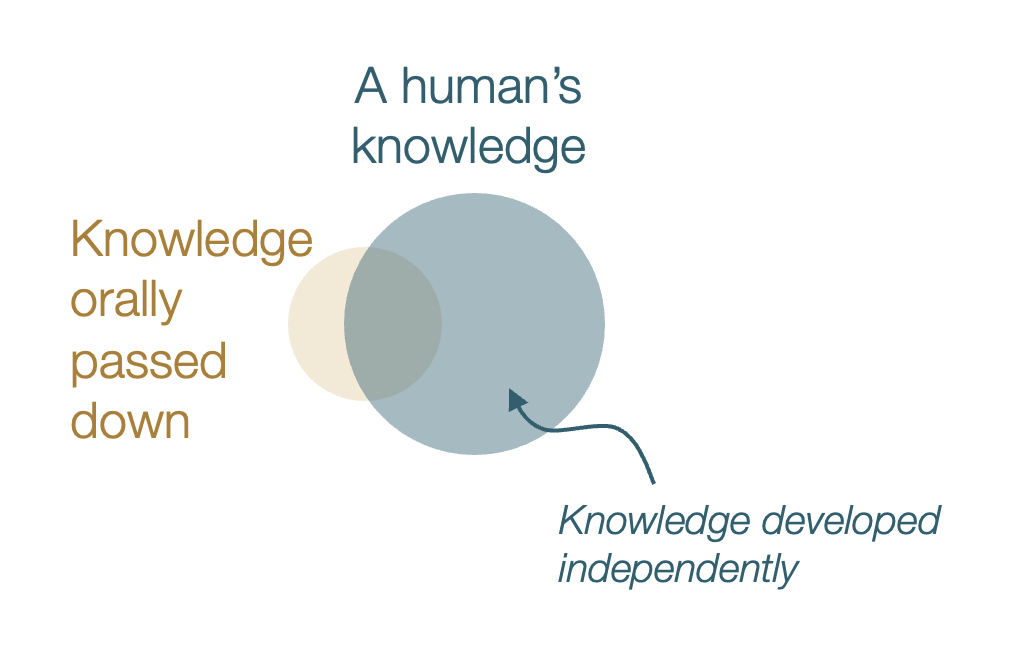
5,000 years ago, writing emerged, and we started storing information outside the brain in parchments, papyri, clay tablets… Suddenly, information storage and communication didn’t corrupt as much.

But it was still very expensive to transcribe ideas and consume them: It took a year to copy a full book, and you’d have to travel to where it was to consume it. Hard to search for ideas like that.
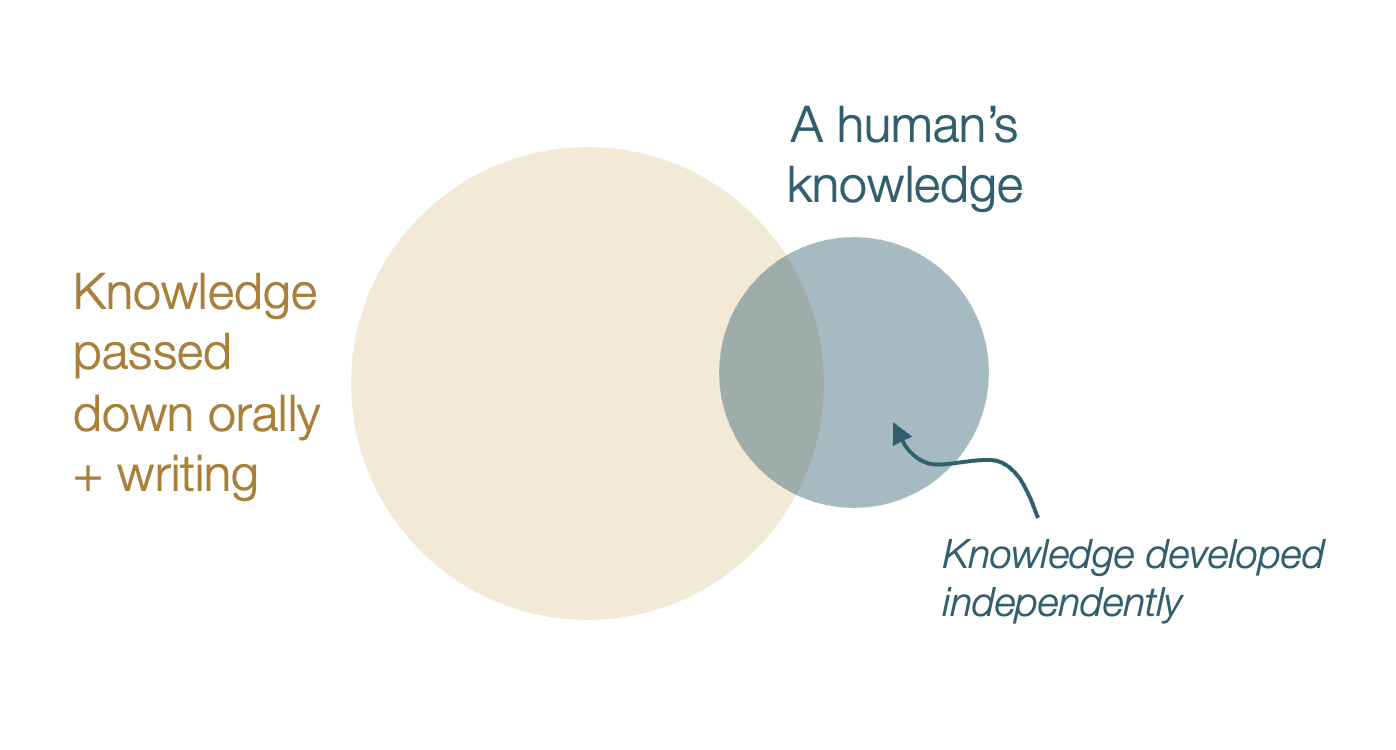
500 years ago, the printing press emerged. Now, the cost of writing a book was still the same, but the marginal cost of reproducing it fell dramatically. Suddenly, information became much more available. You could search for others’ ideas, and this was so powerful that the Enlightenment emerged, as scientists around Europe shared their ideas and built on each other’s.

But you still had to print the book, learn about it, search for it, and buy or borrow it. Your search was limited to the size of your pocket and your local library’s shelves.
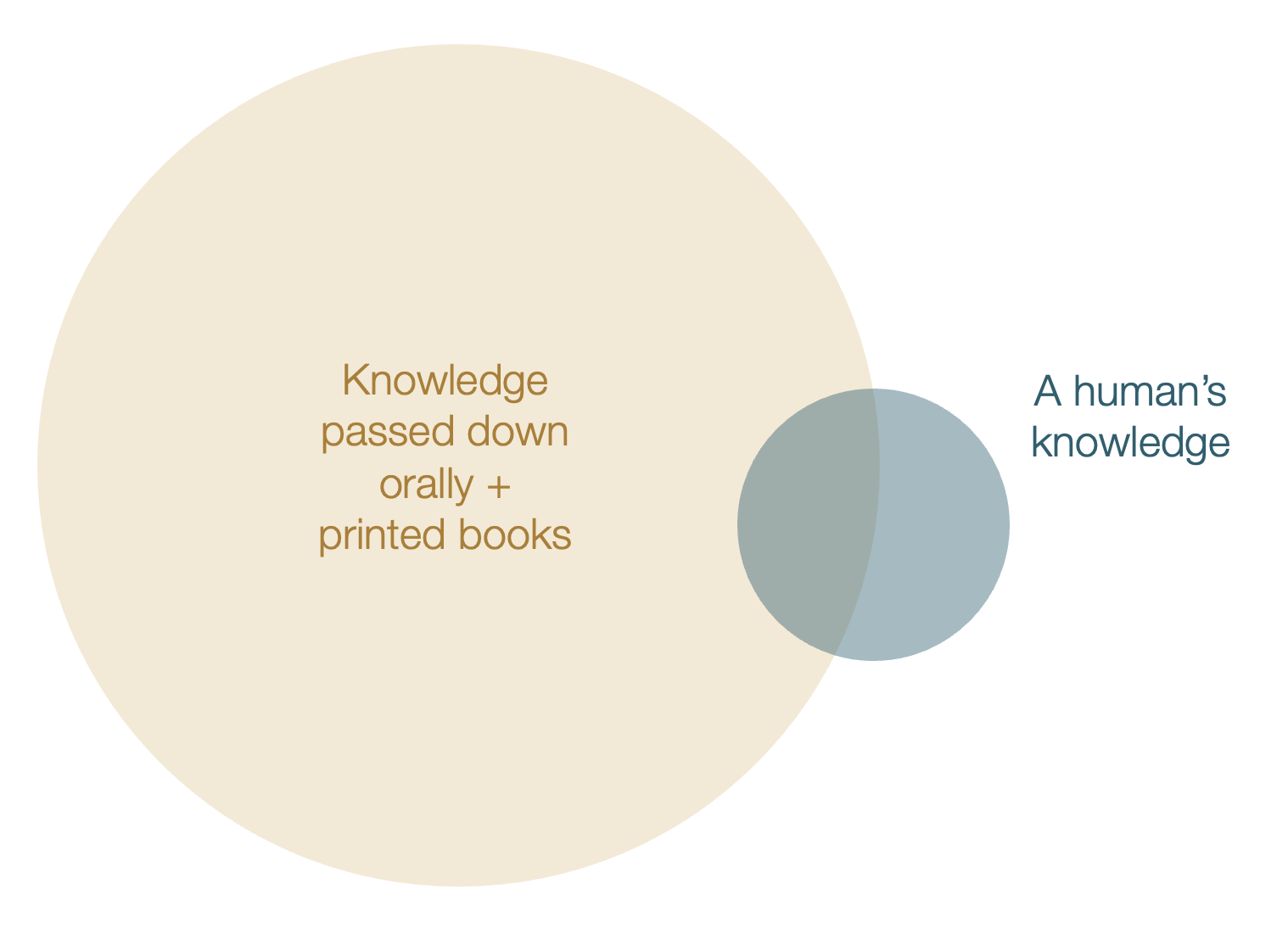
50 years ago, computers and the Internet emerged. Suddenly, writing an idea was as fast as your fingers on a keyboard. The cost of sharing it fell to nothing. Corruption was exiled. The concept of searching for somebody’s ideas became second nature, googling joined the dictionary. That’s when we realized that virtually all of our problems had already been solved by somebody else, usually someone who had written his solution in an obscure online forum 12 years ago.

Still, to solve your personal problem, you had to look up dozens of microproblems and combine their solutions to tailor them to your needs. The friction of every search was small, but it added up to enough that you couldn’t solve all your problems through search, you had to reinvent the wheel.
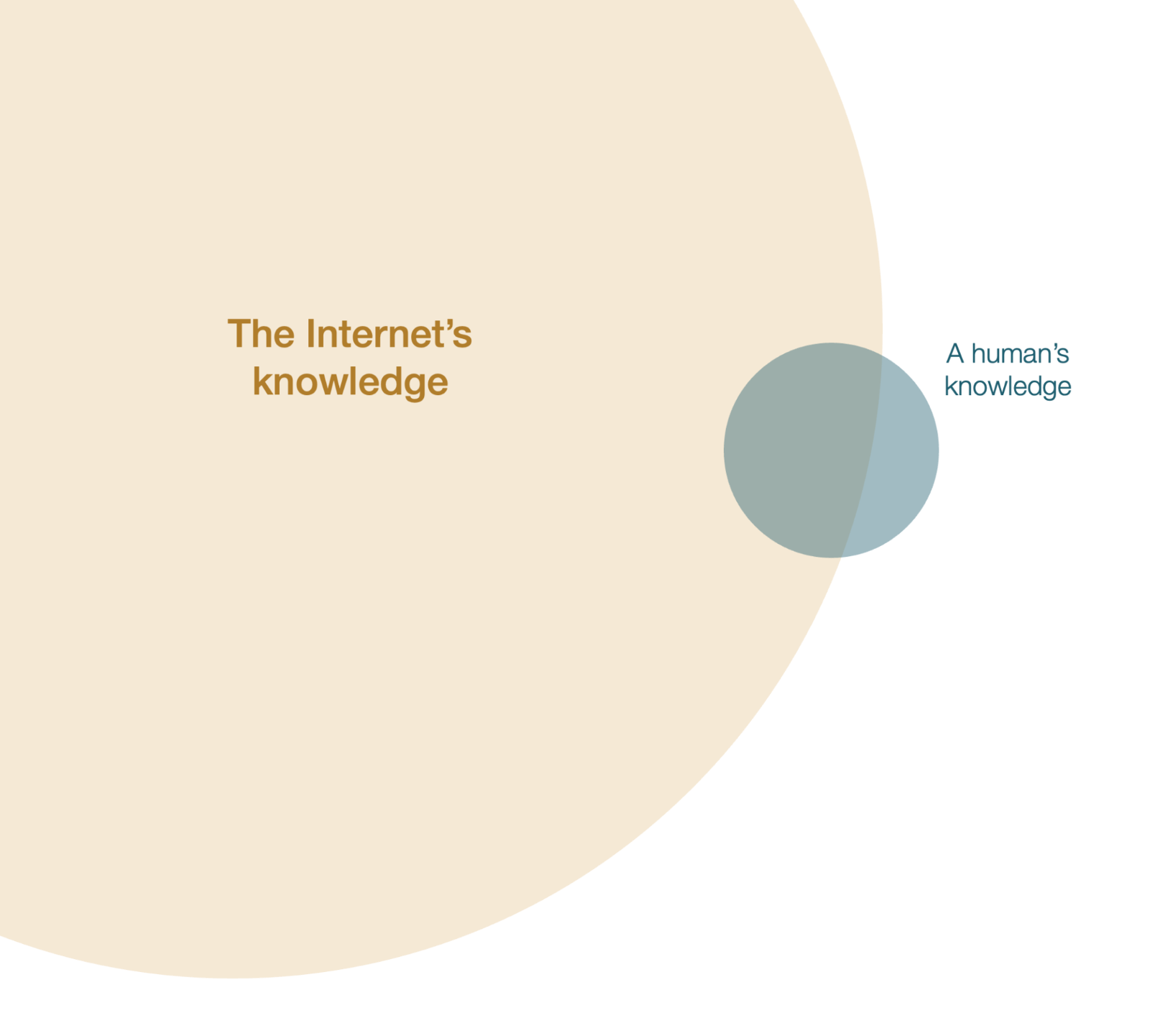
5 years ago, we put the world’s knowledge in a cauldron, and from there emerged intelligence. Suddenly, LLMs independently looked at all the problems, recorded the solutions, chained all the thoughts, and brewed an answer tailored to your specific needs. Now that the friction of every search disappeared, it became clear: Intelligence is mostly search. You just need to cast your spell deftly enough to summon the perfect combination of facts, problems, and solutions, chained in the right order from the latent space of human knowledge.
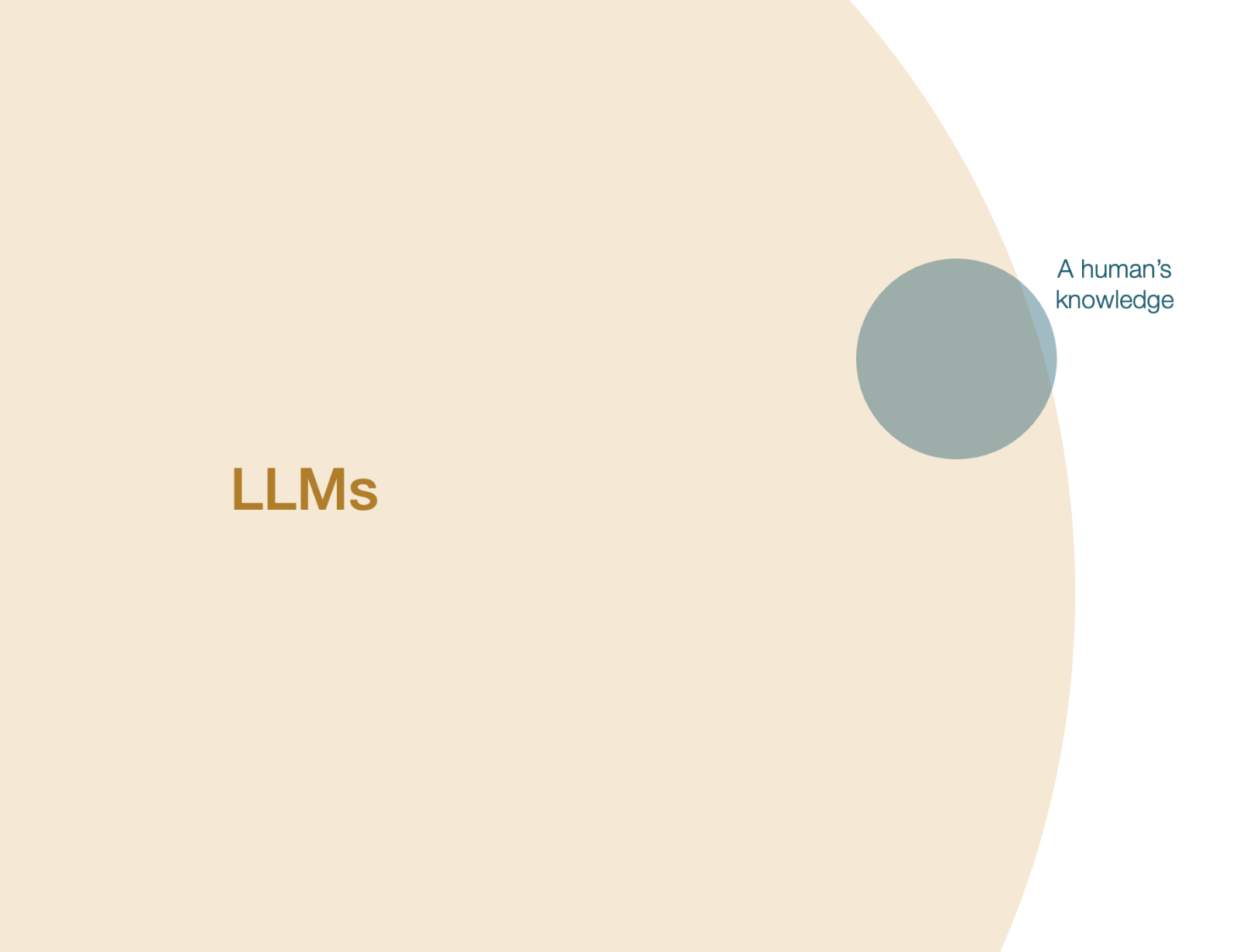
Do we? Consider a PhD: A person spends ~14 years studying until they graduate high school, then four more years in undergrad, then two years of grad school, and then a handful of years for the PhD. After ~25 years studying non-stop, this is what they can hope to do with the horizon of human knowledge:
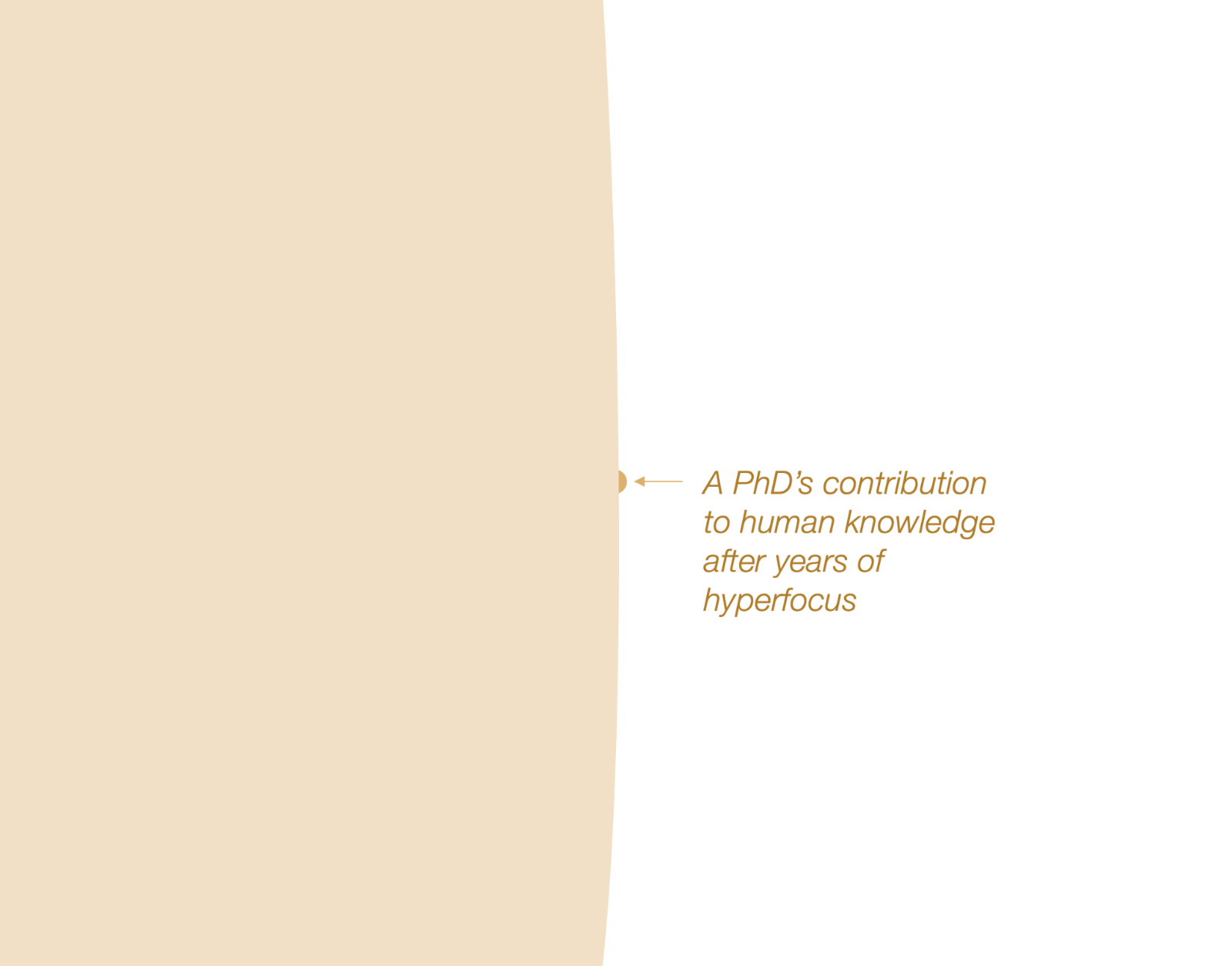
If 25 years of hyperfocus buys one pixel, how many novel thoughts do we really have? No, most ideas are just the combination of other existing ideas.
Take the logic to its endpoint, and fear might wash over you:
If your thoughts are not original, other people have already thought most of them.
Your advantage was collating other people’s thoughts in your unique way.
LLMs bring the cost of searching others’ thoughts and combining them to zero.
Then, it becomes cheaper to spellcast thoughts than to craft them yourself. There will be no original thoughts for you to have.
From 50,000 to 5,000 to 500 to 50 to 5. The next step in the transition is in 0.5 years. Are you, dear reader, about to get obsoleted?
The Fork in the Road
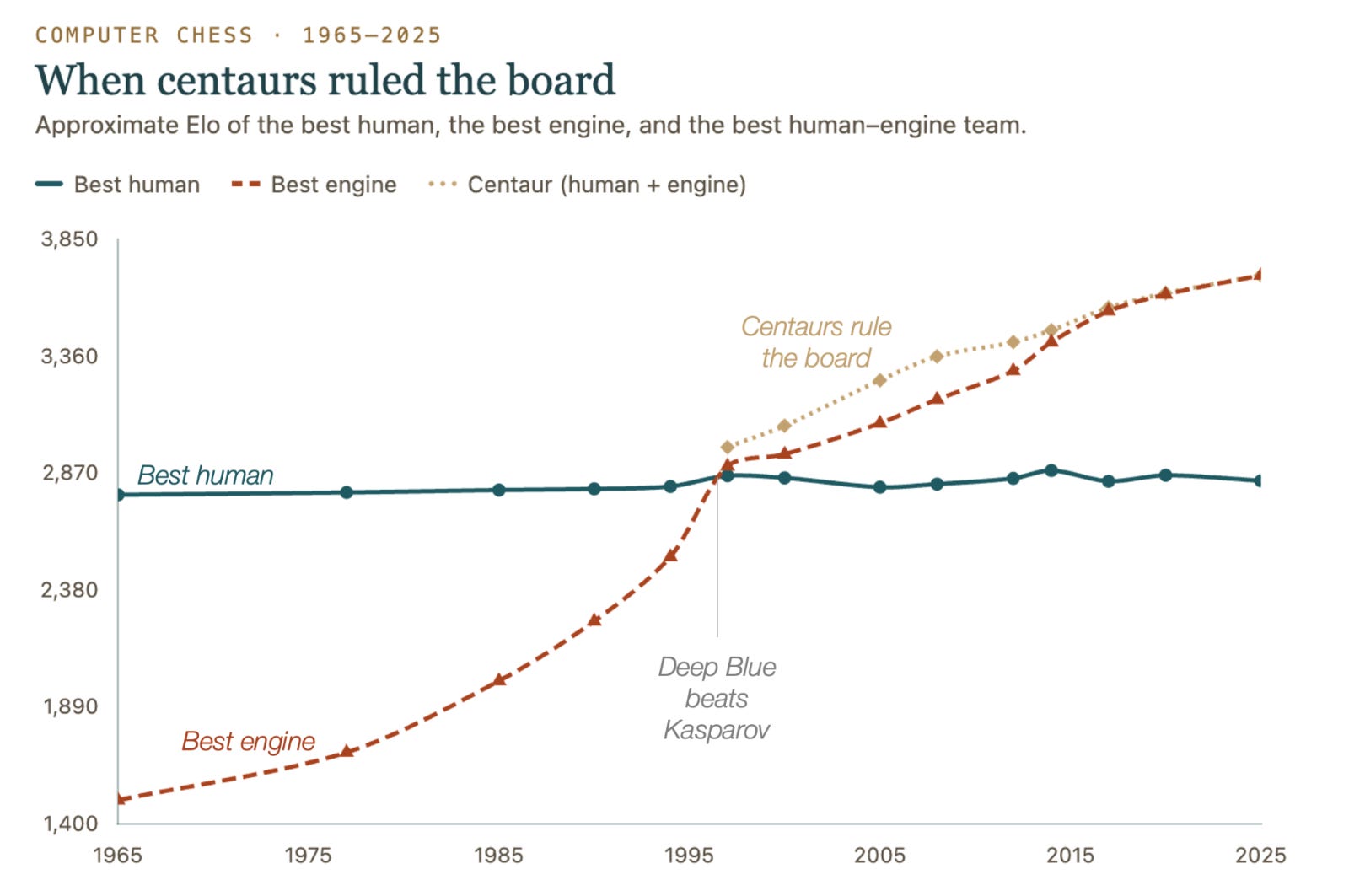
Luckily, humans + AI will be better than either alone. We saw that with chess already: After Deep Blue beat Kasparov in 1997, the best type of player was neither the machine nor the human, but the centaur—humans working with machines with the right process.
If you join forces with AIs, you’ll be able to create novel ideas faster. We’ve entered a period where breakthroughs across disciplines will be a daily event.
Unfortunately, humans never really learned much from computers: The teal line remained flat. And the Golden Era of centaur rule lasted just about two decades. Eventually, computers caught up.
But something different happened with Go: Although humans don’t beat AIs anymore in that game, the quality of human decisions has skyrocketed since AI surpassed humans, as we learn from AI.

Why have humans progressed with Go and not in chess? Is it because Go is a much more open-ended game? What does that tell us about the future of intelligence beyond search?
Intelligence Beyond Search
1. Develop a Unique Combination
Chess is a closed world, so once search got good enough, there was nothing left for the human to supply. Go is open enough that AI became a teacher instead of a replacement. The world is more open still. Knowledge is not a ball, it’s more like a universe.

Most knowledge accumulates in gravity fields we call disciplines. It’s quickly becoming impossible to beat an LLM at any single field, because it can search the field better than you. But there’s an infinite amount of combinations of these fields.
Even the search space itself isn’t defined. Someone has to notice a problem exists before anyone can search for its solution. If you pay attention to people’s unspoken needs, and you can collate the right search across fields like engineering, design, aesthetics, politics, communication, and storytelling, you might produce an experience no human has ever seen.
If intelligence is search, your edge is the query.

If you can identify a unique need and properly orchestrate your agents to combine the data analysis of furniture styles with generative design plus social media trends plus oil painting styles plus an AI to source materials, a robot to carve, and another to paint, you might end up producing unique items like these at scale:

We seem to be entering an era in which deep focus within one discipline is losing ground to frenetic exploration across many, where polymaths will be rewarded compared to experts, as the polymaths will be able to guide their agent networks across fields.
So embrace your ADHD. Go live a life strange enough to come up with questions the cauldron has never considered.
2. Work Where LLMs Can’t Reach
LLMs need data and success measures to become more intelligent than humans. That’s why math, which is extremely difficult for humans, is becoming automated.
But there are spaces where success is unclear, or data unavailable. In these areas, LLMs will take much longer to win, because you can’t search what’s not recorded.
What are ways to achieve that?
You can thrive in the unmeasured: Innovate where you have an internal urge to create something new that doesn’t tap into known tastes. A chef creating a new restaurant concept. A fashion founder coming up with new clothing ideas.
Or you can thrive in the unrecorded: Noticing people’s feelings, their needs, their desires, their problems, and helping them solve them before they even know it. Job related to community—whether that’s a priest or a yoga teacher—will be especially protected from the dictatorship of search.
Do you want to offer a sponsorship like this one? If you have a business that is moving the world towards a techno-optimistic future and would like to reach 135k curious, globally-minded people to learn about it (founders, researchers, investors, policymakers), reach out here.
I wrote a paper 40 years ago on an idea I came up with for a different translation of Exodus 6:3, bounced it off my professor, he said make sure you search all the indeces, you'll probably find some obscure journal printed that idea 100 years ago.
Well, 40 years later, finishing the paper, I did find an obscure journal that came close, 90 years ago.
And AI has been amazingly helpful in research and writing - some of them are quite good at ancient languages, including hieroglyphics and cuneiform.
The more far-reaching the different pieces of information to combine, and the more interestingly they get combined the more unique and creative the product is. Polymaths have always made important breakthroughs in fields for this reason and their importance seems to only be increasing.