

Workers in the digital industry are having an existential crisis.
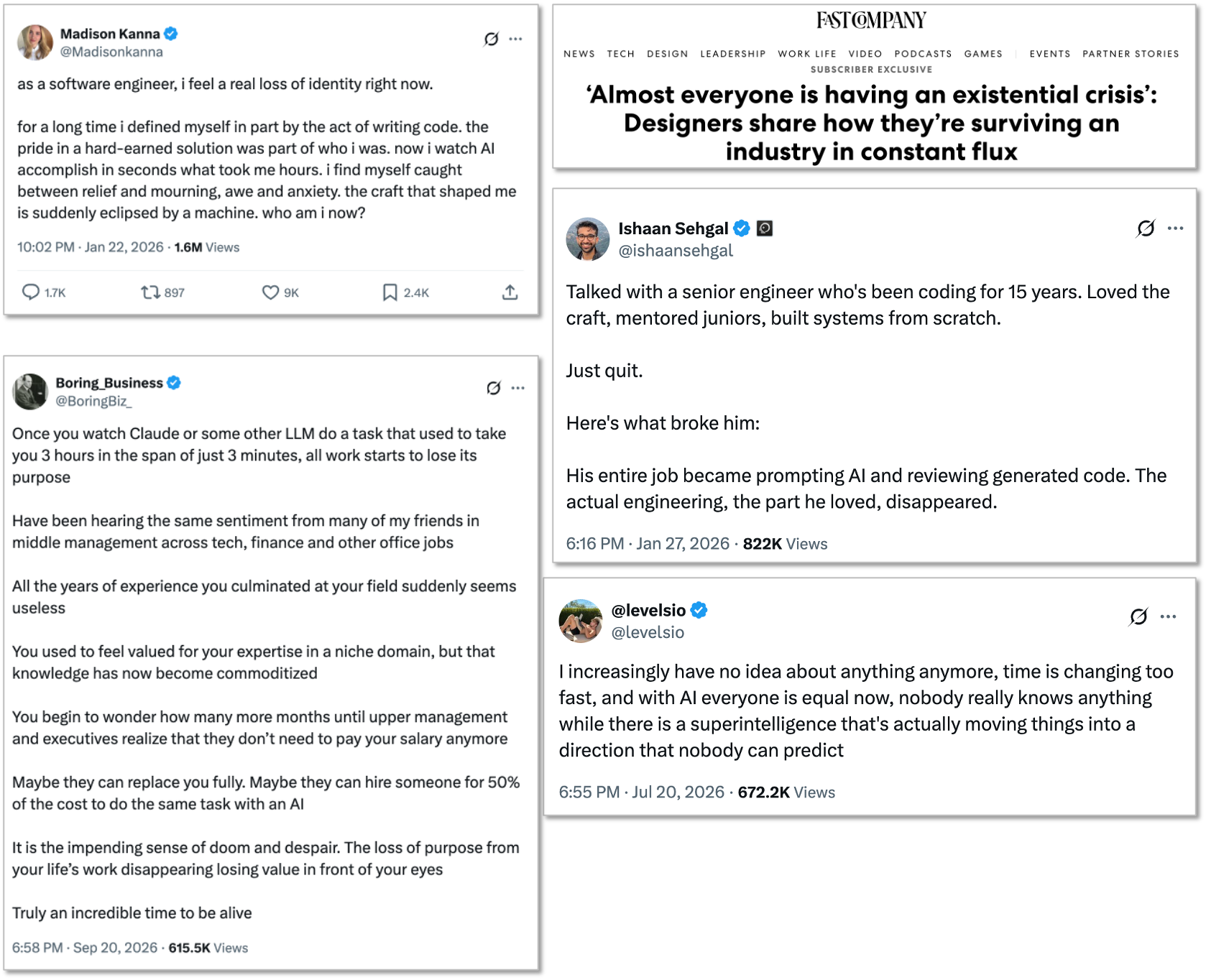
With AI, it’s becoming ever easier to make images, video, write articles, code… AI is tackling healthcare, education, law, consulting… All intelligence-related jobs are seeing the same trend: People who spent a lifetime developing their craft are at the same level as newcomers. Their skillset is now a commodity, and with it their status… and their income.
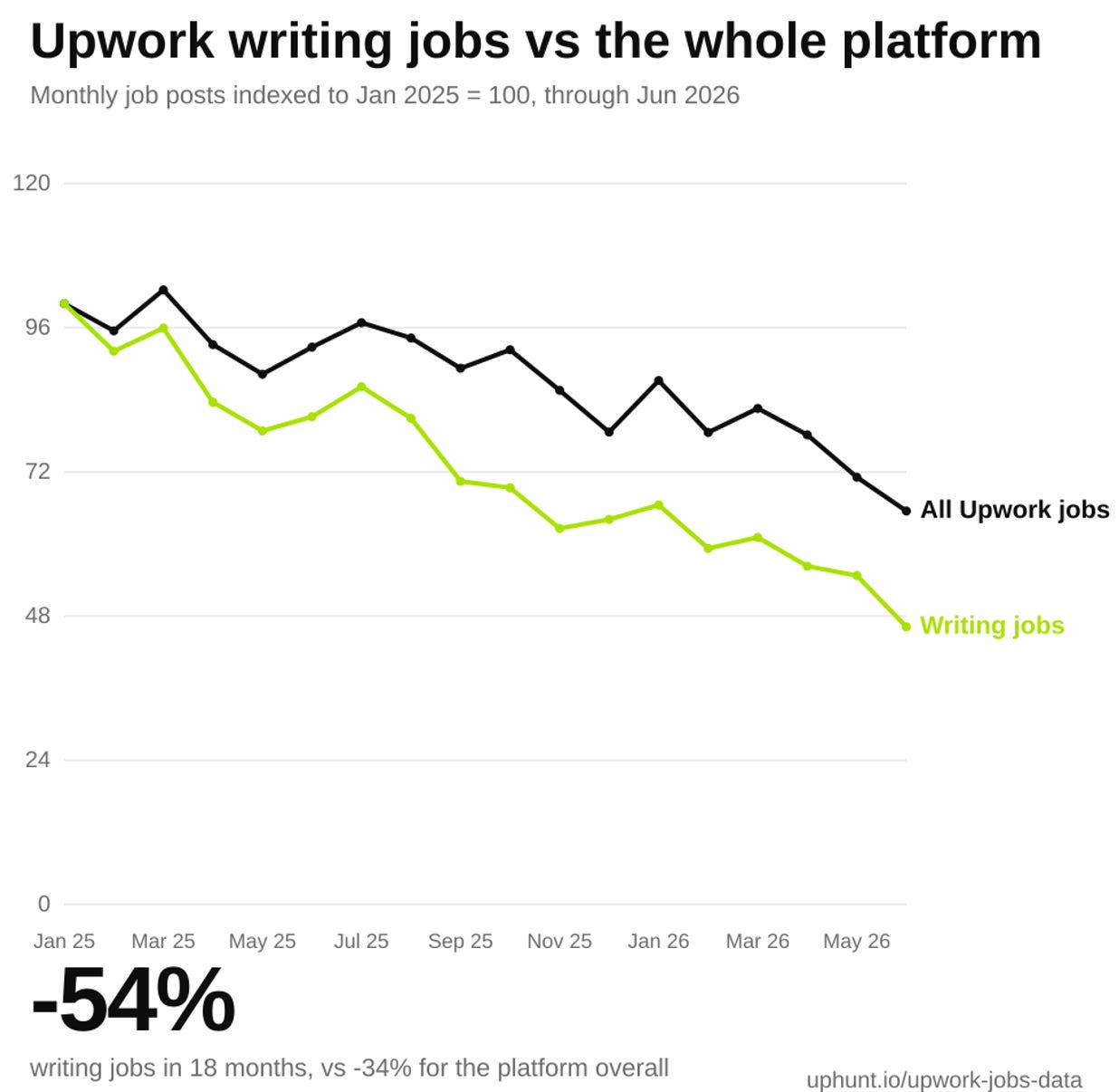
Writing and translation are already suffering deeply.
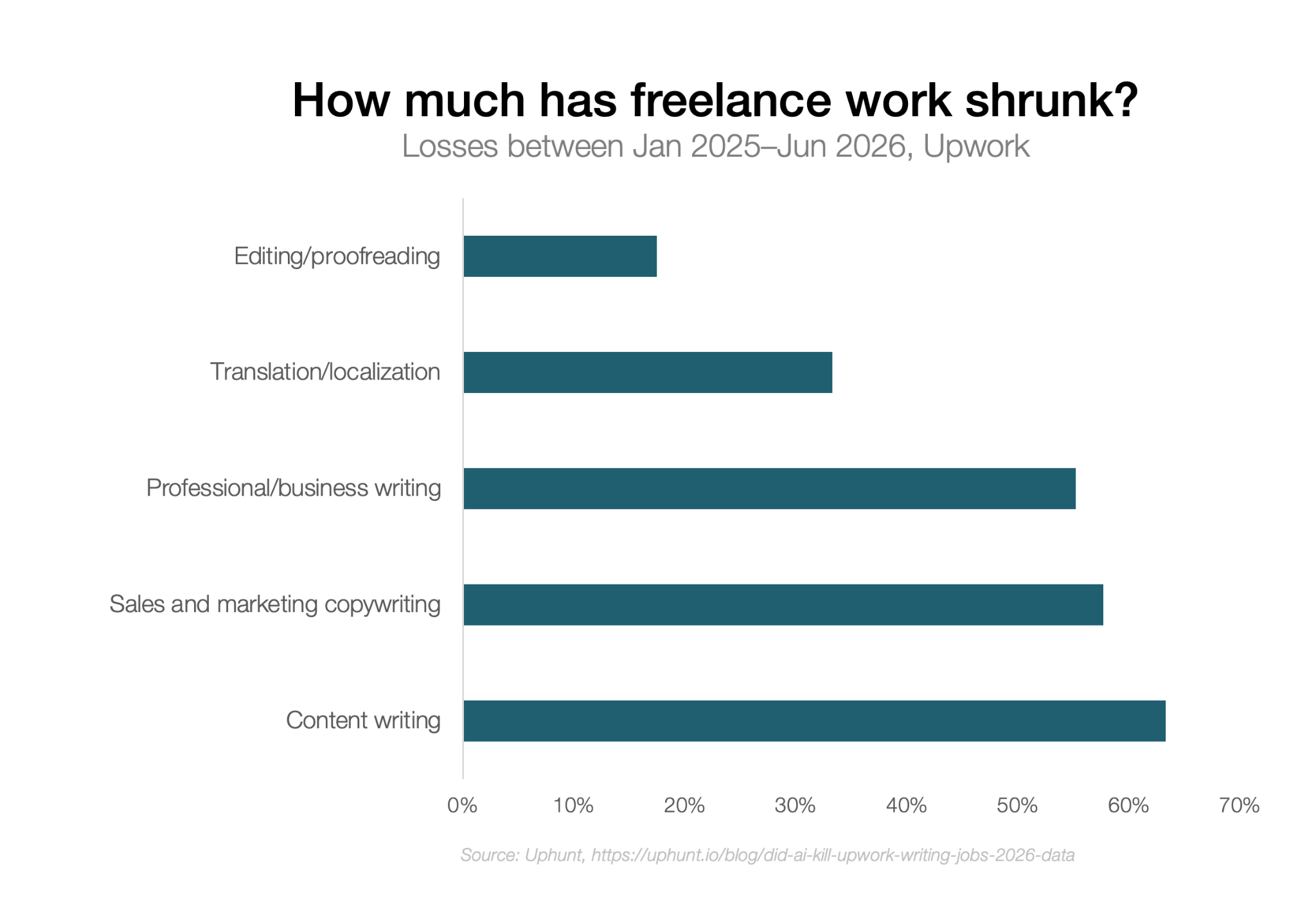
It’s not because digital jobs are disappearing:
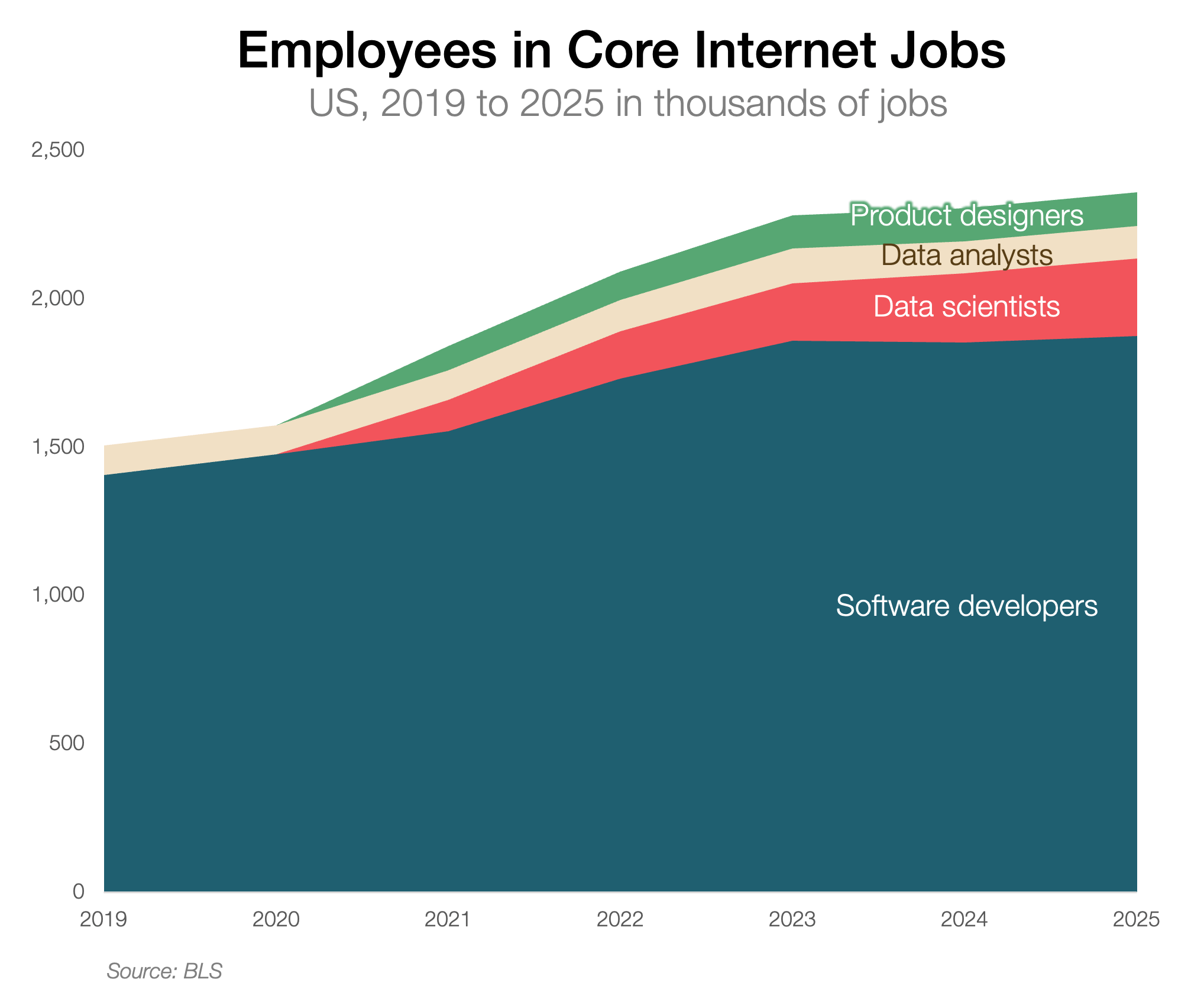
It’s because they’re seeing the writing on the wall.

There Is No Moat
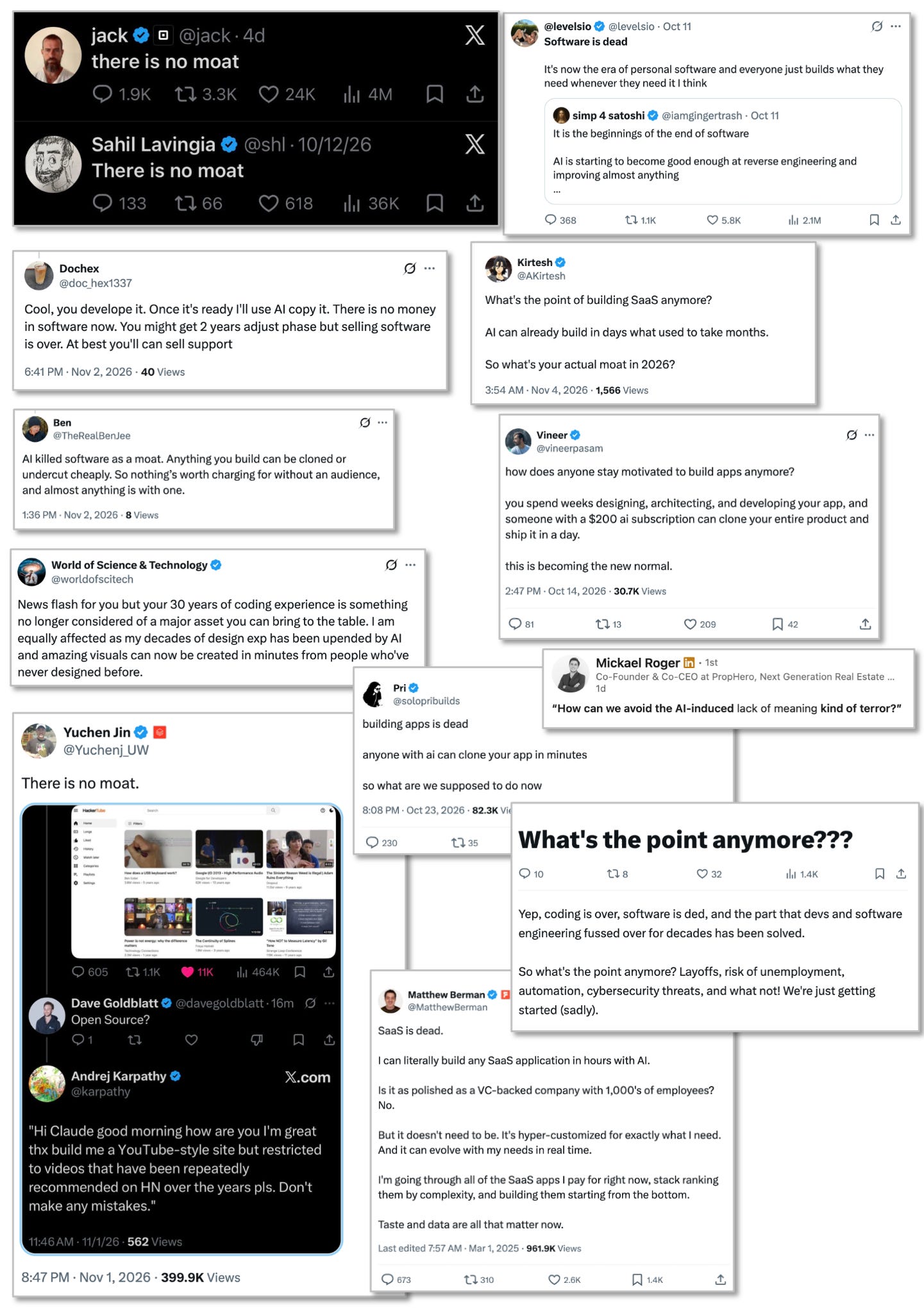
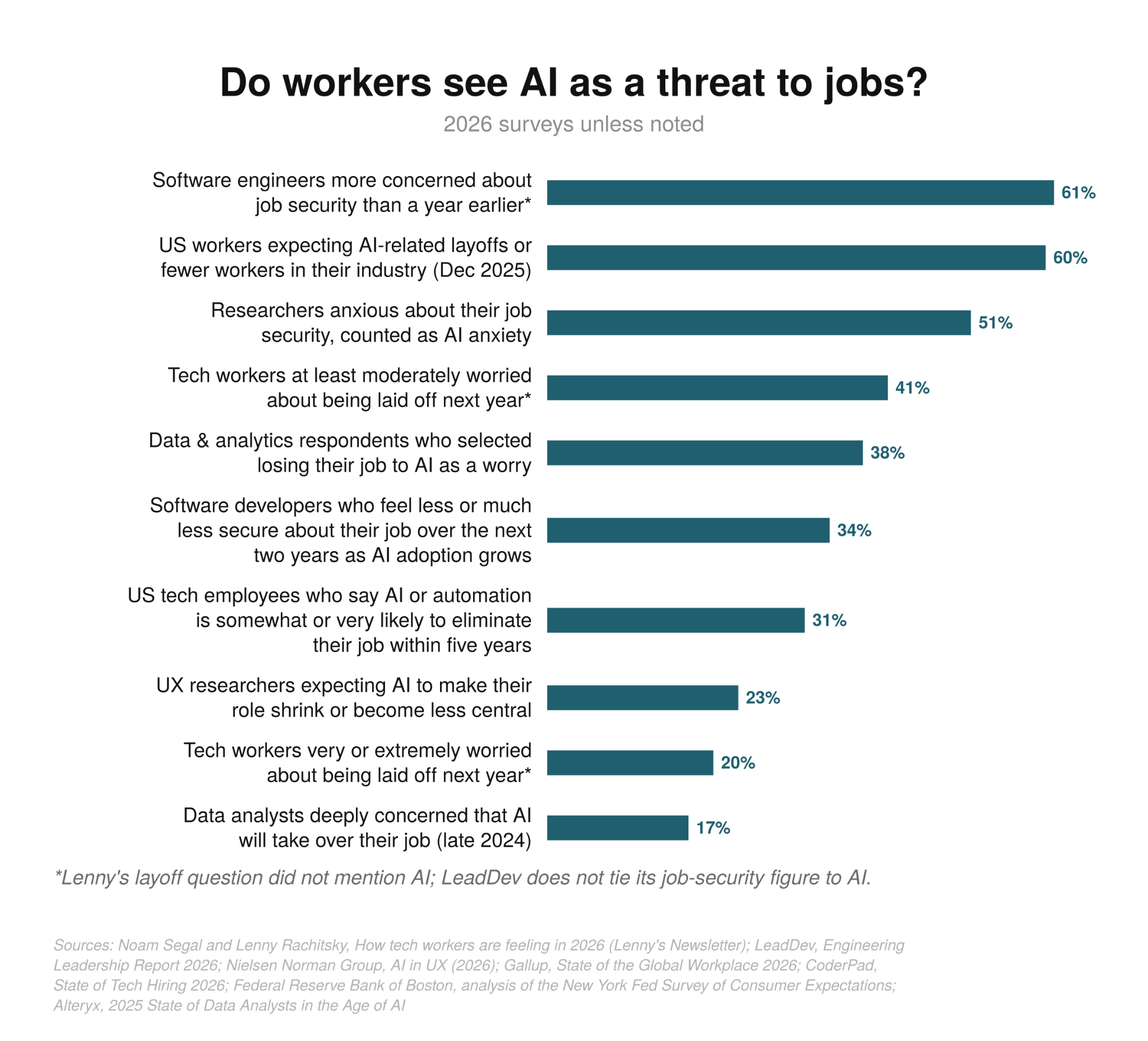
Digital workers are simply scared that, whatever they can do today, an AI will be able to do it better than them, at a fraction of the cost and time, very soon. That’s reflected in their job security:
The mechanism is simple: AI can do most tasks better than they do. It codes better, it draws better, it specs better, it gathers user feedback better, it notices more things… Many workers are limited to prompting the AIs over and over, letting them do most of the work. Then, they realize that the AI can prompt better than them, at which point they end up just clicking on Proceed every time the AI asks them something. It’s not hard to project into the future and realize that maybe they still have a job because their bosses haven’t managed to string the AIs together in the proper configuration to replicate their work. Yet.
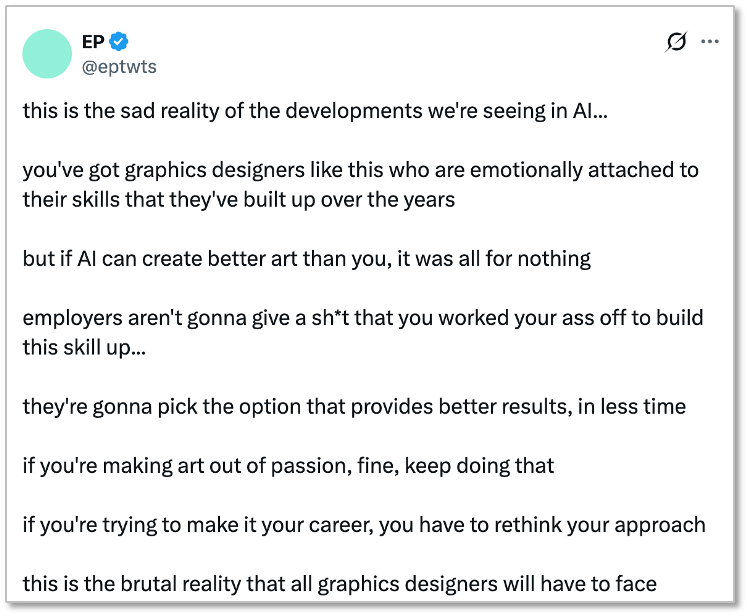
If AI can do most individual tasks that an intelligent worker can do, and now we’re learning to string them together with agents, how long before almost all of these jobs disappear?
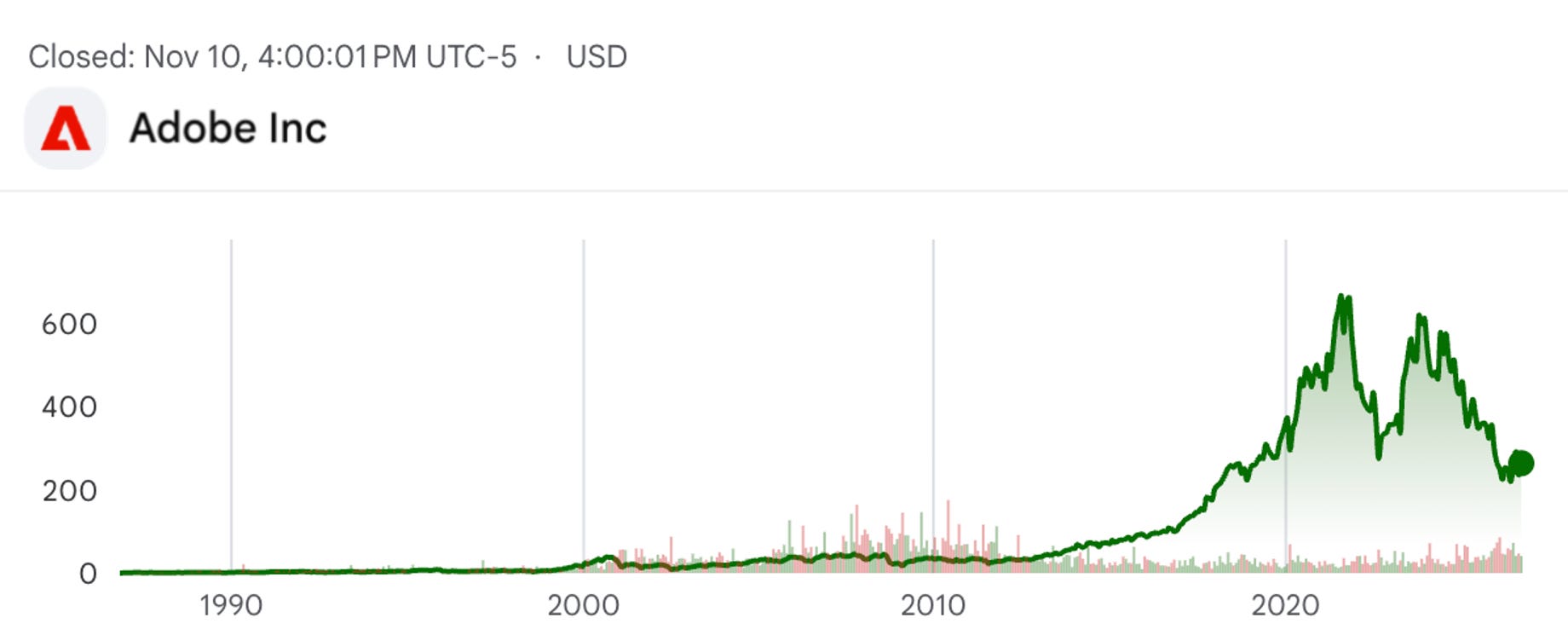
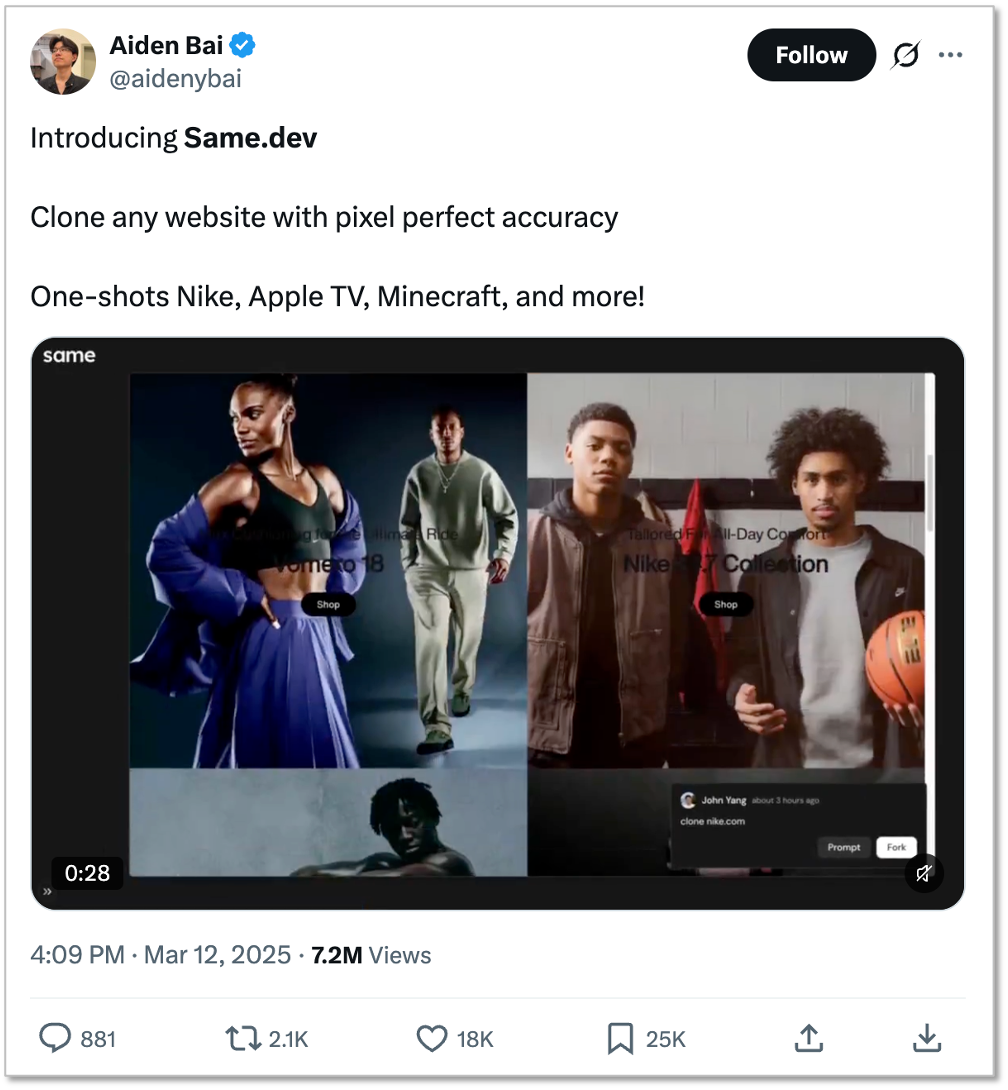
It’s not just that AI will drop the costs of employees by replacing them with AI, and big companies will become super rich. Look at what happened to Adobe:
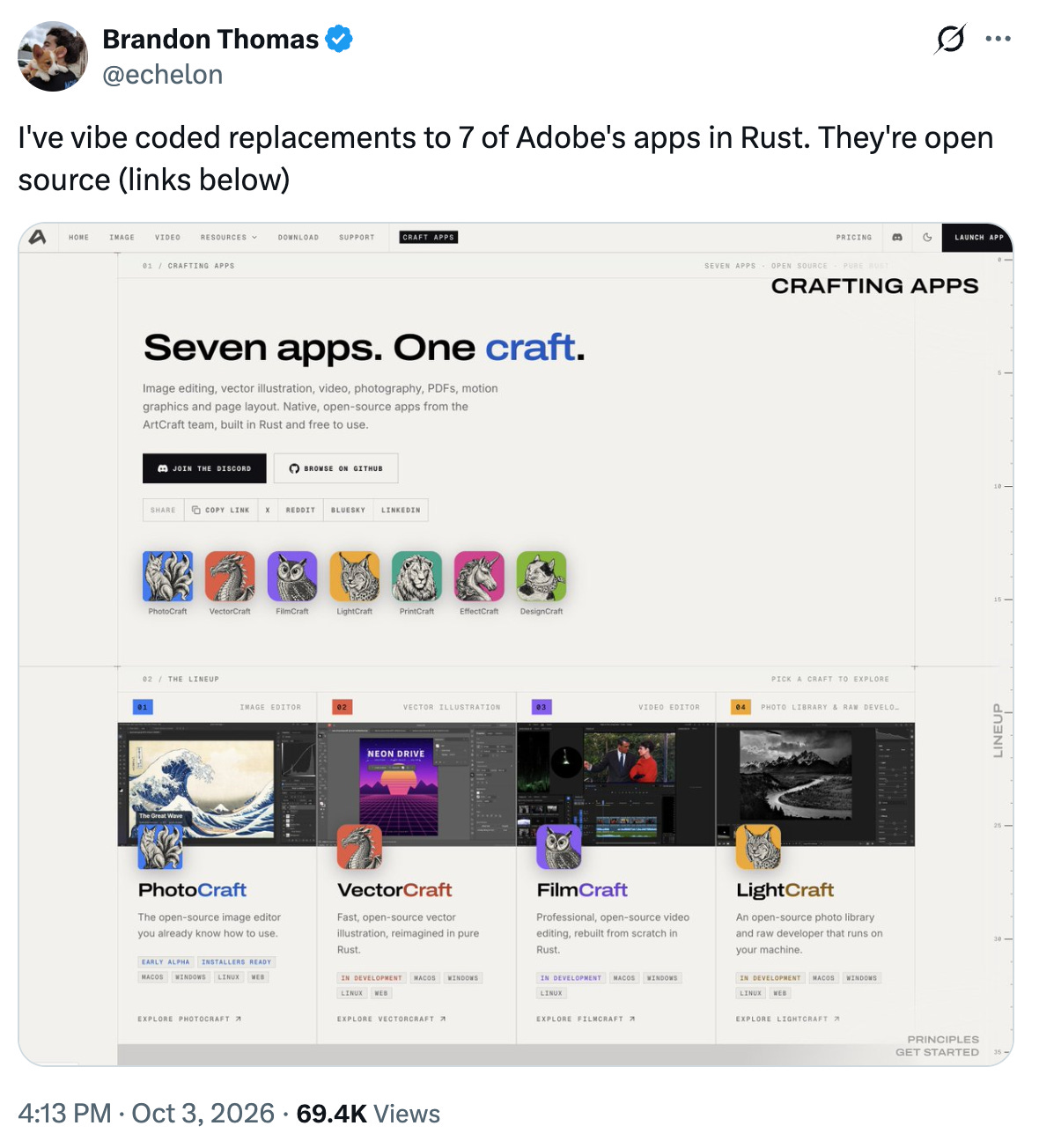
Soon after this tweet, the same team published 17 apps open source. How much can Adobe’s stock withstand this type of attack?
Now bring that to the entire economy:
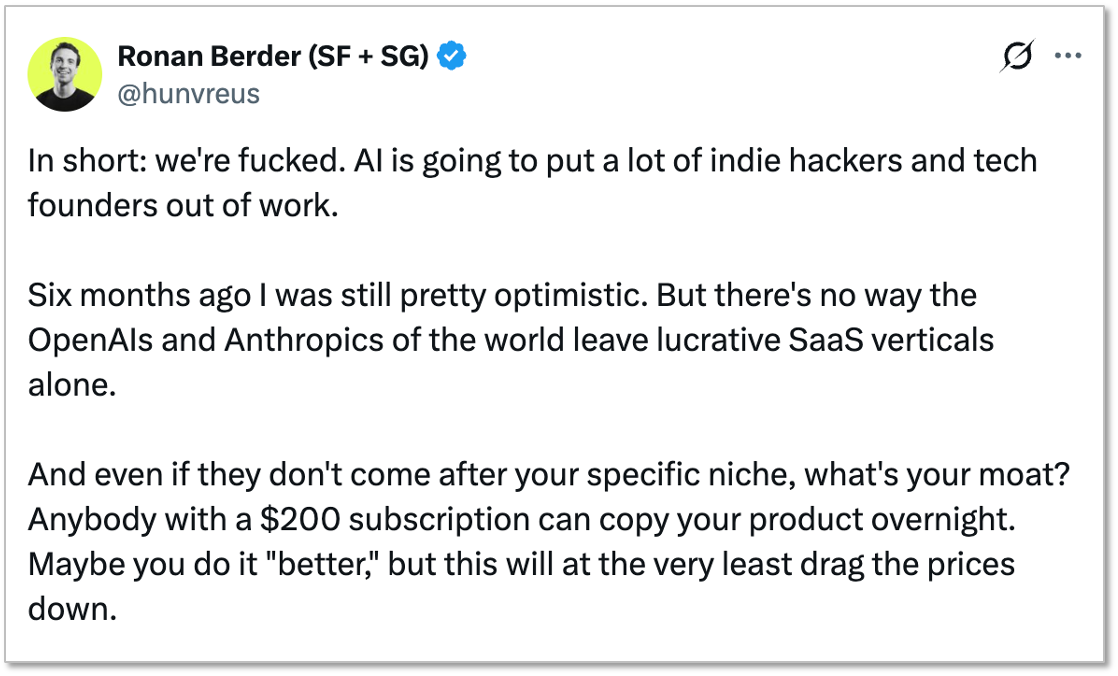
And this is not just true of employees, it’s also true of entrepreneurs: What kind of company can you build if anybody can one-shot1 you?
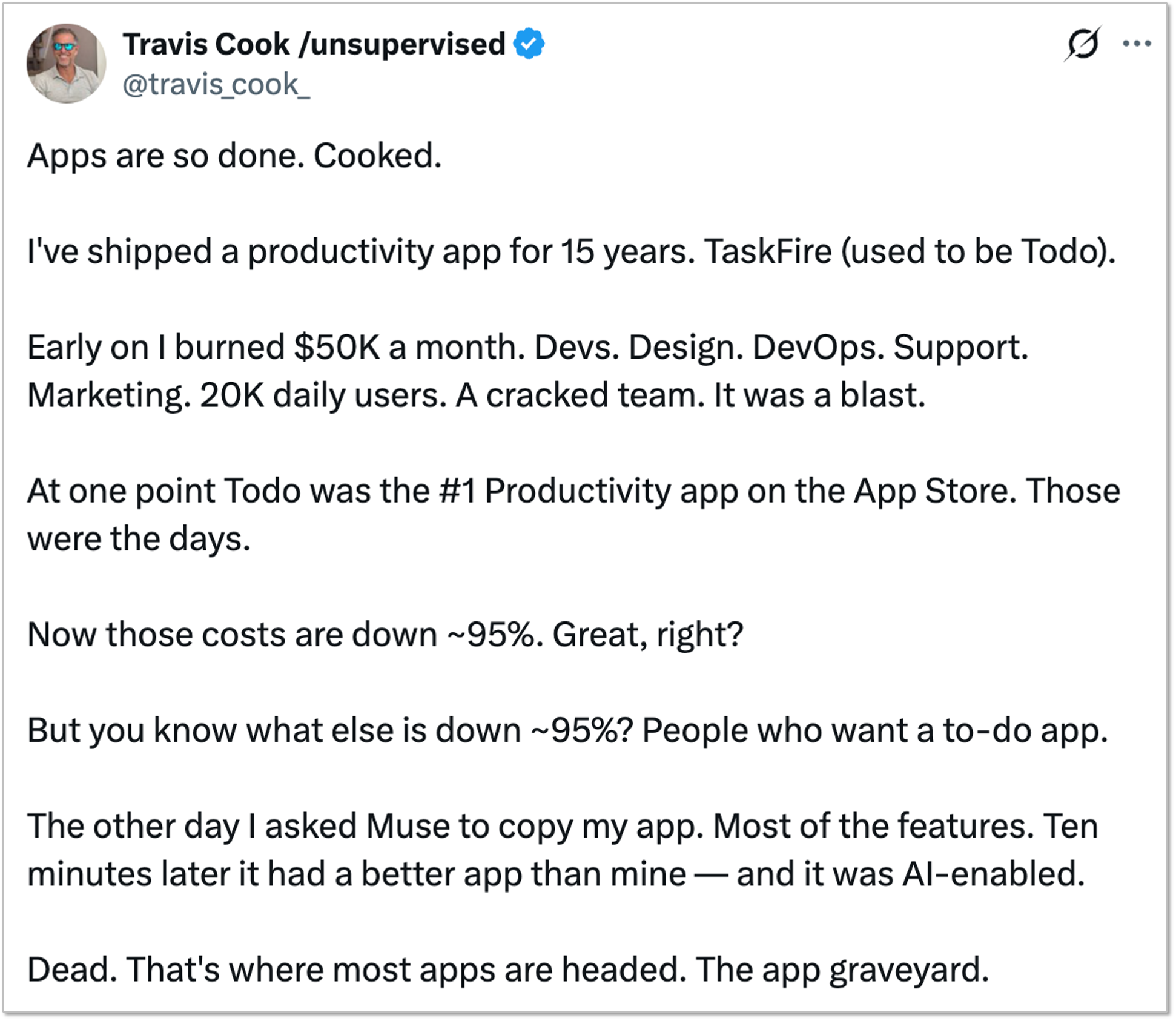
I have that same concern across all my endeavors: Right now, AI can’t write at the level of depth and insight that writers like me do, but how long will that last? I can build the best space animation—something as good as anything that came before, and make it near free instead of $30 per month. But what stops anybody from doing that to my own software? From asking Claude: “Please copy this entire simulation”? What about any other type of software? Are there any protections? How much time do we have until that world comes down on us?
To answer that, we must walk every step of the process, starting with the first victim, SaaS2:
Entrepreneurs (mostly solo-preneurs, or small teams) start copying and releasing all types of software.
First, they copy, rebuild, and improve SaaS, since the software already exists and it’s easier to copy.
Tech companies and SMBs all start to abandon their SaaS providers: Why pay $5,000 per year when you can pay $10 per month?
Early on, big companies don’t switch, because these subscriptions don’t cost them much in the grand scheme of things, and stability matters. But the next time the contract is renegotiated, they won’t sign a 5 year agreement, it will be one year, and it will be for much less: They now have alternatives.
But as these contract renewals come up, they’ll wonder: Why not build it ourselves? They don’t worry as much about the cost in terms of cash. They worry about the coordination cost: They’re hostages to the provider’s knowledge of their problems and willingness to change their code in a minute. Why would I pay Salesforce $10M per year for a software that I can’t easily understand or modify, when I can pay a team of three people internally $1M in total and get a custom tool I can modify any way I want, at any time, insanely fast?
With this competition, the price of every SaaS product craters. 90% reductions are easy to consider, because virtually the entire cost of SaaS is building the product, not servicing it.
This means the number of users of SaaS increases, but not by 10x. For example, what share of the businesses who needed an HR tool had a dedicated one that they paid for, as opposed to free Google / Excel spreadsheet? The ones with HR tools before are definitely going to switch to cheaper alternatives—let’s say 10x cheaper. But what about the ones with Google Sheets / Excel spreadsheets? Are they going to switch to paid software? Or open source? Or will they build it themselves? I assume few will go to a paid service now, and if they do, it’s certainly not going to increase the market by 10x to counterbalance the 10x drop in price. The result is that the overall revenue in the industry shrinks.
As it does, margins erode dramatically. SaaS companies lay off anybody they can. Most go out of business, some survive through dramatic headcount cuts.
The winners of all this are bootstrapped founders and incumbents who move fast and break things. The losers are complacent SaaS incumbents.
So that’s for SaaS. But what will follow SaaS? Well, everything is about to be SaaSified:
If you’re one of these tech companies seeing AI replacing so many services, the next question you’ll ask is: What other costs can I automate with AI? Since the vast majority of costs for these companies are tech workers, they will be next—especially because software developers are intimately aware of the work that their peers do. Designers, developers, product managers, data analysts, product marketers… They will work on automating each one of these positions—even if none will actually say so, because the social backlash would be ferocious.
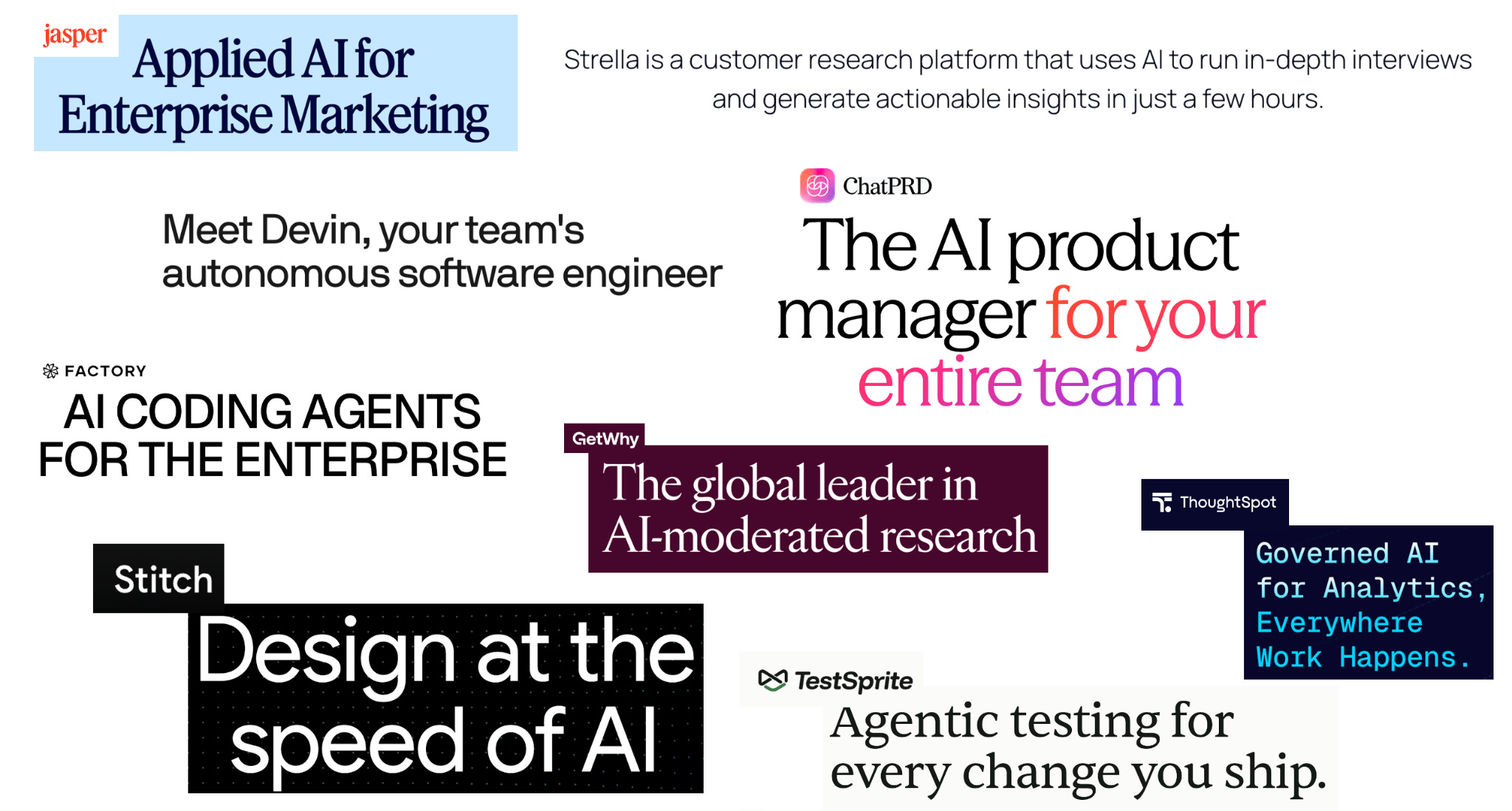
But even these companies are at risk: If I’m an entrepreneur and I want to hire a product manager AI, now I need to explore all these tools, understand which one is best, compare pricing, and sign up with one of them, which will then cost me $100/month, or $1,000, or whatever.
Or I can just build it myself, which might take me a bit more time to get right, but it will cost me substantially less per month, I can then multiply my product managers at will, I can put them in my own servers… So whether I choose external providers or internal depends on how good my AI is at copying these other services, which in turn depends on how much of a moat these companies have in crafting the very best product manager replacement—that is, it depends on their moat.
But don’t think this will end with tech workers. Next come these types of workers in non-tech companies. Because millions of companies hire marketers and sales people and business analysts, and all of them will be replaced.
Next come the other jobs that are further from tech, but are nevertheless based on intelligence: tax advisors, financial advisors, medical doctors, teachers…
These all have some sort of government protection, so they won’t simply be replaced, but the mechanism of their obsolescence is pricing, like we saw before. For example, an entrepreneur and a tax advisor meet and build an AI for tax advice. The AI puts together everything, and the tax advisor reviews and signs off. Knowing that the tax return will be better than what he was ever able to dream of before, he’ll go from managing, say, 50 customers before to 500. Now the entrepreneur hires other tax advisors. Each one goes from 50 customers to 500 customers, so the software is 10xing their productivity. Since many companies do the same, now the market is flooded thanks to a 10x improvement in productivity. Let’s imagine that in the past tax advisors were in short supply and they could only serve, say, 20% of the customers who wanted advice. Now, they can serve everybody twice over. This oversupply means tax advisory firms start competing for customers, and prices plummet. With lower prices, people who didn’t get tax advice before flock to get it. So what wins, the reduction in price, or the increase in volume?
Well, if we take tax returns as an example, tax professionals e-file 88M returns every year in the US, out of a total of 166M filings, so at most the number of customers could increase by 89%. A drop of 90% in price would result in an overall revenue drop of at least 81% for the industry.
In the grand scheme of things, this is good! More people can afford the service, and those who already do can save more money and use it to do something else. The problem is when it happens to all industries at once.
To understand what happens to each job, the crucial question is the Jevons Paradox, where a drop in prices can make a product so affordable that the volume of new customers more than offsets the cut in prices. I started looking into specific jobs here and was surprised by what I found. I’ll share more in a premium article what will likely happen to jobs such as bookkeepers, insurance claims processors, recruiters, admins, translators, salespeople, business analysts, management consultants, lawyers, architects, teachers, private tutors, diagnostic physicians, psychotherapists…
This will not just happen to employees. Entrepreneurs will face the same problem: cut-throat competition for their services. Prices will collapse while opportunities multiply.
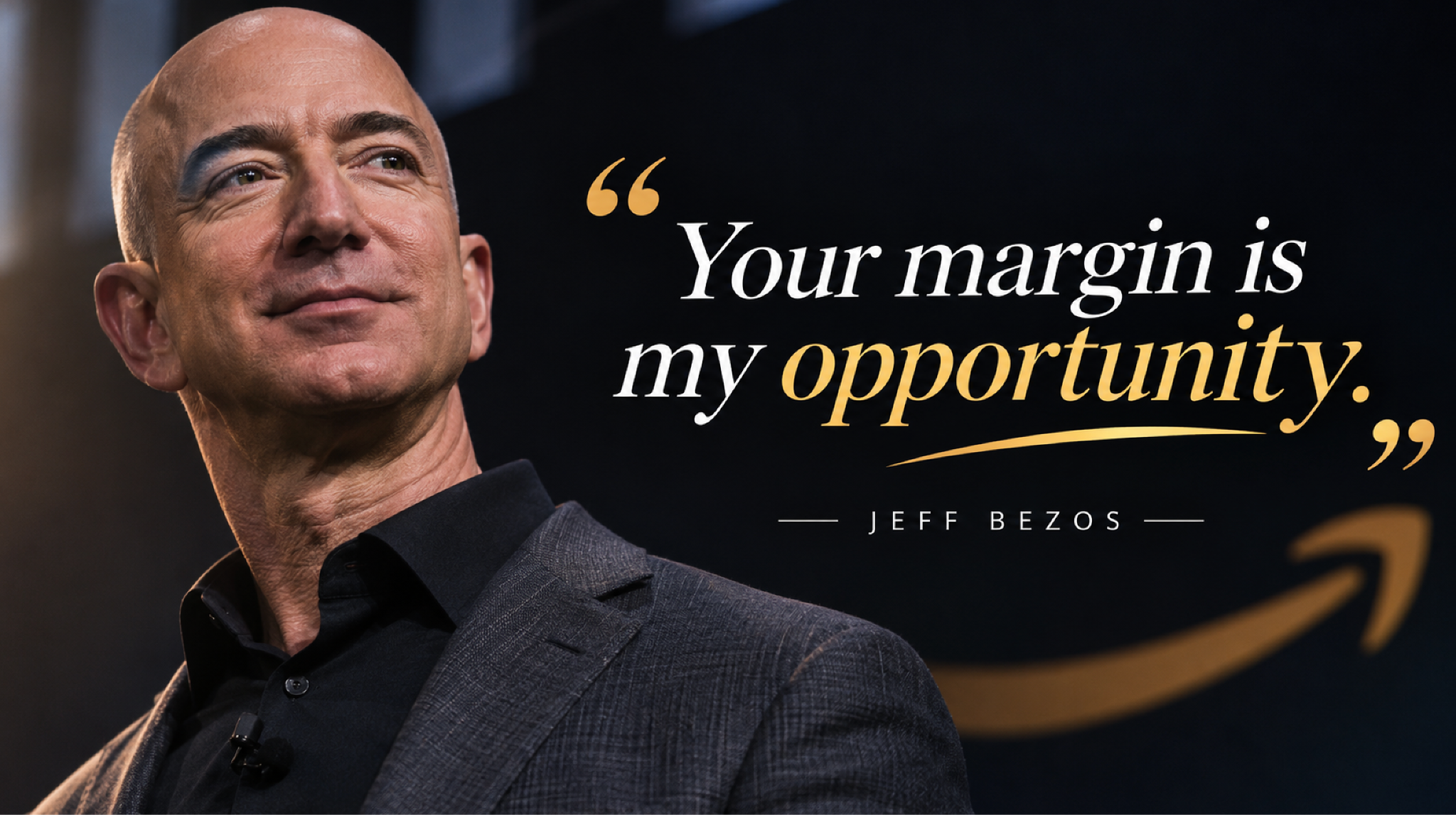
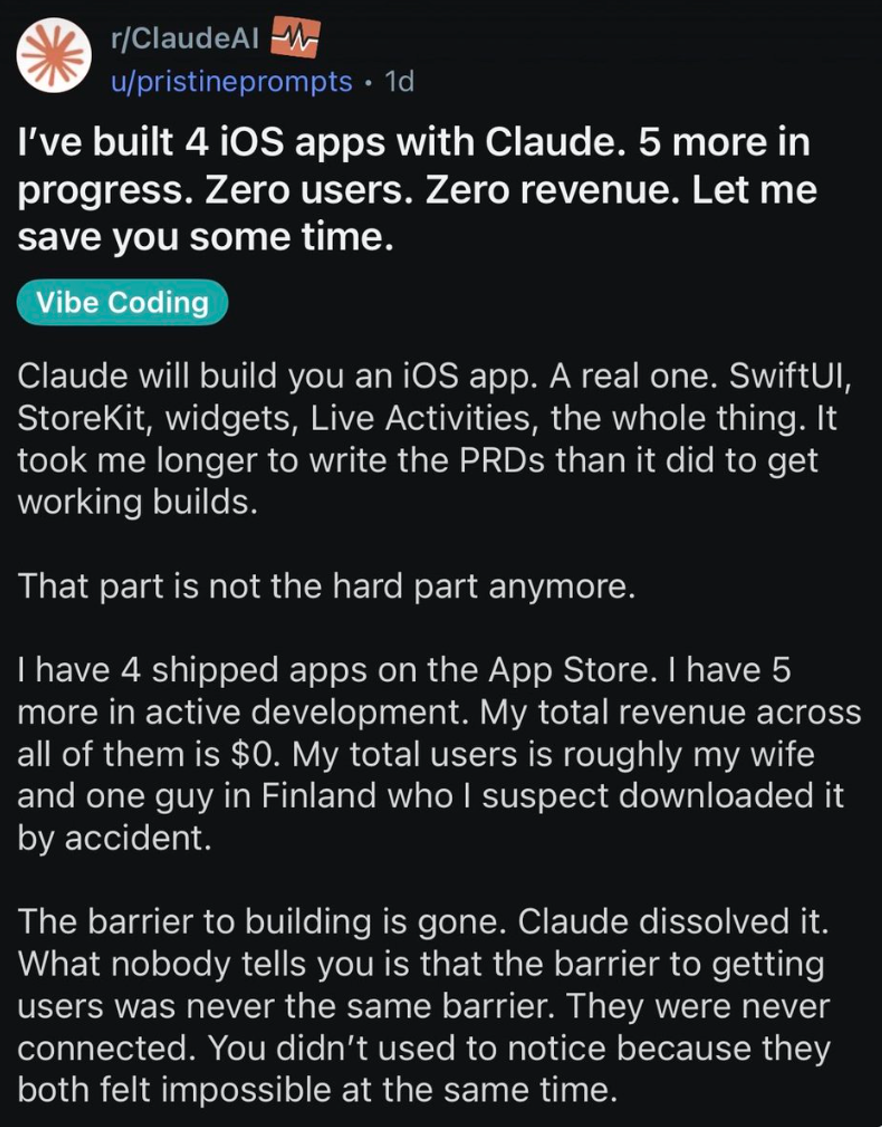
We will have tens of millions of entrepreneurs building these SaaS companies, and hundreds of thousands of millionaires will be minted as a result, even some billionaires. But the vast majority will not make this money. They’ll be left vibe-coding app after app with zero success, bringing the prices of everything down as a result.
There are also vast consequences for investors, I’ll talk about them in another premium article.
The question becomes: What moats are left? What can you build that will withstand the AI deluge? What areas should you start specializing in? What companies should you join? What investments should you make?
What Moats Are Left?
These are the 16 moats I found in academia, people’s discussions, and thinking about this myself. How defensible is each, really?
