

Geography has dramatically influenced architecture, but another force might have been even more important: technology. How has technology shaped architecture and our living spaces?
We’re going to answer this question today through a trip to the Roman Empire: What problems did the Romans try to solve? How did that influence the architecture that we know today?
In the next few articles, we’re going to explore successive architectural styles: Byzantine, Islamic, Romanesque, Gothic, Renaissance, Baroque, Rococo, Neoclassical, Historicist, Revival, Modernist, Contemporary… In the process, we’re going to see how geography, culture, and technology have interacted to drive architecture.
The Architectural Problems the Romans Inherited
The Romans learned most of their architecture from the Greeks, and some from the local Etruscans. Here, the Hera II Paestum in southern Italy:
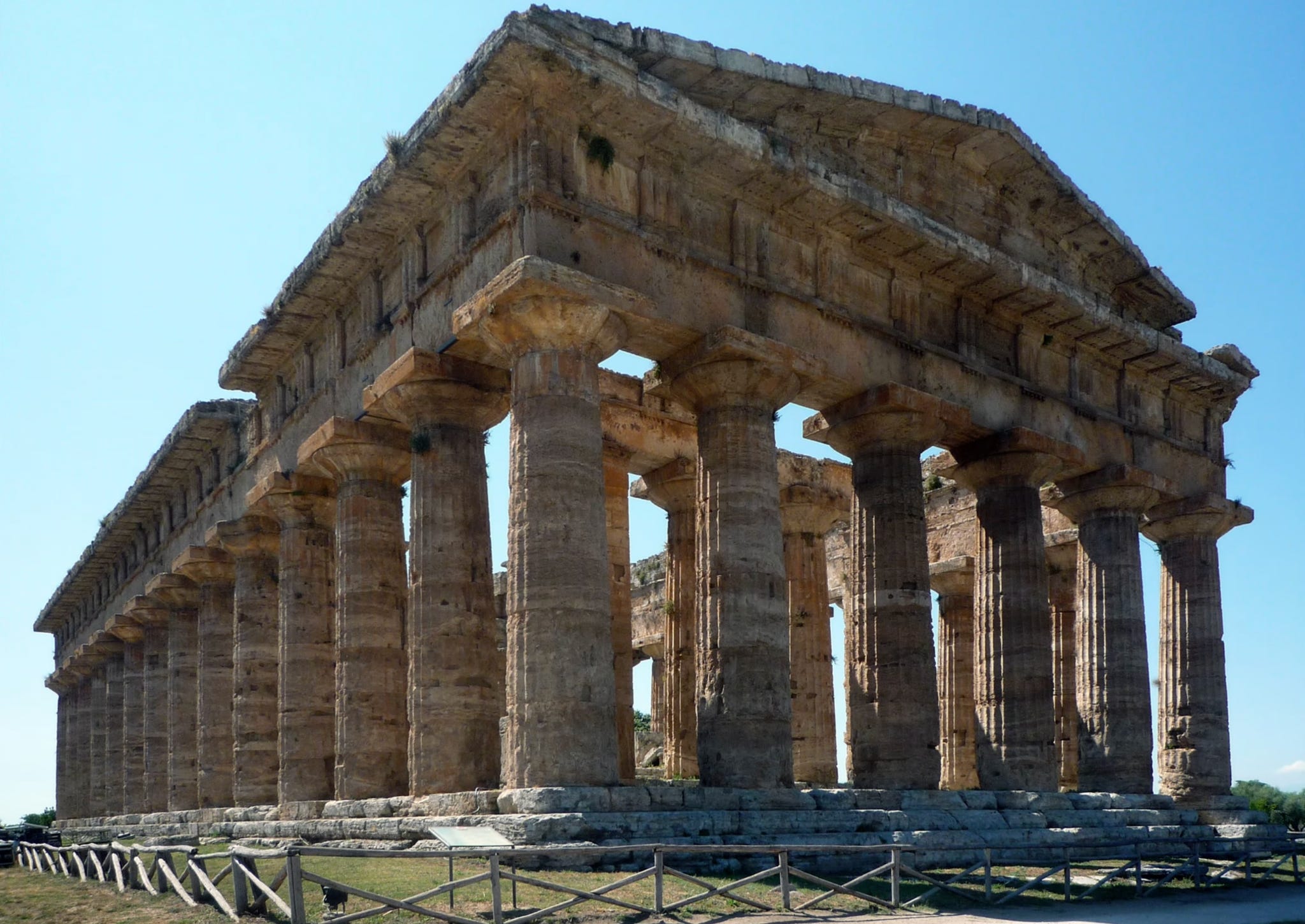
But this type of structure has two big problems that didn’t fit Roman goals:
The indoor part is too small to hold an event. The system of vertical columns with horizontal lintels was too heavy to allow for big indoor spaces.
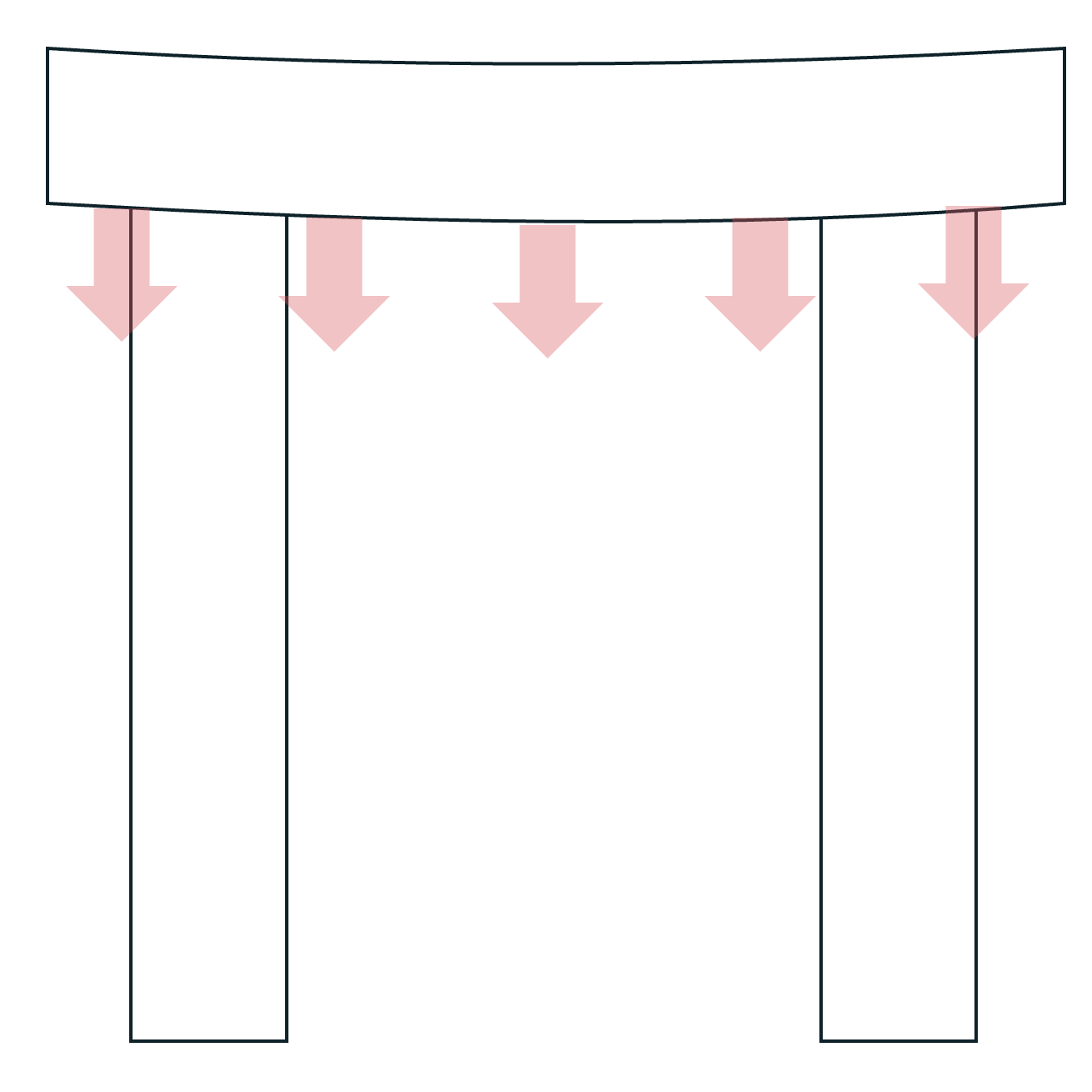
They’re expensive to make. If you want to build many civic buildings (temples, forum, baths, basilica, market, theater, bridges, aqueducts, walls, gates…) across many cities in the empire, it’s hard to replicate this design: It requires too much stone that might be scarce, or skilled craftsmen to cut, carry, and assemble the stone.
There’s a third problem that Romans wanted to solve: comfort in private homes. They wanted the entire city, including many residences, to have running water, drainage, and heat.
The Key Roman Technologies for Architecture
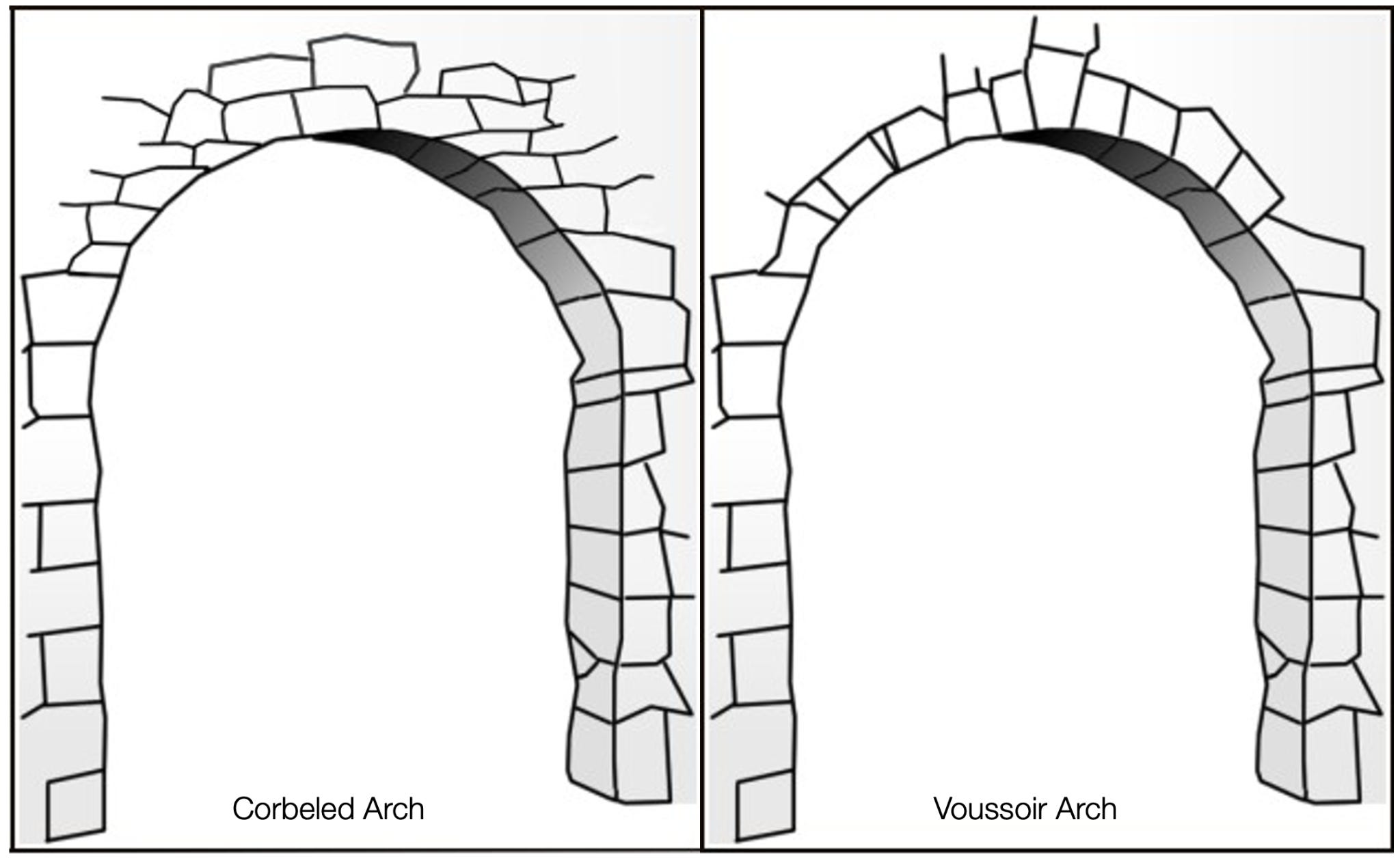
Romans adopted a few technologies that allowed them to increase indoor spaces. One is the voussoir arch.
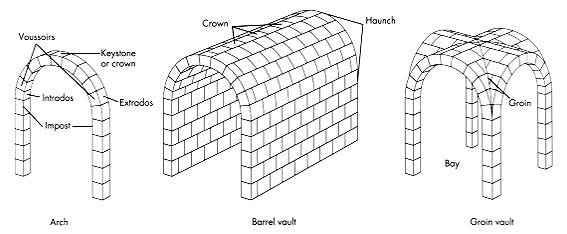
Voussoir
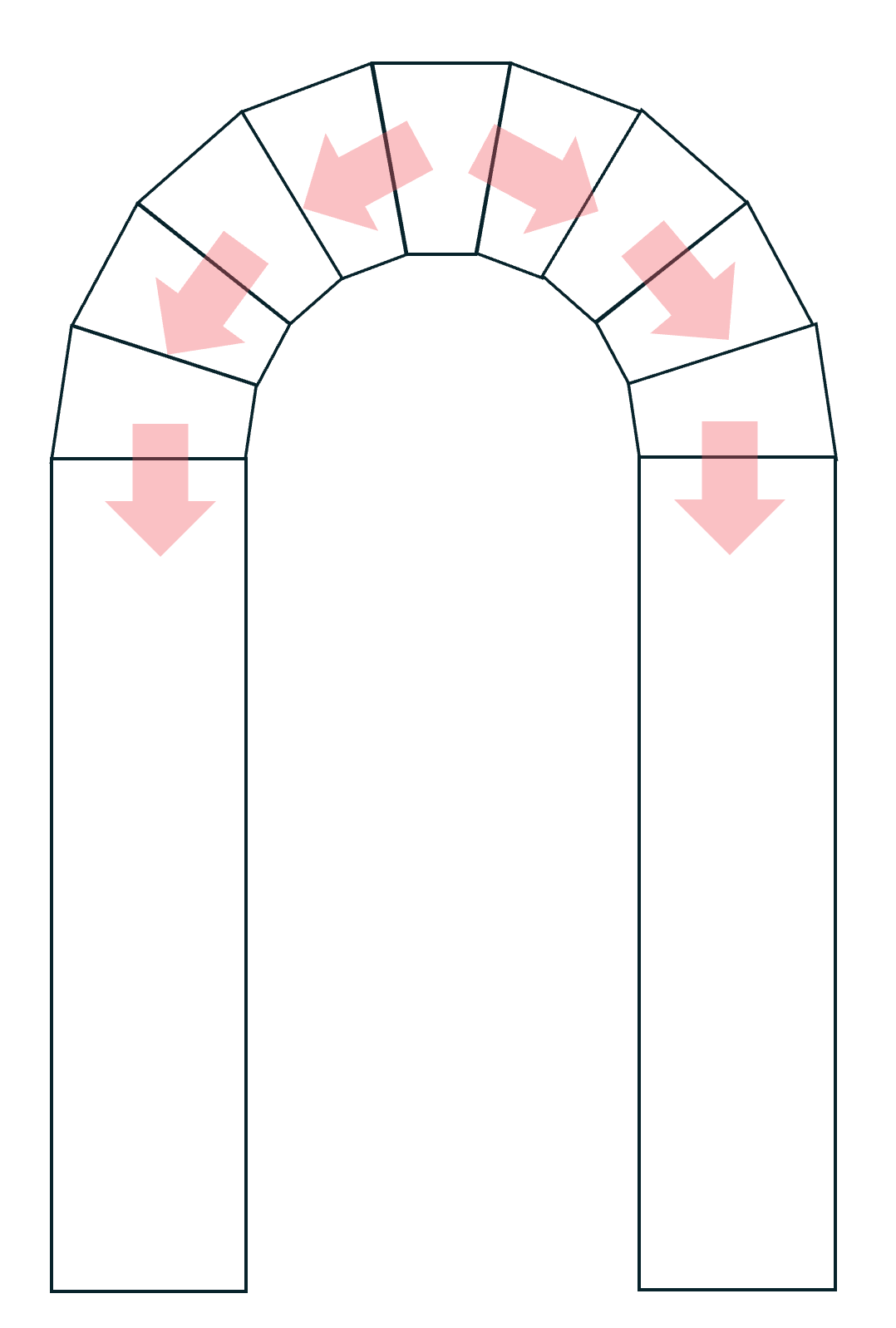
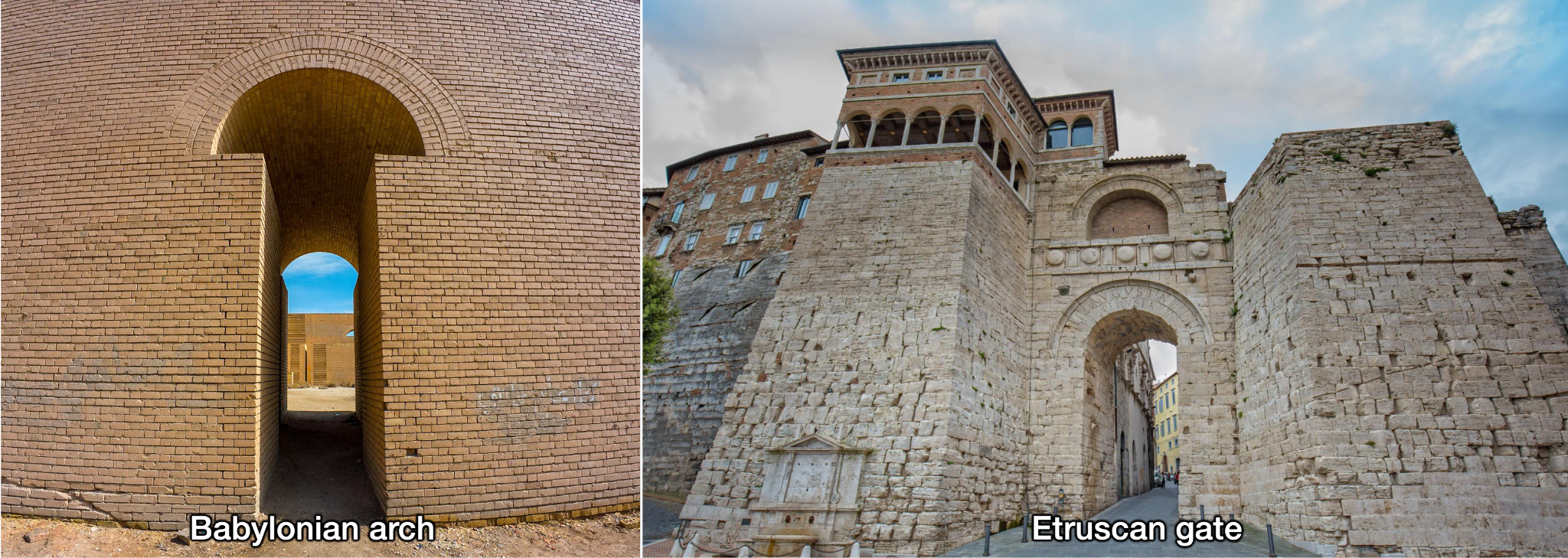
The voussoir arch transfers weight sideways, preventing collapse and allowing a much wider space between columns.
The Romans didn’t invent either of these arches; they took them from the Etruscans, who probably took them from around the Mediterranean (Mesopotamia and Egypt). But the Romans perfected them.
Barrel & Groin Vaults
If you take an arch and extend it along a corridor, you get the barrel vault. Again, this already existed around the Mediterranean, but not extensively, and the barrel vault is quite limited to single corridors anyway. The Romans learned to combine two of these into groin vaults.
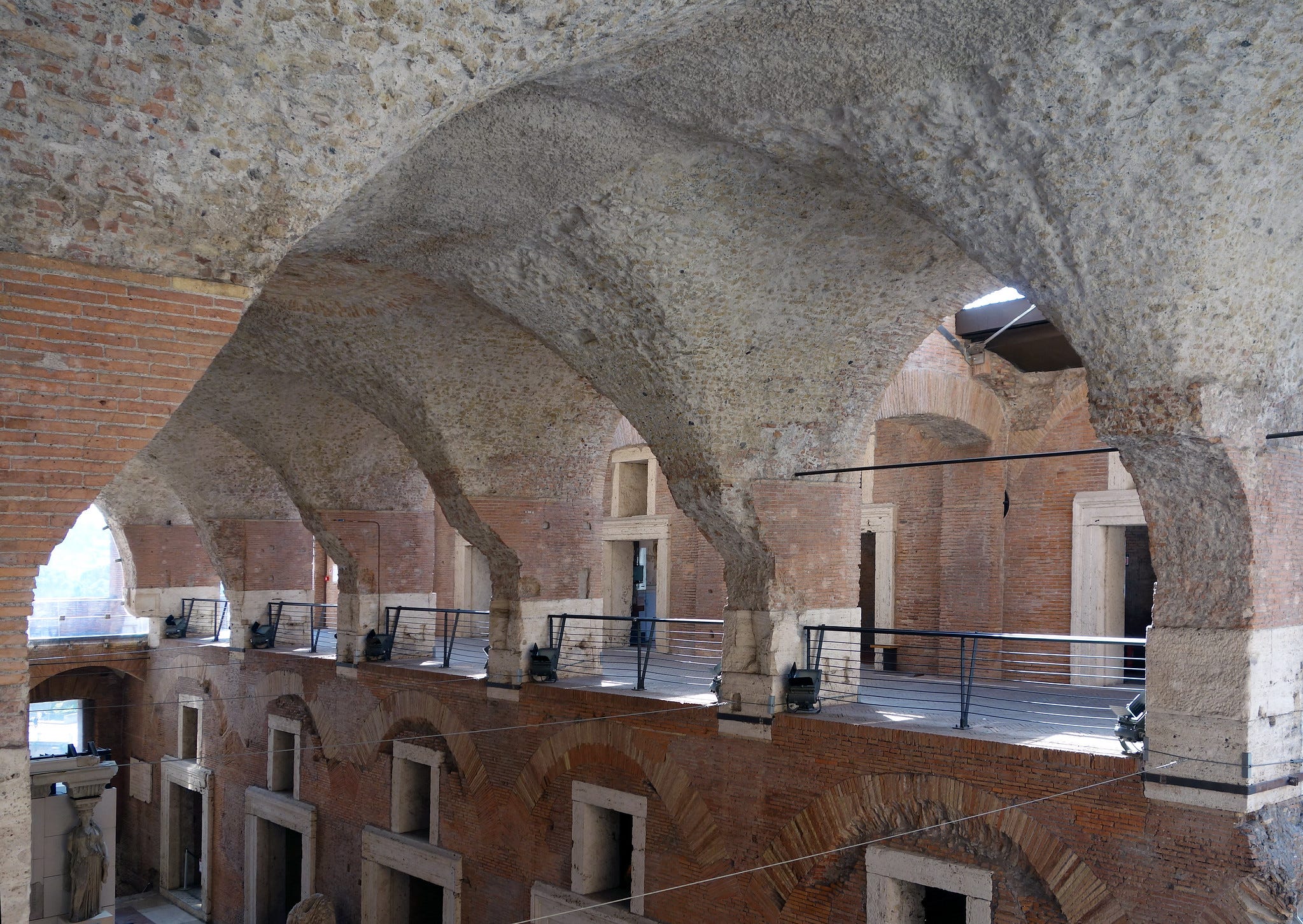
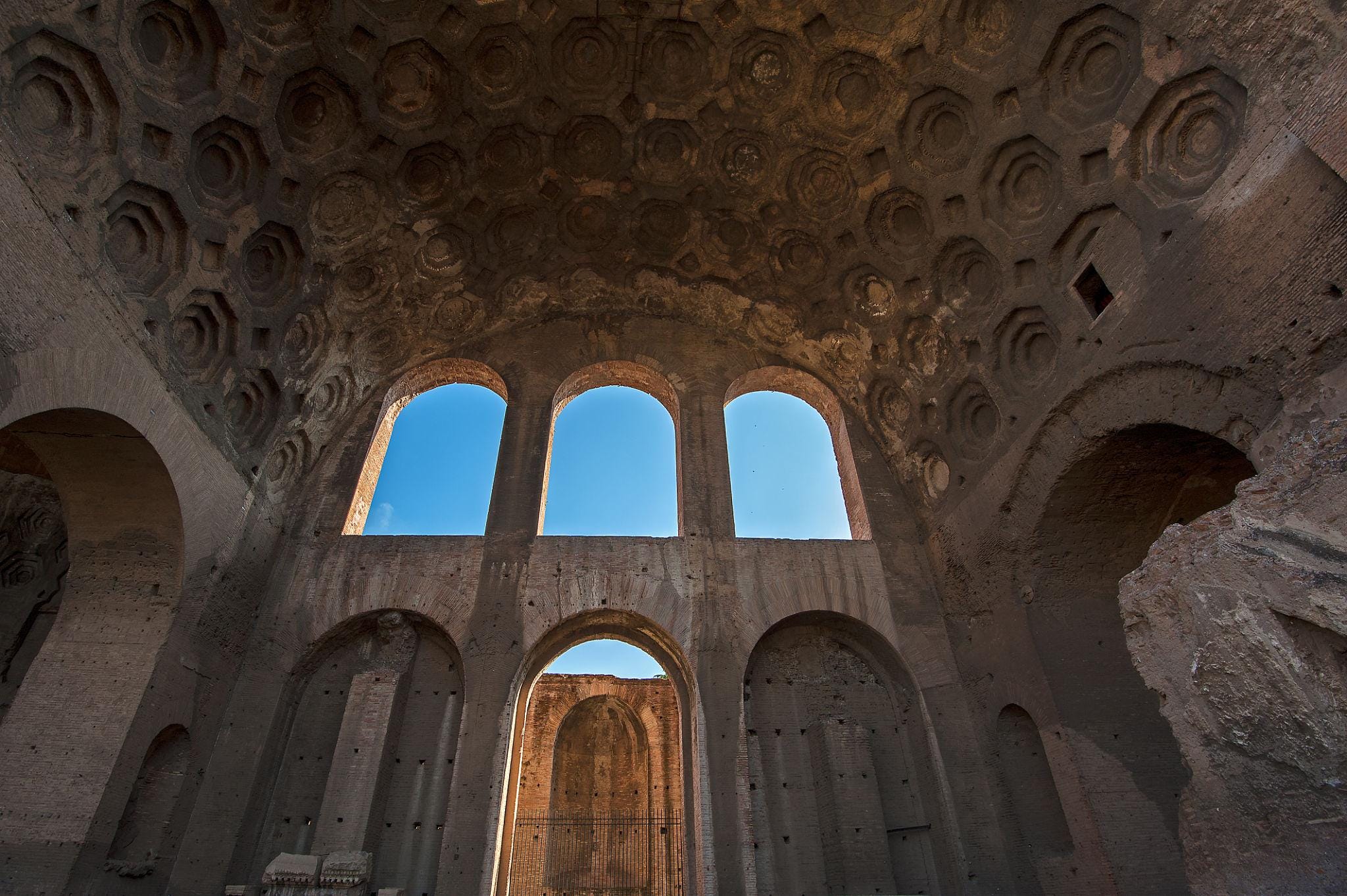
You can see the type of result that arises from this as you scale it:
Dome
Instead of projecting the arch in a single direction, you can rotate it in a circle and create a dome.
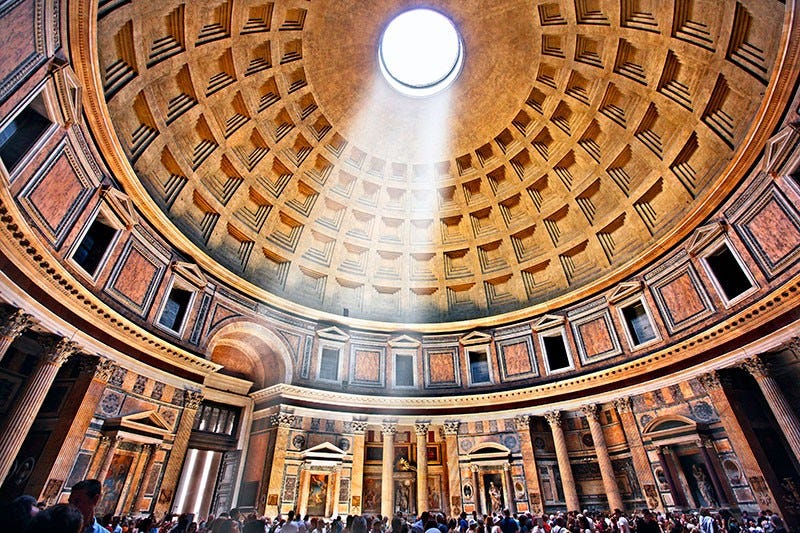
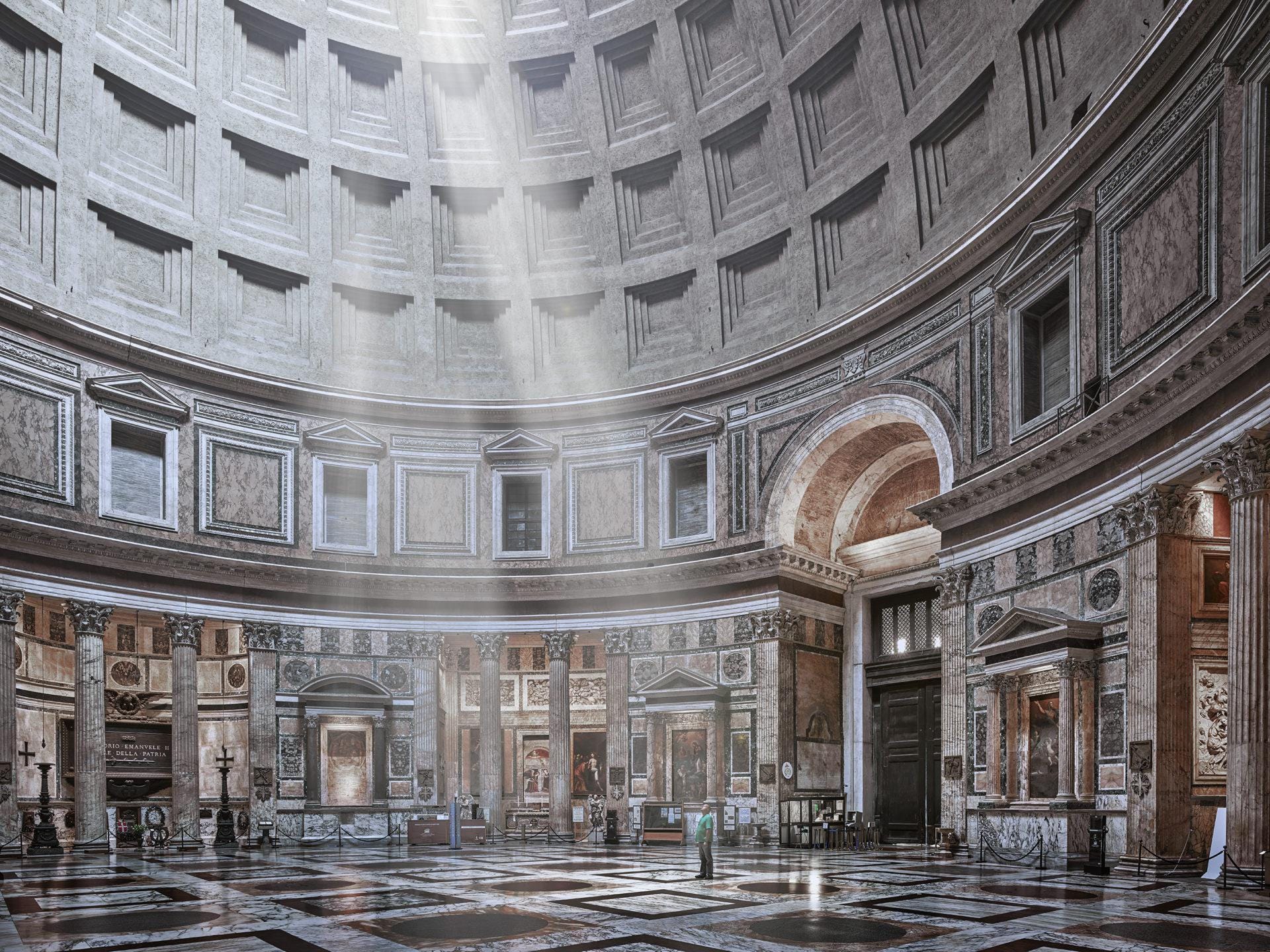
Rome’s Pantheon, with a span of over 43m, was the largest dome in the world for 1,300 years! And you can see the transition from Greek to Roman style when you view it from outside:
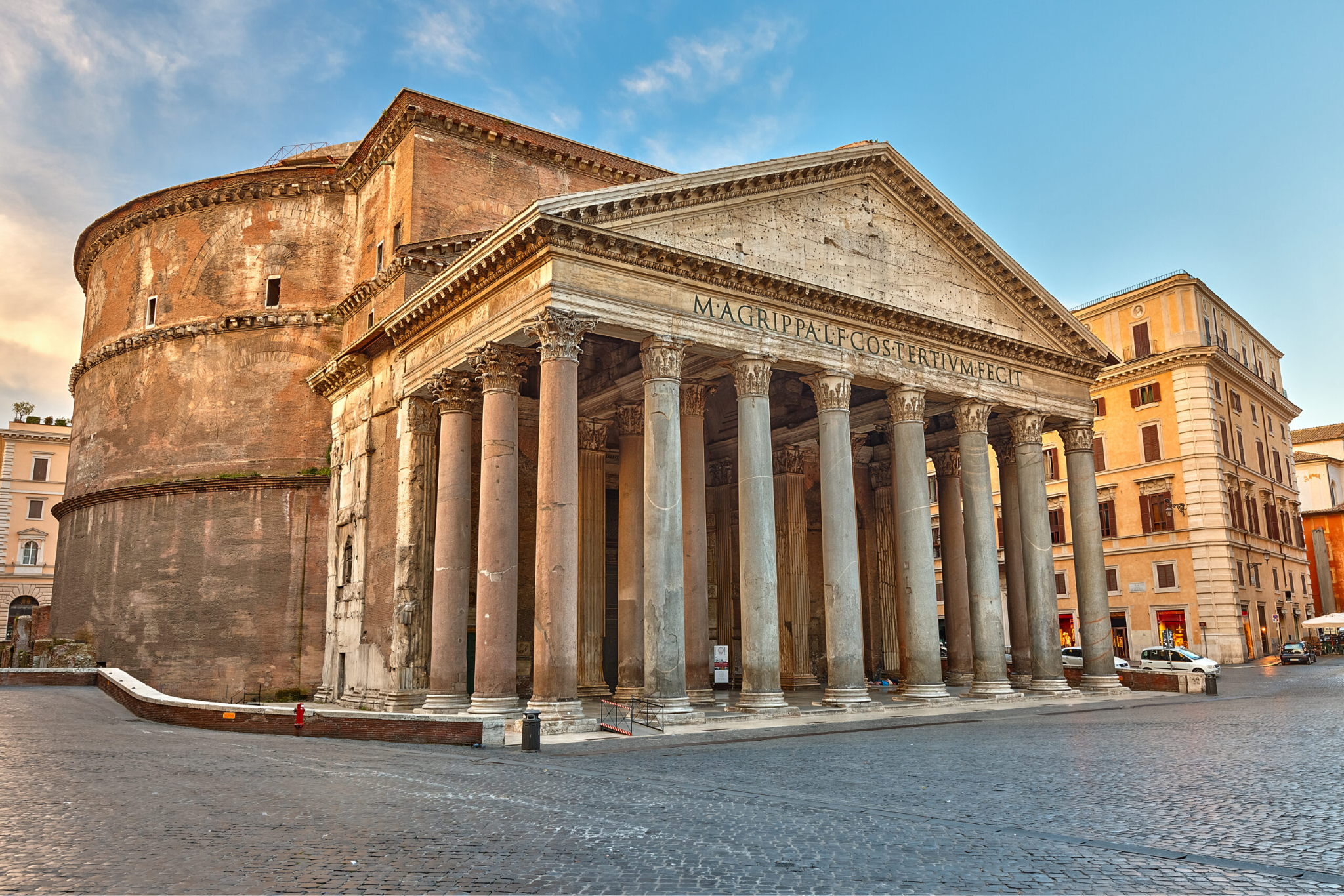
Imagine that you come from a Greek world where virtually all social life happened outdoors, and suddenly you can create these huge indoor spaces that had never existed before. Big events and social life can now happen indoors!
Cement
Notice, though, that neither the dome nor the groin vaults from before are solely made of stone. They require a lot of cement.
Like the previous technological improvements, cement already existed before the Romans: It was made through a process that took limestone, changed its chemistry to reshape it, and then reconverted it into limestone.
Yes, cement used to be basically limestone: Both were calcium carbonate, CaCO3. When heated, CO2 is released and what is left is quicklime, CaO. Add water, it becomes slaked lime Ca(OH)2. Now wait for long enough, and it will capture some CO2 from the air and eject the water, creating CaCO3 again. The problem with this is that it takes a long time, and you can’t have much water around or your slaked lime will not dry out.
If you add sand to the cement, you get mortar. Add stones to the mortar, and you get concrete. Previous civilizations used mortar and concrete, but not as much as the Romans, because their version was weaker for building, longer to set, and couldn’t be done around water.
The Romans were lucky to discover that mixing the lime with volcanic ash (pozzolana, very common around Naples, added silicon and aluminium to the mix) made a much stronger cement that could even set under water, and became stronger with time rather than weaker. The Romans mixed elements in such a way that cement could actually heal over time, something we’ve only recently understood.
There is a kind of powder which from natural causes produces astonishing results. It is found [...] about Mt. Vesuvius. This substance, when mixed with lime and rubble, not only lends strength to buildings of other kinds, but even when piers of it are constructed in the sea, they set hard under water.—Vitruvius, De Architectura, Book 21
Only with this superglue could the Romans make the dome and the other types of buildings we’ve seen.
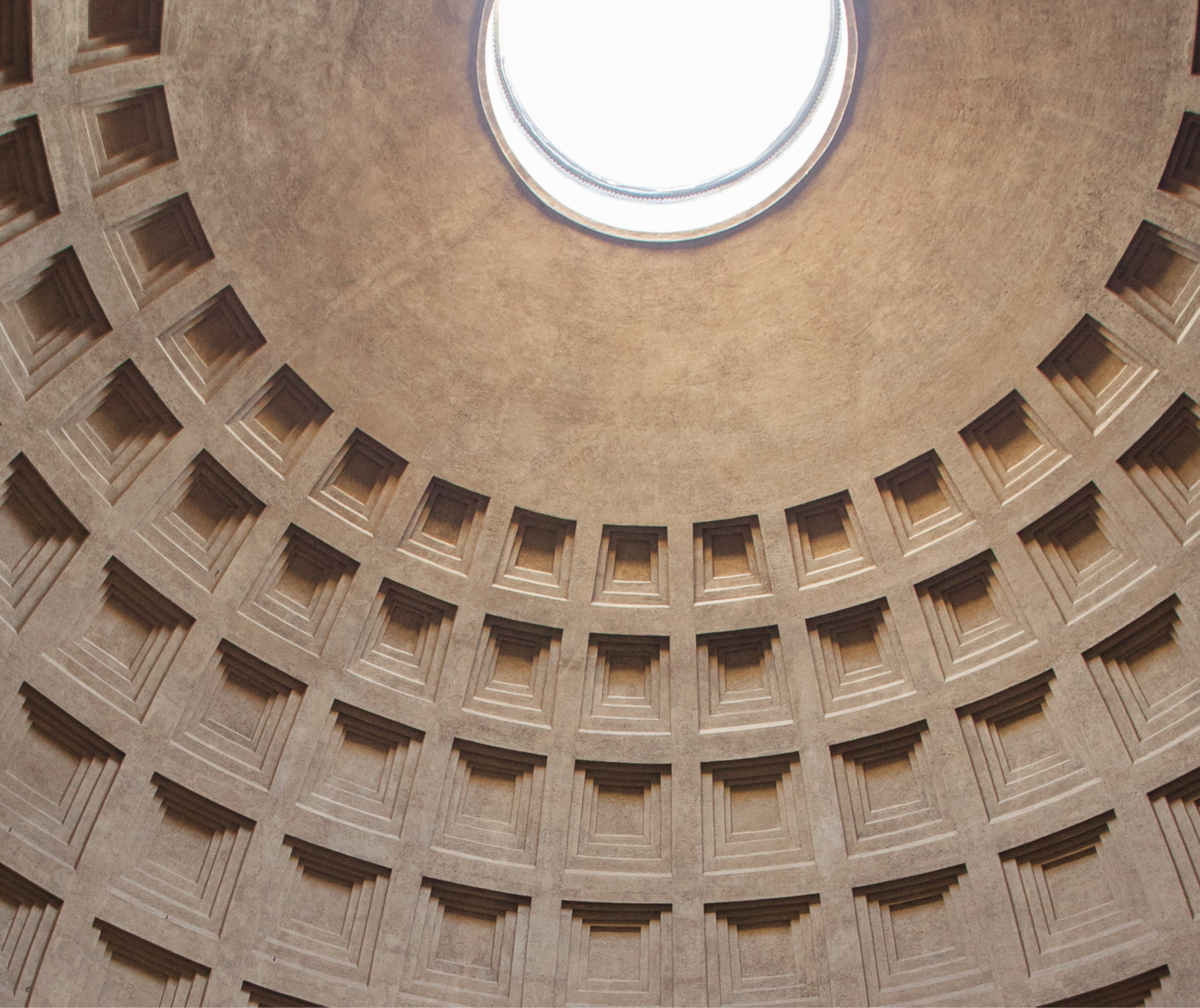
This is all Roman concrete: Roman cement with sand and aggregate (e.g. sand, stone, pieces of brick…) that serves as a skeleton. The mix was lighter at the top, with pumice stone (volcanic stone with bubbles in it) and became heavier and heavier as it went down, closer to the walls. The dome width is also thicker towards the bottom.
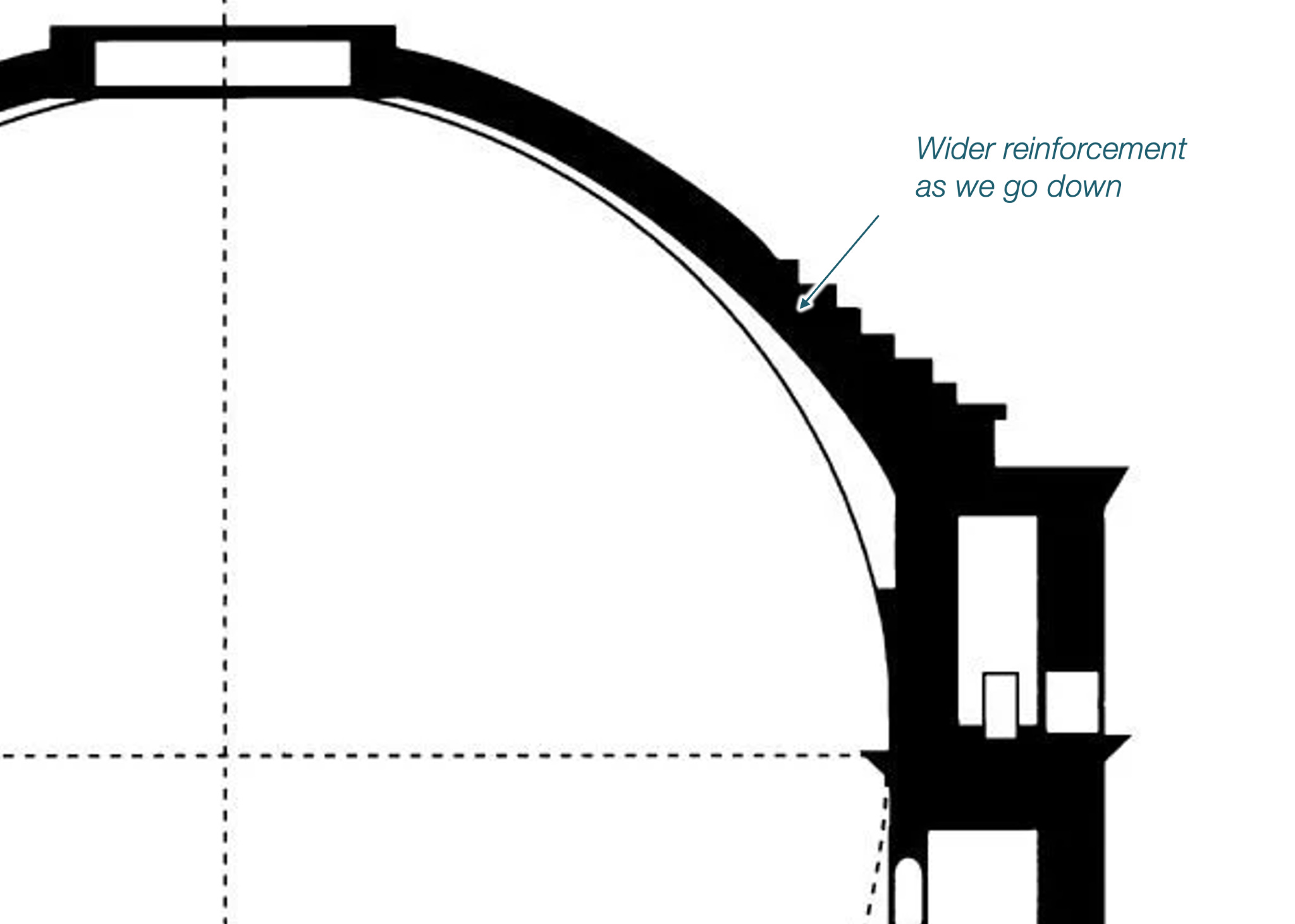
Note the squares throughout: They are coffers, which enabled reduction of material (and hence weight). At the top, a hole further lightened the structure, while also allowing for a beautiful play of light and shadow.
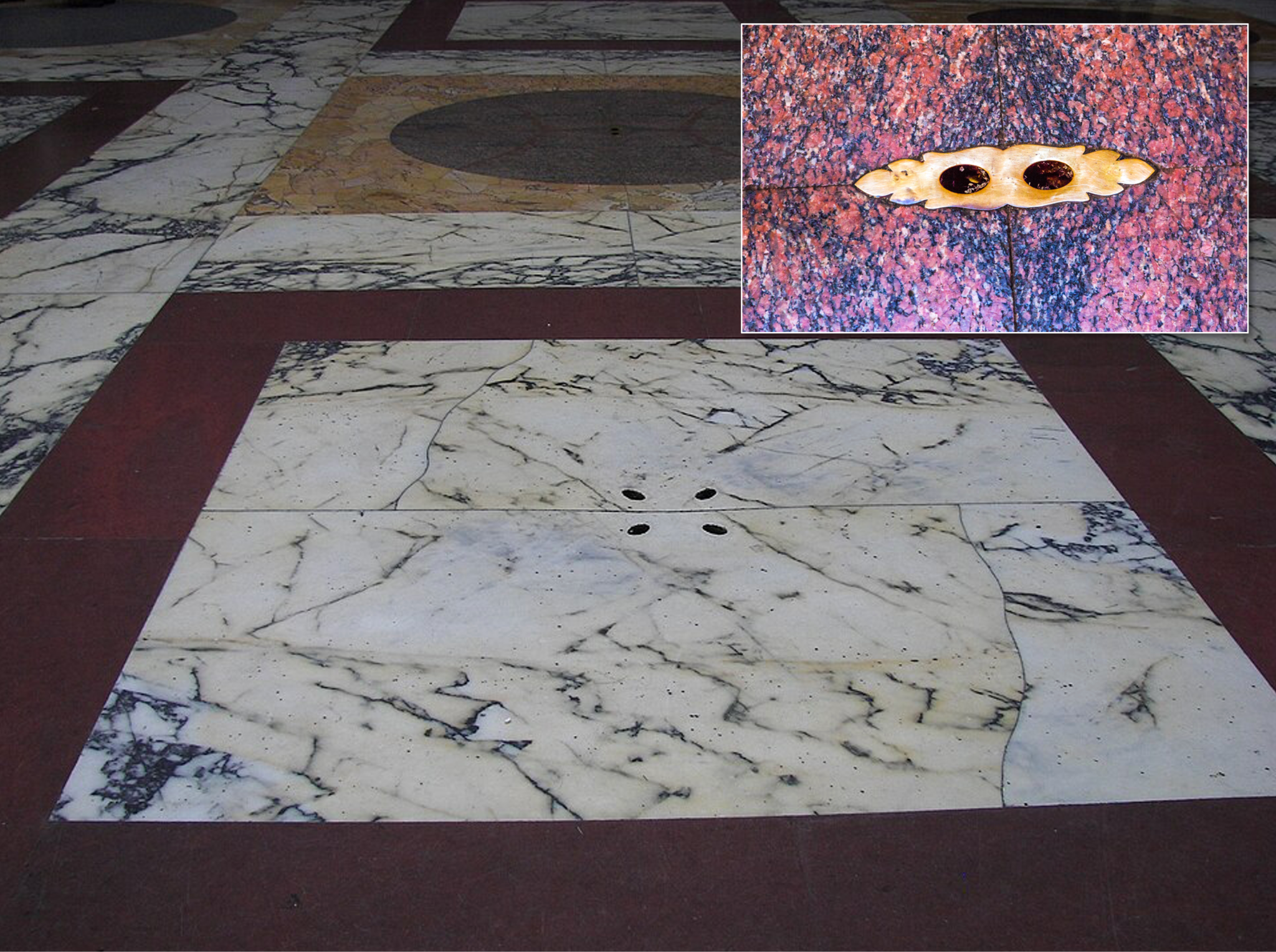
Small holes in the floor allow for drainage.
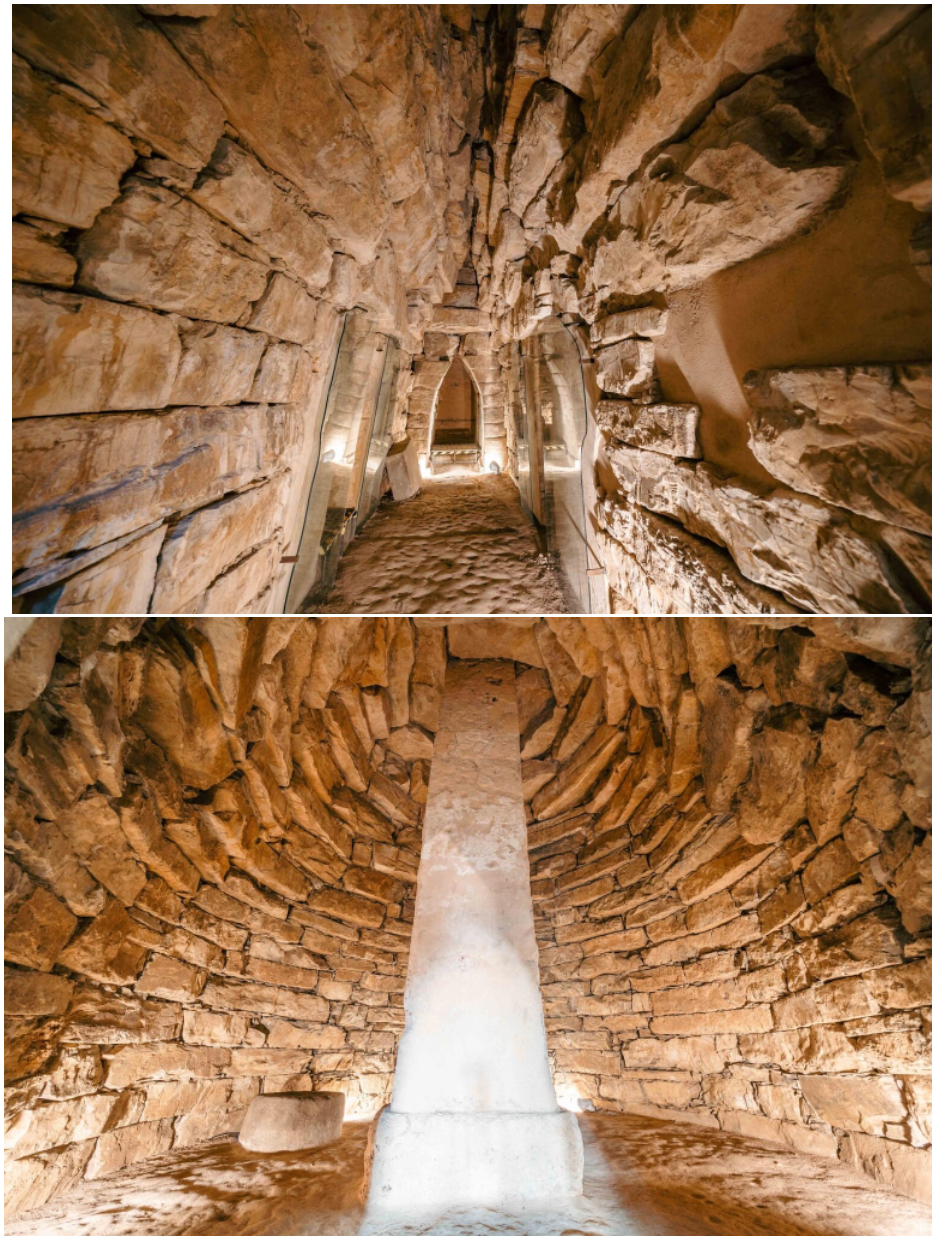
You really see the progress when you compare it with what came before:
Wooden Formwork
But concrete is a bit liquid; you can’t just place it in a specific shape. It needs formwork: a frame to hold it until it hardens.
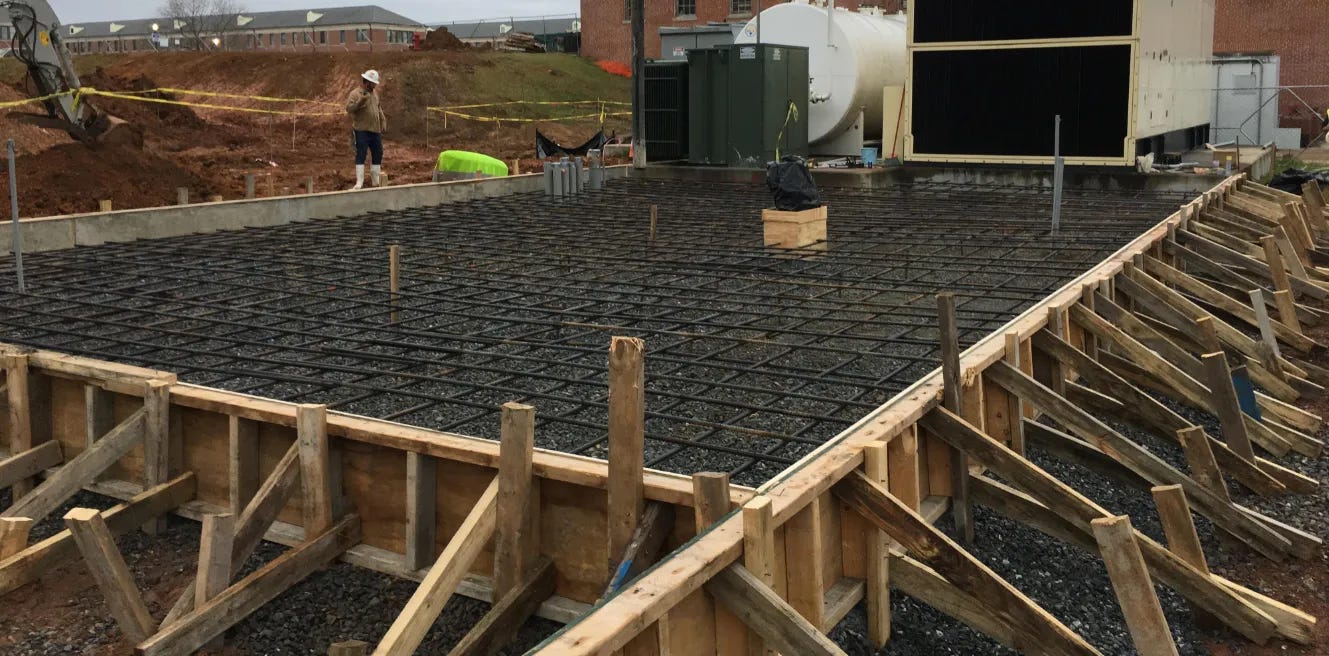
Romans used wooden molds, just as we do today, and poured the concrete inside. They used it for everything, from domes to walls to columns.
With the discoveries of voussoir arches, groin vaults, domes, and cement, building became much easier. Romans didn’t need to source good stone and even better craftsmen. They could simply crush and transport limestone and brick, mix them with sand, aggregate, and water, pour the result into wooden formwork, and erect their buildings.
This means construction became much cheaper and easier than in earlier days, giving Romans a solution to their second problem, which meant they could build many more buildings across the empire. Of course, these two things go together: It’s not like the Romans figured all this out and then started to build. Rather, all this building allowed them to iterate and figure out better and better construction techniques.
Civic Buildings
Romans built aqueducts to bring drinking water to their cities. Once they could build huge indoor spaces, they could bring water to indoor buildings, and baths became possible.
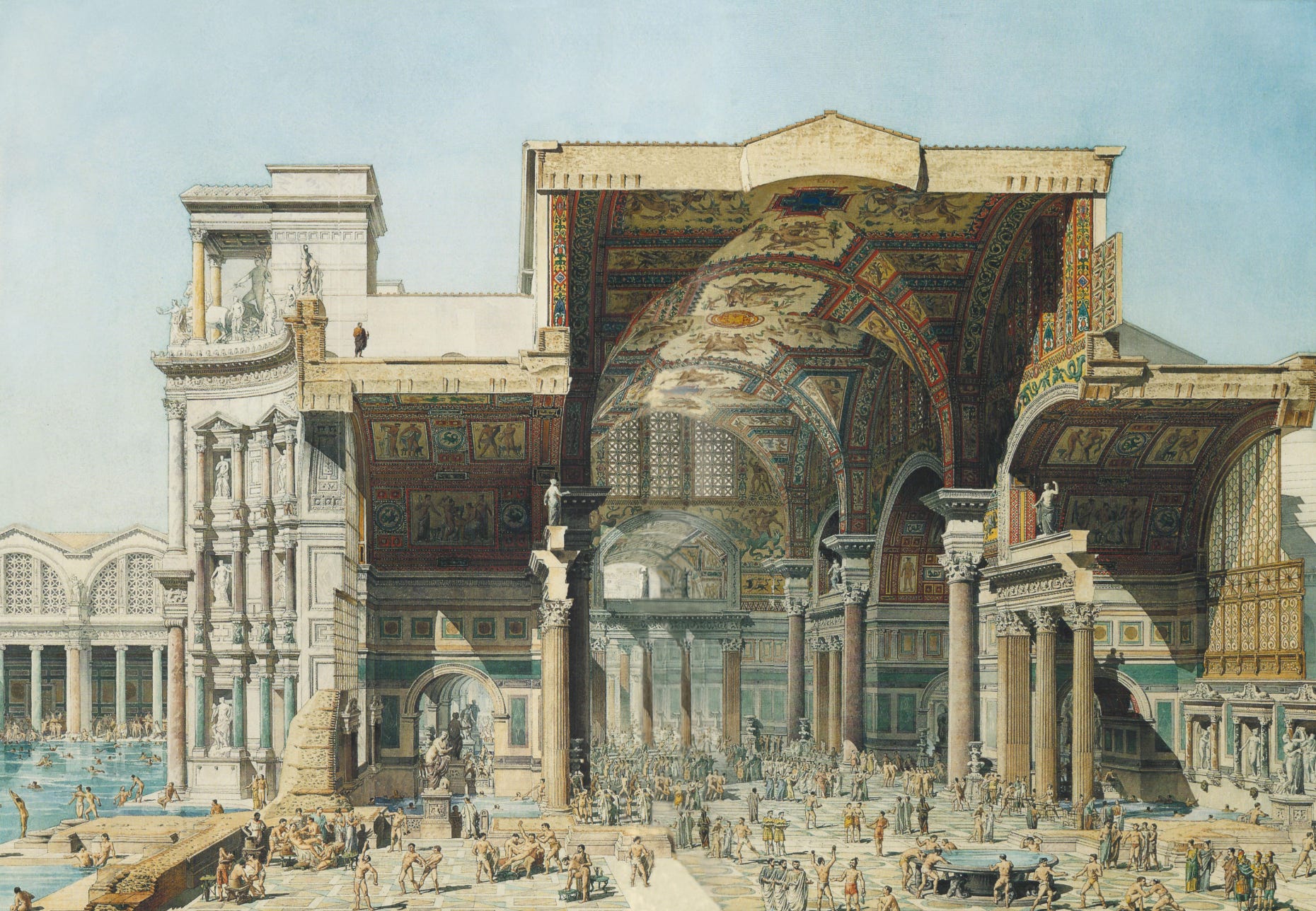
Indoor Architecture
Once you start bringing water indoors for baths, you might as well start bringing water to other buildings, including private ones. This requires channeling water through small tubes in walls. But with what type of material? As we saw in How Ancient Metals Started Civilization, Romans had way too much lead from their silver mining, and lead is easy to work with, so they built their plumbing with it. Plumbing comes from plumbum, Latin for lead.
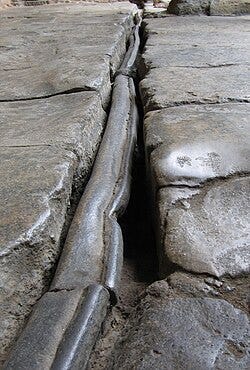
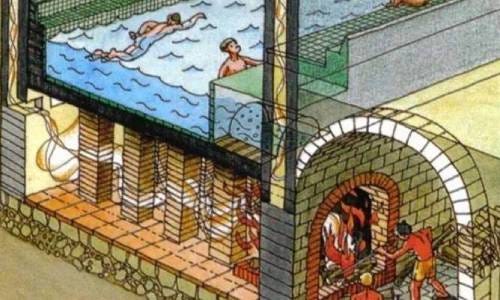
Moving water requires pressure, so Romans built water towers to store the aqueduct water. Water is generally cold, though, so Romans had to warm it up. They didn’t just face the challenge of water management, but heat management, too. For that, they needed cauldrons, some fuel, chimneys, all incorporated into the building.
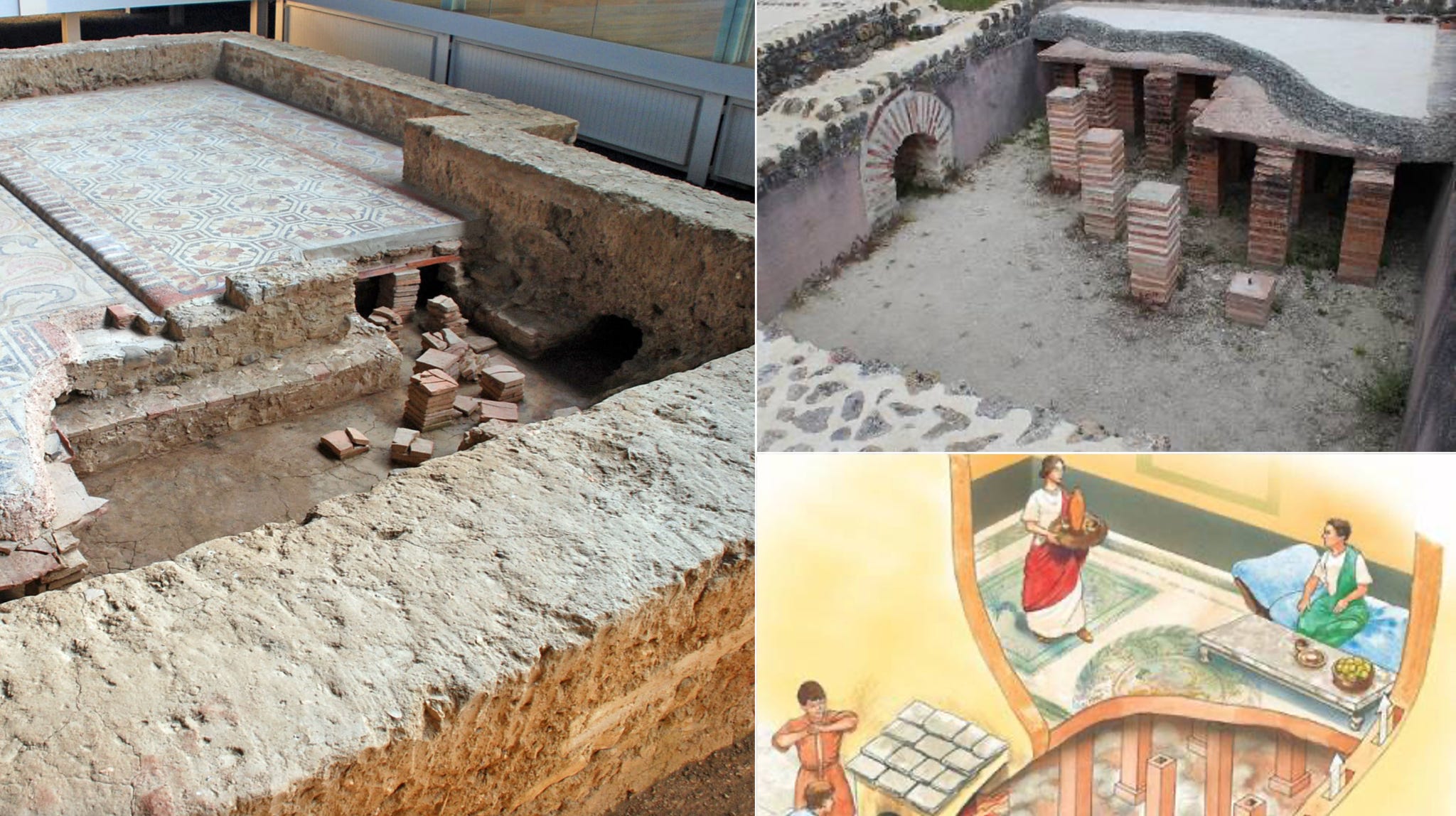
And once they did it for the communal baths, they began incorporating it into housing, starting with the rich.2
And this is how Roman architecture solved their problems:
Huge enclosed spaces thanks to arches, vaults, domes, cement
The ability to build them at scale thanks to the easier processing of limestone and clay, the standardization of shapes, and the use of wooden formwork for pouring concrete
The ability to provide services like running water, drainage, and heating at scale, by applying the learnings from construction of many public buildings to that of private homes, and by taking advantage of the critically wide availability of lead.
What’s striking about Roman architecture is that a lot of it was extremely practical: They had convenience problems and they wanted to solve them, so they developed the corresponding technology. I always heard that Rome was a civilization of engineers rather than philosophers, but this was the first time it gelled for me. They had the benefit of an empire that kept expanding, so more and more buildings to build meant much more experience through iteration, and more technological development.
Most other ancient architectures stemmed from a cultural desire that translated into the technological progress that enabled it. We’ll see those in the next few articles, where we cover the Byzantine, Romanesque, and Gothic architecture. After that, we’ll examine Renaissance, Baroque, Rococo, Neoclassical, Historicist, Revivalist, Modernist, Contemporary, etc. All, to understand how architecture got where it has, and how we can improve it.
The rest of the quote is also super interesting: Vitruvius was trying to understand chemically how this could happen.
My guess is: If the Roman Empire had continued expanding, some of these technologies would have become cheaper and cheaper, and enter the homes of poorer people.
Fascinating piece. I never knew that lead plumbing was an intelligent way of using a by-product of a higher-value activity. Thank you.
Wasn't the 5th planet Saturnus? Earth is just the ground, anyone can see that.