

In Starship Will Change Humanity Soon, we saw how the cost of sending stuff to space is dropping, and that will enable new industries to emerge.
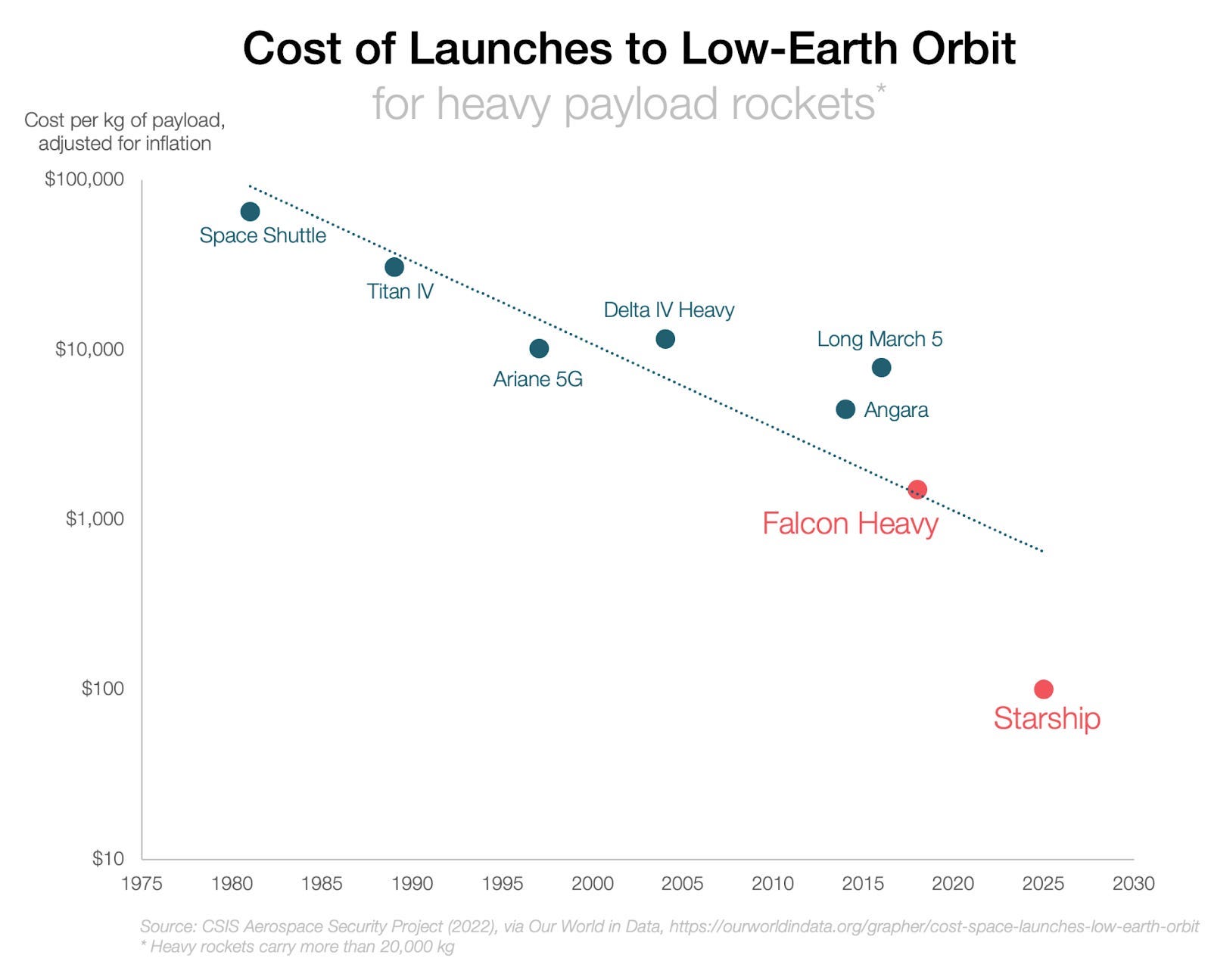
In No Room for Deep Space, we realized most of these industries will be close to the Earth, including space tourism, Earth imagery, space mining & manufacturing… Now, we’re getting specific examples of this.
Of course, the biggest example is SpaceX’s Starlink, which has just trademarked “Starlink Mobile” and it has bought a bunch of mobile spectrum to operate in the US—probably the first of many countries for which they will do this. This is leading SpaceX to a valuation of $800B.
But today, I want to look at less well-known examples:
Helium on the Moon
Pharma manufacturing
AI Data Centers
1. Helium on the Moon
In No Room for Deep Space, I said it was not economically viable to mine anything far from Earth:
Let’s assume the cost of transportation to space is $5,000/kg, and mining there costs an additional $5,000/kg. That’s a total of $10k/kg penalty for space mining. That means you need some scarce element that costs more than $10k/kg on Earth. What elements cost more than that on Earth? Not a lot.
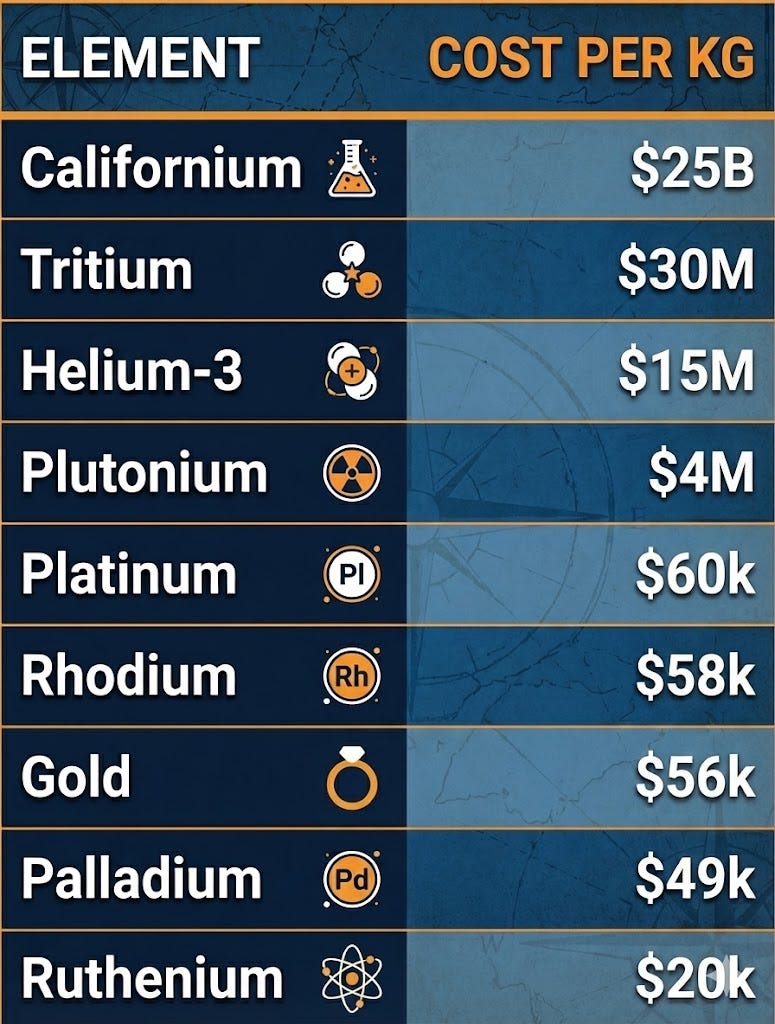
We would need first to find these elements in deposits so concentrated that the mining plus shipping would cost less than directly mining from the Earth. So far, we haven’t found such highly concentrated deposits anywhere.
I was wrong! We have! The 3rd one on that list.
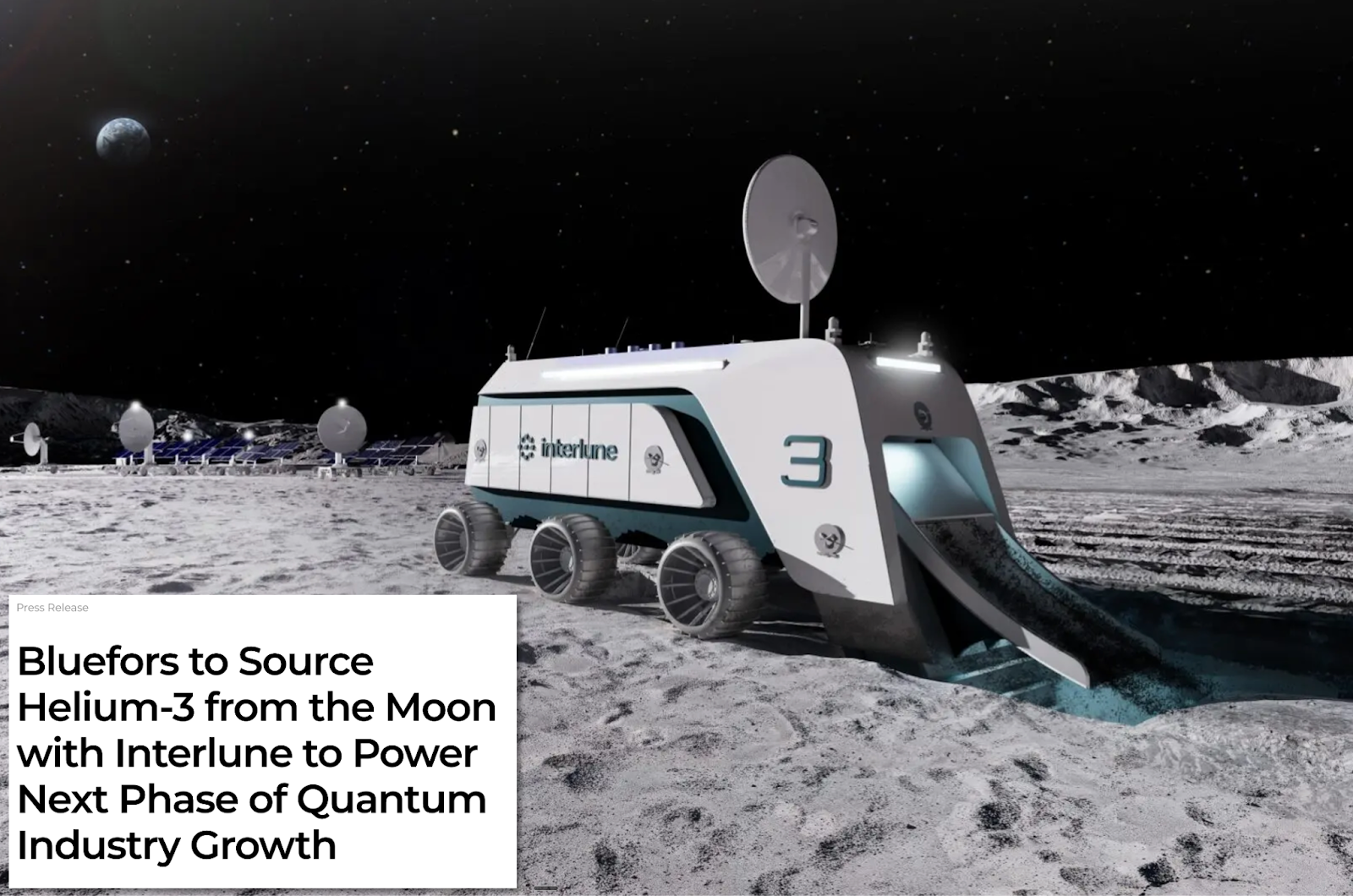
Turns out the Moon has plenty of Helium-3! According to this paper, there is 10,000x more He-3 on the Moon than on Earth! A total of ~700,000 tons, vs the Earth’s ~30 tons. What? How come?
Our Sun shines because it fuses hydrogen into helium. Some of that helium is the more stable He-4, but some is the radioactive He-3. Some of these helium particles are expelled from the Sun in solar winds. The Earth is protected from these winds by its magnetic field and its atmosphere, which is why we have little He-3.
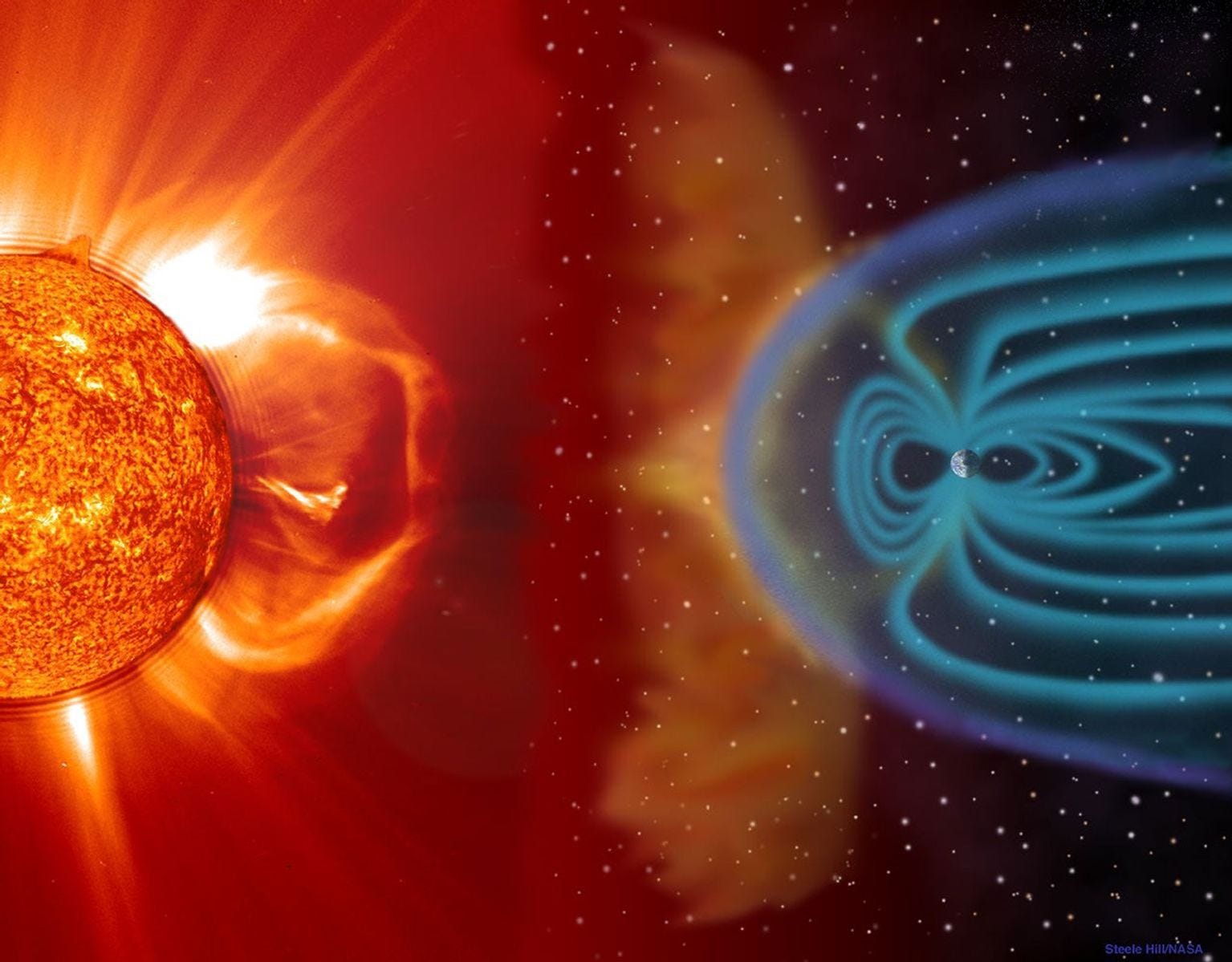
But the Moon has no magnetic field and barely any atmosphere! So apparently helium lands on its surface and is captured by the ground’s regolith. Wow!
So He-3 is scarce on Earth, but what is the demand for it? According to Bluefors, the company who promised to buy so much of it:
As one of the world’s largest consumers of helium-3, Bluefors utilizes it in its cryogenic measurement systems for applications in quantum technology, physics research, and the medical and life sciences industries. These systems provide the extremely low temperatures of under 10 millikelvin (sub -458ºF/-272°C), needed for the atom-stopping cold, essential for the operation and stability of qubits in quantum computers. Recent breakthroughs from companies such as Google, IBM, Intel, Amazon, and Microsoft indicate that widespread commercial adoption of quantum computing is imminent. In the coming years, the demand for helium-3 will rise sharply to power this next phase of quantum industry growth.
Bluefors leads the market with the most extensive installed base worldwide, having delivered over 1,500 dilution refrigerators and more than 15,000 cryocoolers to date.
OK so we need radioactive helium to make quantum computers (!!). Wait, it gets better! Helium used to cost something like $1M/kg, but its price has been skyrocketing.
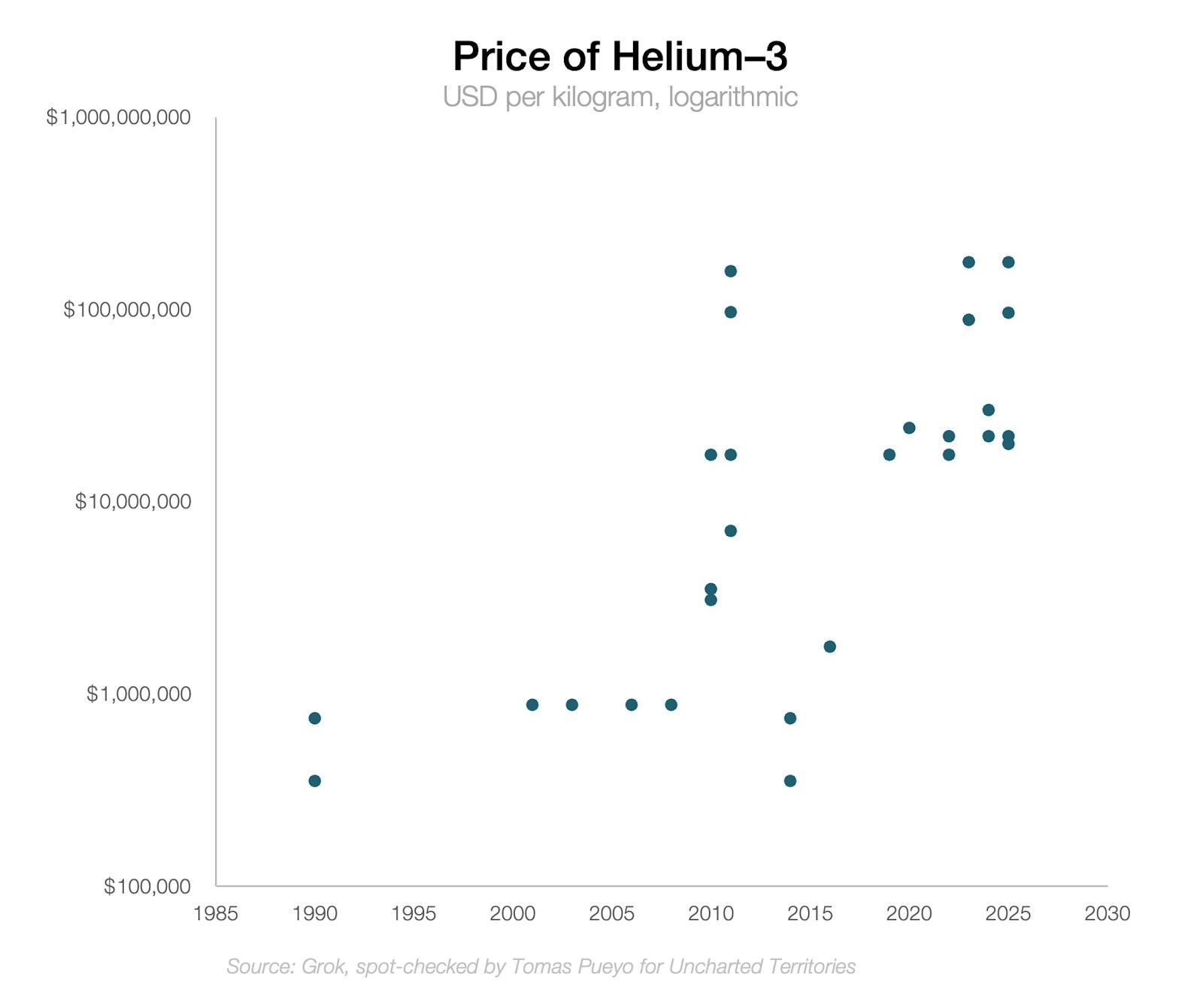
And why is that? Listen to this. Because He-3 used to be a by-product of nuclear arms programs,1 but as nuclear weapon production has dwindled, so has He-3 production on Earth.
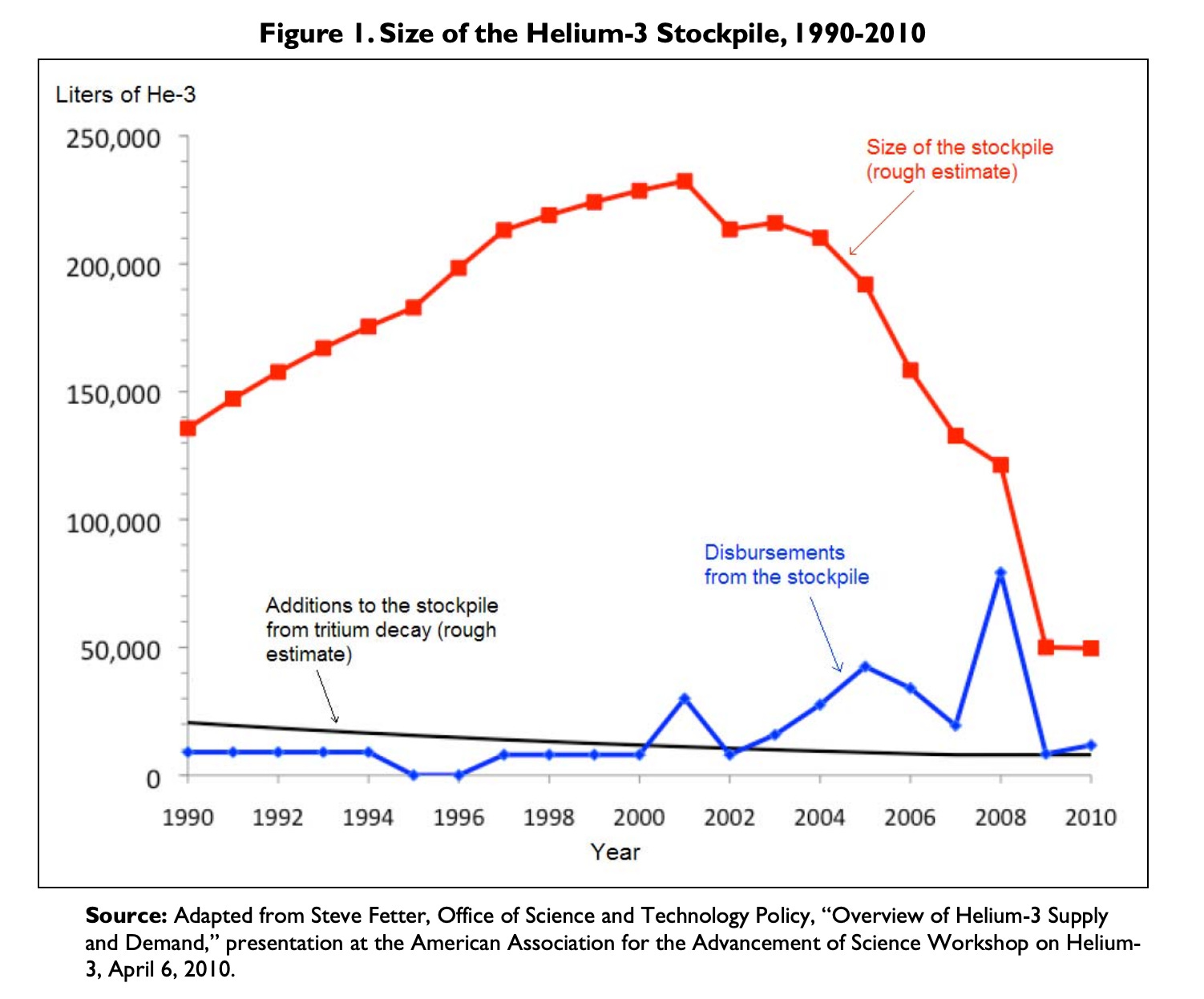
That’s why Helium-3 costs about $20M per kg today. Now, if we start bringing a lot of He-3 to Earth, its price would shrink. But Bluefors has committed to spend $300M over 10 years for 10,000 L per year, or 100,000 L in total, which means 11.5 kg, or $26M/kg.2 My guess is they were seeing prices skyrocket, and they decided to secure them for the next 10 years by sourcing the helium from space!
In any case, if your price per kg is $26M, that gives you a lot of leeway to harvest and bring that thing to Earth. How much?
A Falcon 9 mission to Mars would cost ~$67M and could carry ~4 tons. That’s about $17,000/kg, but as of today people pay mostly to send stuff to space, so there is plenty of empty cargo space for the return. Still, let’s be conservative and assume SpaceX would charge $17k/kg. That’s less than 0.1% of the value of He-3! The trip back would not be that expensive.3 What would cost, though, is sending all the machines to the moon to operate this harvest. How much would that be?
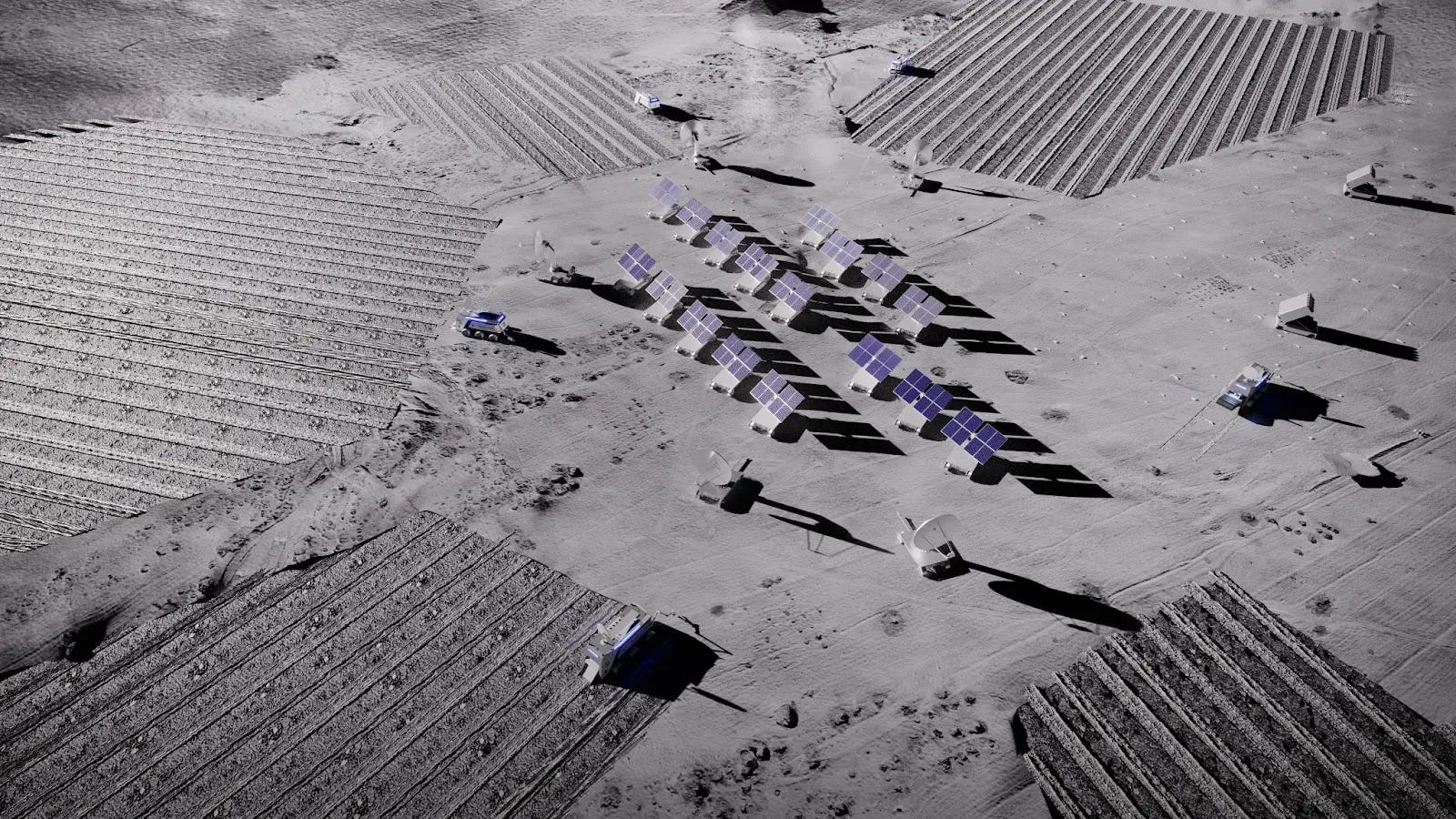
Interlune has designed a harvester that can process 100 tons of regolith per hour.
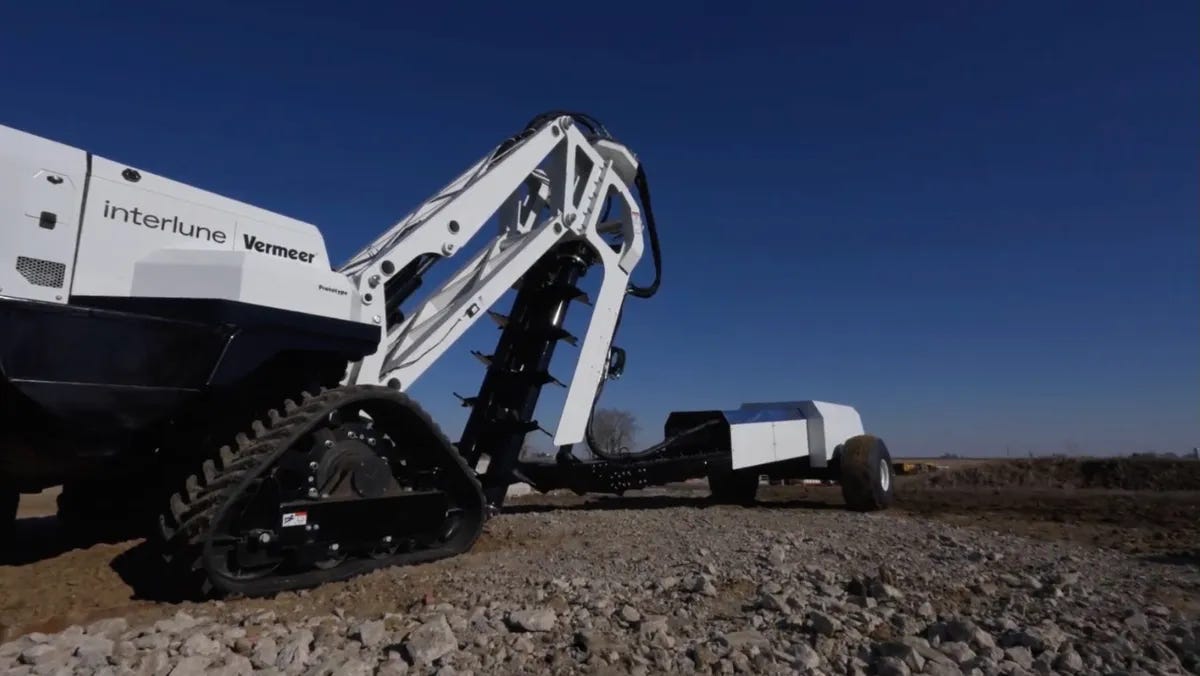
Over 28 days, that’s 33,600 tons4, which backs out to about 0.49 kg per harvester per month.5 Two years of operation would yield about 13 kg, more than the entire cargo that Bluefors has requested for 10 years of operation.
That harvester will weigh about 3 tons.6 ChatGPT tells me you need to add 12 tons of other stuff (processing plant, solar panels, storage, radiators, cryoseparation…), for a total of 15 tons.
15 tons is three Falcon 9 missions, so about $200M.7
If all of this works well, Bluefors will be paying $300M to Interlune so that it can spend $200M of that on sending hardware to the Moon. That leaves $100M to develop all this tech and bring the helium back to Earth. Once that’s done, Interlune would have the entire thing paid for in two years, and it would then have an ongoing harvesting operation on the moon, producing millions per kg of helium.
This is freaking science fiction, but it sounds like it’s happening, and it’s worth summarizing.
We are building quantum computers, for which we need cryogenic cooling that only one element, Helium-3, can provide. Until now, the only place we could harvest it economically was from aging nuclear warheads, and it cost millions per kg. But as nuclear arms have dwindled, the price of that element has skyrocketed to tens of millions per kg, so we’re trying to figure out where to get the damn stuff. It turns out there’s a lot of it on the freakin’ moon. It has accumulated there over millions of years because that’s precisely what the Sun produces when it fuses hydrogen and then sends it flying through space. We don’t catch it because Earth has an electromagnetic shield and an atmospheric shield, which the moon doesn’t have, so the Moon bakes the helium into its soil. We’re now about to send lunar harvesters via reusable rockets so that they can automatically harvest the helium with energy from solar panels, but only two weeks at a time because of lunar cycles.
Fuck. Yeah.
