

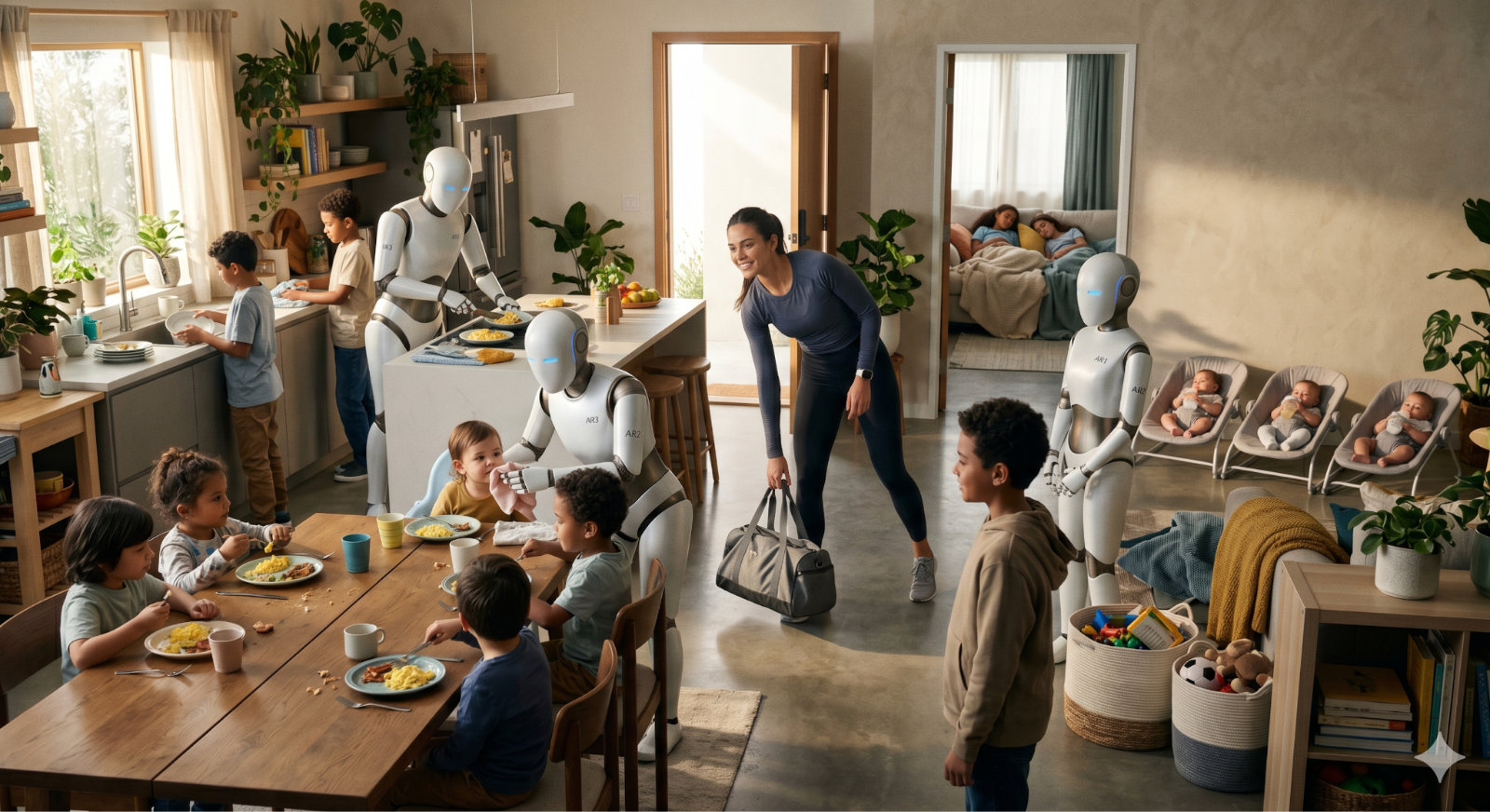
It’s Saturday, 10am, and Sheila wakes up to five little bodies crawling up into her bed:
JOHN: Good morning mama!
MUM: Good morning sweethearts. How did you sleep?
FELICITY: Veeery well! I love you mama!
MUM: Ah, I love you too…
The mum, Sheila, is 25.
MUM: Did you have breakfast already?
DARON: Yes Mum, the six youngest all got their bottles.
MUM: Thank you kiddo. What about you and your older siblings?
DARON: We all had our Saturday scrambled eggs with tuna. AR1 made Javier and Cooper their additional egg whites. Melissa, Svetlana, and Bosoma are still sleeping.
MUM: Thanks for keeping tabs on it. You’re the sweetest boy. I’m going to the gym, OK? We’re going to do something cool afterwards.
OLIVIA: Cool! The botanical hike?
MUM: Sure! AR2, AR3, can you make sure they’re all fed, clean, and dressed up by the time I come back? Also, please come up with a fun hike, 2 hours long, that can also teach the kids about plants.
AR2: Of course
MUM: OK bye!
Sheila grabs her gym bag from the floor, leaves the house and closes the door with peace of mind, knowing that AR1, AR2, and AR3 will take good care of her 17 children.
Fertility is dropping around the world.
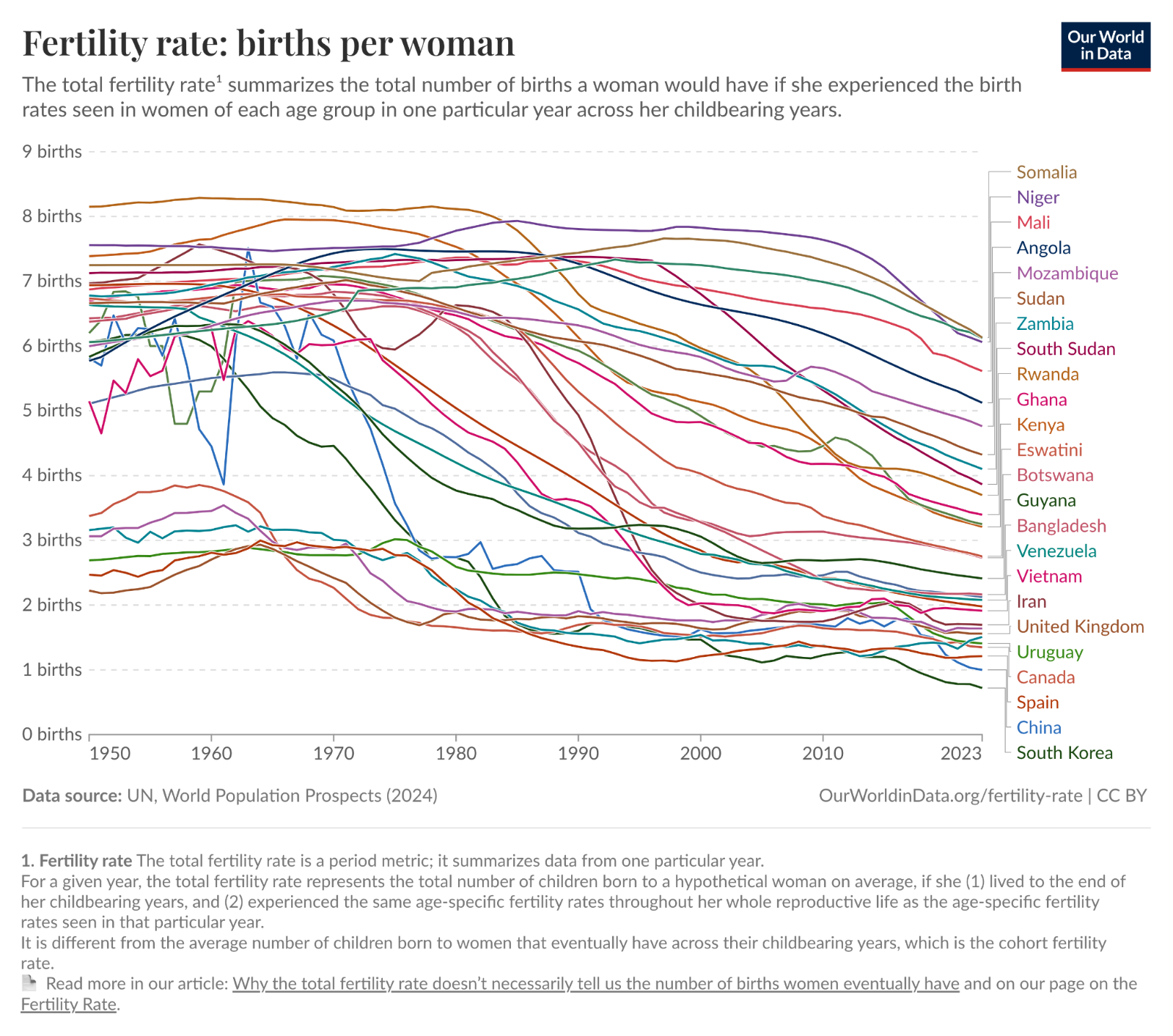
Nobody is sure of exactly why. It must be something universal, that happens everywhere, but at different moments, and it’s not clear what fits the evidence.
My take is quite simple: Humans are pretty rational, we don’t have children like we used to because:
Having children is less useful
Childrearing is still a drag
Life has gotten better
A. Children Are Less Useful
Before, if you didn’t have children to take care of you when you aged, you died faster and poorer. They were your social security, your insurance, and your retirement income.
But as the above sentence highlights, all these roles have been replaced by the state now. Less need for children.
B. Childrearing Is Still Quite Painful
It’s certainly better than it was before: Women and children are much less likely to die in childbirth, there are epidurals, C-sections, universal schooling, etc. But it’s still not great:
Women still have to grow them in their belly and give birth
Parents still don’t sleep for a few months after birth
After that, parents must pay their kids lots of attention in the early years. Breastfeeding and/or preparing bottles, changing diapers, cleaning poop, putting to sleep, dressing, bathing… The moment-to-moment can be quite boring, and even soul-crushing.
Parents must then spend the rest of their lives worrying about their education, their grades, their clothes, their food, the money to finance it all…
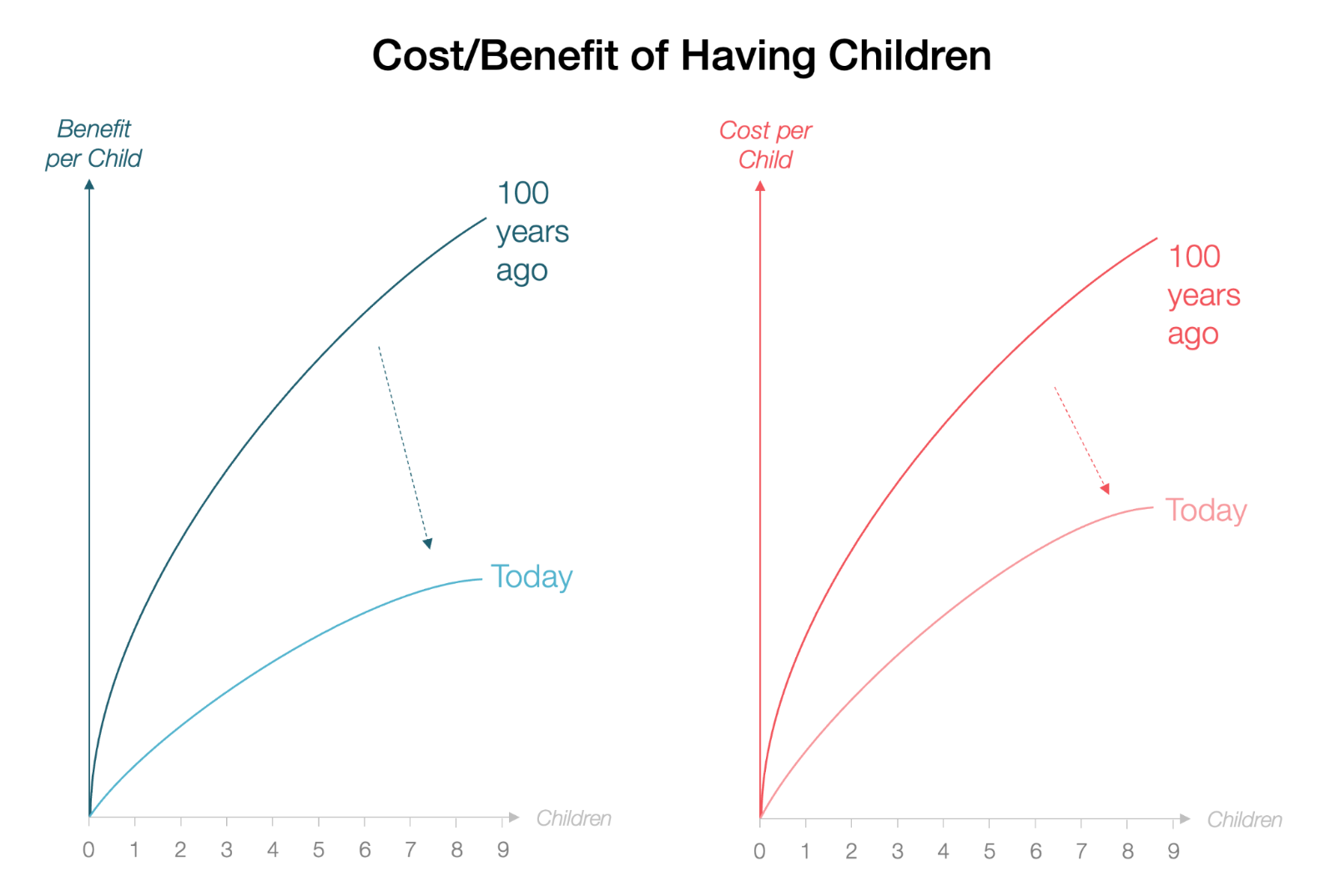
On balance, I think it’s less beneficial to have children now: As hard as it was to have children before, there was little else to do, there was no contraception, and more importantly, if you didn’t have them you’d likely die much younger. When life is at stake, people have ways to make things happen.
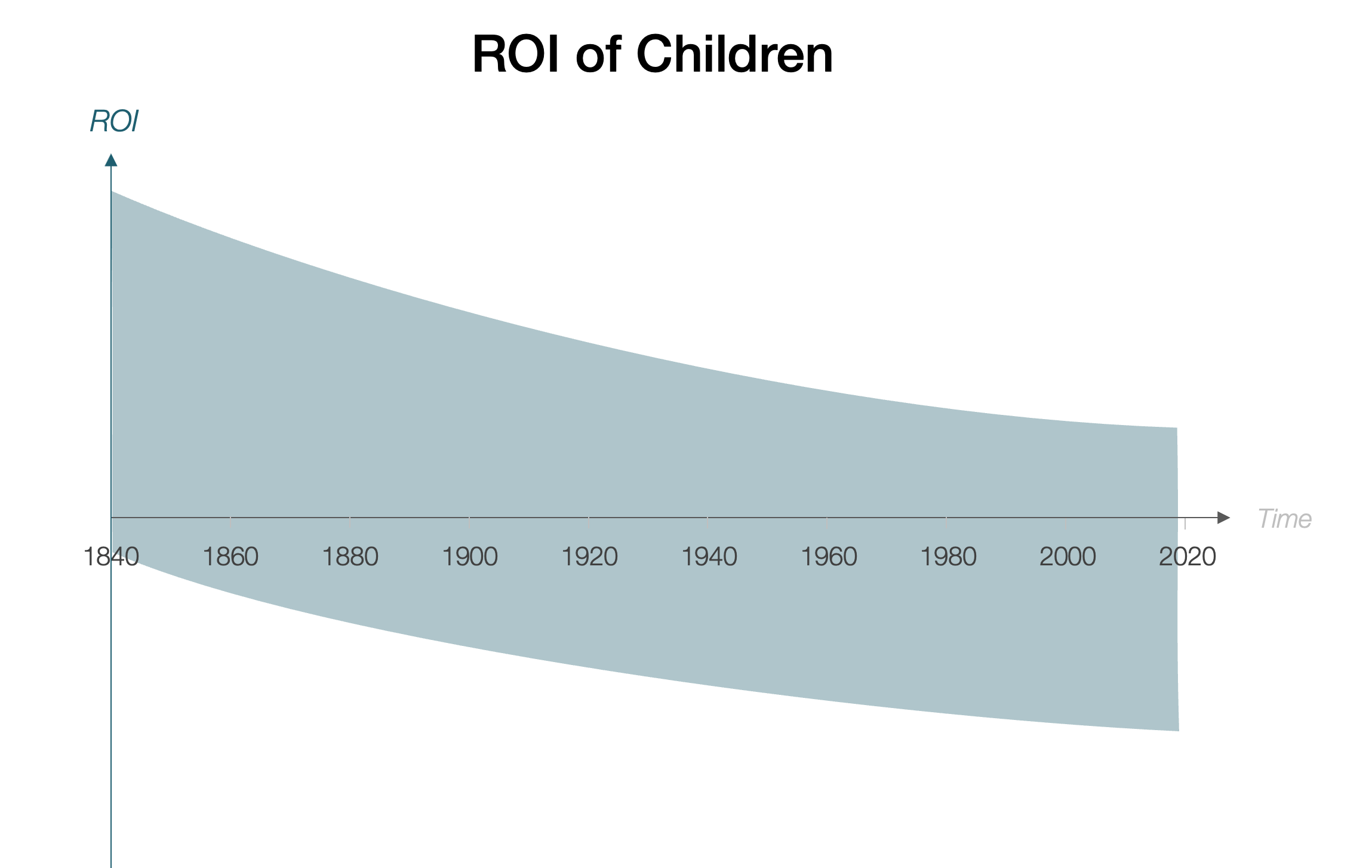
And on top of this, we had the massive increase in the cost of opportunity.
C. Life Has Gotten Better
Life is so much better now: better food, better shelter, more security, more education, more healthcare, more job opportunities, more entertainment, more travel… Life today is awesome compared to yesteryear.
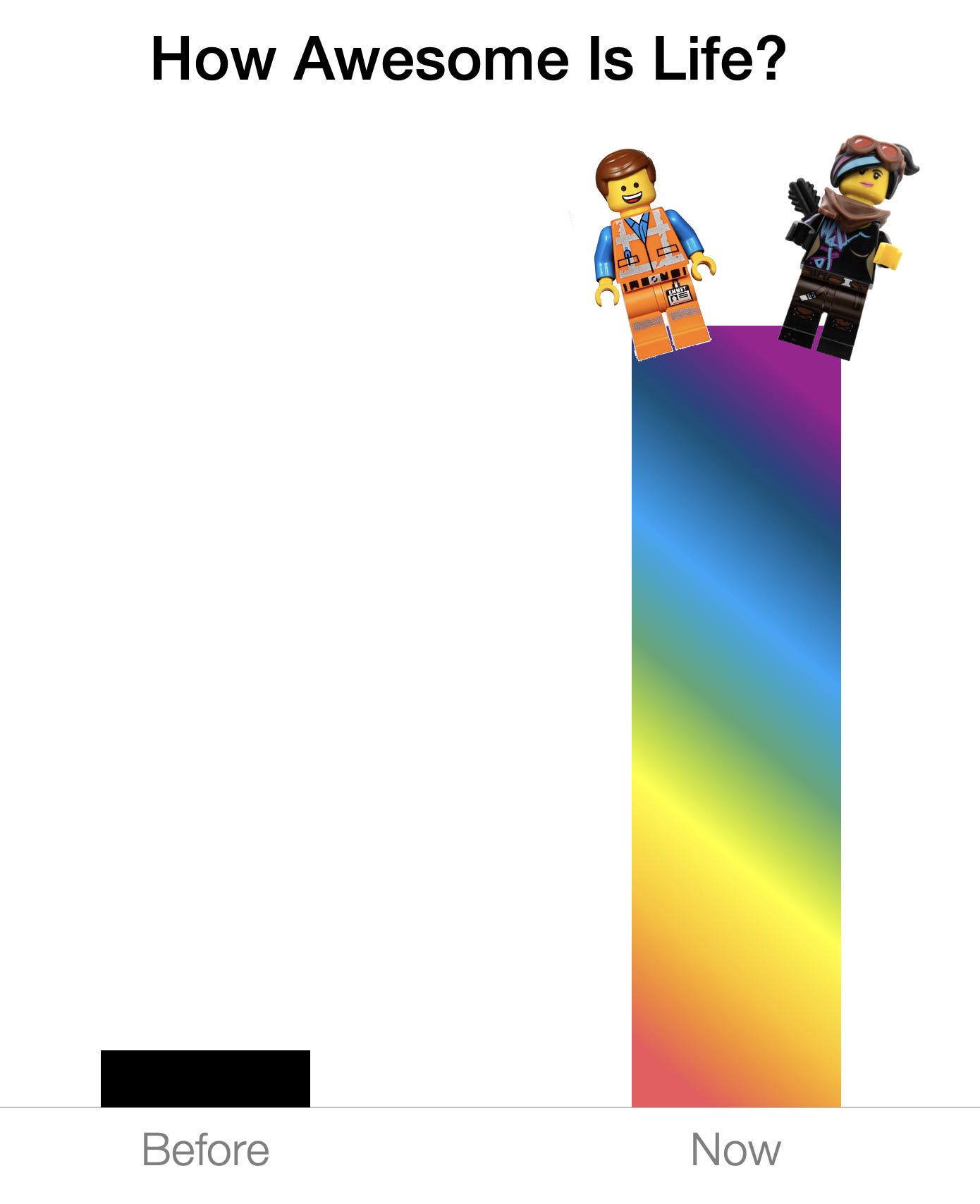
The better life gets (especially for women) and the more alternatives they have, the less they want to have children.
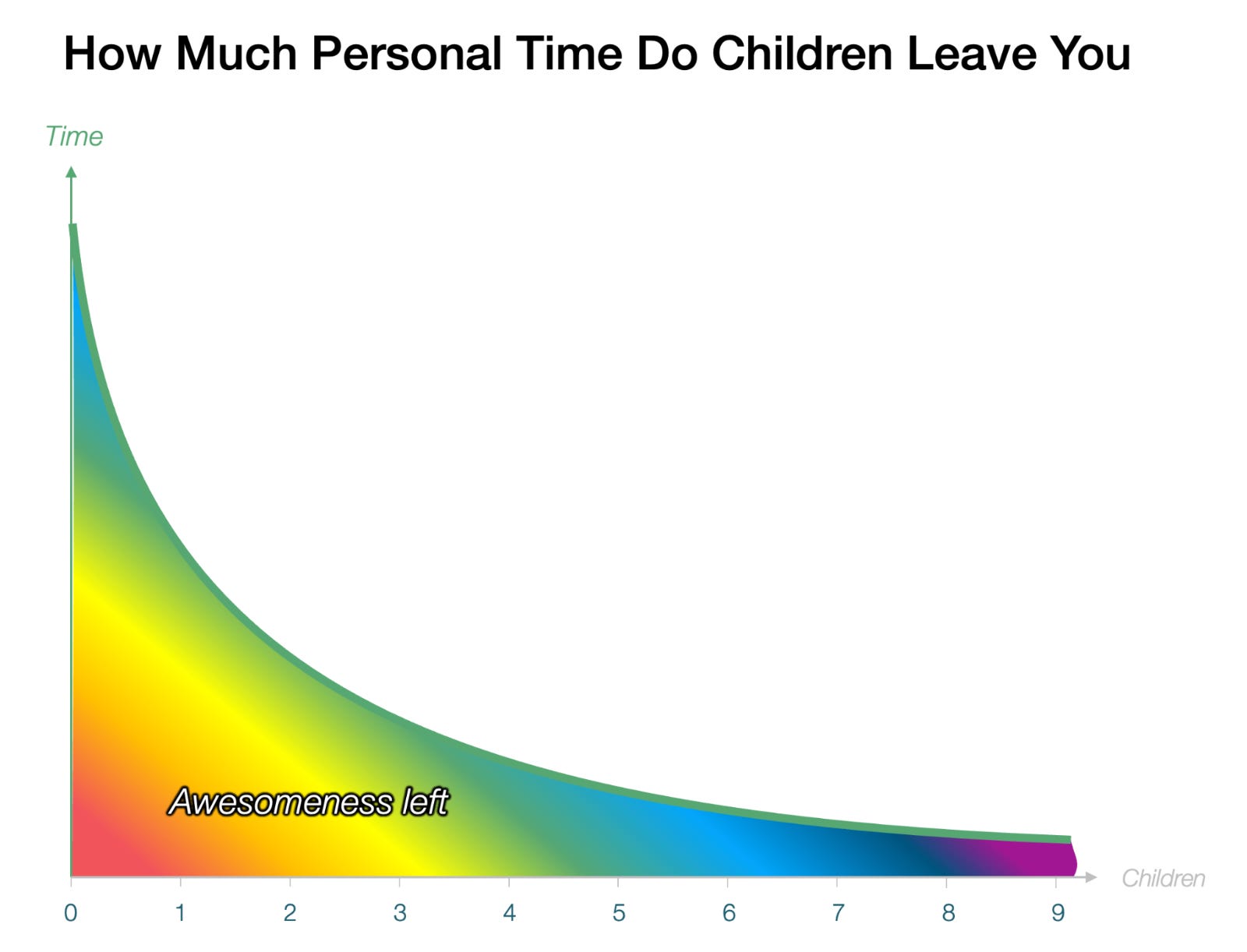
So the cost and benefit of children have gone down, but the cost of opportunity has exploded. That means parents would rather enjoy life, and fertility craters.
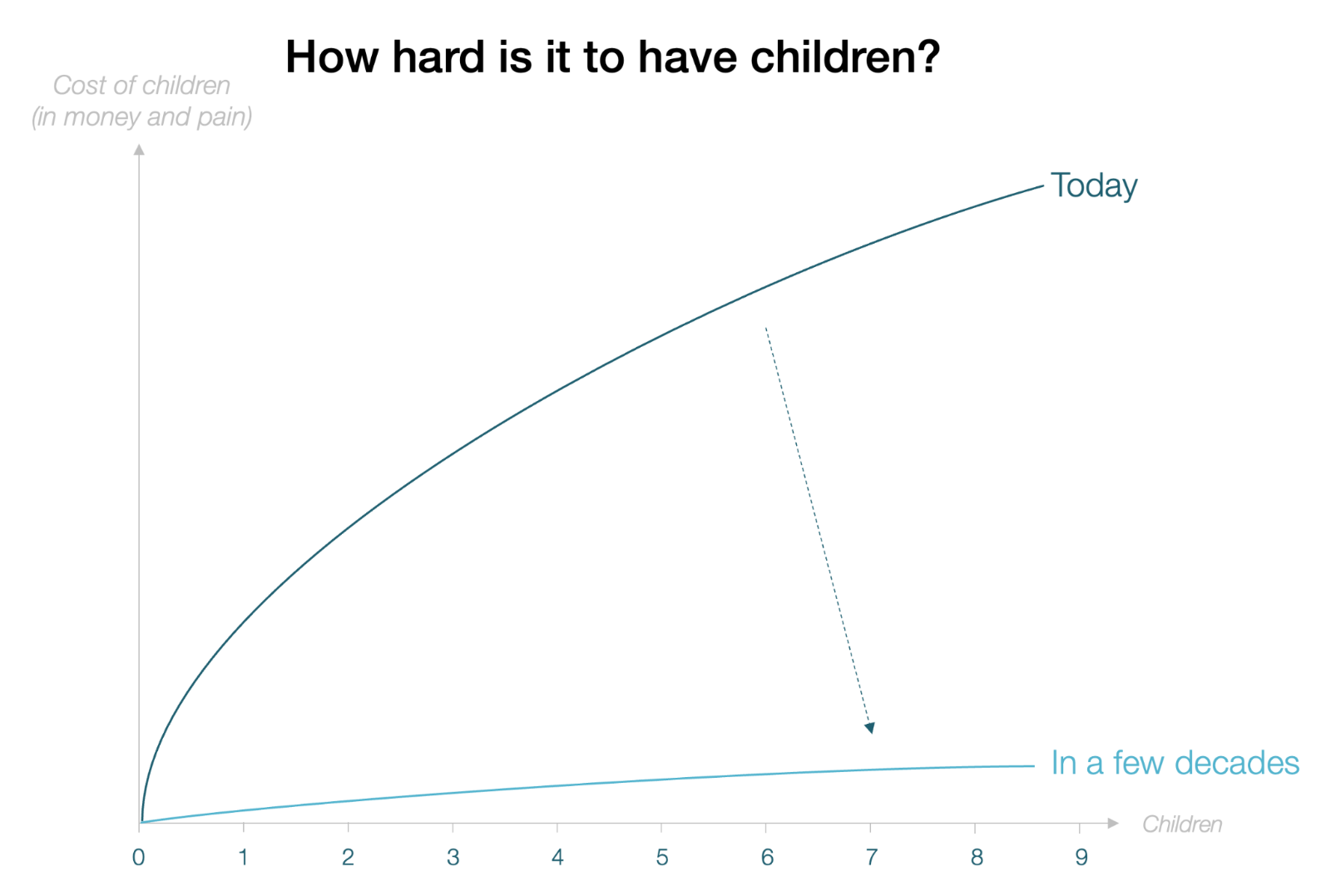
But the high costs of having children are about to crash.
1. Conceiving
Right now, to conceive you need to have sex and be lucky enough to conceive. That’s enjoyable for many, but many people struggle and have to go through in-vitro fertilization. This means several rounds of injecting themselves with hormones for weeks at a time, until the woman undergoes surgery to extract the eggs. Often, that fails too.
When the egg retrieval works, many are of poor quality. Of those with high quality, many will not be fertilized by high-quality sperm, so they won’t be viable anyways. After 3+ rounds of IVF, only ~50% of couples have a successful pregnancy.
When conception works, it frequently comes with problems. 10% to 20% of pregnancies end in miscarriage. 3% of babies are born with birth defects. Of those that don’t, it’s a lottery of whether they are healthy, strong, intelligent, happy…
All of these problems will be resolved.
In-Vitro Gametogenesis will soon allow us to take any cell (eg, from the skin) and convert it into gametes, which we can then pair with high-quality gametes from the other sex to form millions of embryos.
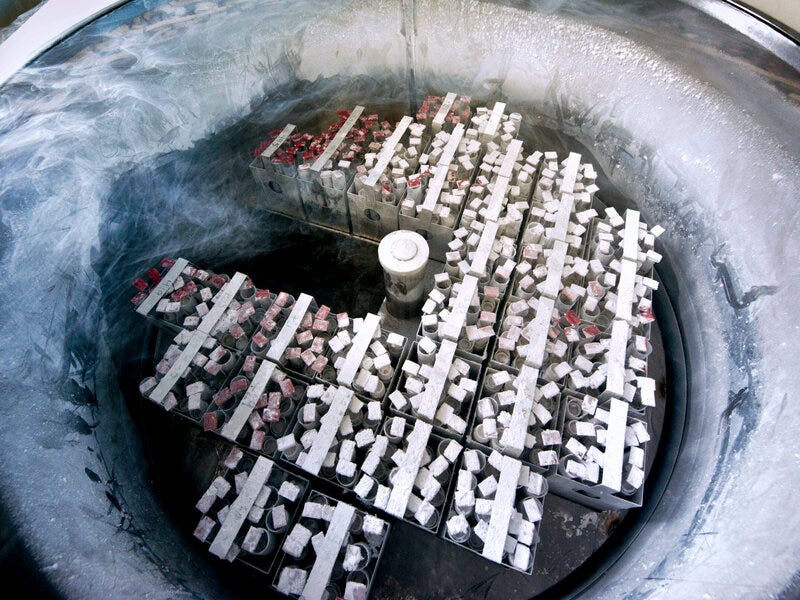
After a few days of development, companies like Herasight will test which ones have the highest genetic quality (many times, quality genetic factors go together), and for the remaining embryos, parents will be able to calculate the tradeoffs: Would I rather 4 more IQ points, or a 70% lower probability of cardiovascular diseases?
Parents will thus be able to generate as many high-quality embryos as they want.1
Another thing that might be compelling about this is that it makes it much easier to be a single parent, as it’s trivial to get, say, skin cells from a consenting person. If a mother (or father) wants to bring up children alone, with friends, or with extended family, they can have children who have different sets of parents.
Eventually, genetic code might be enough to generate embryos, as we might be able to print DNA molecules from one person or another, or parts of the genetic code of several people, specific types of efficient mitochondria, etc. We’ll be able to take the best genetic code for our children, and mix as much of it as we want with those of the parent. Two gays (male or female) will be able to have children with 50% of the DNA of each. We can conceive families made of several parents, each one of which shares a fraction of the child’s DNA. What if ten people got together to have 20 children, each of which had a share of DNA of each adult?
2. Pregnancy and Birth
Today, after day 8 or so, embryos are implanted into a woman’s womb, where they grow until at least week 24 or so—ideally, full term, after which the mother has to give birth.
This is dangerous: For many women, pregnancy is uncomfortable and risky, and it can neutralize them for up to nine months, after which they go through a traumatic event (birth), which can kill them (~0.2% of pregnancies). Those who survive might have vaginal tearing, anal tearing, incontinence, prolapses… Many women then have postnatal depression (“baby blues”).
The reason we must implant into a human uterus is regulatory and scientific. Today, we have the technology to keep growing embryos until Day 13, and we haven’t done more because it’s illegal.2 Foetuses can survive after Week 24 and until Week 40+, so we just need to extend the artificial womb capabilities between Weeks 2 and 24 (the remaining 55% of pregnancy), which requires the ability to grow embryos beyond Day 13.
Scientists have been able to push into both ends of this cycle with mammals: implanting a fetus after the 14 day equivalent for humans and extracting it into an artificial womb before the 24 week equivalent.
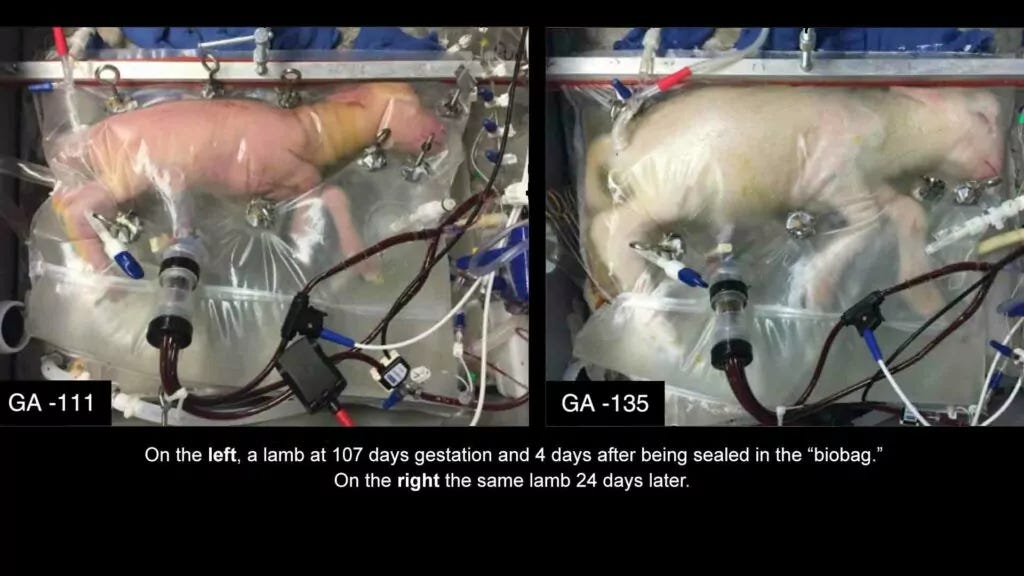
It’s a challenge to create artificial wombs, but it’s not an impossible one. If we try, we’ll be able to do it in the coming decades.
3. Early Childcare
Parenting a young child is brutal. You don’t sleep more than 4 hours straight. The little monster wakes up every couple of hours screaming. You don't know whether he cries because he’s hungry, tired, bored, scared, thirsty, dirty… You do whatever you can to figure it out. If he doesn’t cry, you’re even MORE concerned: Is he dead of SIDS (sudden infant death syndrome)? All this while you still must do the groceries, get the baby’s paperwork done, prep the formula, cook for yourself, wash the clothes, clean the house, buy the gear you’re missing…
Rich families employ humans to do all this, starting with the night nanny that helps them get sleep. But none of this is impossibly mysterious work. It’s pretty straightforward, just tiring. Humanoid robots and AIs will be perfect for it. It looks like we’re going to have them in less than a decade, so starting then, early childcare will be a matter of how many robots you can afford and how efficiently they work. The more robots we buy, the more their cost will drop, and the more we will be able to automate this.
4. Later Childcare
As they grow up, you need to cook for them, buy them clothes, watch out for them, push them to study, clean up their rooms, pack up, get dressed, undressed, brush their teeth, go to bed, take them to school, to their extracurriculars…
Currently, the solutions for childcare are either nannies or school. But they’re both expensive, and neither is perfect.
Humanoid robots will never tire, you will be able to have many, you will be able to combine them with other robots like self-driving cars to take children to school, and all these time-consuming tasks will disappear.
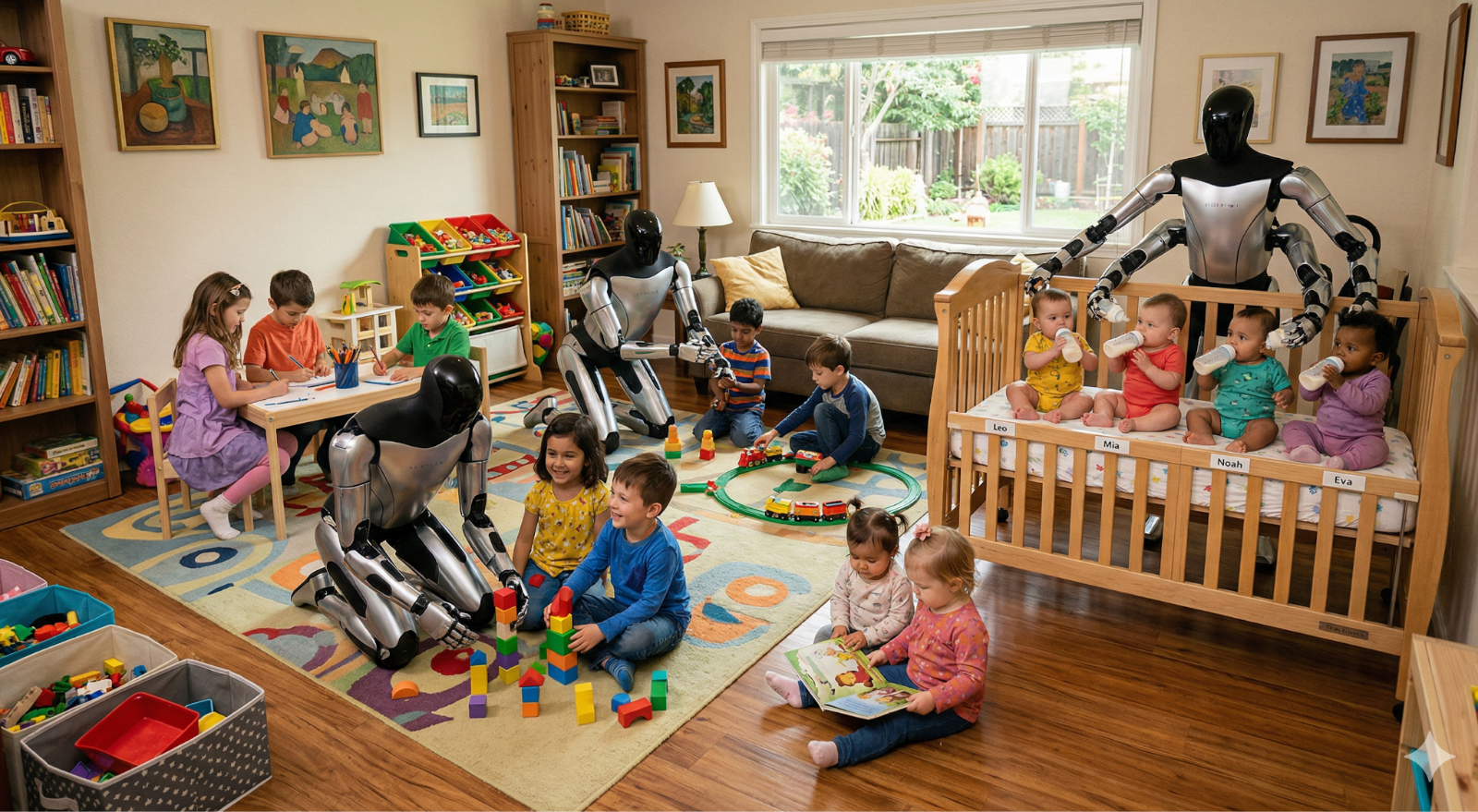
When I first thought about this, I wondered: Is this dystopic? I conclude it’s not. Many families who can afford it have employees who help them with all these chores. As a parent, you’ll be able to decide which ones you want to keep doing and which ones you’d like to outsource to robots. For example, I wouldn’t want to outsource the bedtime routine, but picking up from school, changing clothes, doing the laundry, cooking, serving dinner, cleaning afterwards, and many similar tasks are much better outsourced for me. If I had 10 children instead of 4, I might need a robot to help, but I’d be managing it.
5. Education
Education is the other massive time sink for parents. School is not enough to push people to their maximum potential, which is why parents also get involved. Even a single child might be overwhelming, though, because children learn best with one-on-one tutoring, as we’ll see in a future article. Robots and AI tutors will be able to tutor children much better than parents and teachers, giving parents peace of mind about their children’s education.
6. Family Coordination
Conceiving and coordinating all the activities of a small family is a nightmare, imagine if you have 10 children instead of 2. From my article on this topic:
Do the children have enough food to eat? Does the fridge have the ingredients? Are their vaccines in order? Do they have the flu or something worse? Are their documents in order? Who will they have playdates with? AIs are already becoming personal assistants. It’s trivial to imagine them as family assistants, which will further reduce the cost of having children.
Why Have Kids Then?
If we take out all this work, you might wonder: What’s even the point of having children? If you take out all this work, do you even really want to have these children? Do you care about them?
I actually think these chores are not the main source of happiness and connection with your children. Sure, telling them to clean up again and again contributes a little bit to connection, but also, if you eliminate all these moments, that gives parents much more time to focus on the moments that matter: dinner, reading a bedtime story, holidays, travel, conversations about the world… These are the most pleasurable and fulfilling moments for both children and parents.
Here’s a fact you might have noticed if you’ve had a nanny: Children quickly forget most of them. Even if they spent years with them, they become a distant memory after a few years. They don’t care if they stop seeing them altogether.
Conversely, a child who was abandoned by their mother or father will dwell on it all their lives.
This tells you that chores are not that important, and that the figure of the parent is intrinsically important for the child. And the child is one of the biggest conceivable sources of fulfillment for the parent, so it’s a win-win.
Another important fact: Children appear much needier than they actually are. Humans are evolved to appear super needy to their parents as children, because that way the parents overinvest in them, and they don’t have time for any more children. This was crucial for survival in the past, because fewer children meant more food per child. What this means is it’s OK not to give your children all the attention they demand. They won’t turn bad.
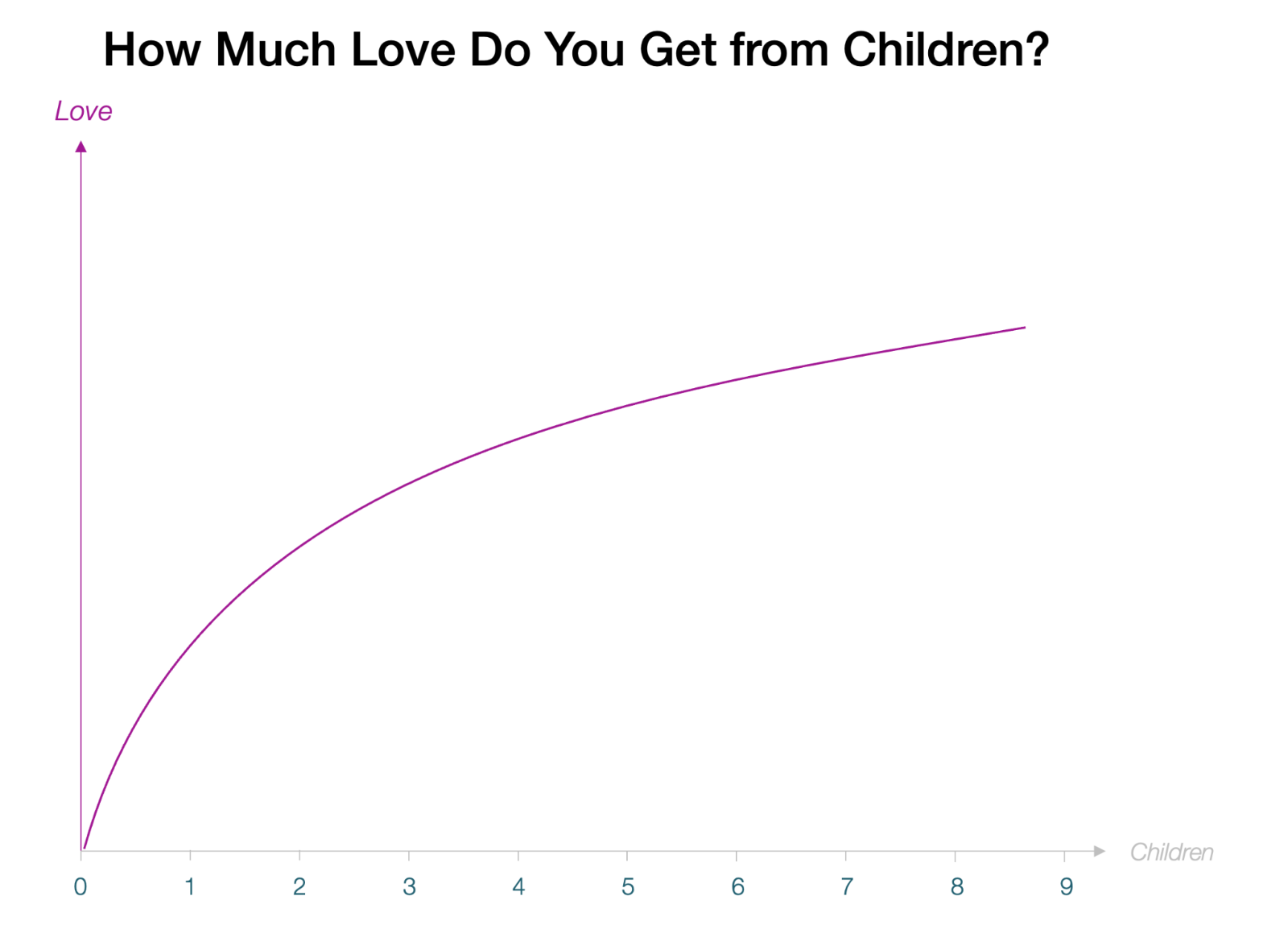
Having more children will dilute a little bit the intensity of the relationship with each, but the additional love more than counterbalances it.
How Many Children Will We Have in the Future Then?
You can see there are actually many variables at play here:
Benefits to having children might go down a very tiny bit because more help at home reduces slightly the attachment to each. Still, the benefits will remain huge because there’s little that’s more fulfilling than the love of a child.
Costs to having children are going to plummet at each stage though, from conception to education. This means the ROI of having children will go through the roof.
Most notably, this will free so much time for parents that they won’t have to choose between children and enjoying life.
In some ways, this will simply bring to the masses the fertility that only rich people can comfortably afford.

So how many children will we have? It depends.
Some people will still think the hassle of children won’t be worth it, either because they don’t value children, because they don’t want to do it alone and can’t find a partner, or any other reason.
Many people who love children now, but can’t commit to parenthood because of the toll on their health and quality of life, will be able to have (many?) more than none.
At the extreme, some people who truly love children and want to have as many as they can will now be unbridled. Families of 10, 20, 50, 100 children might become possible.
The distribution of children per woman might look like this:
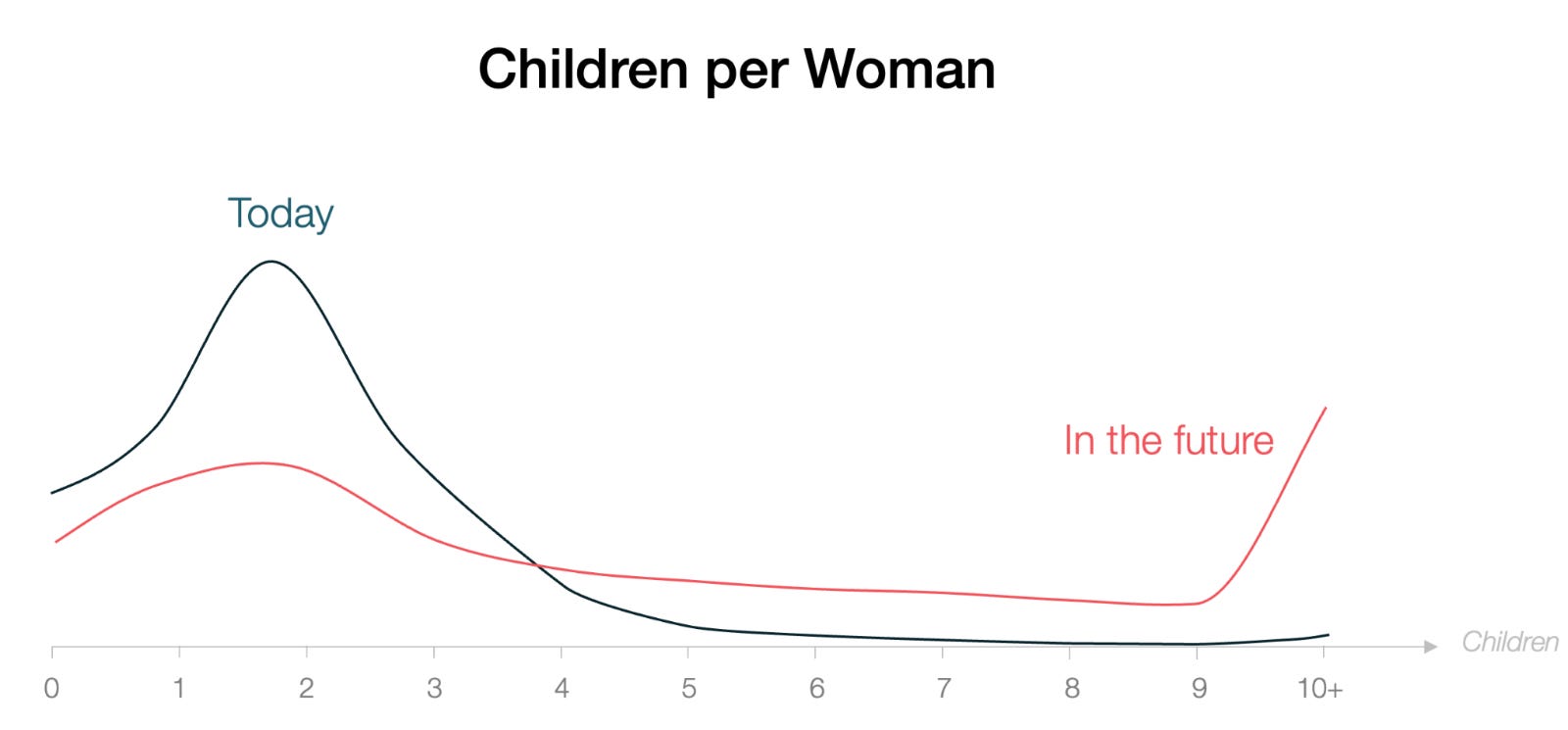
Some people might still decide to have no children because they simply don’t want to.
But many of those who remain childless today might decide to have children: With a much lower cost of parenthood, they might jump in even if they’re not partnered, or just to try.
Families with one or two children today because it’s so much work might decide to have one or two more.
Families who have three or more children today really do love children, and have fewer than they wish they had. They might go for four, five, six, seven…
The type of family who is already having eight or ten children will be completely unbridled.
This last group is interesting, because what stopped many of these families from having more children before was probably the cost: on the mother’s body, the parents’ attention, or simply the economics of paying for school, clothes, food, and shelter.
But as we said, most of these constraints will be released in the future.
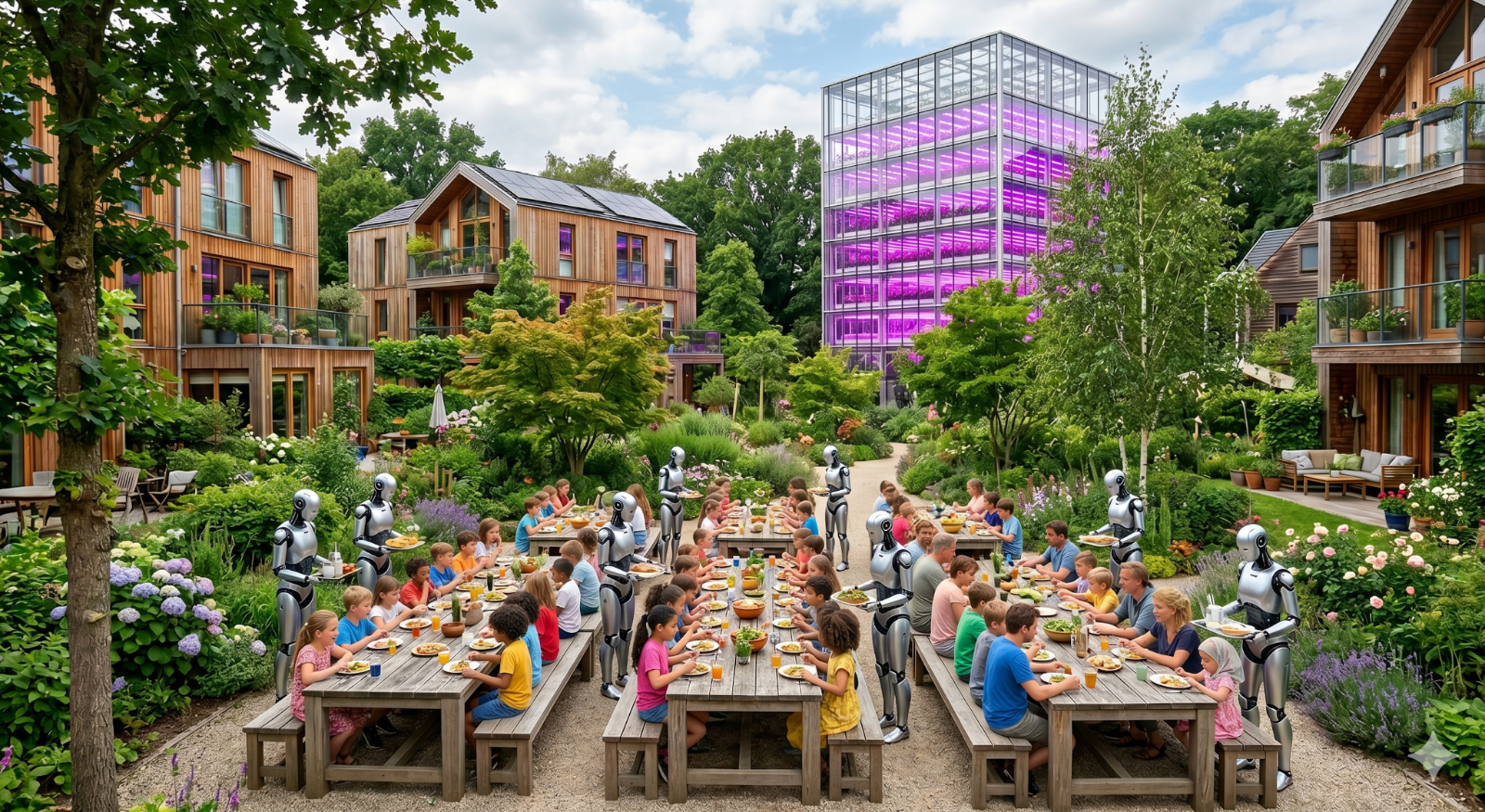
School will become near-free AI school. Childcare will be done by robots. Clothes are already quite cheap, and will be cheaper. Children of the same approximate ages can share them. Food costs will shrink in the coming decades, as we’ll have energy and robotic abundance, which will allow for vertical farms to produce lots of good, cheap food.3
So what will become the new constraint to having children? The one thing we’re not going to be making more of is land. A family with 100 children doesn’t need a home with 100 rooms though, children could share rooms four at a time, or there can be dormitories. But they still need physical space. Today, we think in terms of housing in cities, where it’s expensive because:
The land is in high demand
Construction costs are high due to high regulatory requirements
But a family with 100 children would probably prefer living in a rural area, or with similar families, so real estate will be cheaper than we assume today.

The other thing we’re not making more of is attention. So maybe the new limiting factor won’t be economic, but how many children we just want to have and create a connection with. Most people might stop at 2-10 children for that reason, but I’m sure some families will love having many more. As an interesting real-world proxy, it’s interesting to know that a Russian woman had 69 children. My thesis here is that we’re anchored on what was possible until now, so families of more than 10 children sound like an aberration to us. But the Dunbar number (a cognitive limit to the number of people with whom one can maintain stable social relationships) gives us a good sense of the actual limit of a community. I bet there will be families with 150 children.
If the points above are true, it would only take very few couples having a lot of children for the fertility crisis to completely evaporate, and in fact become a radical fertility boom.
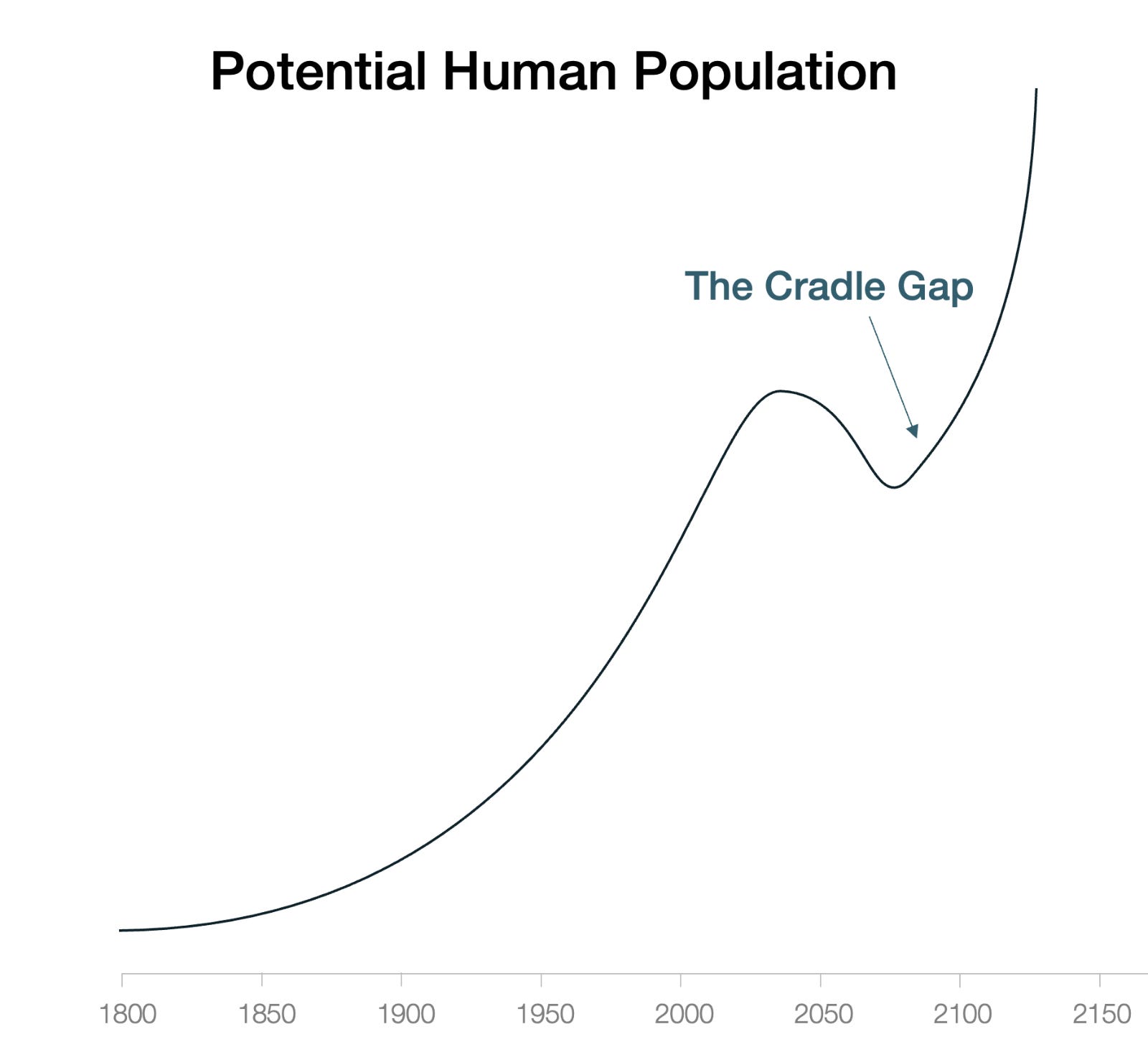
What are the consequences of this?
I am skeptical of the fertility collapse narrative. It will take decades for it to really hit, and lots of things can happen in decades.
People who mourn never having children will practically disappear. This is dear to my heart, as having children is one of the most fulfilling things people can experience.4
Families with many more children than today might become more common in the future.
Families with dozens and dozens of children, practically unheard of today, will become something we hear about, and get to experience first hand.
Families with 100+ children will exist.
If it’s true, real estate might suffer a lull in the coming decades as fertility decline continues, but afterwards it might go stratospheric.
If that’s the case, urbanism will have to change. We’ll need more cities with taller buildings.
This is another reason to colonize Mars and build space habitats.
We might be able to select human embryos / engineer them to make life on Mars more feasible. For example, bodies that can withstand a lower gravity, a few more unprotected solar rays, or an ultracold environment.
If you really care about the fertility collapse, go work in one of the industries I’m mentioning above.
If you’re a politician, or work in media, work to release the limits on research in artificial wombs and blastocyte development.
All of this assumes AI won’t change fertility dramatically.
Yes, Sheila, from the beginning of the article, is possible. She might become one of many women—or men—who simply go along with their lives in a new type of happy family.
And in case this makes you uncomfortable, just know that at that point the cells are undifferentiated, meaning they’re just a handful of identical cells, not very different from the original skin cells that might have been extracted for the process.
The two main costs of vertical farms are labor and energy. If you shrink these, they will have a tremendous advantage over traditional farms, as vertical farms waste much less fertilizer, water, and use less land.
If you don’t want to have children, good for you! But if you do, what a horrible thing to not be able to have them.
Thomas, I normally buy into most of your ideas, even if they feel hard to imagine or unconventional, but this one definitely feels dystopian to me.
My biggest pushback (said as a father of 3) is the Myth of Quality Time. You mentioned that things like school pickup or doing chores or rocking the baby to sleep are things we could give up to robots, but we can keep dinner time and vacations, etc. Many of the most profound moments for me as a father, and developmentally important moments for my children, happened during these "boring, everyday" situations. Driving the kids home from school lets you really understand the mood of your children that day -- what was exciting for them, what made them feel sad, etc. Outsourcing those moments as "inefficiencies" seems to really miss the important moments of human connection.
I shiver at this idea of a future as someone who is now spending years processing childhood trauma from neglect. My childhood looked normal and adequate from the outside: fed, clothed, sent to school, had my own room, lived with both parents, they paid for things like hobbies & after-school activities, etc.
Except they hardly interacted with me, including rarely co-regulating, and never really got to know me. If robots had been an option, my parents would’ve chosen that too, and I’d likely be even worse off. Human nervous systems need to co-regulate with other human nervous systems to learn how to self-regulate. Without learning self-regulation, the human doesn’t immediately die, but goes on to live under stressful, dysregulated conditions— with no understanding of what’s wrong or why things are hard (because neglect is an absence; you can’t point at it the way you can point at explicit abuse).
Parentified children raising each other is already documented as not being good for their development. Adding robots to the mix wouldn’t solve this and could make it worse.
I would prefer for future tech to boost parent-child time/connection, not replace it. If it’s possible to have more than 4 or 5 kids and spend adequate quality time with all of them, I’m unaware of it. In a world where you don’t need child labor on your farm and there isn’t a high chance of childhood mortality, why would anyone have more children than they can adequately parent?
Anyway. I still enjoyed this article, as it got my mind a-crankin’. I just happen to disagree / to hold a very different hope for the future of fertility.