

Last week's premium article: What’s the Value of a Life?
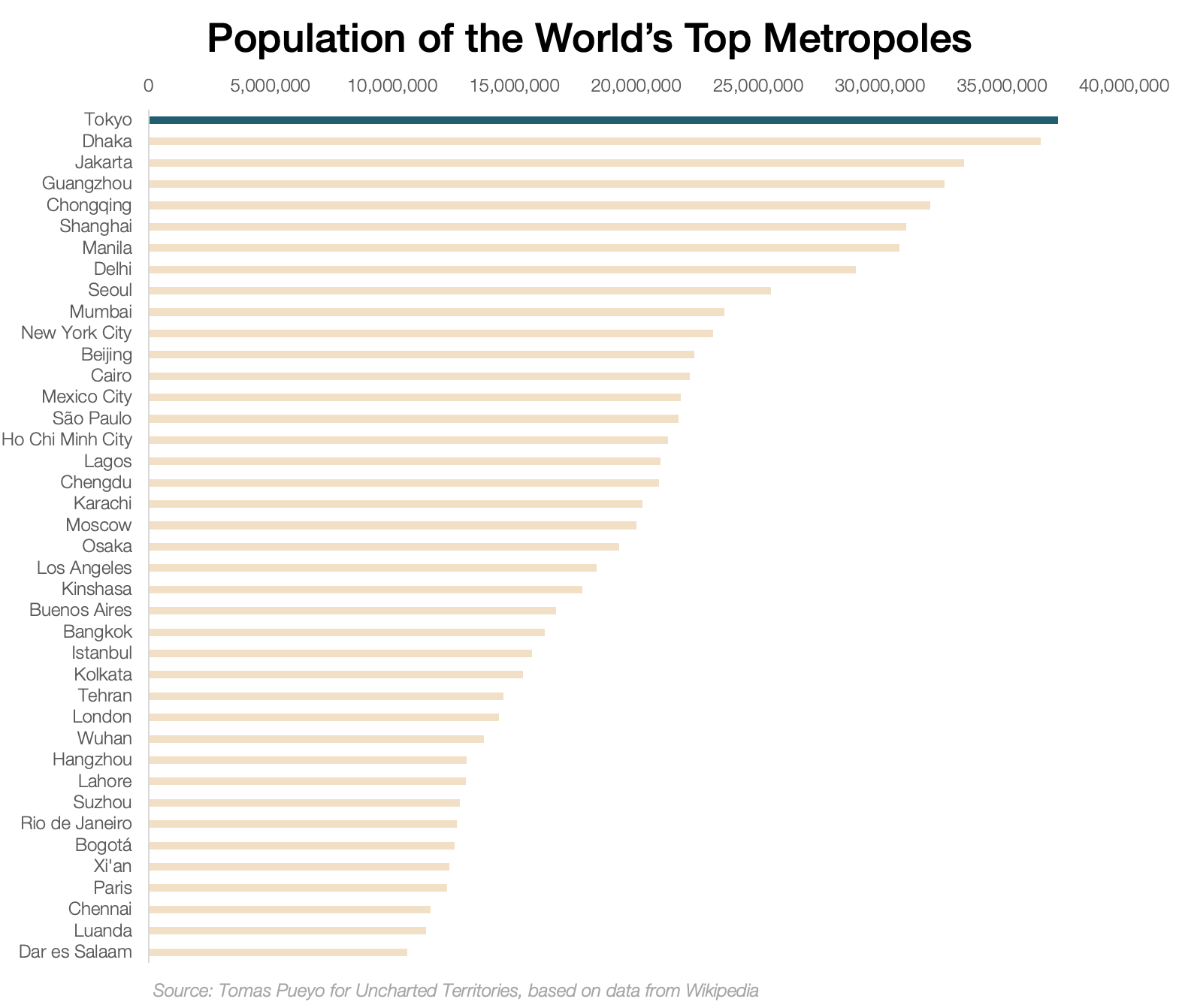
With 37M people, Tokyo is the most populated city on Earth.
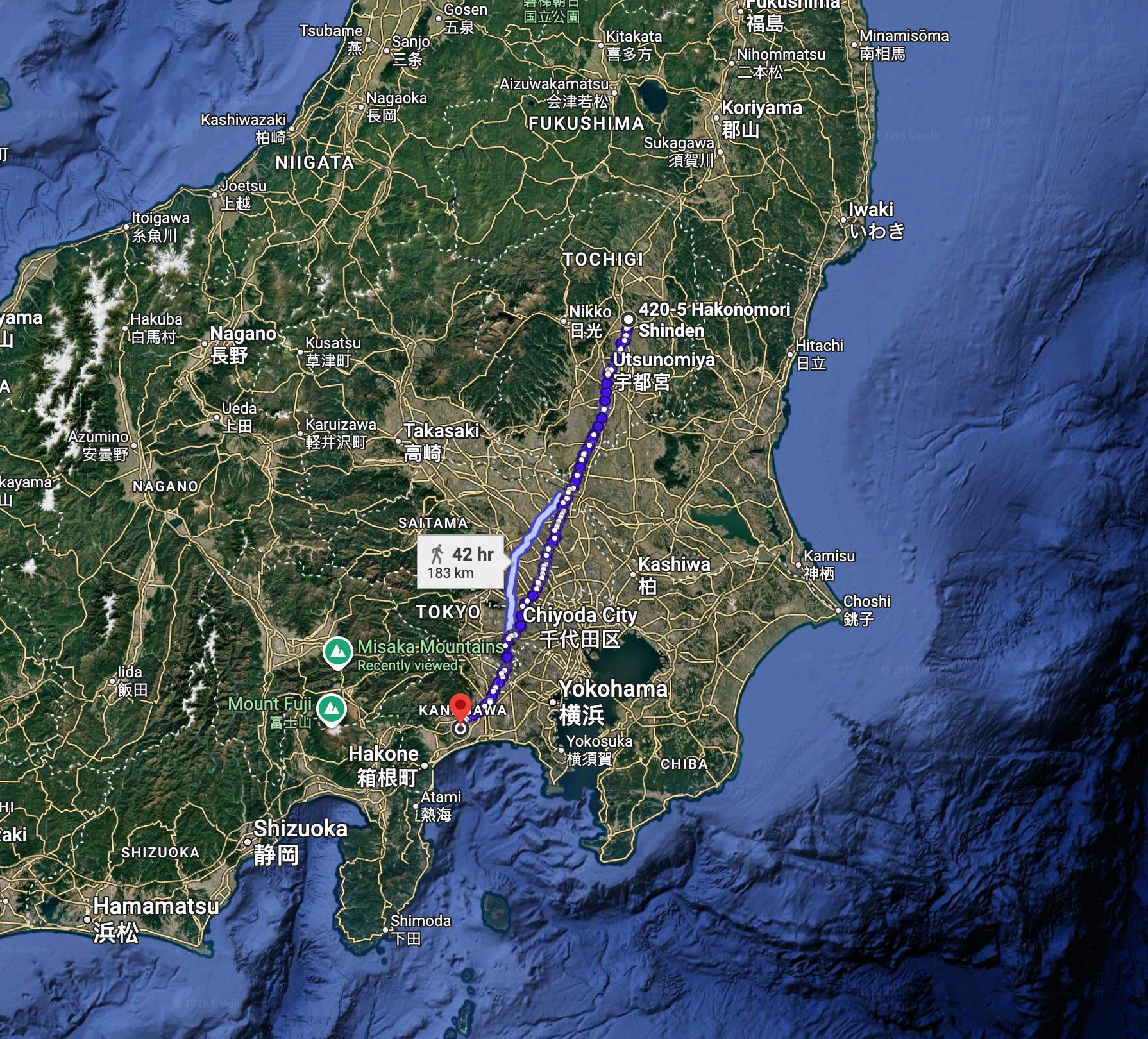
It would take you about five days to walk from one side to the other.
Since it’s so big, more than half of those nearly 40M people take the subway every day, which is why Tokyo’s railway network is the biggest and busiest in the world.1 Shinjuku is the busiest railway station in the world (nearly 4M people daily at its peak). Shibuya is the busiest pedestrian crossing (~100k people per hour during rush hour). Tokyo built a gigantic underground river to protect the city from flooding, sometimes referred to as the world’s largest drain. It has the most Michelin-starred restaurants, the largest wholesale fish market, one of the world’s busiest airports…
Why here though?
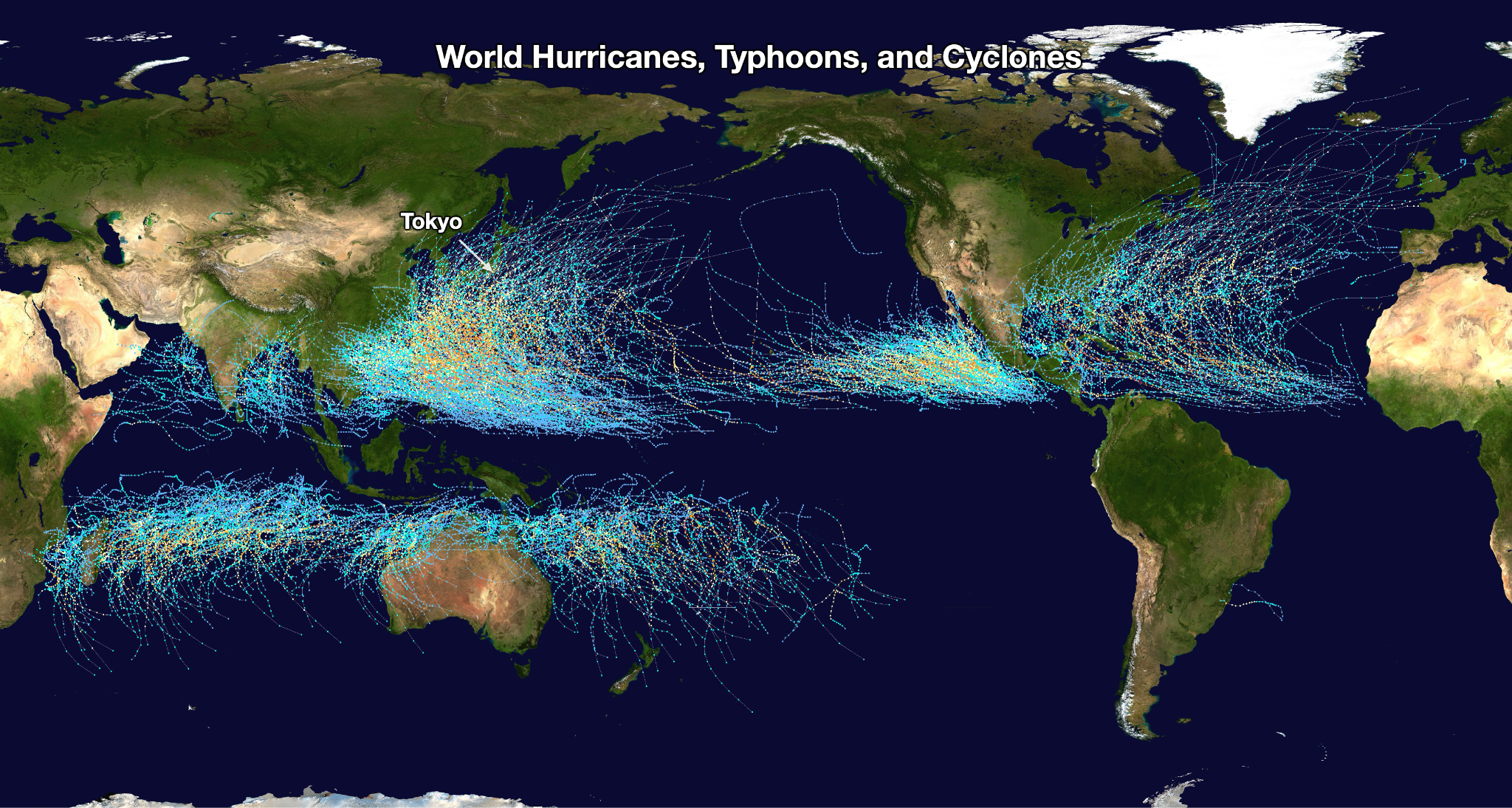
Isn’t there a better place?
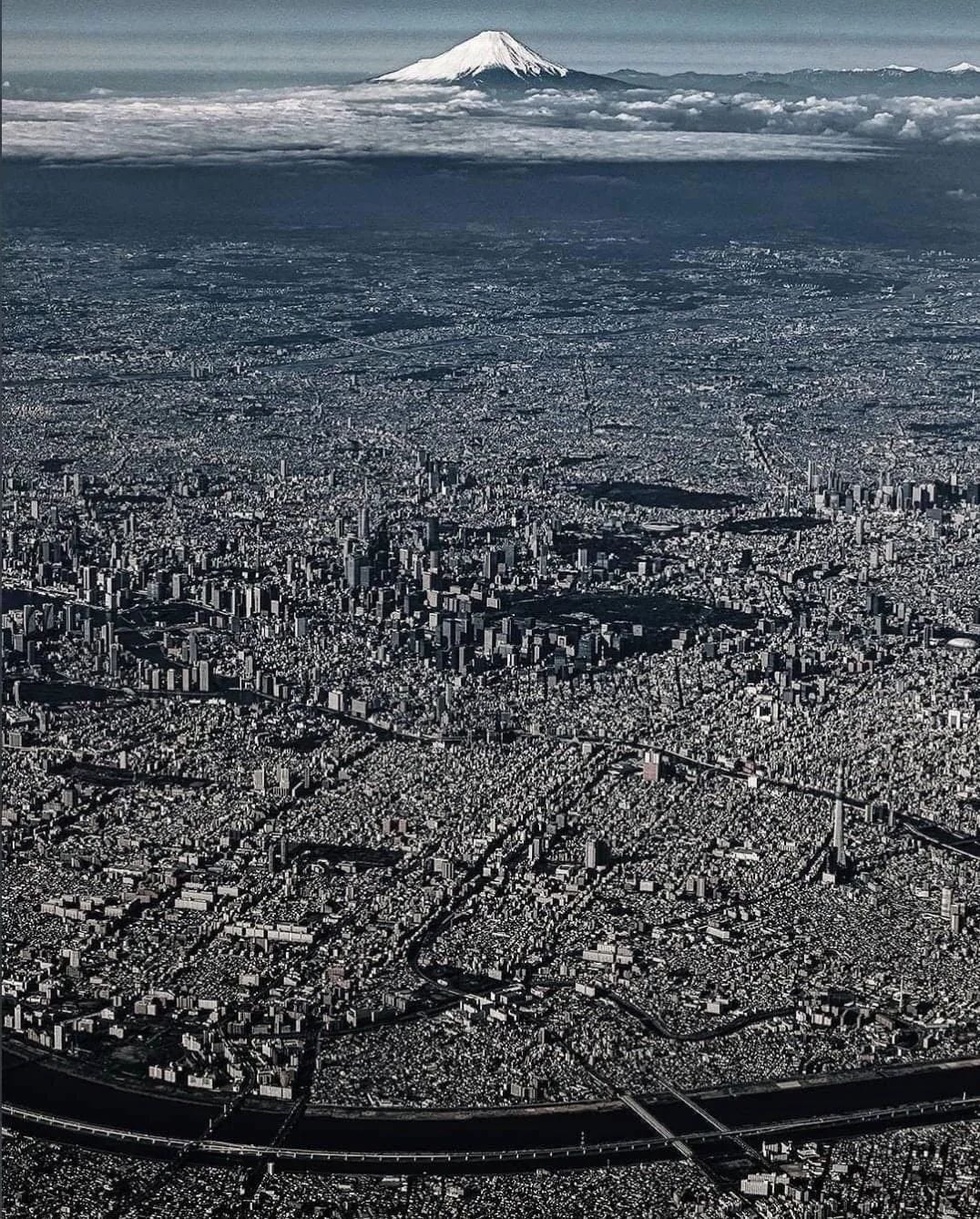
Why did you pick the “big volcano place” for your capital, Japan?
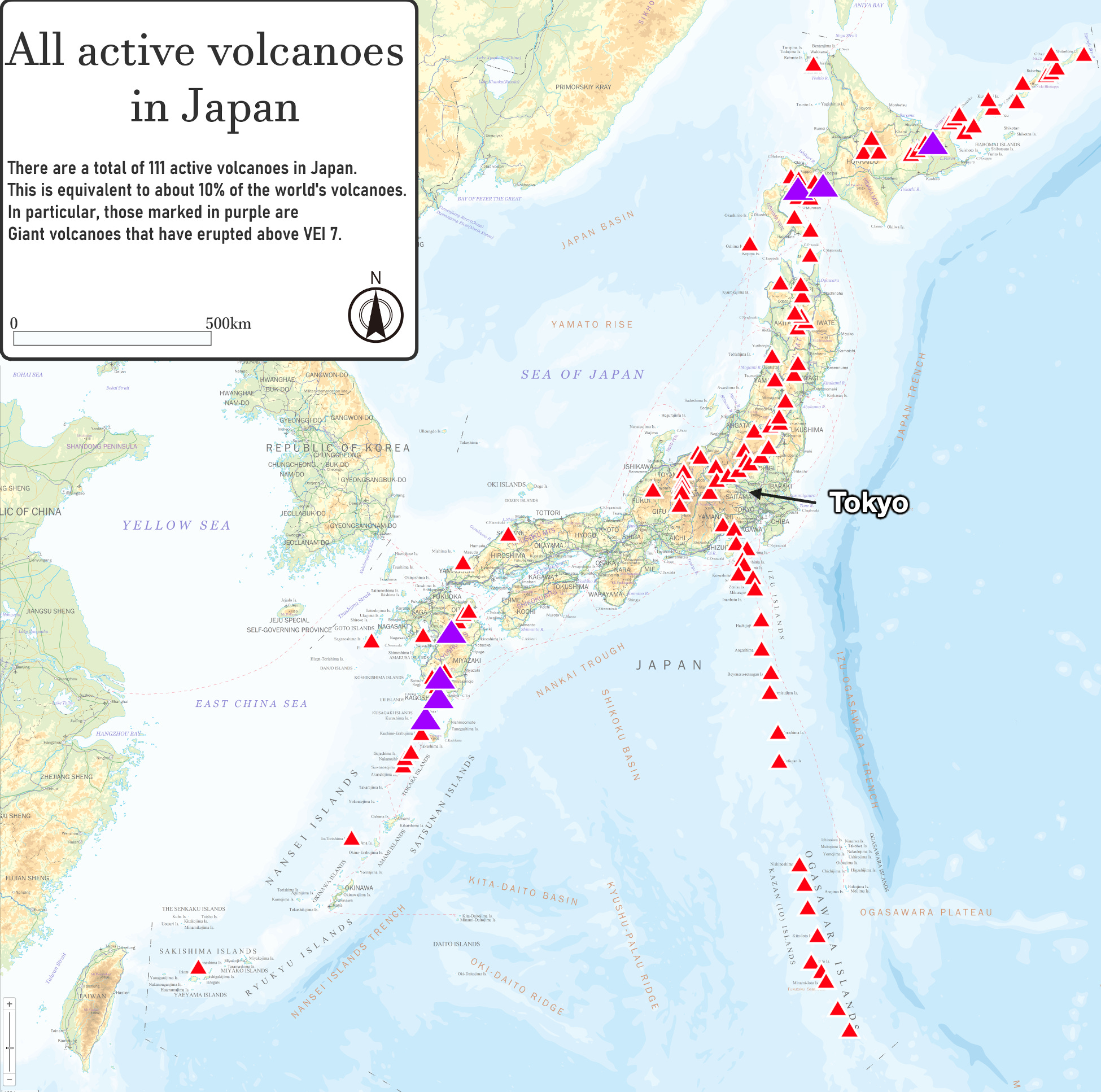
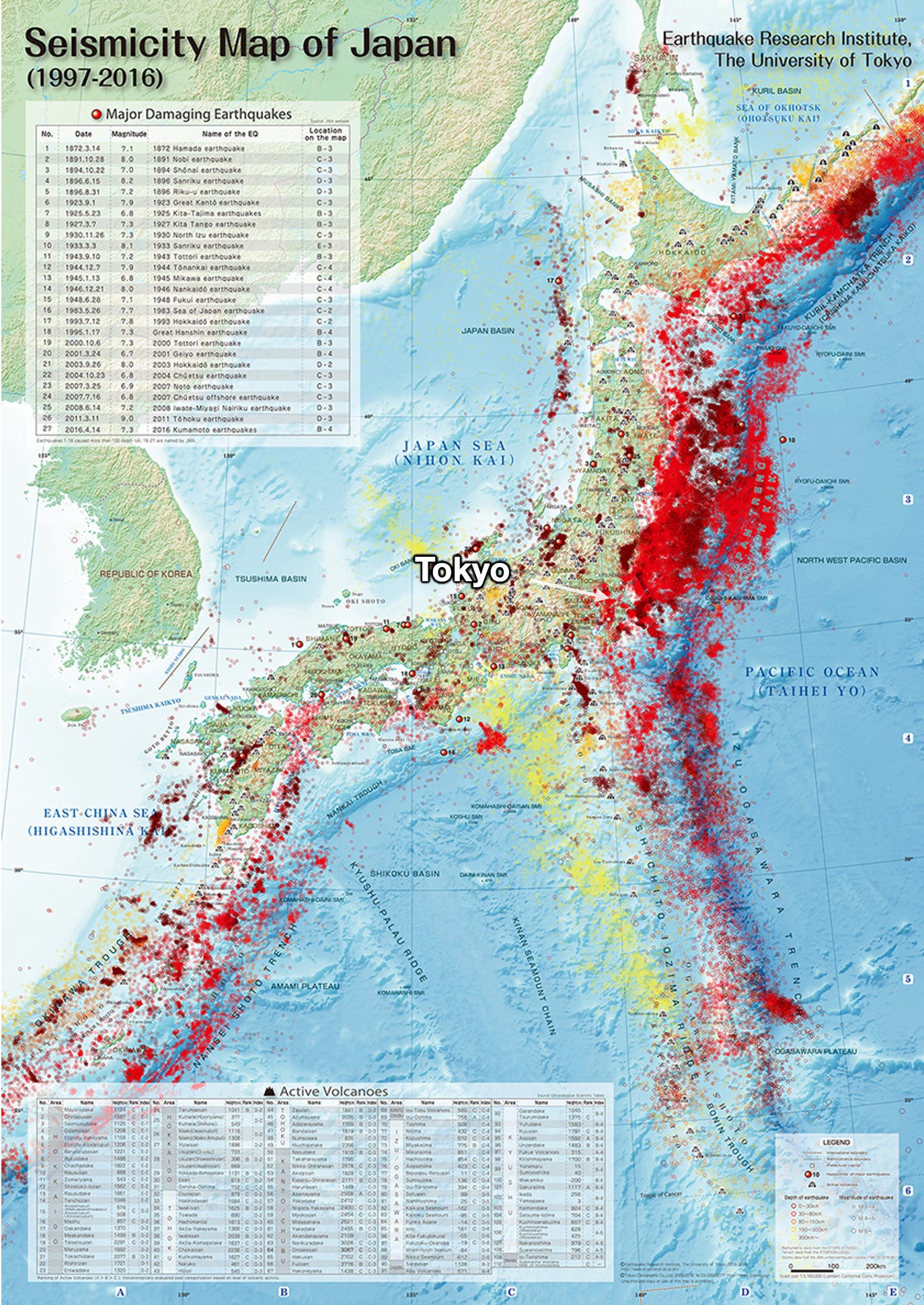
Why is it also the capital of earthquakeland? Couldn’t you find a better place, seriously?
To add to the conundrum, Tokyo contains 30% of Japan’s population, yet it has been the capital of Japan for less than 200 years, and had just ~60k people around 1600! Yet by 1700, it might already have been the biggest city in the world!
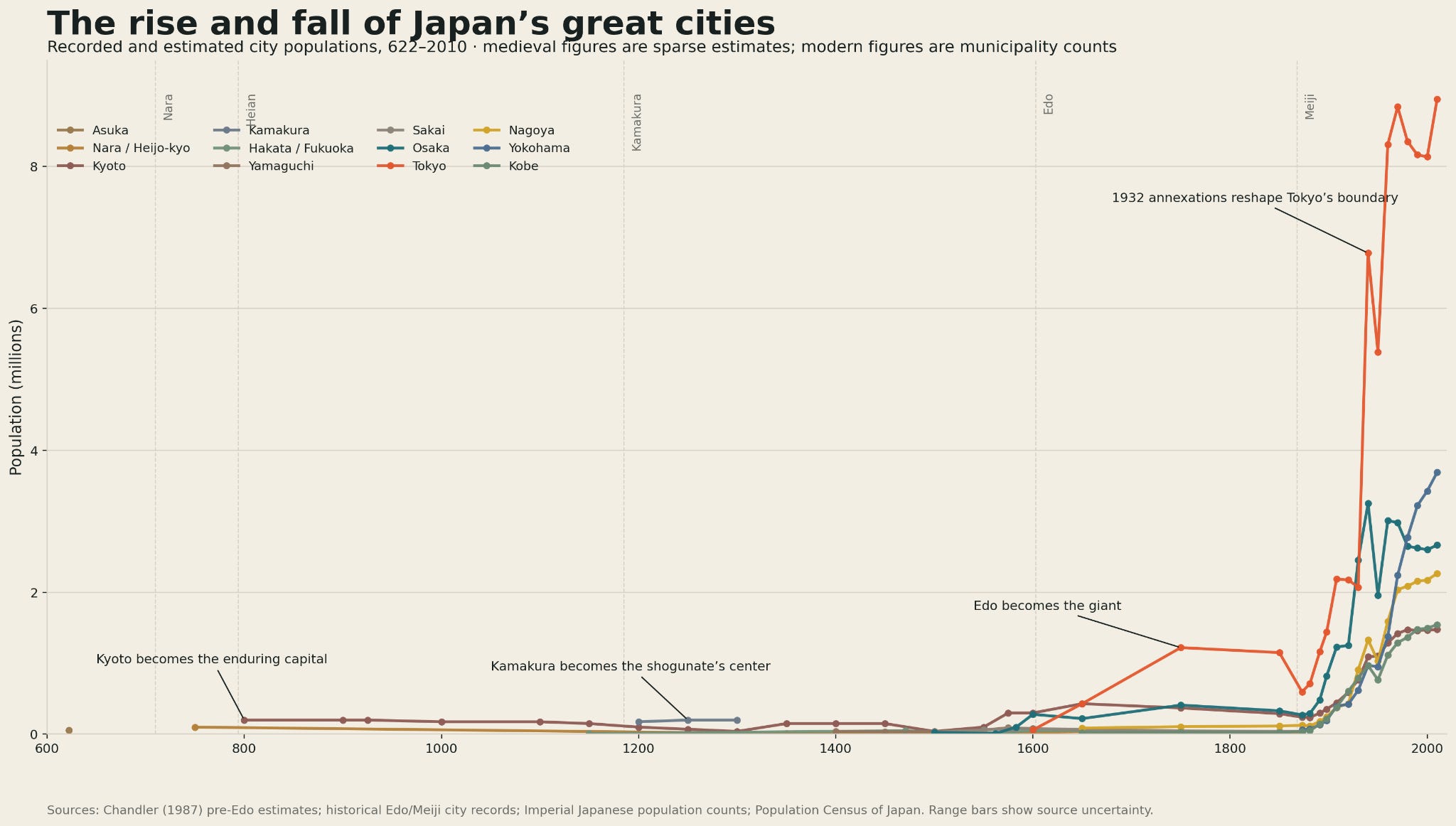
So how come the biggest city in the world has been the capital for less than 200 years, and is situated in volcano, earthquake, tsunami, typhoon land?
It is not a coincidence! It’s there because of these things!
Japan Is Dense
Tokyo is populated because it’s in Japan, and Japan is very populated, as I explained in the previous article:
Japan’s staple is rice, which has a unique feature: It produces a lot of calories per km2. It can feed a lot of people.
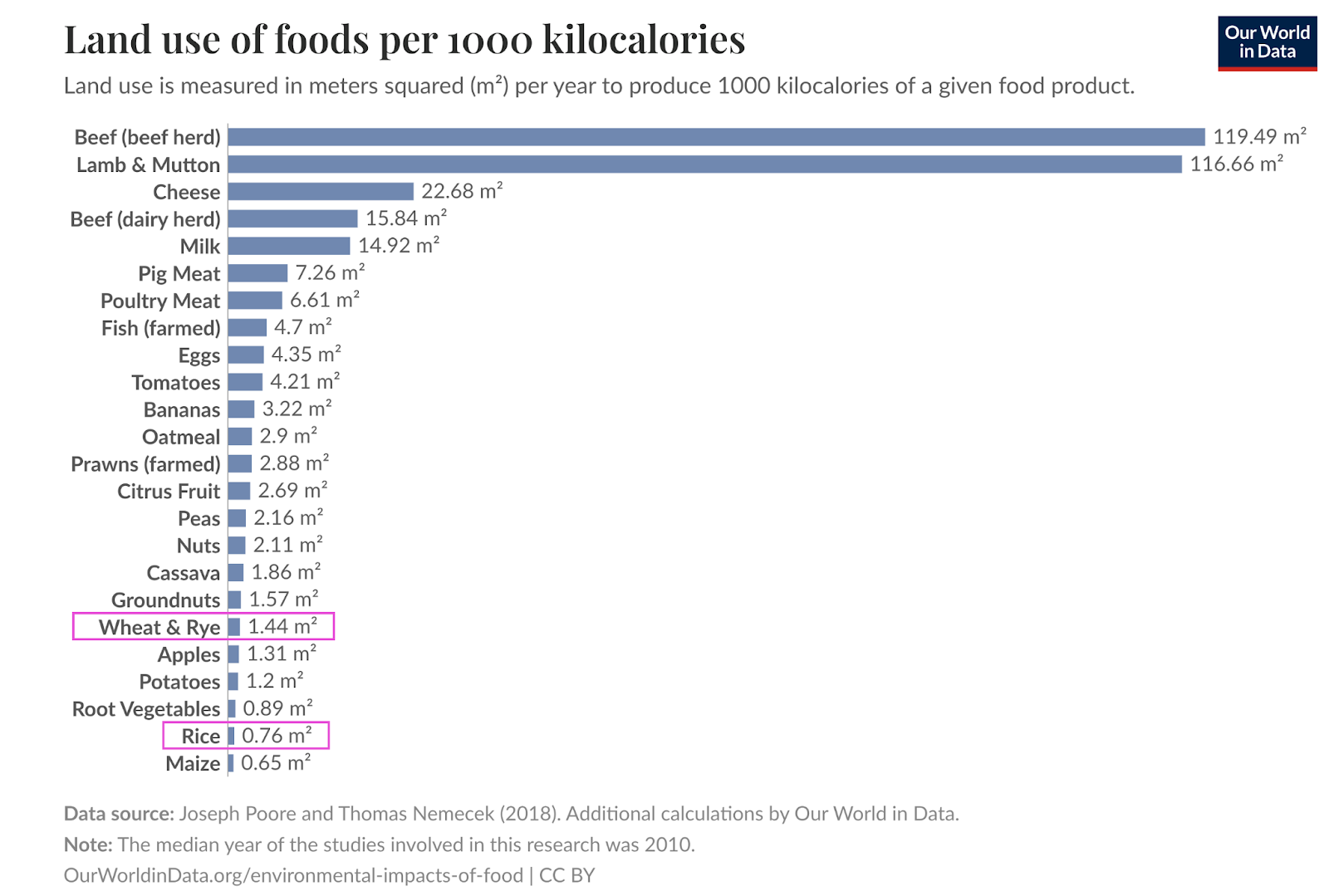
The south of Japan has a climate that allows for double cropping—one summer harvest of rice, one spring harvest of wheat or barley. So the population density is very high in the south.
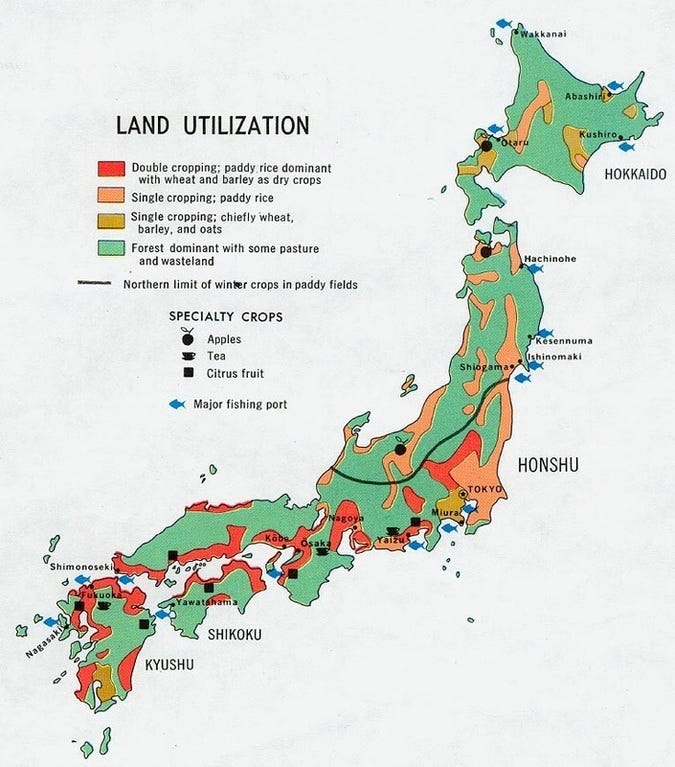
Japan could supplement its diet with plenty of fish thanks to hot and cold currents meeting at the northeast coast of the main island, Honshu, producing a lot of seafood.
It was isolated enough that it didn’t have to fight constant wars, and it didn’t suffer wave after wave of infectious diseases.
It was small enough that most of its populated areas could be unified, reducing civil wars and the deaths associated with them.
The ashes from volcanic activity might have improved the fertility of the land.
The constant rain on mountains meant lots of sediments flowing to the plains, which fertilized them.
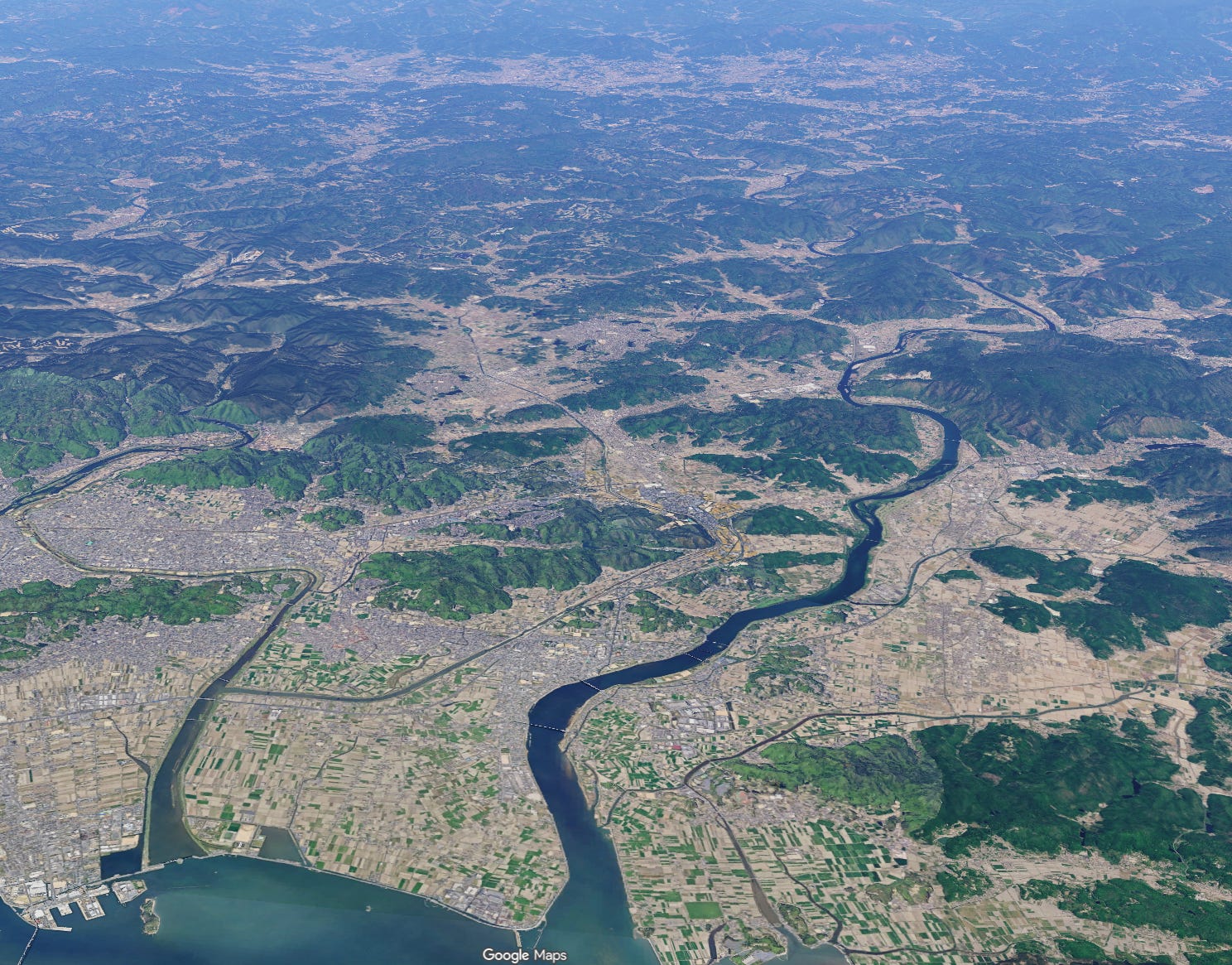
This is why every inch of Japan’s valleys is packed with people—especially in the south:
Tokyo’s Density
So the question becomes: Why is Tokyo the biggest of the Japanese cities?
The total population of a city depends on how much land it occupies, and how much population density there is in that land (people per km2 x number of km2). Surprisingly, Tokyo’s population density is similar to those of Nagoya or Osaka! Since Tokyo contains ~30% of the country’s population, it implies it’s just 2.5x more dense than the average Japanese plain—which makes sense since it’s the capital. Sure, Tokyo’s central neighborhoods are denser, but some Osaka neighborhoods are in the same order of magnitude.
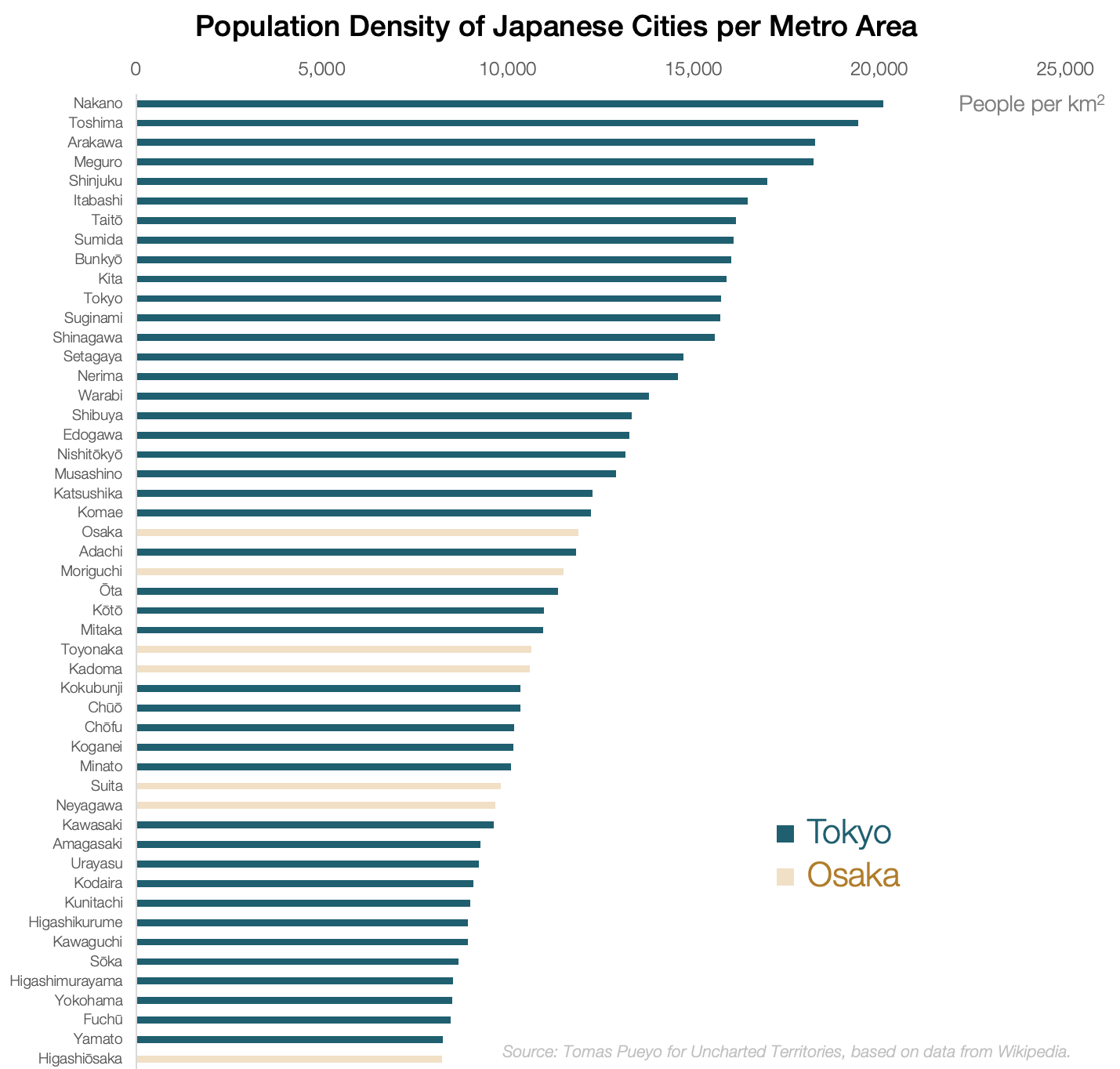
Tokyo is not even in the Top 50 of the world’s densest cities!2
So yes, Tokyo is quite dense, but not crazy dense. If not density then, Tokyo must just have a really big surface area. And indeed, what makes Tokyo so populated is that it has ~15,000 km2 of high-density land. That’s why it takes 5 days to walk from one side to the other.
Why is Tokyo so extensive?
The Kanto Capital
A topographic map immediately shows the answer:
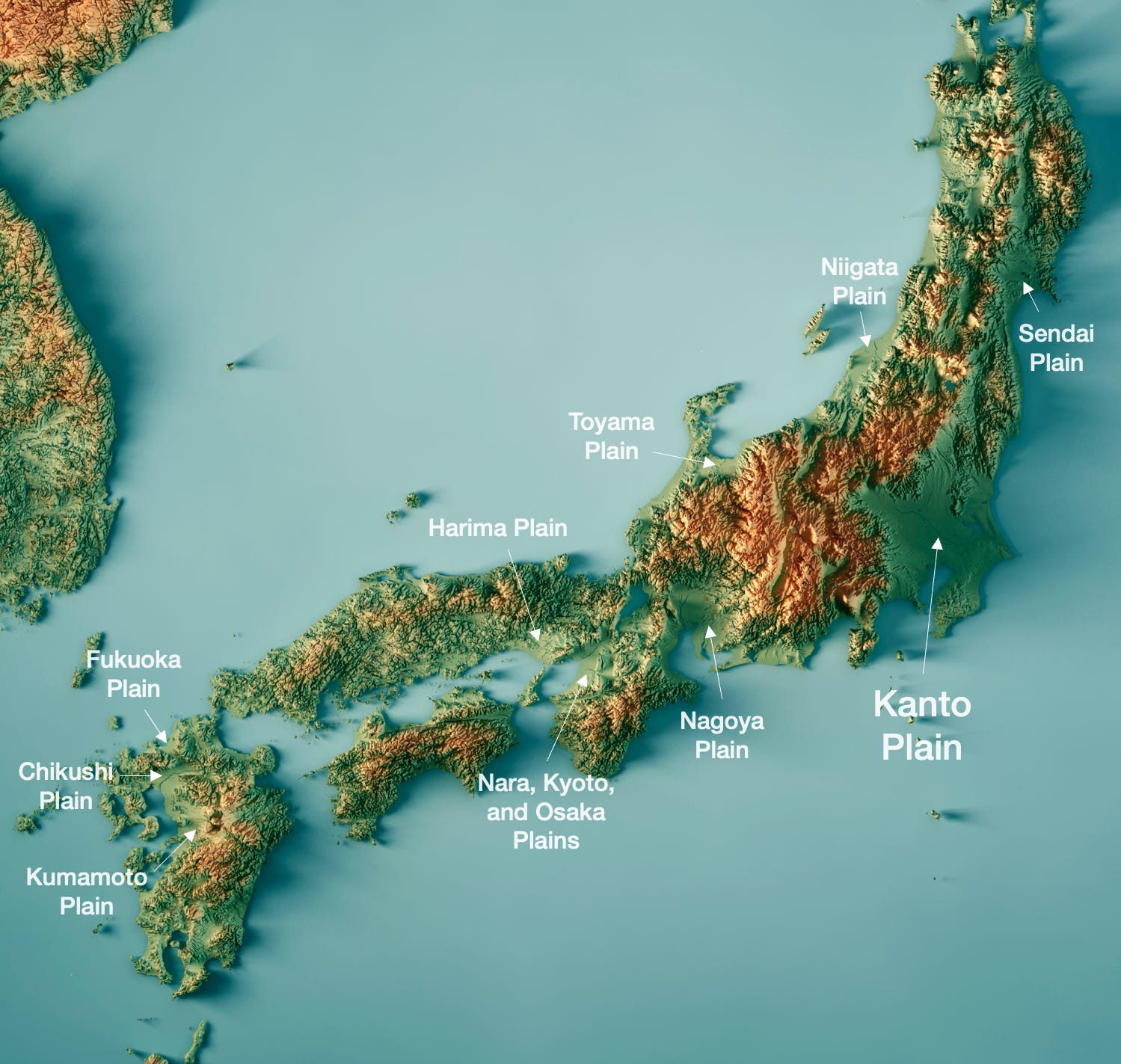
Tokyo is on the Kanto Plain, by far the biggest in Japan, accounting for ~15-20% of the historical farmland in the country.3 This meant that historically, it produced the most food, so its population could grow the most. And grow it did, until it became the most populated city in Japan.
OK so we now know why Japan is so populated, and why Tokyo is the biggest city within Japan (because it’s on the biggest plain). But then… Why is the biggest plain in the country there and not elsewhere in Japan? Why not in Nagoya, or Kyoto? As far as I know, nobody has answered that yet. So here is, for the first time, my hypothesis.
