

The poster competition is closed. We got 76 entries! Go check them out and vote here. I’ll announce the winner in a couple of days!

Nine months ago I looked at the data and concluded that we were not yet in an AI bubble: The fundamentals of the business models were good. I thought demand for AI would continue growing, and that would drive stocks up. Indeed, demand and stocks kept growing.1 Are we still in that world?
It’s time to reassess what’s going to happen looking forward, and now I’m less confident because of several signals:
Massive stock market swings in AI
Some signals that demand is weakening on the ground
Competition
Cash availability
Let’s look into the details.
Weakness Signals
1. Stock Signals
This is the South Korean stock market index KOSPI:
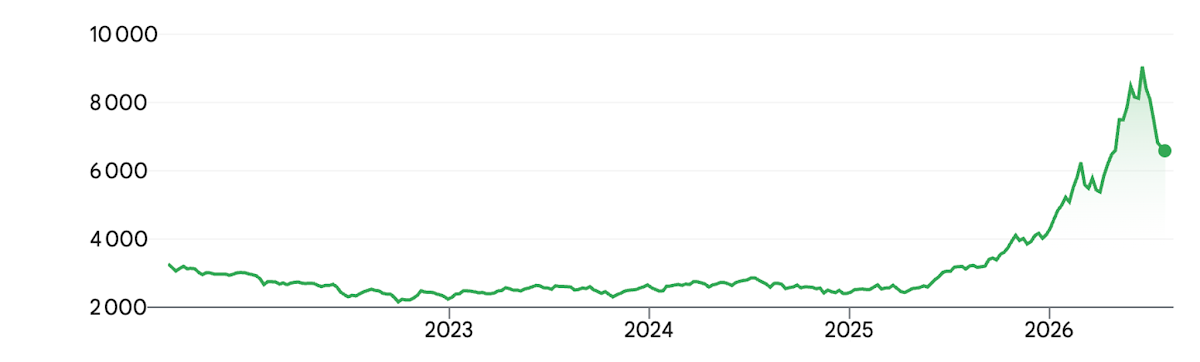
This is because SK Hynix (a company that makes the critical memory needed by AI) and Samsung (which also makes memory, as well as chips) account for about half of that index. After so much growth, a correction was due. Since lots of retail investors had joined, and many of them were leveraged (borrowed to invest), the correction caused a scare and touched off panic-selling. Others who were overleveraged were forced to sell because their stocks had lost more money than they had put in.
South Korean companies are not the only ones that have suffered this correction. At the time of writing, Micron, also a memory company, has lost 32% of its peak value, AMD (chips) has lost 18%, NVIDIA 15%, Intel 36%, Broadcom 19%. These broad drawdowns have caught other investors that were overleveraged, such as Leopold Aschenbrenner’s Situational Awareness.
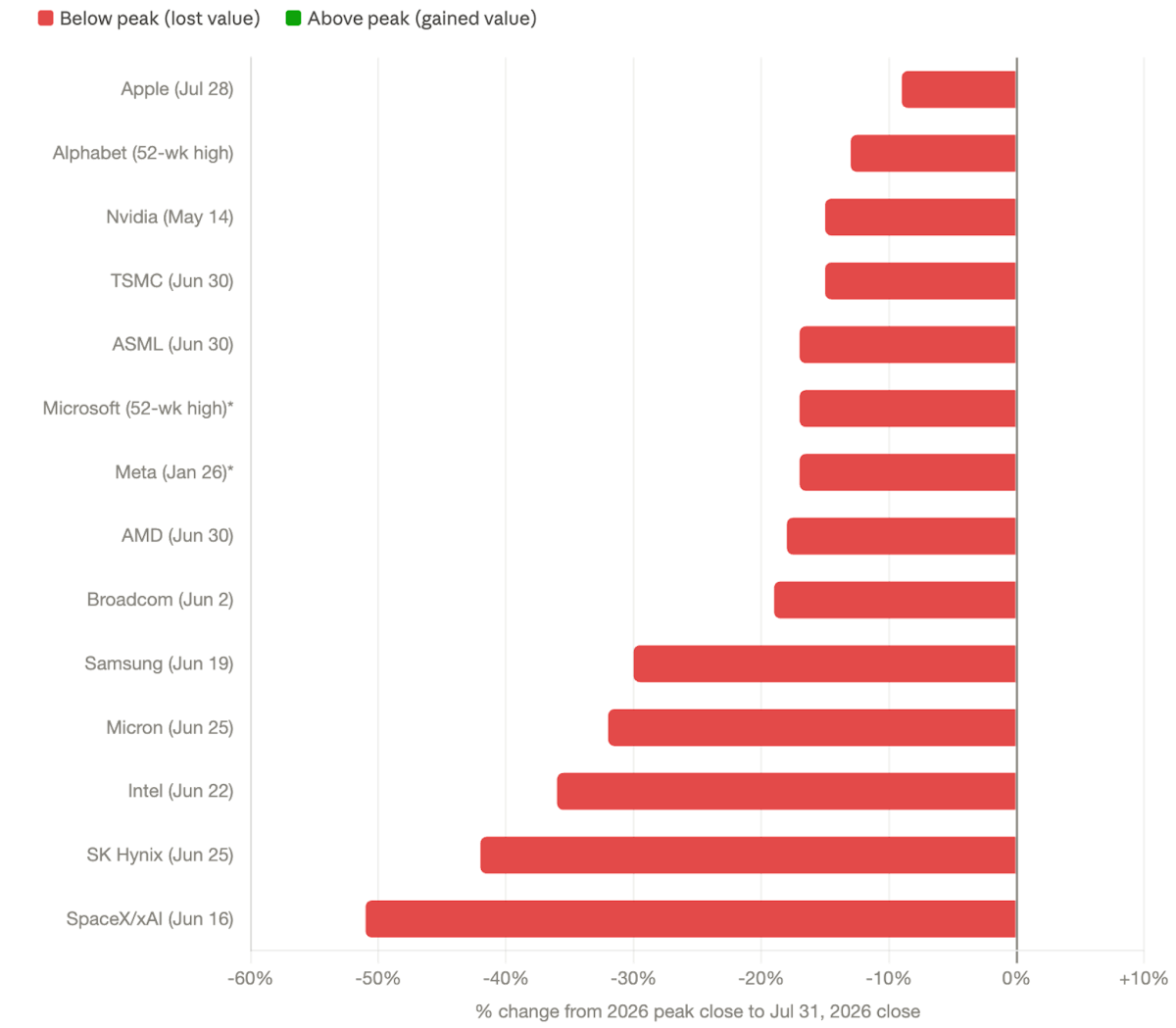
Note that virtually all of these have grown back from their troughs, but is this a stop on the way down, or was the trough a stop on the way up?
2. AI Demand Weakening
I constantly read examples of tech companies saying they’re going to cut their AI spend because it’s gone through the roof—60% of enterprises are doing this, according to the investment bank UBS. These include companies like Uber, Walmart, Amazon, Meta, Microsoft, Cisco, Atlassian, Tesla, Salesforce, or DoorDash. Logically, if the cutting-edge tech companies are cutting AI spend, surely others are following suit, right?
3. Cash Availability
This is Google’s cash flow (how much cash is produced or eliminated by the company):
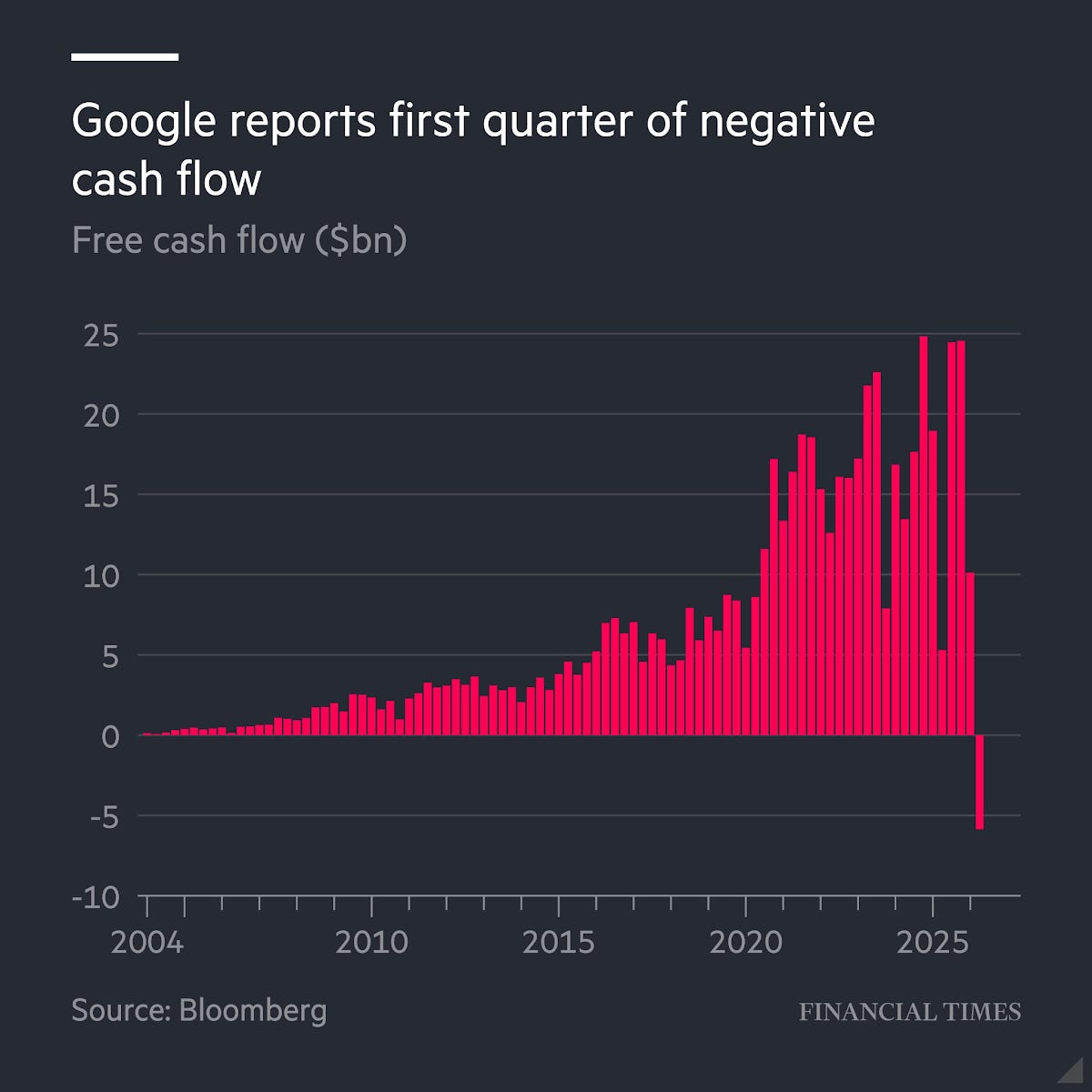
For the first time in its history, Google has burned more cash than it has earned. If it’s doing that, odds are its competitors are also burning through cash at a flabbergasting speed.
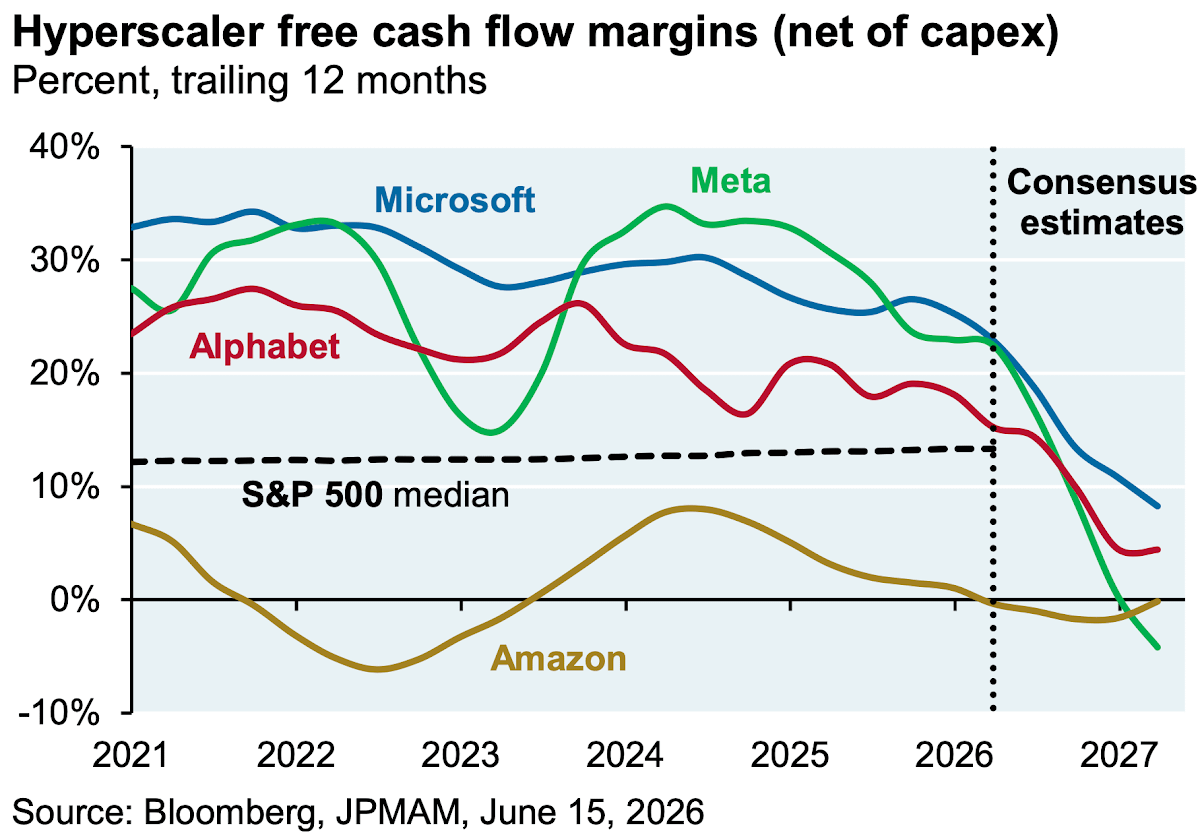
All this money is going from hyperscalers to chip and memory makers.
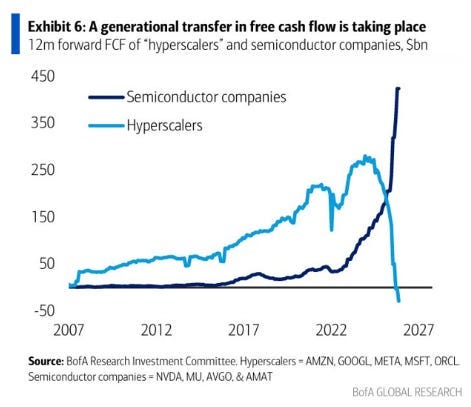
As hyperscalers burn all this cash, they start borrowing. They still have plenty of room to do that though
4. Competition
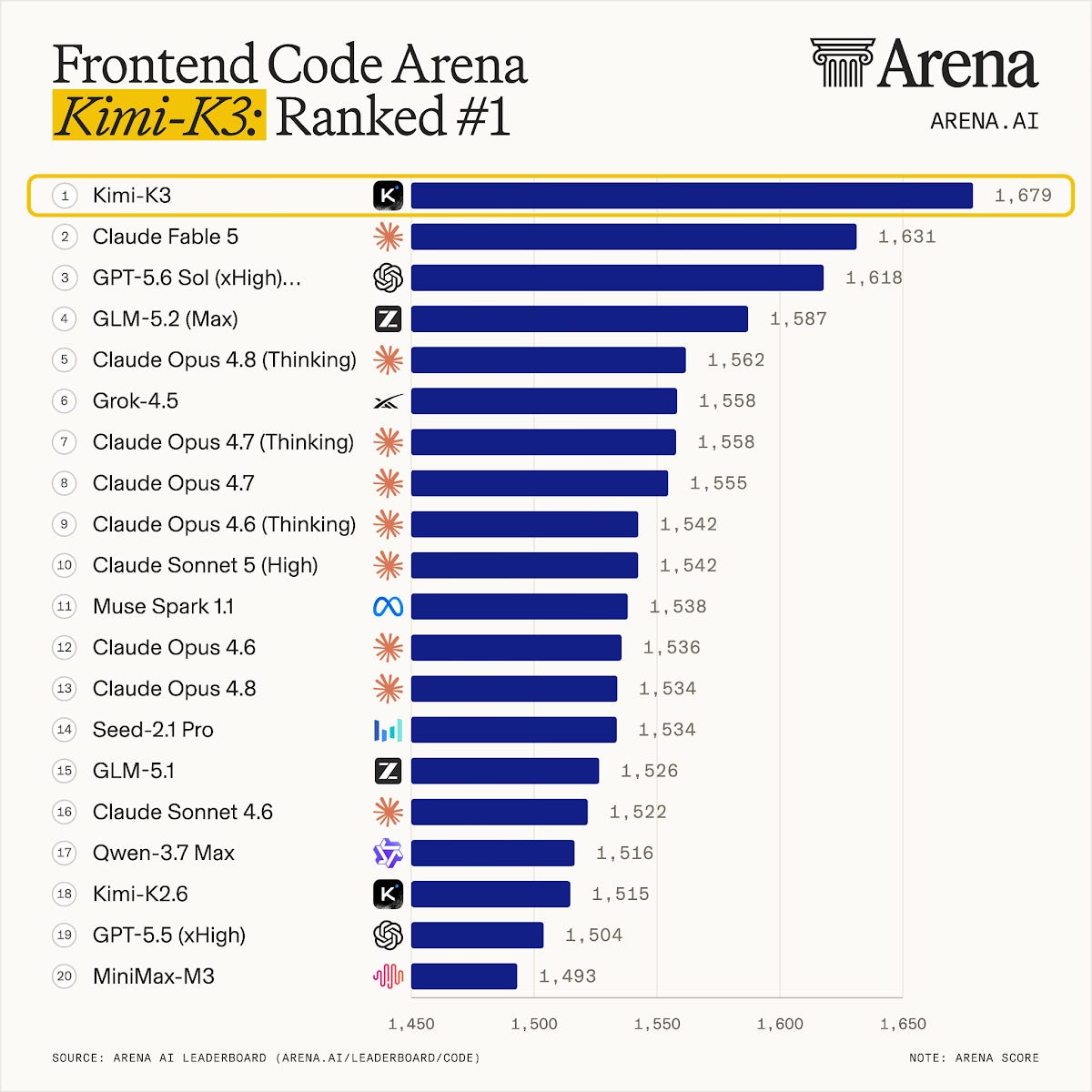
A couple of weeks ago, the Chinese open-weights model Kimi surprised the world: It beat frontier models like Claude and ChatGPT in some performance evaluations (in the case below, coding):
It’s the first time this has happened:
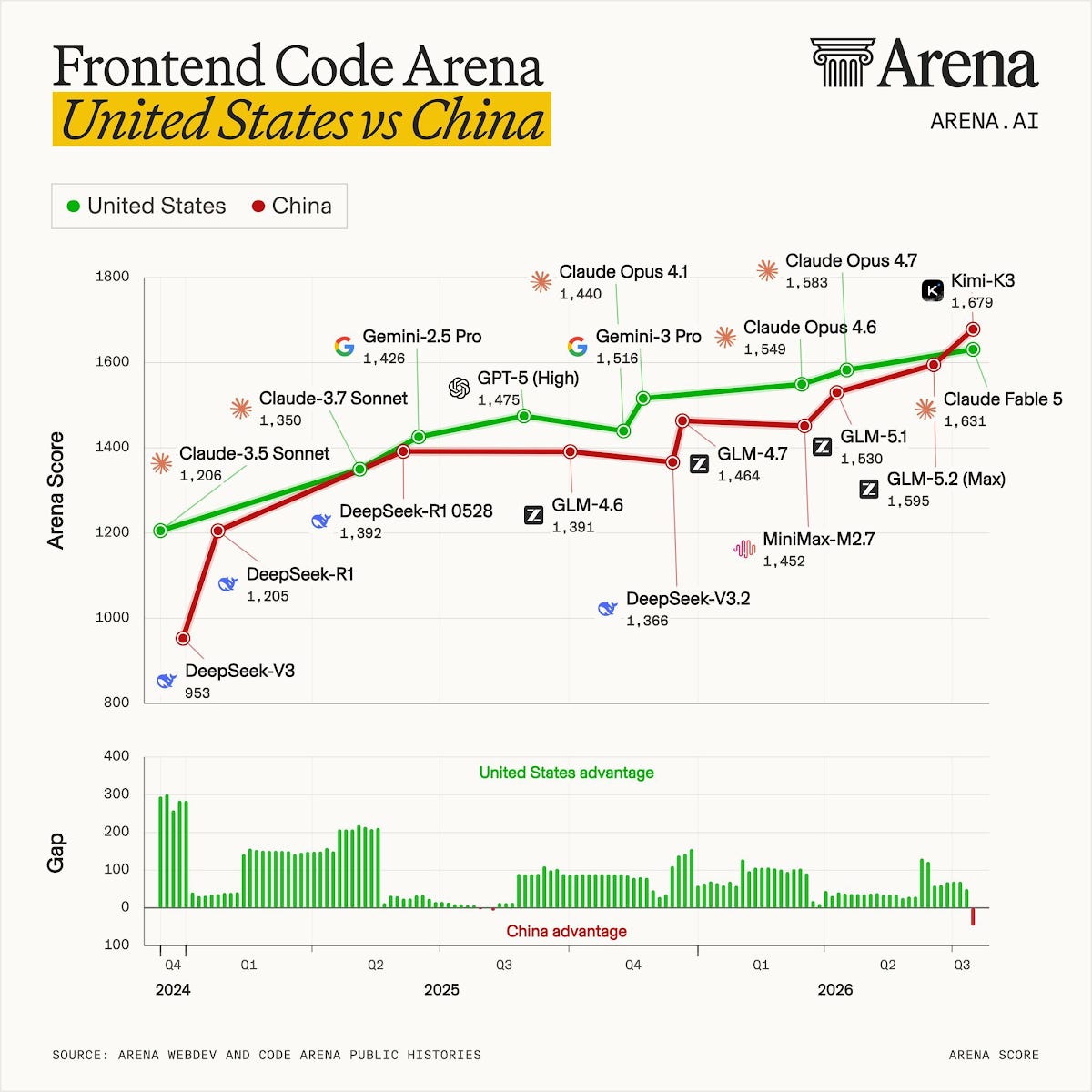
Now this is just for coding, and is only one evaluation. In other measures, it seems like Kimi is still a few months away in performance compared to bleeding edge models.
Since they’re basically free to use, the market is moving to them, at least in terms of tokens:
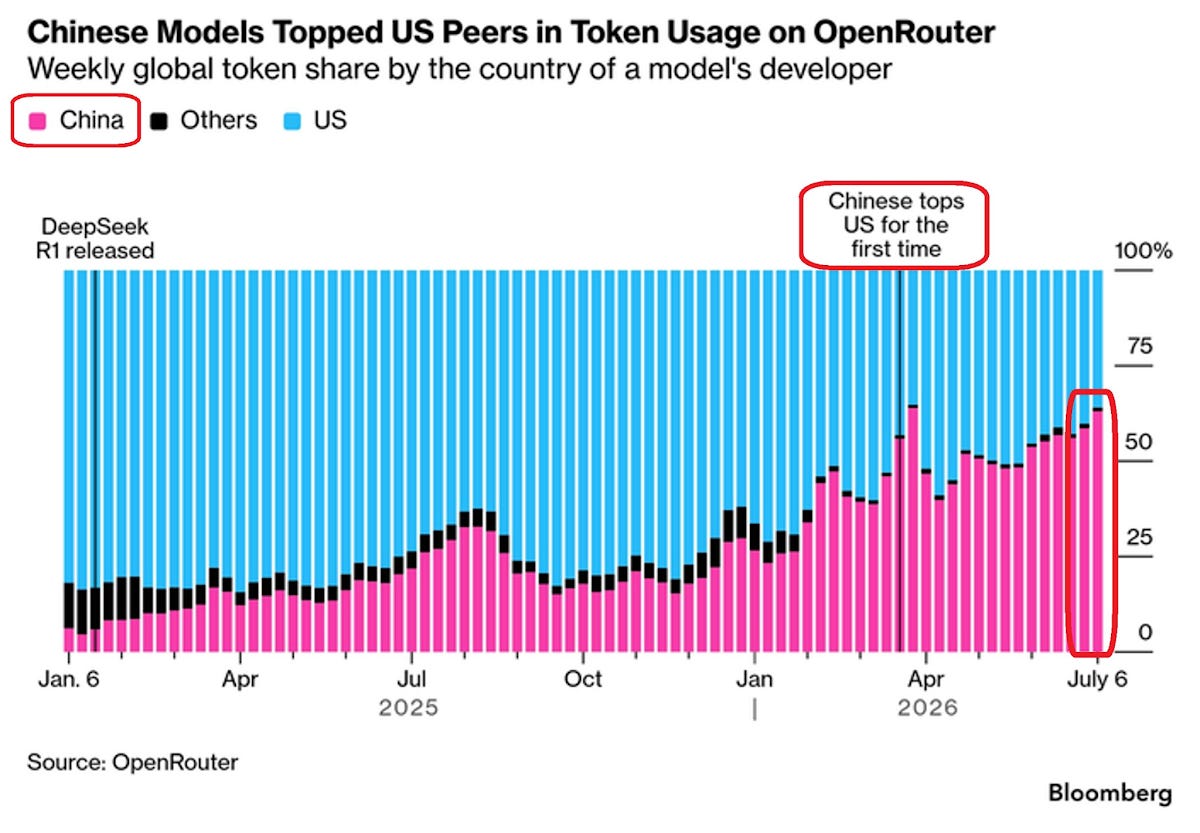
This is a massive deal, because the trillions invested in frontier models like those of OpenAI and Anthropic are contingent on these companies making huge returns, but if their products are easy to copy, their lead will eventually be competed away: Who will pay millions to a company when a free version from China exists? If this continues, wouldn’t investment grind to a halt?
The way this usually happens is through distillation: A company asks another company’s model lots of questions, and then uses the questions and answers to train their own model. The companies that suffer the copying aren’t happy about it, but their argument against it is pretty flimsy: They, themselves, have trained their models on the entirety of the Internet’s content, for which they don’t own any copyright. Hard to accuse others of copyright violation when you’ve done it too.
The lack of scruples of these Chinese models is another upside for them: They have very few harnesses.
After using all three recent releases, Fable, GPT 5.6, and now Kimi, it's clear that the full power of the models has been significantly held back by the safeguard restrictions, leading to the top models being quite literally lobotomized in some areas, which leads to subpar results as the safeguards pollute its entire thinking and problem solving abilities.—Enzo
You can use them for all sorts of nefarious goals (and also for legitimate ones that are nevertheless blocked, such as cyberdefense or research into hot topics), and they won’t stop you.
Overheard: “I’ve switched to Kimi from Claude for a bunch of work. It’s just so much more fun because it just does the thing instead of lecturing you”.—David Sacks, investor and Chair of the President's Council of Advisors on Science and Technology
This is also called dumping: Make a similar product at a fraction of the cost, destroy the industry in the source country, and then control the entire supply chain. China has done this with electric vehicles, solar panels, and many other industries. Get ready to add AI to the list.
The solution is not protectionism, though: It would lead to worse and more expensive models.
But China’s impressive performance is not just due to distillation. They can learn from each other in a way that closed companies like Anthropic, Google, and OpenAI can’t, since they are hiding their secrets from others, and must reinvent the same solutions.
OK, these are all the signals of weakness I can find on the outlook of AI companies and their stocks. But are there signals of strength? And how do they compare to the weakness signals?
