

It’s time for the quarterly magazine. In the coming days, I’ll be sending a few smaller-than-usual articles on all the news relevant to topics we’ve covered in Uncharted Territories. Today, I’ll share eight thoughts on a topic I’ve touched in many conversations behind doors across the world this quarter: the shifting of power between China, the US, Russia, and the EU.
1. China Will Support Russia’s War in Ukraine for a Long Time
After the Network States Conference this year (I’ll write about it in the future), I went to visit Balaji Srinivasan at his Network School in Forest City, which I’ll talk about another day. As we walked around the city, we spoke at length about the future of the world. He had an interesting take: In the war with Ukraine, China will keep supporting Russia for as long as it takes.
In China’s view, it’s the perfect conflict:
The US must focus on Europe, preventing its shift to China.
It sinks Europe’s time, attention, and money.
Russia loses power, population, resources, reputation, and wealth, making it immensely dependent on China.
The longer the conflict rages, the more Russia unties itself from Europe, and so the more it must tie itself to China.
This is why Balaji predicted Russia was eventually going to prevail, or at least not lose.
Meanwhile, I had the same take on the other side. It’s unknown whether the US will continue supporting Ukraine, but if it doesn’t, I really think Europe will pick up the slack: Whereas the US’s support in Ukraine is largely a symbol of its power, for Europe it’s not a symbol, it’s very much a life-or-death situation, as illustrated by very recent history:
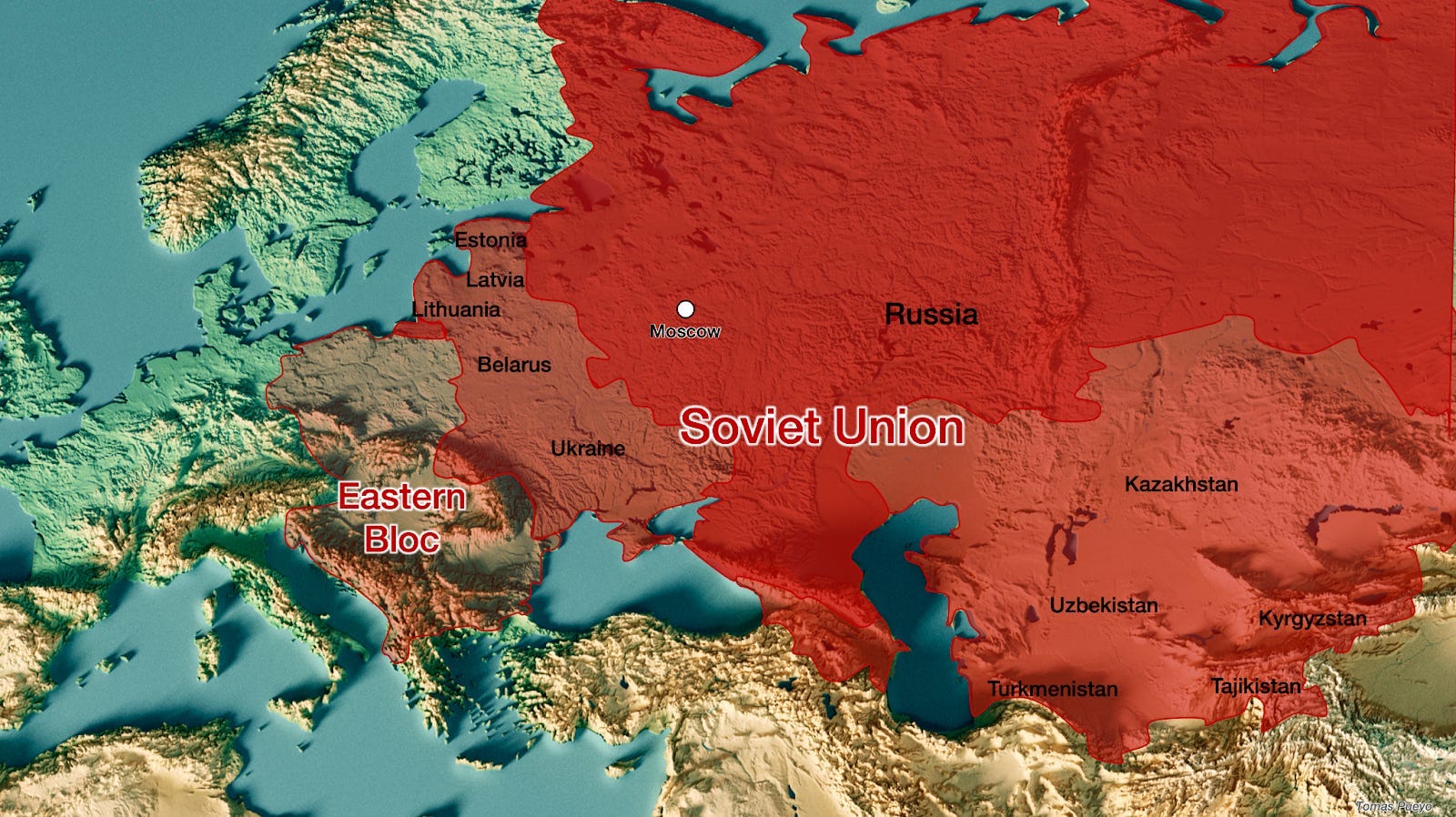
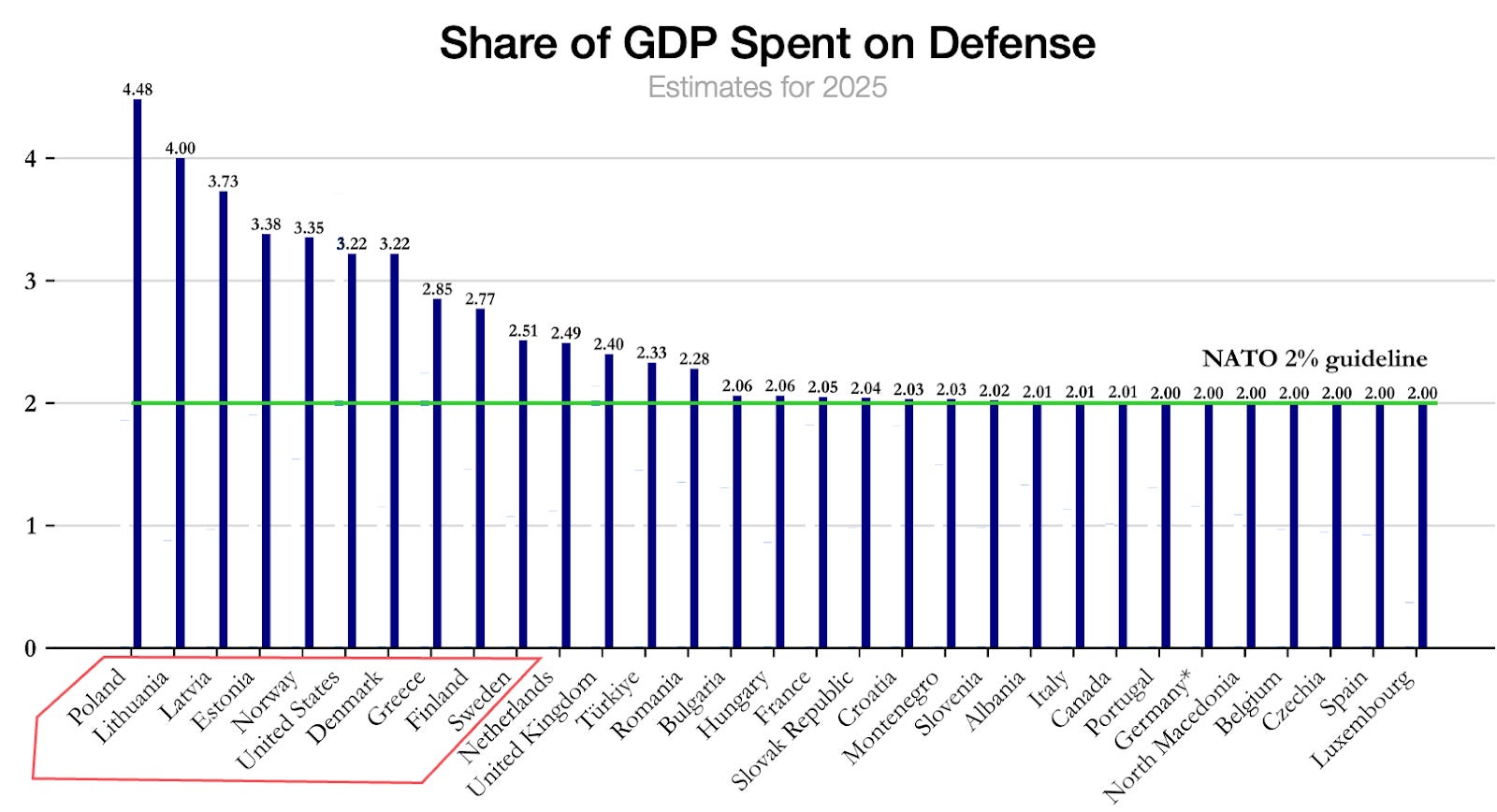
Hence the fact that now the US is only the 6th biggest spender on defense in the NATO alliance as a share of GDP, and all the biggest spenders share borders with Russia.1
This does not bode well for the war between Russia and Ukraine, which by the end of January 2026 will have lasted longer than Russia’s involvement in WW2. Prepare for a long war of attrition. Exactly what’s convenient for China.
2. China Eyes Siberia
As we explained in this article, Russia already has a very weak grip on the eastern side of its empire, Siberia: It’s far from the capital, and transportation is inefficient between east and west.

And that grip is going to weaken as Russia weakens:
Because of the war with Ukraine
It has had a poor fertility rate for a long time already, with a population that’s been shrinking for decades
Most of its economy and government run on oil and gas revenues, which will soon disappear (I’ll talk about this in a future article)
Meanwhile, it’s not news that China is becoming stronger, and as we said, Russia is growing more dependent on China.

I found this tweet interesting:
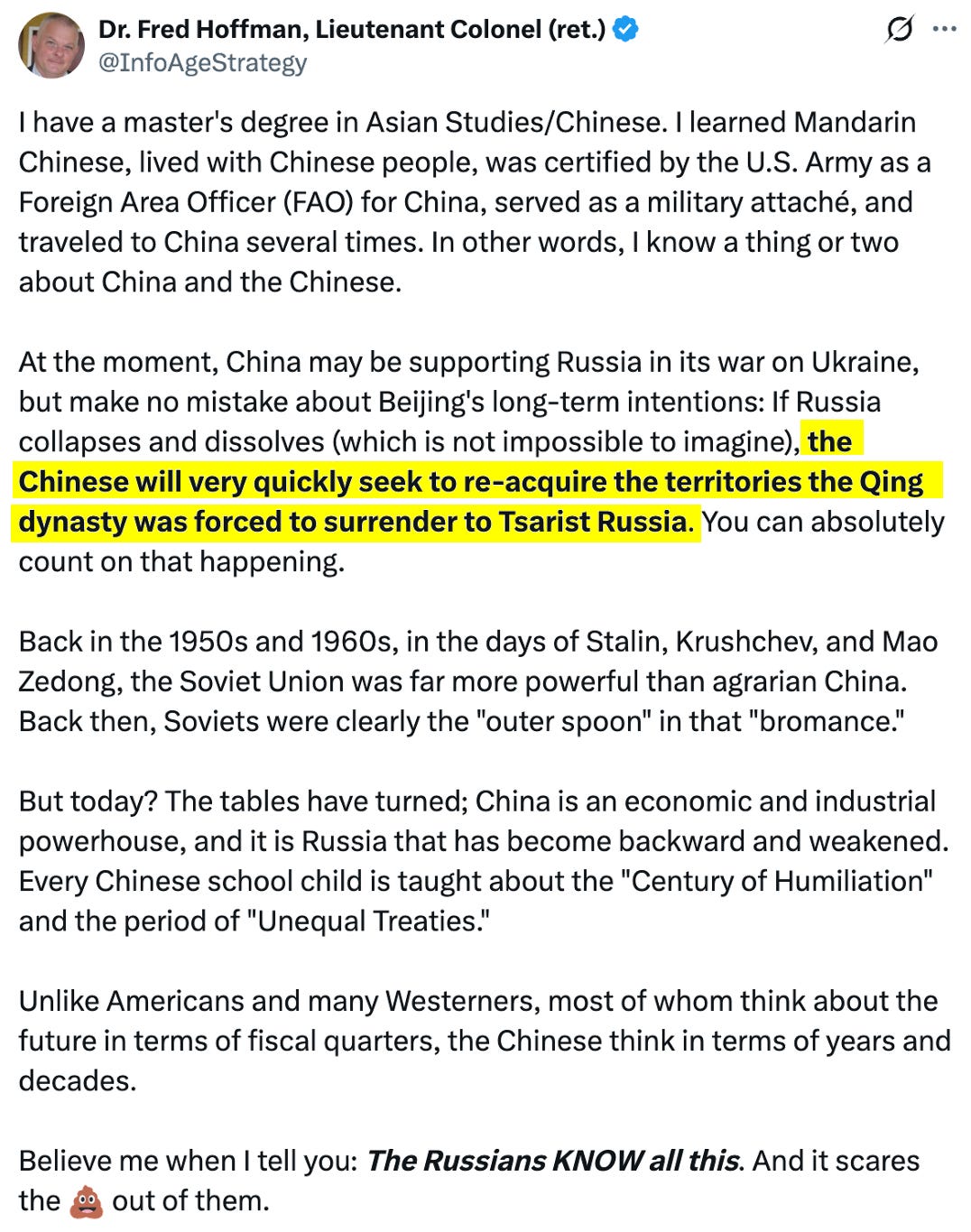
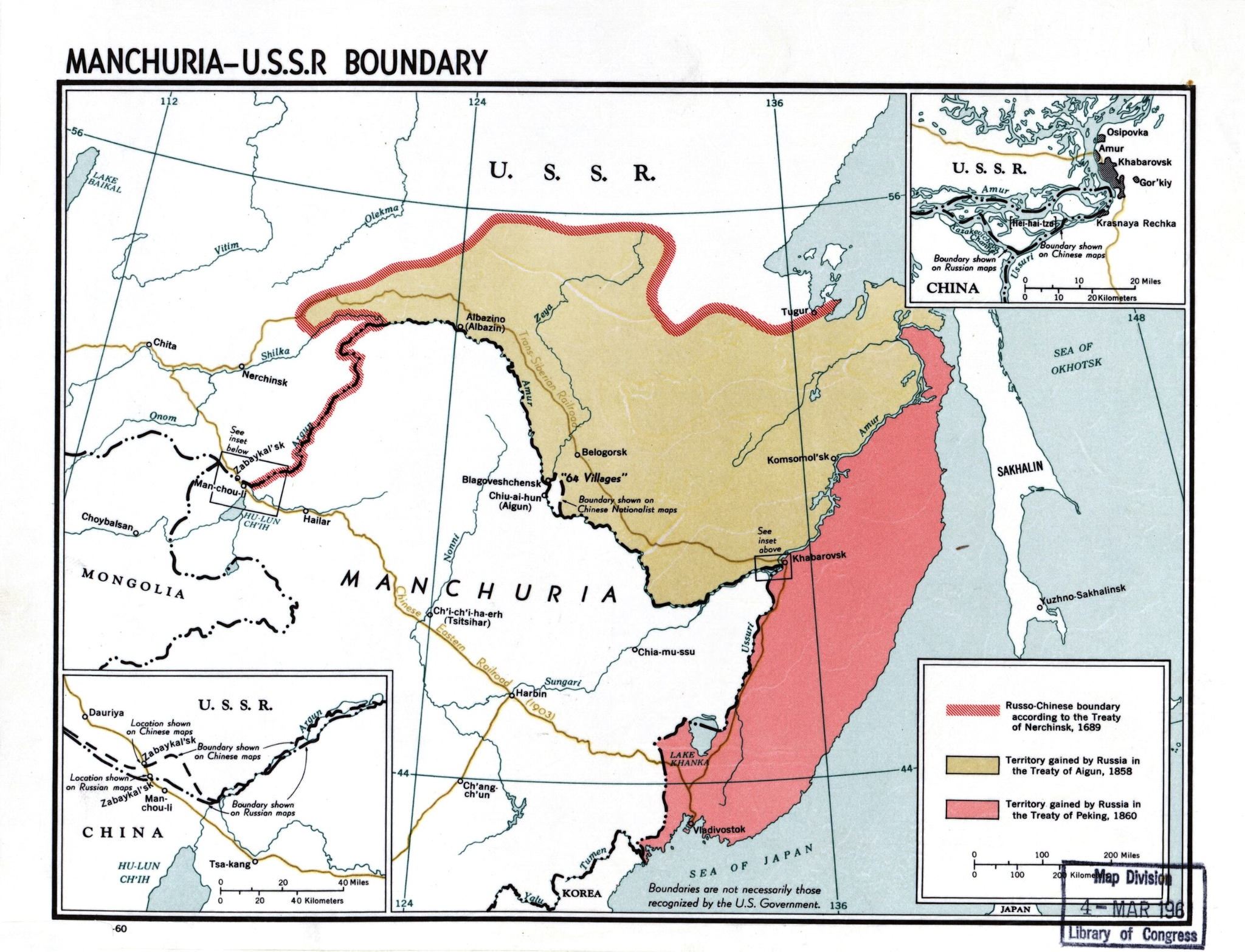
What are these territories the Qing was forced to surrender to Tsarist Russia?
Would it stop there? I don’t think so. The same way Tsarist Russia took advantage of its superior power to take over some regions of Chinese influence, so would China do the same in the reverse situation. And it already has an excuse
Translated with this
This video, circulating in China with millions of views, claims that if Russia loses the war in Ukraine and disintegrates like it did in the 1980s, China should march northwards and take over parts of Siberia, because otherwise the US would do it, and that would be too threatening for China.
3. China Will Continue Expanding in Central Asia
I found myself at another conference a few weeks ago, talking in private about different people’s perspectives on China: diplomats, investors, politicians, entrepreneurs… They shared some ideas anonymously, so here they are.
China annexed Tibet 75 years ago. It is in the process of assimilating the Uyghurs from western China. Now that the US has vacated Afghanistan, China is increasing its influence there. A very well connected source in Afghanistan told me they are feeling a heavy Chinese presence on the ground.
4. China’s Problem with Capital Allocation
A US diplomat said something very interesting about China’s economic prospects:
There’s this Russian saying: “In Russia, if you have money and no power, you have no money.”
The same is true in China. The only way to allocate capital well is for the private market to do it, as it has much more information and its incentives are better aligned than the government’s. But for private markets to allocate money, they need to be sure that money will remain theirs, have long-term assurances that the government won’t take it. This would mean the Chinese Communist Party (CCP) would have to relinquish power (the power to seize economic assets and redirect the economy). The CCP will never do that, so the private market won’t invest efficiently.
5. The Belt & Road Initiative Is Not Dead
I thought the Belt and Road Initiative (a global economic and infrastructure strategy to connect China with its trade partners) was shrinking every year, but no, that was a COVID thing. It’s reaching new records:
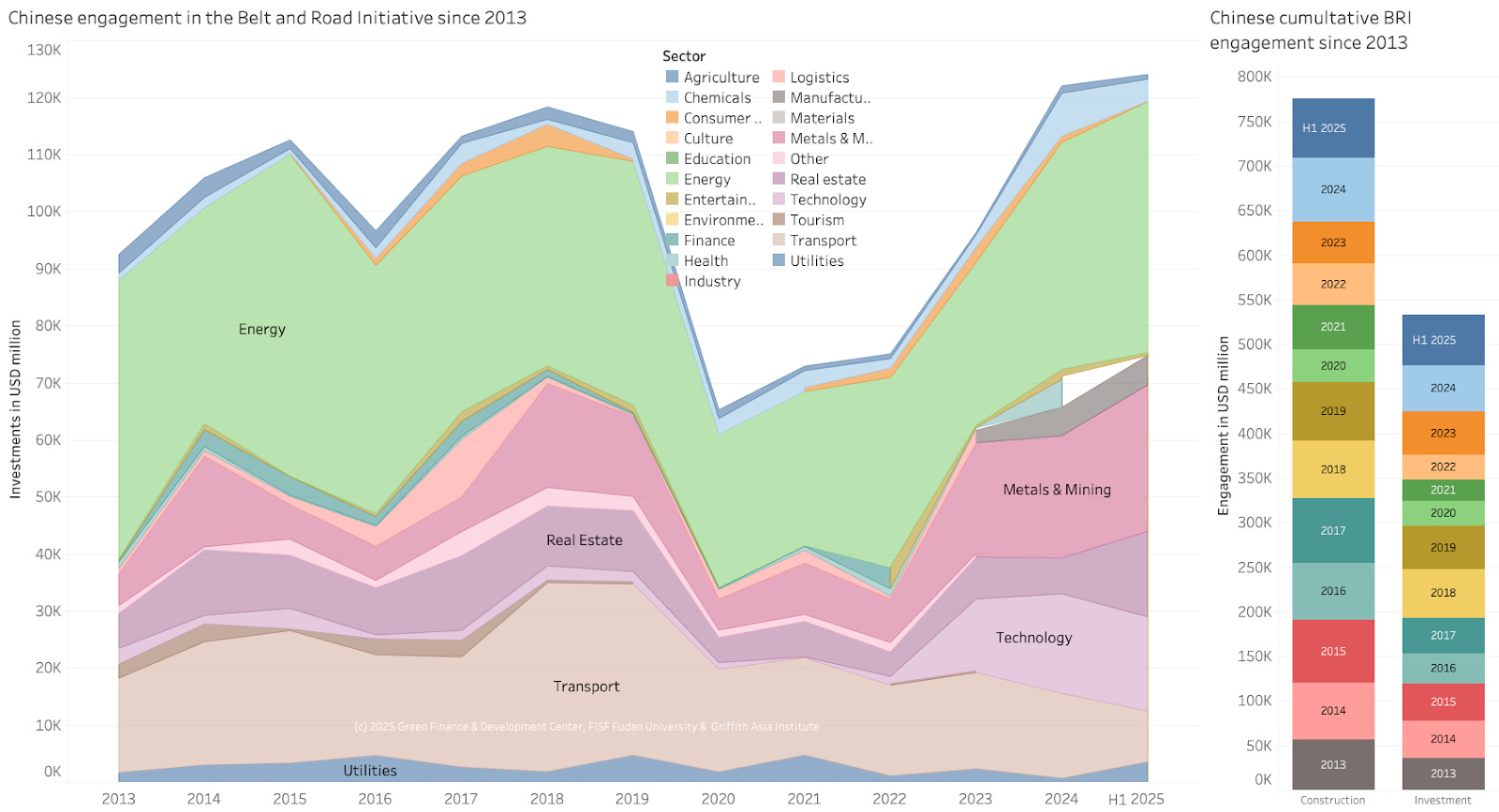
Initially, I thought it was destined to fail: So much money hastily invested around the world could only fail. I’ve changed my mind. These investments make a lot of sense:
They increase China’s influence around the world.
They increase China’s military presence around the world.
They allow it to bypass US choke points in the sea, notably the Strait of Malacca, through which most of China’s oil circulates.
China has construction overcapacity. These deals allow the country to keep building with this overcapacity.
They diversify China’s investments.
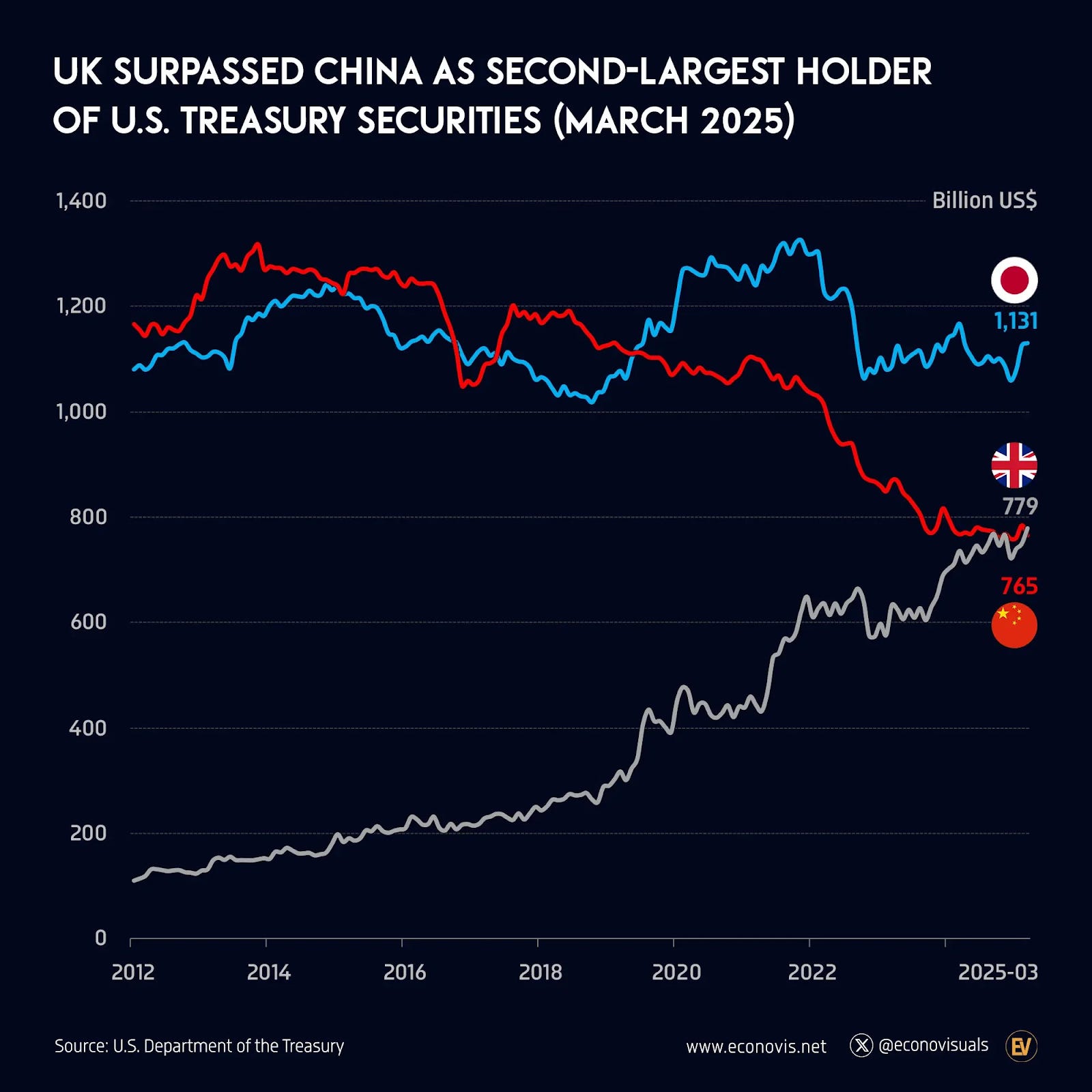
This is especially valuable because China used to buy a lot of US debt with its trade surplus, but that made it dependent on the US, so China has been shrinking its US treasuries for over a decade.
6. The Battle for Africa
A US investor in Africa said something that I had never heard before:
Chinese people go to Africa because they say competition is lower. Everybody works extremely hard in China and has a lot of education. They’re competing for the same jobs. They say they have no competition in Africa because, according to them, “Africans are lazy and dumb.”
It reminded me of the documentary Empire of Dust, in which a Chinese contractor complained about how the Congolese behaved at work and in managing their infrastructure. Some excerpts here:
This highlights how Chinese investment and infrastructure will continue in the future, but also points at conflict: Economic power in the region will have to come with political power, but the last time foreigners had a strong economic and political footprint in the region, it didn’t go so well.
Meanwhile, according to a diplomat in Africa, China so far has utterly failed at conquering the hearts of Africans. They all consume US media, follow US or European sports, sing and dance to English songs, and all aspire to move to America or Europe. I’m not sure of the best way to win this battle of hearts: The US approach of making movies like Black Panther and fighting for the rights of Black people (think Black Lives Matter), or the Chinese approach of building infrastructure while berating Africans for their stupidity.
Why does this matter?
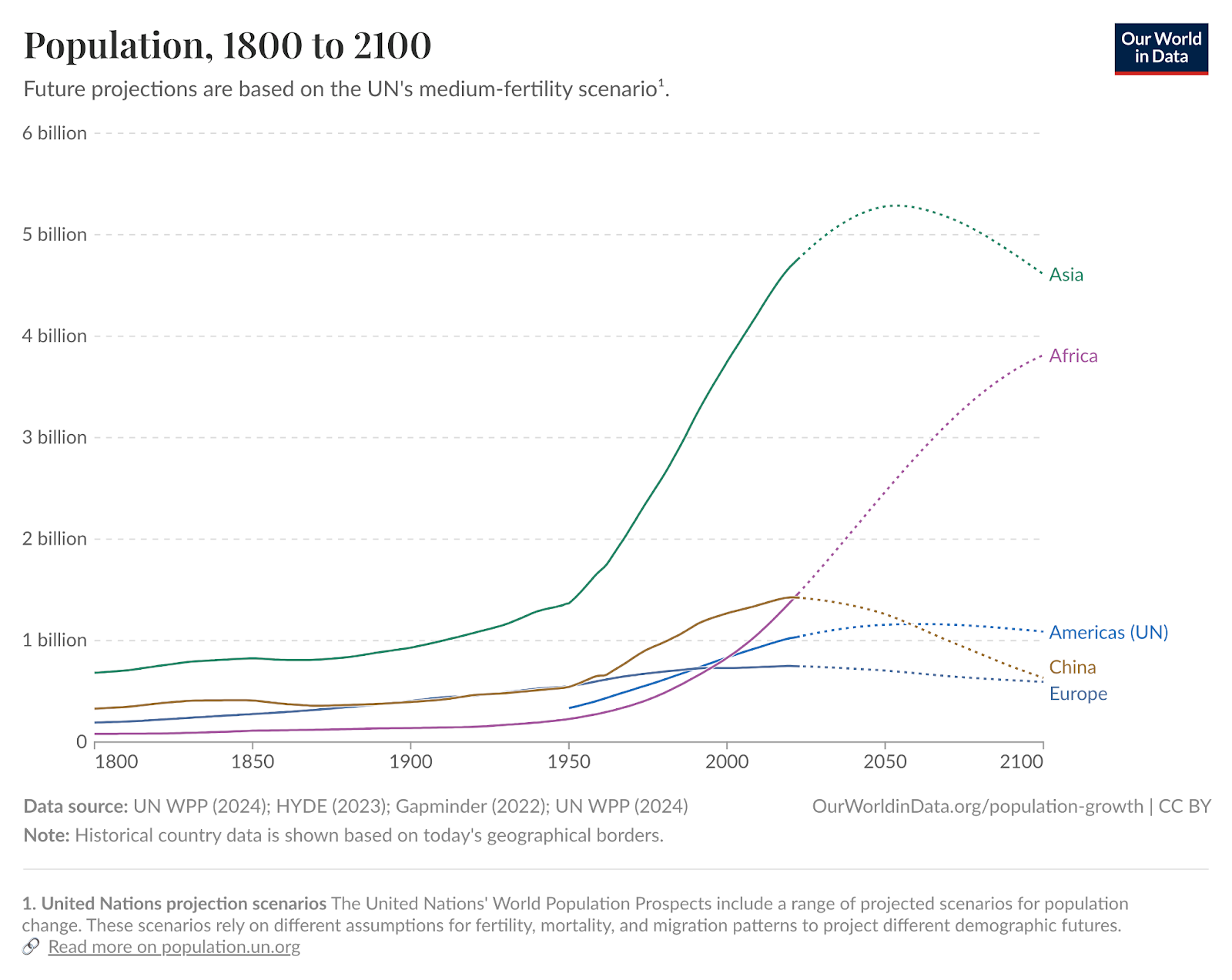
Here’s one visceral way to convey China’s demographic crash:
7. US – China Competition Is Good, Actually
Contrary to many people’s beliefs, I think the US got better thanks to the competition with the USSR.
Usually, we remember the bad (especially the wars, like in Korea or Vietnam, or McCarthyism), more than the good. But there was more good. And not limited to the space race. Thanks to the competition with the USSR, the US had to make efforts to compete in ideology. It was more egalitarian, progressed more in welfare, and focused on the shiny city on the mountain more than MAGA. It courted international friends instead of putting America First. It cared more for the world and making better international institutions.
Since 1991, the US has had no rival, and the result has been more inequality, deindustrialization, less attention to international organizations, more political polarization…
But since China’s power has grown, the US is shining in the areas where there’s most competition. It’s trying to reindustrialize (eg, Build Back Better), invests heavily in AI, has given a legal framework to crypto… And we can expect the US to become a beacon of freedom in opposition to China’s authoritarianism.
Conversely, China’s century of humiliation was caused by its backwardness, which in turn was due to the fact that it had no rival in the region.
Competition is good.
8. Meanwhile in Europe
Except for Greece, which has always had a big military spend to fend off Turkey. Note that Finland and Sweden were not even in NATO before the war.
Shining city on a hill. Anyway, yes, competition _could_ be good, but only if your fundamentals are sound and you are strong enough. Competition of the Dutch with the British ultimately ended in the demise of the golden age of the Netherlands by the fourth Anglo-Dutxh war. The Brits and Germans also competed with each other and that led to the destruction of Germany and the Brits being overshadowed by the Americans. Honestly, the best case scenario for the US is following the path of the UK and slowly fade away (maybe with outsized cultural influence, as the Brits had for many decades long after they were the leading power in the world). Worst case is acting irrationally and ending up like Germany during and between WWI and WWII (or heck, like Argentina since it's glory days around 1900). The 21st century will be contested between China and India.
CHINA WILL SUPPORT RUSSIA'S WAR
The most important reason for China's support of Russia is that China sees itself as next on the list for America's regime change. So in preserving Russia, it preserves itself.
CHINA ANNEXED TIBET 75 YEARS AGO
As per your own Wikipedia reference, Tibet has been part of China since 1720 (Qing Dynasty). Although gaining a high degree of autonomy ("de facto independence") after the fall of the Qing Dynasty in 1911, Tibet's independence was never recognized by either the RoC/Taiwan or the PRC. An independent Tibet has also never been given diplomatic recognition by any country.
CHINA'S PROBLEM WITH CAPITAL ALLOCATION
1. Perhaps not efficient, but definitely EFFECTIVE. Since being hit with tariffs and economic sanctions during Trump's first Presidency China has succeeded in almost entirely removing itself from Western supply chains--even to the point of banning Nvidia GPUs. Not only is China a manufacturing powerhouse, the 2025 Australian Strategic Policy Institute (ASPI) Critical Technology Tracker reported that China leads in 66 of 74 critical technologies.
2. America's and the EU's seizure of sovereign Russian assets--illegal under international law--is all we need to know about Western property rights. The message is clear: Unless you are an American ally, your economic assets are NOT SECURE.