

I attended the 2025 Progress Conference a few weeks ago, and learned about some crazy ideas. Here are a few highlights (I make no money from any of the following):
Neural Implants with Actual Neurons
Drone Delivery Is About to Become a Thing
Freedom of Speech and AI
[Premium only]
How Does Community Notes Succeed at Fact-Checking Where Other Mechanisms Fail?
Sam Altman and Tyler Cowen on When AI Will Manage Entire Companies
Sam Altman on Ads in ChatGPT
For the First Time, Ecoterrorists Could Stop Global Warming
1. Neural Implants with Actual Neurons
Elon Musk’s Neuralink is famous for its brain-computer interfaces: They insert a small chip in your brain.
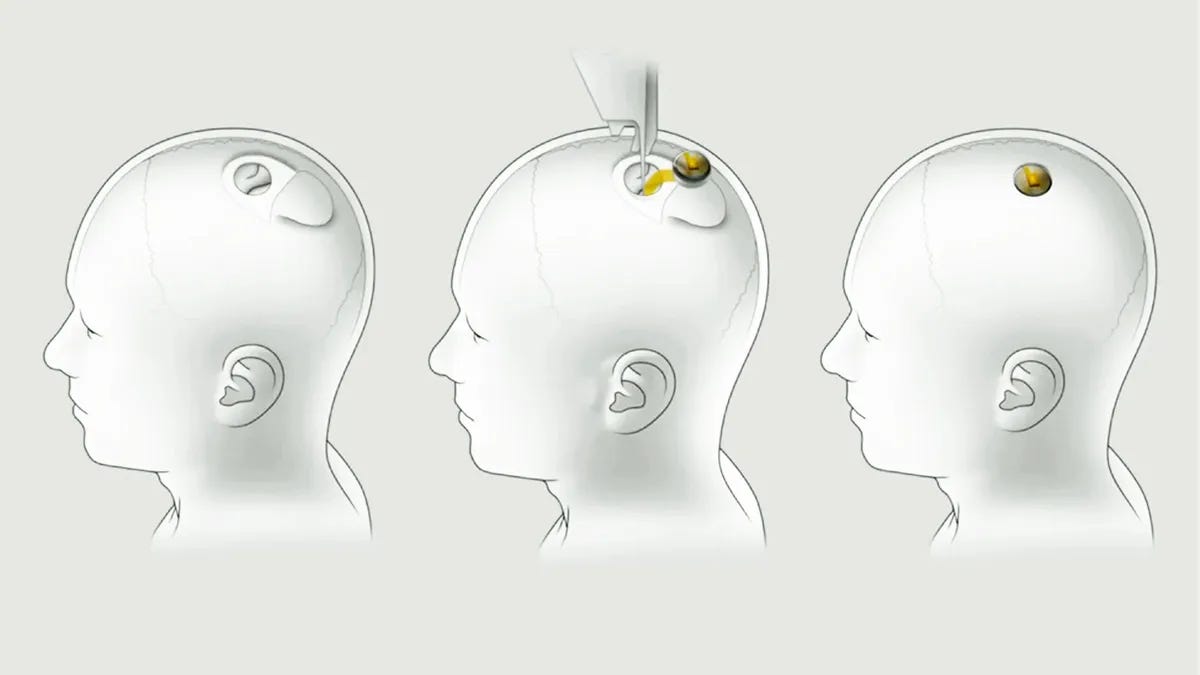
The chip interacts with surrounding neurons by inserting thin metal probes inside the brain.

I didn’t know more companies were in the space. I visited Science Corporation, which does something similar, with a couple of differences:
Their approach is to replace the metal probes with actual neurons! Since neurons already know how to connect with other neurons, they believe that just putting lab-grown neurons in contact with natural ones will make them connect. This should be much less invasive than metal probes and allow for much denser connectivity, and hence more information exchange between the brain and the computer.
Science Corp is starting with eyes instead of tetraplegics. Lots of people lose eyesight because of problems in the retina. The company creates an artificial retina to replace the bad parts of existing ones, and then connects the artificial retina to the optic nerve with neurons.
2. Drone Delivery Is About to Become a Thing
I also visited Zipline, a company that does drone delivery.
I knew about them from when they were delivering medicine in remote areas of Africa. That sounds like a perfect use case: Infrastructure there is really bad, so valuable medication can take days to arrive. But a small plane could deliver it in a few minutes, which justifies the cost.
What I hadn’t realized is that the company is now doing standard deliveries in the US! Back in Africa, the zipline planes had a small runway and dropped the packages with parachutes.
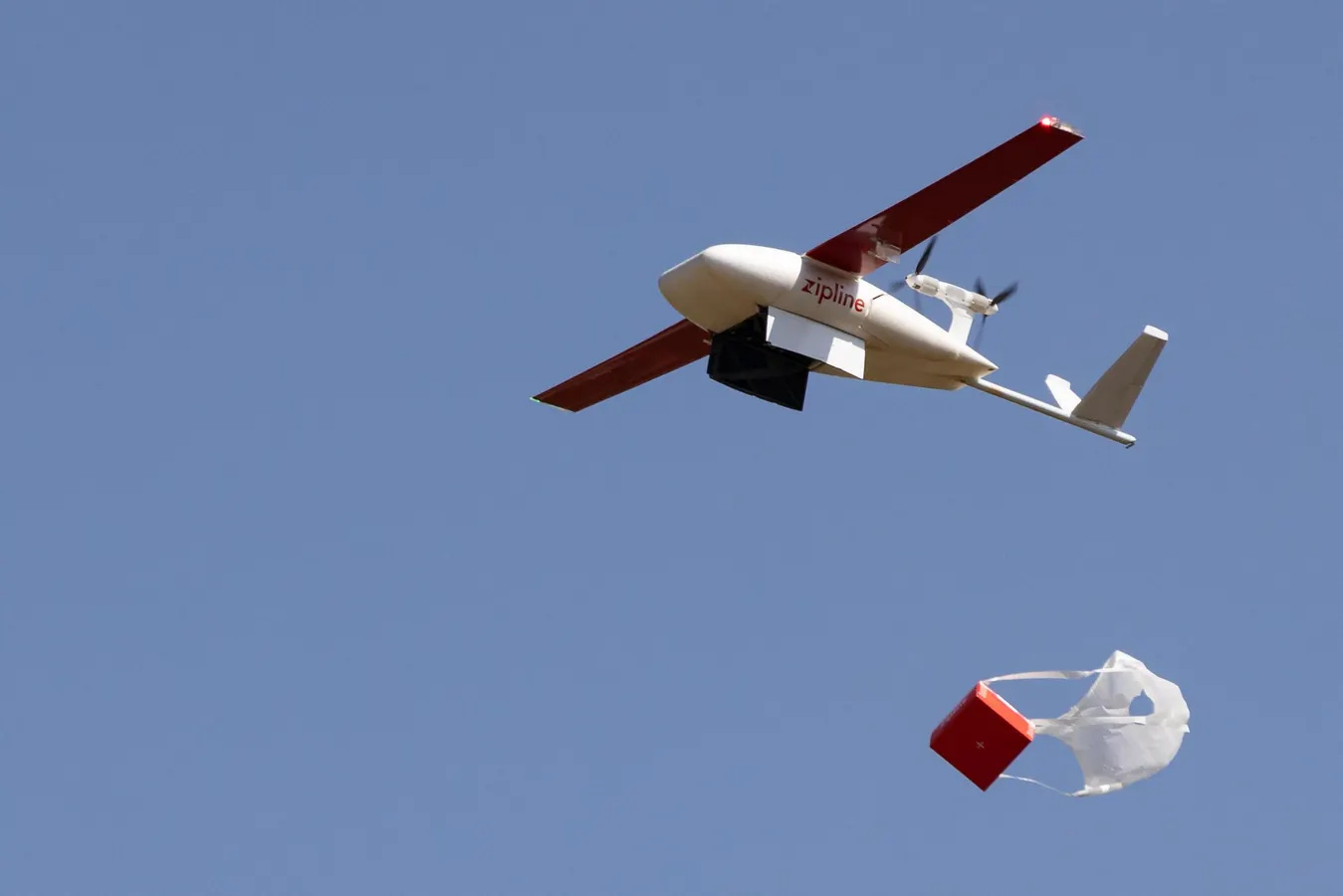
That, of course, isn’t viable in your suburban America doordash delivery. So the company has changed its plane designs, and now they can take off and land vertically, and lower their cargo slowly with a… zip line?
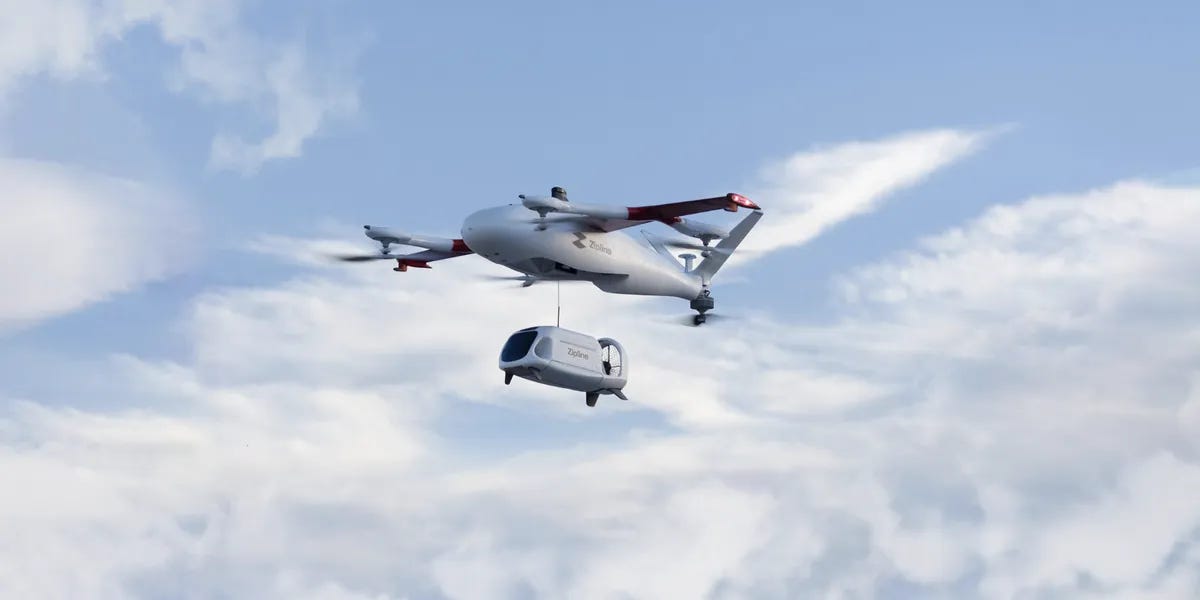
The drones fly around 400 ft (~130 m), which makes them inaudible and barely visible on the ground. This altitude also makes it easier to navigate as it reduces wind gusts, which are more common close to the irregular surface of the Earth.
It can carry up to 8 lbs (3.5 kg) at 70 mph (110 km/h), which is insanely fast! Imagine ordering your burrito and burning your mouth because it got to you 4 minutes after cooking.
The company also contends this will become much cheaper than alternatives, because the thing weighs 55 lbs (25 kg) to a moped’s 200 lbs or a car’s 4000 lbs. When the vehicle carrying your delivery requires substantially less material, it should be cheaper once all the R&D is amortized and economies of scale kick in.
The weight is also going to shrink over time, as today ~35% of the drone’s mass is battery, and batteries are getting cheaper and lighter every day. The drone can do about two flights per hour (so up to 50 per day), with a max flight time of 30 minutes, with the average delivery up to 10 miles (16 km).
The company says they have just 100 planes active today, but by next year they’re going to have 15,000!! If that’s true, within a couple of years there should be more zipline delivery planes than helicopters in the world. Its main customers are going to be for medicine delivery, food delivery, and fast goods delivery: Imagine ordering your Amazon package, but instead of waiting one day, you wait five minutes!
3. Freedom of Speech vs AI
There’s a push to regulate what AI can and can’t say. I’ve been curious about this topic over the last few years, but a couple of sessions discussing it convinced me that we need to push for AI’s freedom of speech, meaning we should prevent states from mingling in that too much.
The most convincing argument for me is that every time there’s a new tech for communications, the state tries to censor it. Of course, that happened with the Church and the states with the printing press, and with every new media since. Government censorship of AI would be especially bad because it’s so intimate and close to us. Do we really want the state to influence so heavily what we think and even how we think?
How do governments attempt to censor new media? Usually, with something that appears logical: child pornography!
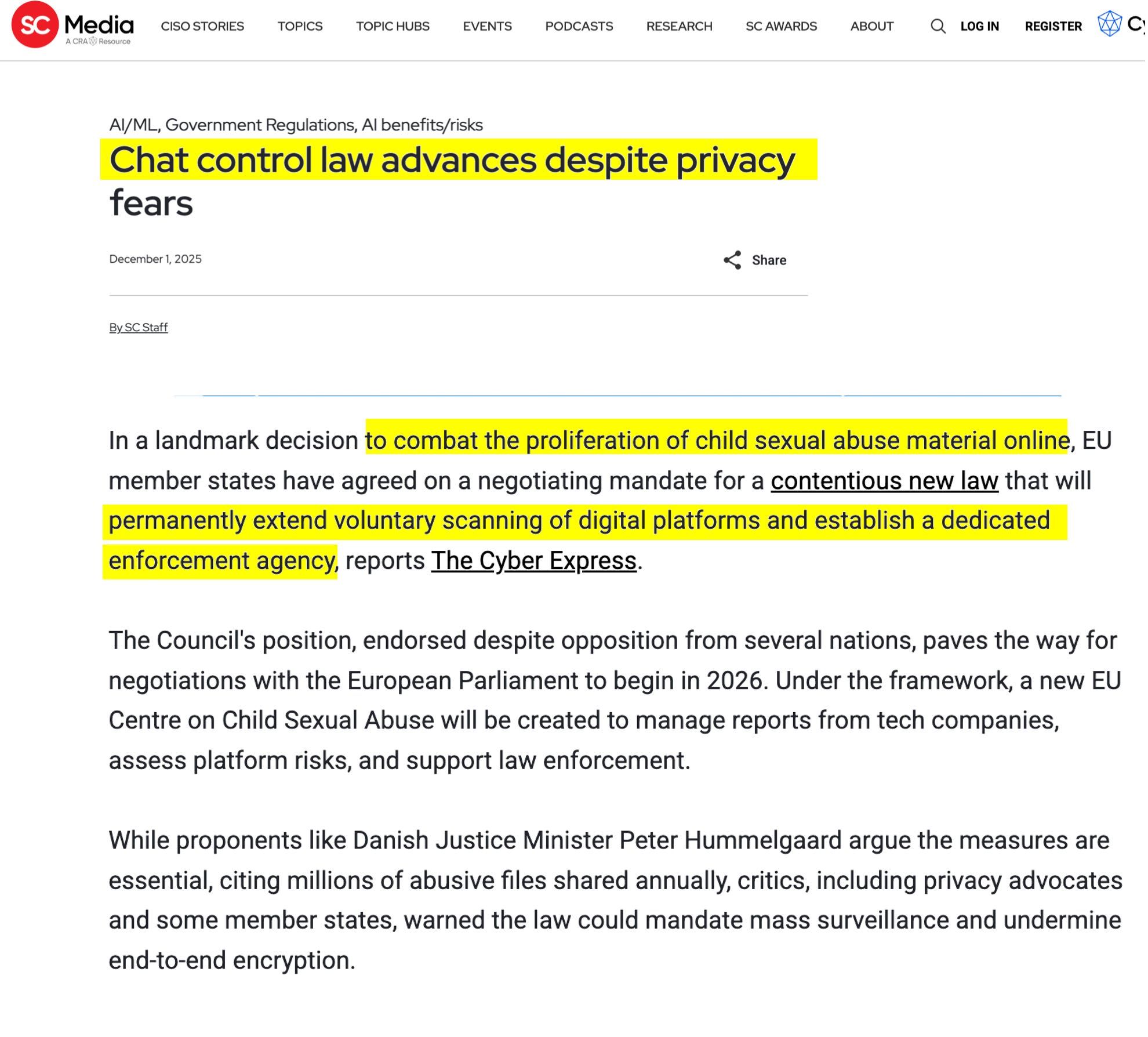
Of course, who doesn’t want to protect children? There are few crimes that are more abhorrent than abusing children. That’s precisely why politicians use this, and not any other crime. If the law was called the “Reduce Petty Theft Crime Act”, and mandated to record and process all private conversations in search of evidence against them, people would be irate. So they use child pornography.
Now, child pornography is a problem. We should not minimize it. Although more than half the content is produced by children portraying themselves, the vast majority is of pre-pubescent girls. But we should deal with it like we deal with all crime. Do we let the police enter our homes without a warrant to search us? No. Then why would we do it with our personal communication?
No, this type of action is a Trojan Horse. Of course we need to be careful with child pornography,1 but we shouldn’t burn the house to roast the pig. The freedom of speech of the entire population, and thus the political freedom of a country, is more important than a few crimes, which should be tracked by professionals rather than by thwarting everybody’s freedoms.
