

If you know how to look at this map, you can deduce a lot of Japan’s history, why it has the borders it has today, where they are contested, and why it went through the wars it did.
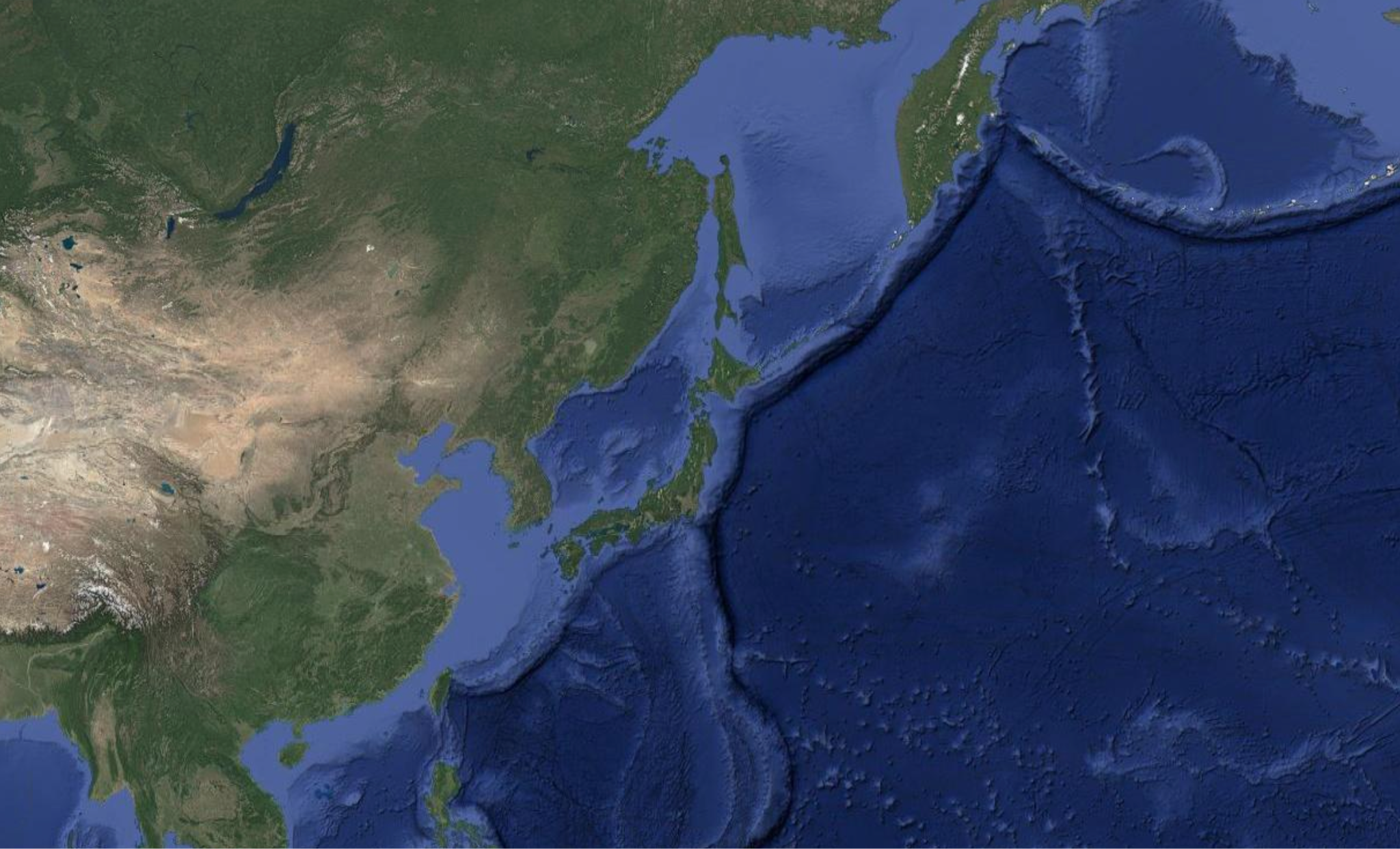
What can you see?
The Four Main Islands
The three big islands of Honshu, Kyushu, and Shikoku were destined to be a political unit:
They are very close to each other
They’re also oriented mostly east–west. That means they share the same climate, which facilitates movement, because people’s lifestyle and crops don’t change.
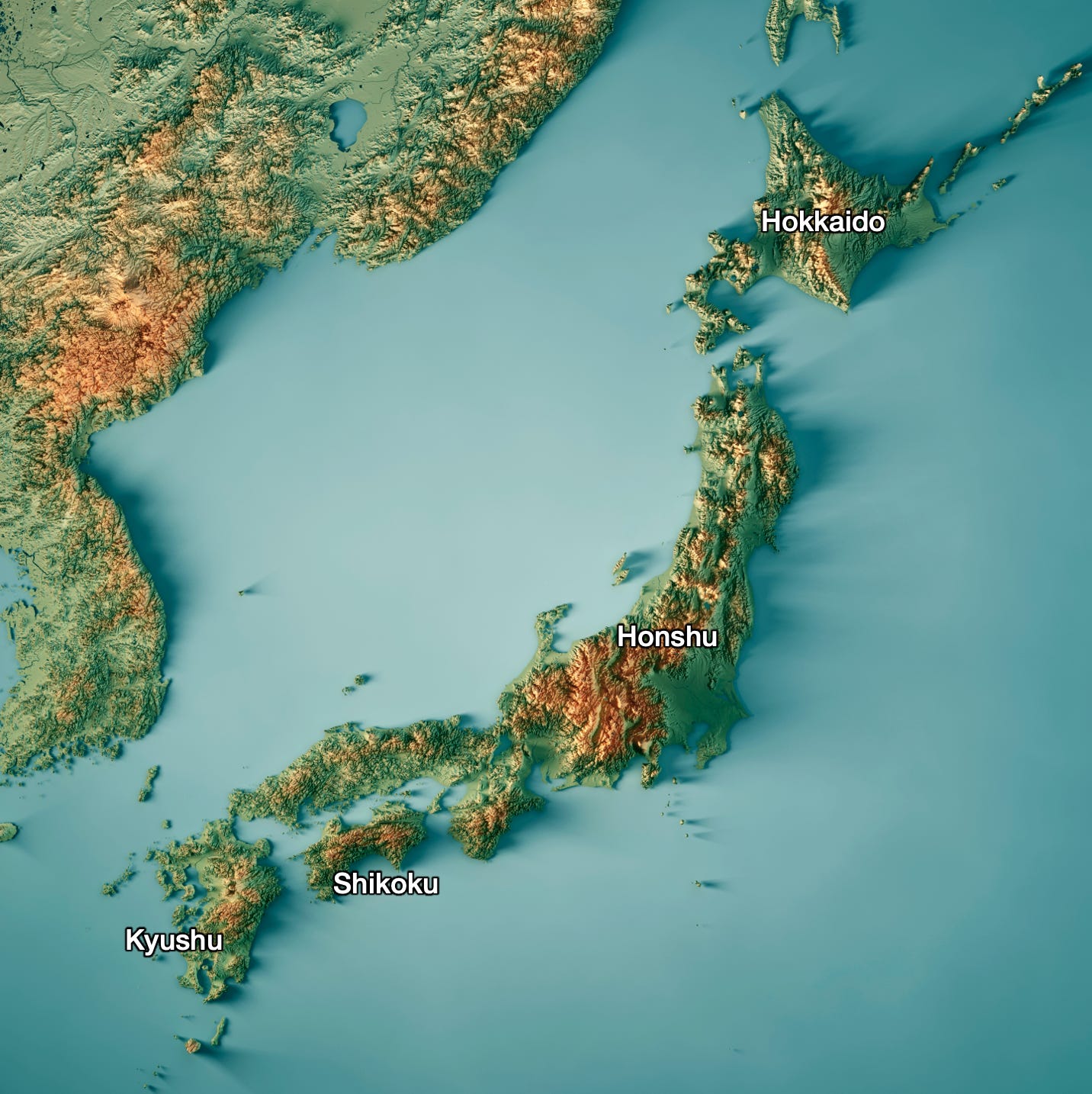
Hokkaido is much farther north, which means different climate and ways of life, so unifying with the other islands would be harder. But the island is so close (~19 km, 12 mi) to Honshu that it was very likely to ultimately unify with Japan. All this explains a lot of Japanese history, like for example, why the three southern islands of Japan united partially for the first time over a thousand years ago, and why Hokkaido was only fully conquered and colonized at the end of the 1800s.
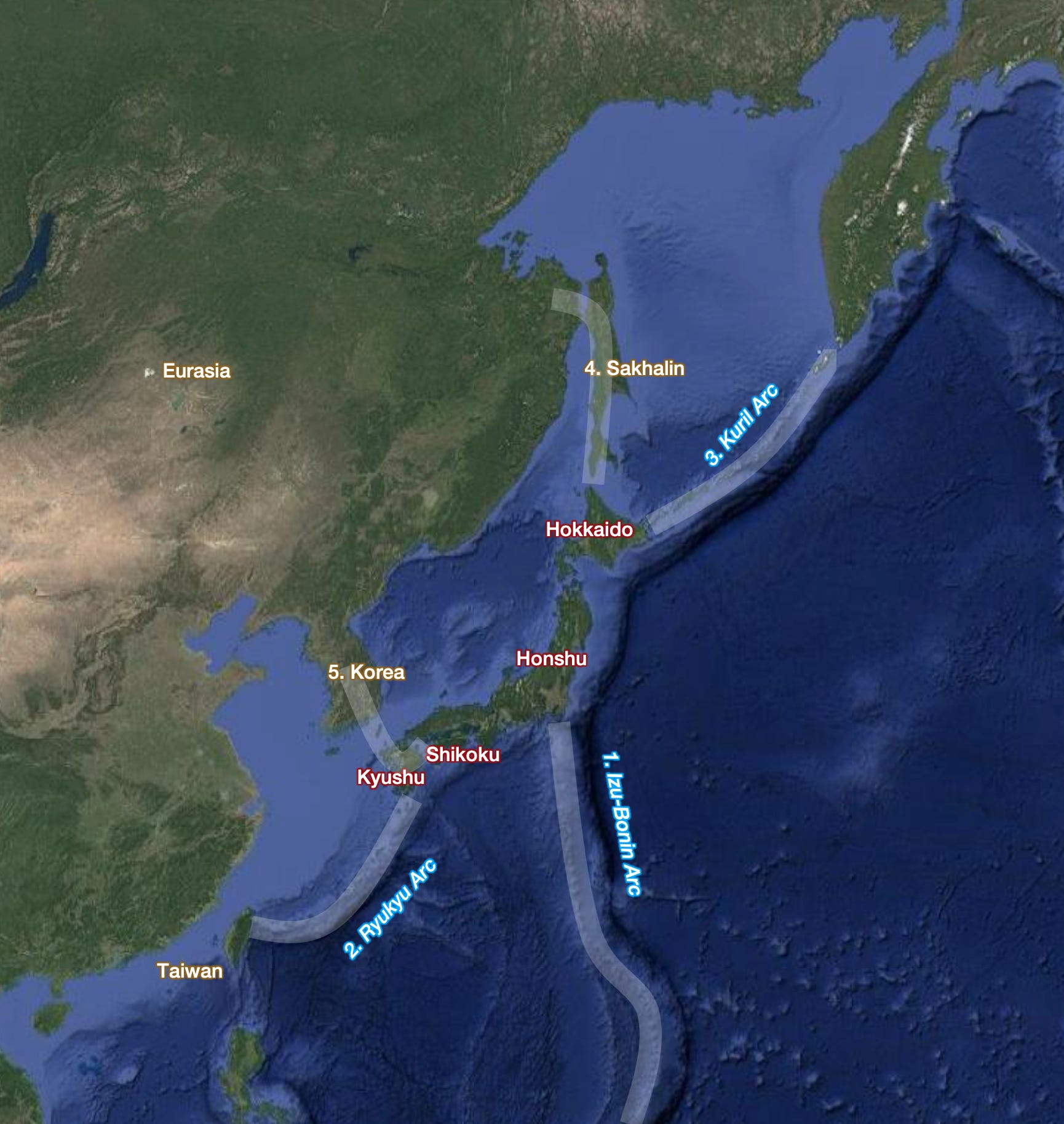
These four islands are not isolated in the middle of an ocean. There are five paths to reach them.
The Five Gates to Japan
1. Izu-Bonin Arc
The Izu-Bonin Arc goes nowhere in the Pacific, so it was logical that Japan would own it. This is where the islands of Guam and Iwo Jima are,1 which the US used to approach Japan from the south during WW2. The US still owns Guam.
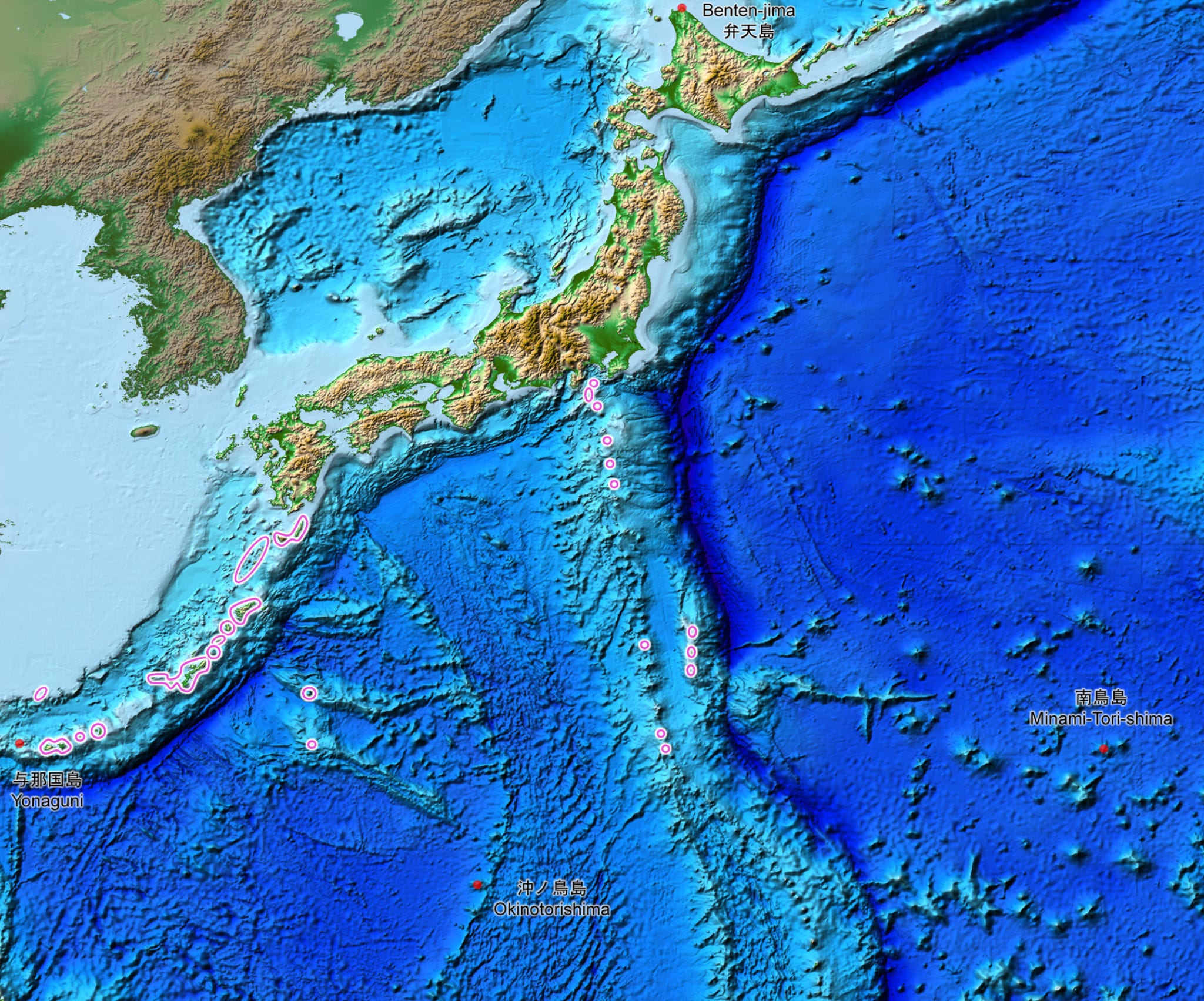
The other four gates extend close enough to the continent that their ownership could be contested between Japan and the Asian powers.
2. Ryukyu & Taiwan
The Ryukyu arc ends at Taiwan, which is 130 km (80 mi) away from mainland China, separated by treacherous waters. Since Asia is such a massive continent, wars between its biggest powers have always been land-based, so their armies have also been land-based, and hence their navies were never strong. That’s why Taiwan has been part of the Netherlands (sea power), Spain (sea power), the Koxinga regime (a Chinese sea power), Japan (sea power), independent for the last 80 years (supported by the US, a sea power), and only part of China (Qing Dynasty) for a bit over 200 years, in the 1700s-1800s.
That explains why Taiwan has been contested throughout history, and after they lost their independence, the islands in the Ryukyu Arc have been part of either Japan or the ruling power in Taiwan. Since Taiwan has never been that strong, most of that arc of islands belongs to Japan today, after it conquered it in the late 1800s. This is why Okinawa, for example, belongs to Japan today.
As China’s economy and influence grows and it tries to return Taiwan to the fold, it includes more than just Taiwan in its claims. The most notorious example is the Senkaku Islands, whose exclusive economic zone might include oil, and are closest to China (of all the Japanese islands in the area).2
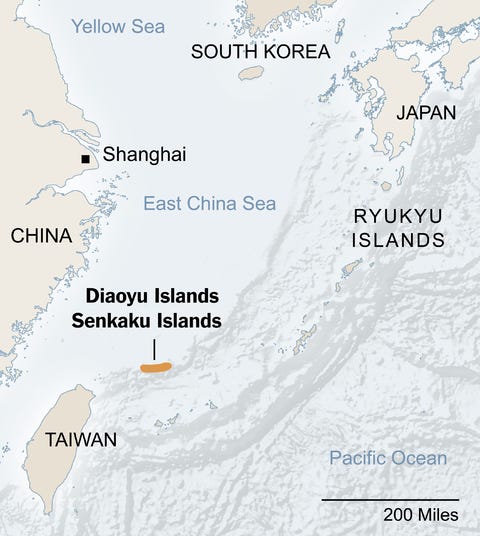
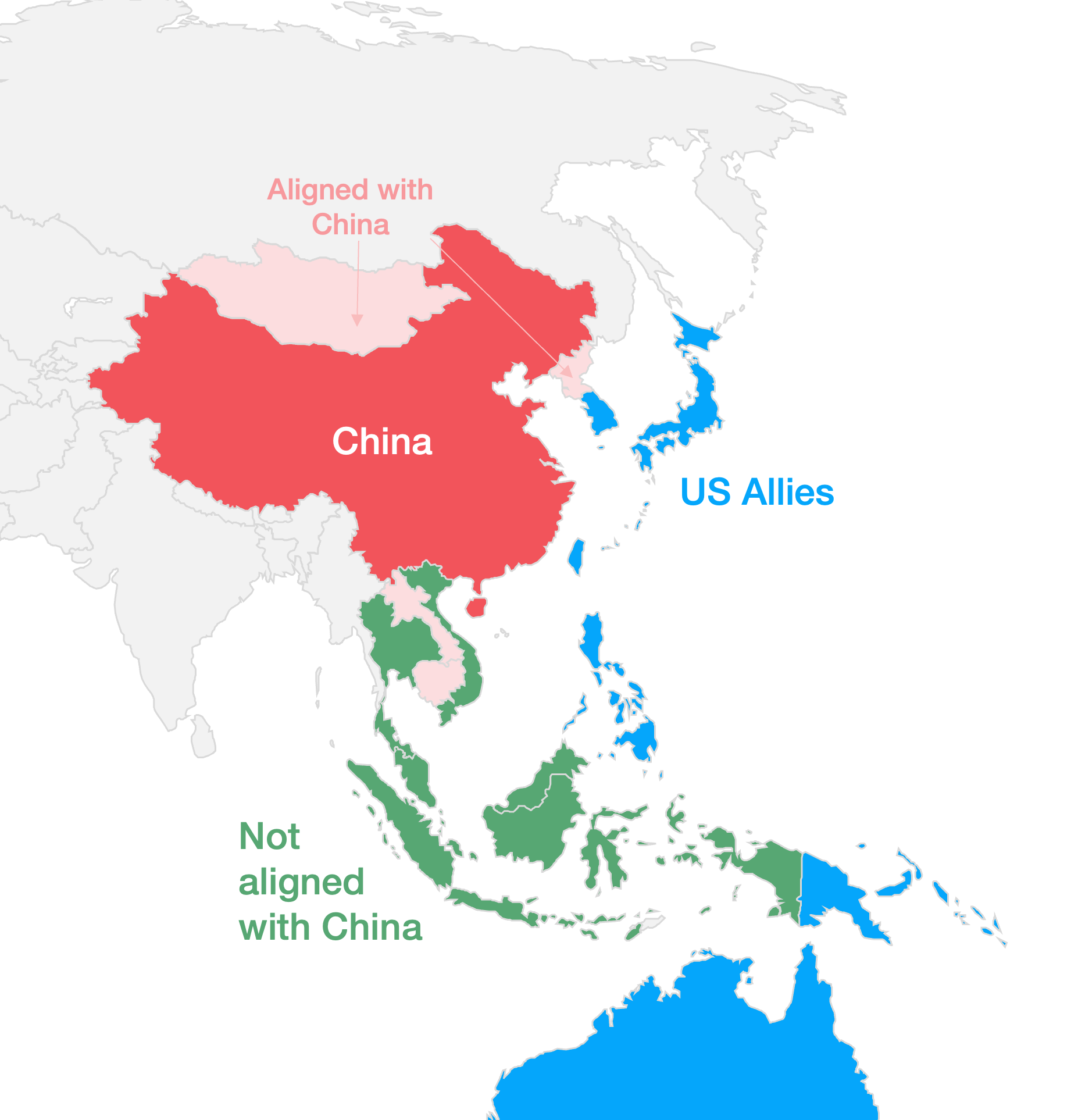
Notably, today China is encircled by enemies in the sea, which means they could blockade it. That’s why it is being so aggressive in pushing against its neighbors in the South China Sea, and another reason why it’s aggressive towards Taiwan.
3. Kuril Arc & 4. Sakhalin Island
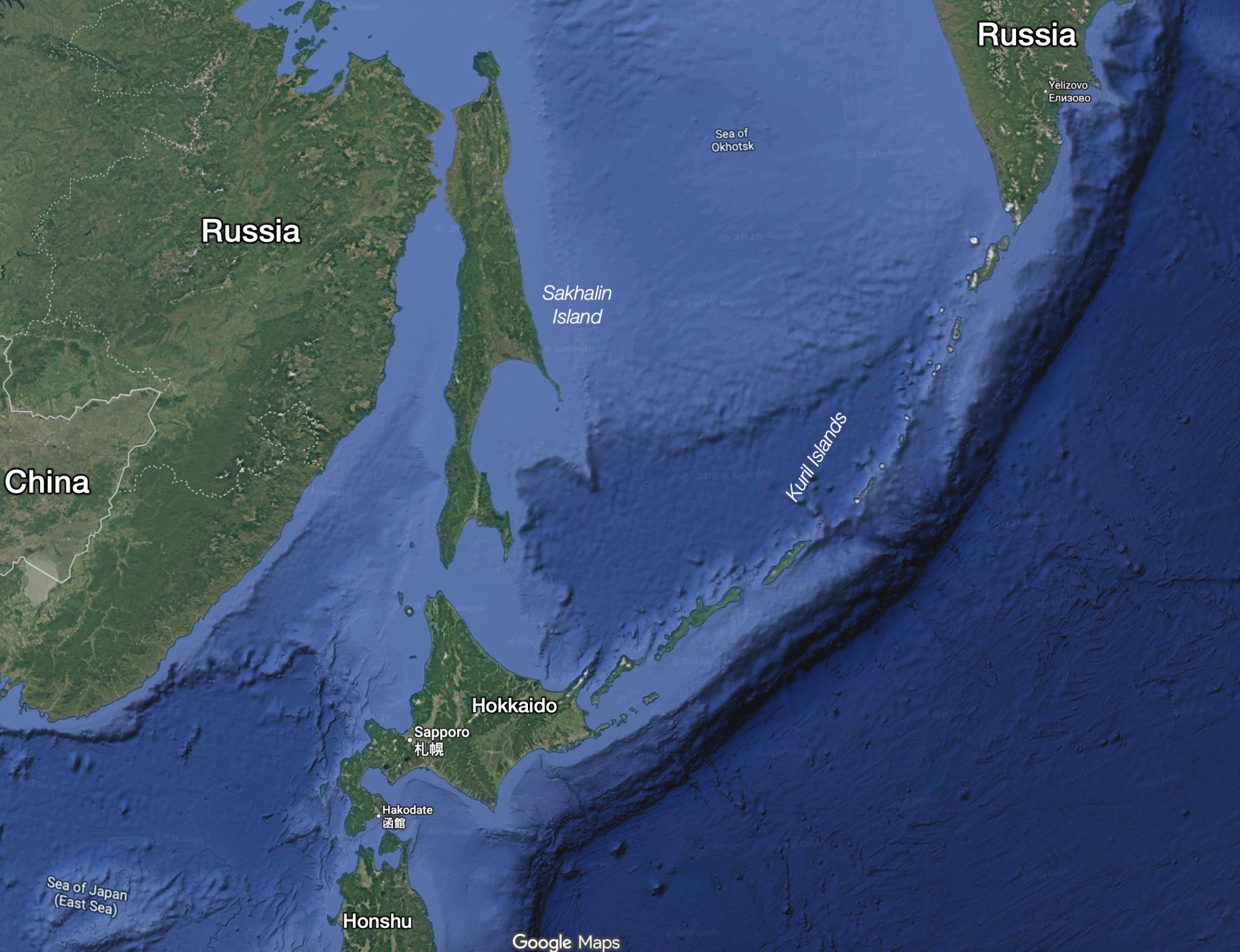
The island of Sakhalin and the Kuril Arc could have belonged either to Japan or to the continental power in the region—which happens to be Russia. This has always depended on the winner of the latest war. Since Russia became an imperial power before Japan, it had time to reach the Pacific and take Sakhalin before Japan did. By that time, Japan had industrialized, and it won the war with Russia in 1904-1905, so it took control of the southern half of Sakhalin Island and the parts of the Kuril Arc it didn’t already cotrol. But then Japan lost WW2 in 1945, and the USSR rushed to reclaim as much of these islands as it could. It recovered Sakhalin and conquered all the the Kuril Islands
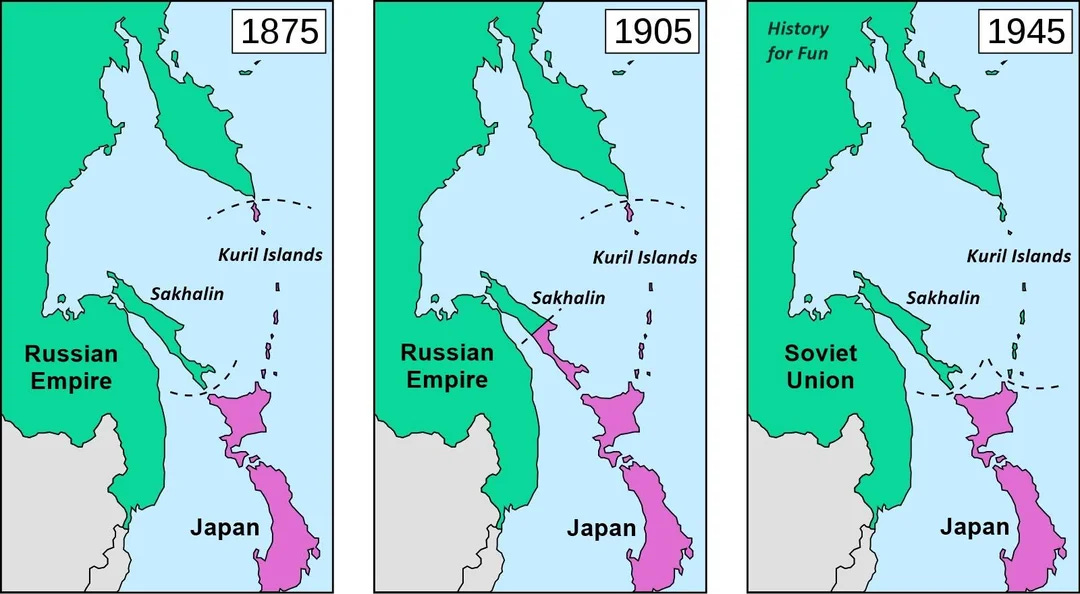
The USSR pushed so aggressively that the closest Russian island to Hokkaido is just ~2 mi / 4 km away!
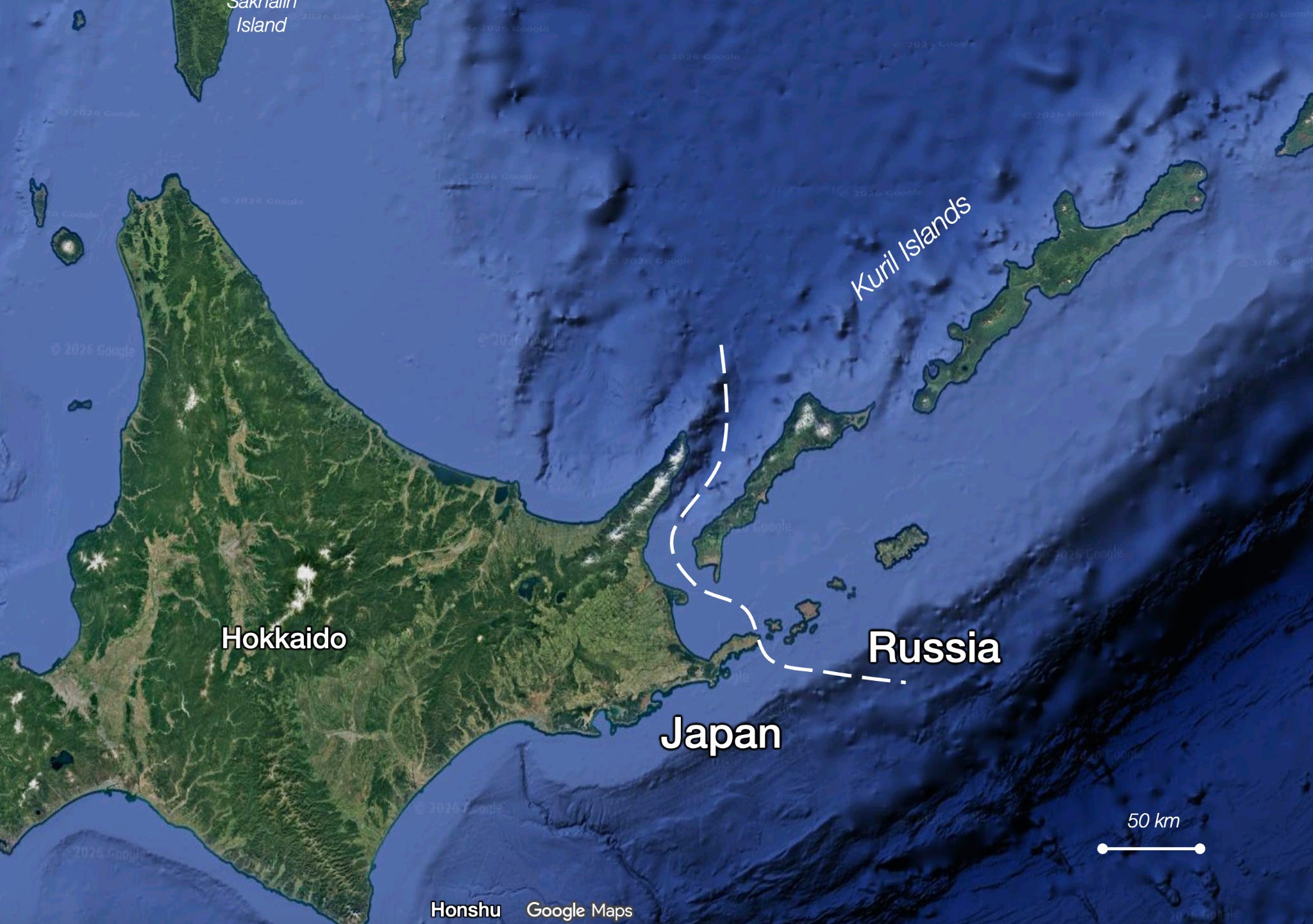
Historically, Japan is in a stronger position than Russia to control the Kuril Islands, because they’re small distant islands and Japan is a maritime power, while Russia, by nature, is a land-based one. It’s very telling that Russia and Japan have never signed a peace treaty since WW2, mainly because Japan has a very strong historical claim to these islands, and they disagree on where exactly the border should be.
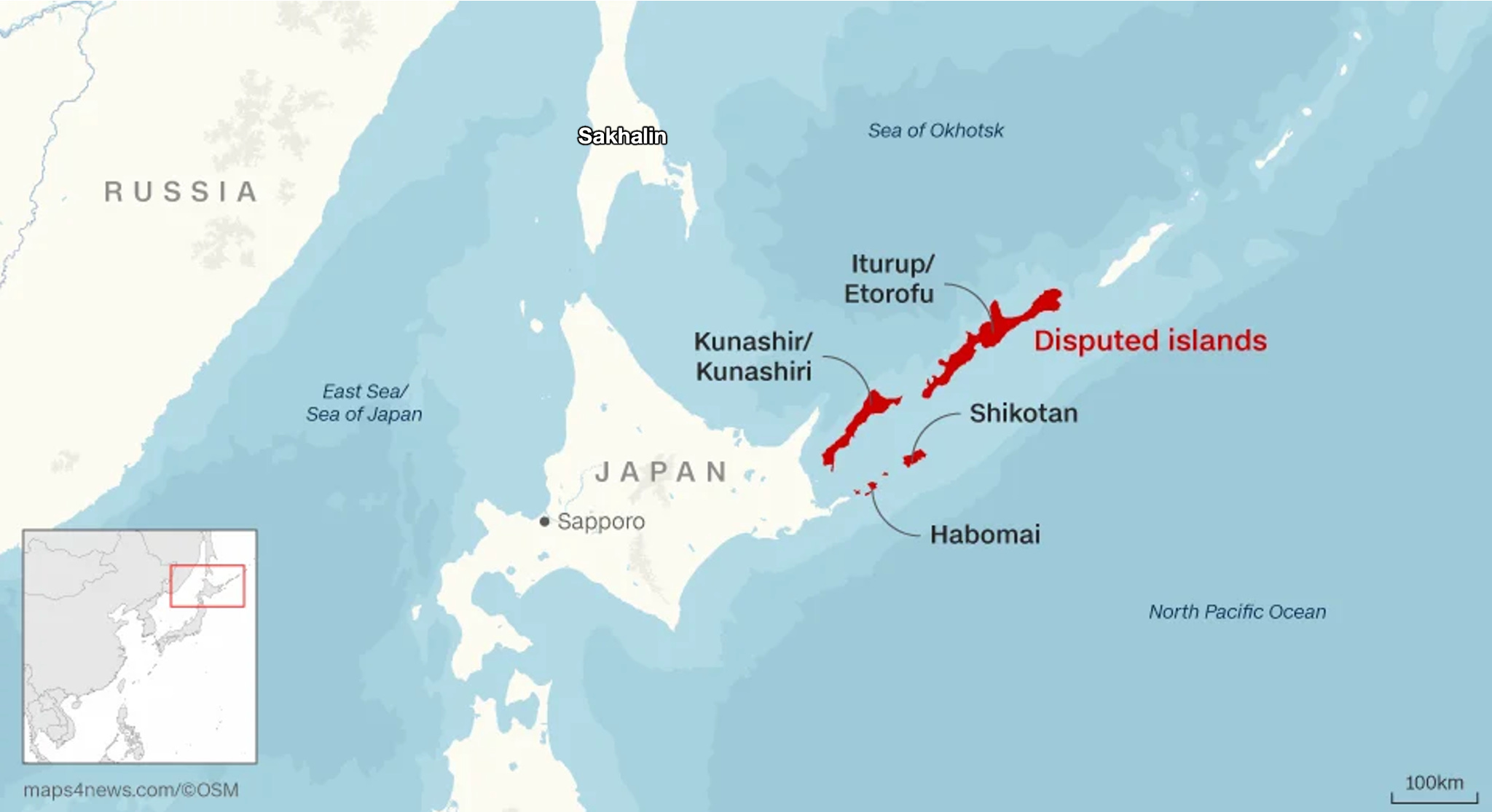
Russia kind of agrees that the small islands are Japanese (Habomai, Shikotan), but doesn’t want to give them up unless Japan ends the claim on the bigger Kunashir and Iturup.
In the other direction however, Sakhalin is big enough and close enough to the continent (less than 10 km) that, although it could have gone either way, it favored Russia historically—and has almost always been Russian.
5. Korea
Korea is far enough from Japan that it’s quite hard for either Japan to conquer Korea (three attempts, one succeeded in the late 1800s/early 1900s, for less than a century), or for Korea to conquer Japan (two attempts, failed, by the Mongols).
If Korea had been a flatland better connected to China, it would historically have been part of China. Being a mountainous peninsula, it has always been hard for China to control. Here’s a diagram, from the Korea article:
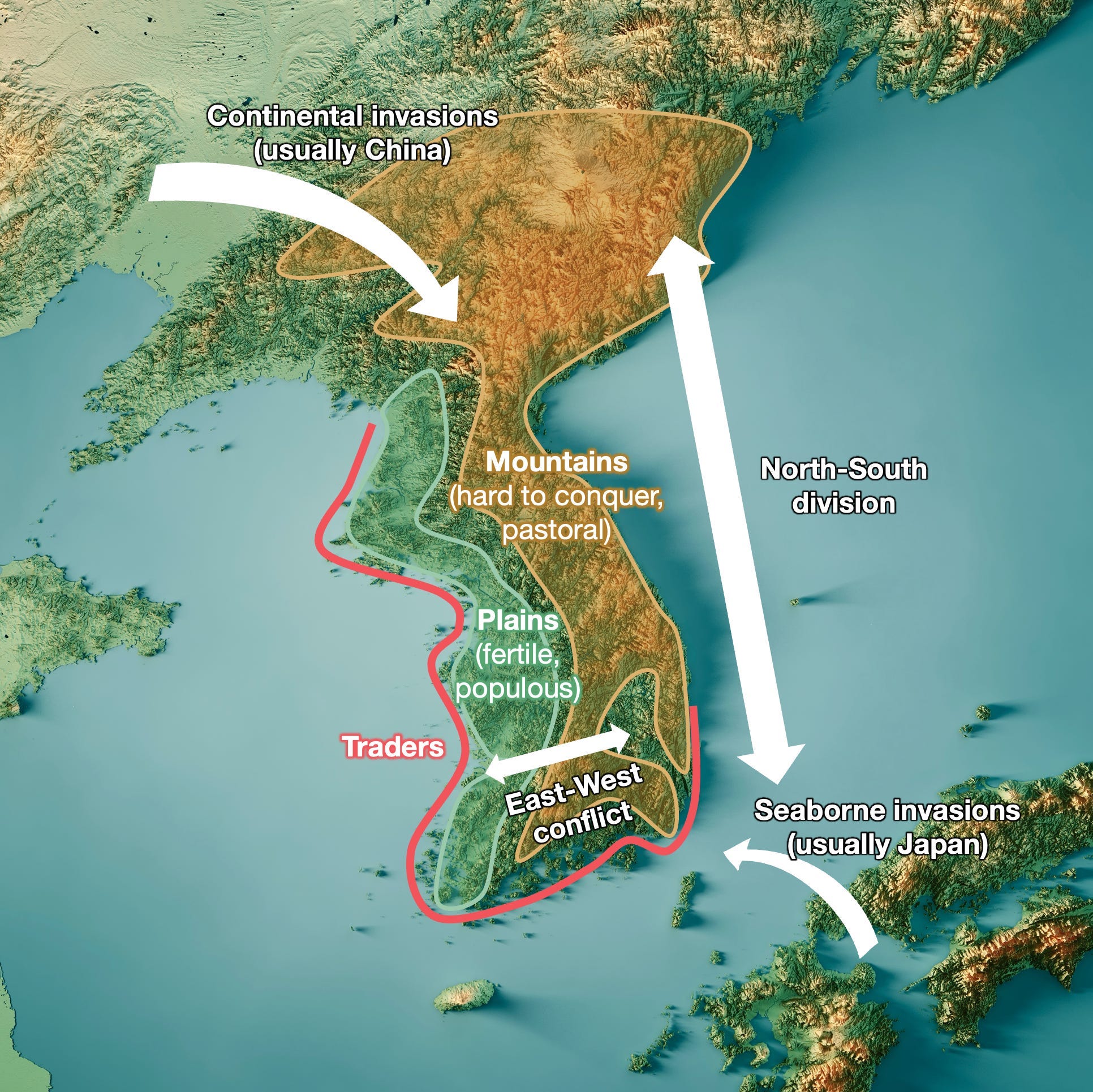
The result is that, for Japan, Korea is likely to always be a buffer against continental powers.
In between the two is the island of Tsushima, which could be used as a stepping stone in either direction, especially since it’s closer to Korea (~50 km) than to Japan (~130 km). The claim to it could have gone either way, but for the same reasons as before, it’s Japanese, since Korea has had to be a land power to fend off China, but Japan is a sea power with no threat to the south or east. It could focus on the island and get it.
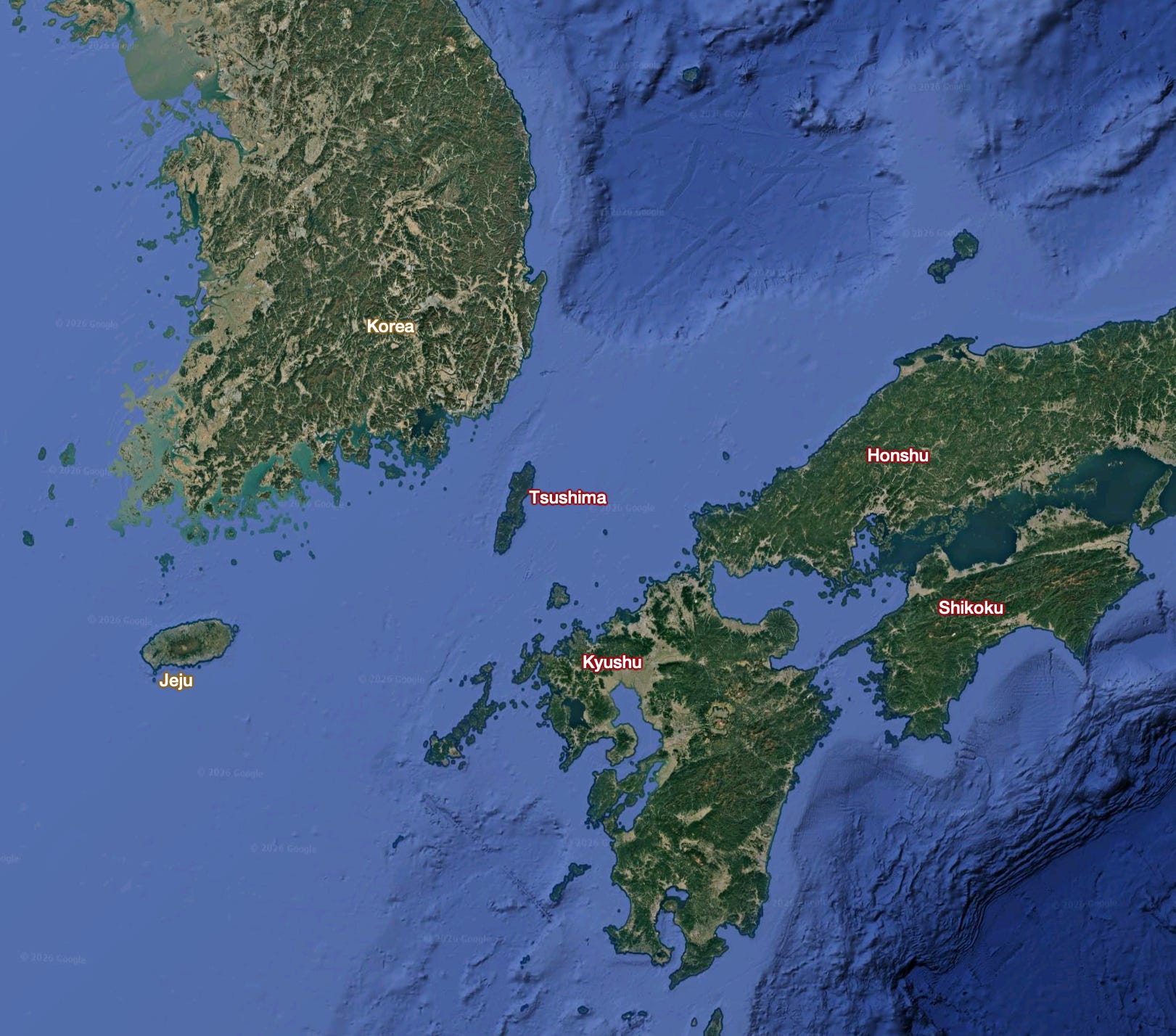
Jeju Island, meanwhile, is closer to Korea via plenty of small islands, and farther from Japan, so it ended up in the Korean sphere.
The distance between Korea and Japan is long enough that there have been few invasions on either side, and even fewer that succeeded, but short enough that trade and technology could travel—mostly from the continent to Japan.
Resources
We’ve identified Japan’s first three main objectives:
Internal priority: Unify the four main islands
External priorities:
Secure all the islands that lead to Japan
Fend off the threats from powerful Asian empires
To figure out the last objective, we need to zoom back out.
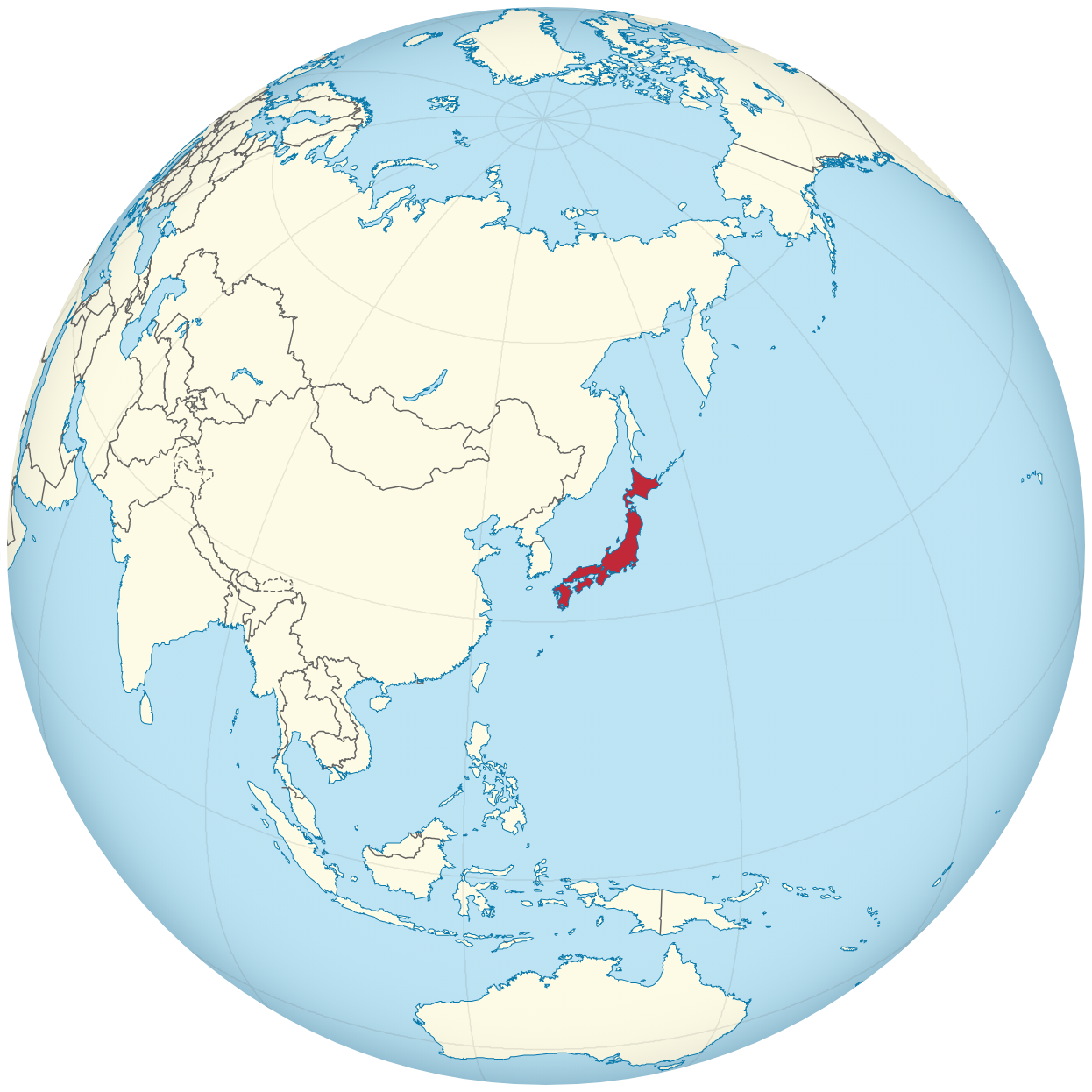
Japan is lonely. There’s nothing to its east and south. To its north, there’s just cold. All its potential threats come from the west—but that’s also where all the resources used to come from.
Because Japan is resource poor. As it’s on a “newly” formed geology,3 it doesn’t have much oil or coal.4 The newly-formed mountains had gold, silver, and copper—which the country used extensively in its past—but not much more than that.5 All the rare-earth minerals, and even more common ones like iron, which it needs for its advanced technology, must be imported.6 And the valleys are good for agriculture, but the population has outgrown its production capacity, so it needs to import the majority of its food: 63% of its calories and 34% of its value.7
So Japan must procure lots of commodities from abroad. As an island, these commodities will always arrive by sea, so Japan must make sure it can secure its maritime supplies—whether by controlling them or by being friends with the ones who do. Most of Japan’s missteps leading to WW2 can be traced back to this.
Japan’s 4 Geopolitical Objectives
So these are Japan’s 4 main geopolitical objectives:
Unite the four main islands
Secure the five gates that lead to Japan
Neutralize the superpowers that can invade: the Asian land powers and the international sea powers
Secure all the resources it needs through maritime trade
If you understand this, you can understand virtually all of Japan’s history:
How it coalesced around 700 AD into a united country for 1000 years
How it devolved into a feudal country over the centuries
Why it was unified around 1600
Why it forgot how to produce guns
Why its samurais forgot how to use their katanas and their horses
Why it closed down for 250 years
Why it got traumatized in the mid-1800s
Why it became the only non-Western country to industrialize in the 1800s
Why it created its own empire in Asia
Why it later lost it
Why it is the way it is today
Actually it’s the Izu-Bonin-Mariana Arc, as the Izu-Bonin splits in two and meets the Mariana arc to the east.
But also still closer to Japan’s Ryukyu Islands and Taiwan than to China
Last 25M years or so.
It has little oil, but more coal. It doesn’t mine it because it’s cheaper to buy it.
Lead (it usually comes with silver), zinc, iron sulfides.
The ore. It refines a lot of it.
That’s why vegetables are so expensive, for example. And why they’re so original, like cubic watermelons: When your land is expensive, machinery and work are relatively less so, and you can afford to play with your food.