

After 1300 years as the largest dome in the world, Rome’s Pantheon was replaced by Florence’s dome in Santa Maria del Fiore. To this day, it remains the biggest masonry dome ever built.1 What?!
In a span of 100 years, the same city would birth an endless list of history-making figures: Michelangelo, Leonardo da Vinci, Brunelleschi, Botticelli, Raphael, the Medici, Machiavelli… What’s going on?!
What was in the water? I’d like to know, to brew it again. Florence or Silicon Valley can’t have been pure serendipity. How do we replicate them?
To answer that, the best place to start is a cathedral that had spent 100 years with a massive hole in the roof that nobody knew how to plug, much before Lorenzo de Medici, Leonardo, or Michelangelo were born.
Brunelleschi’s Duomo
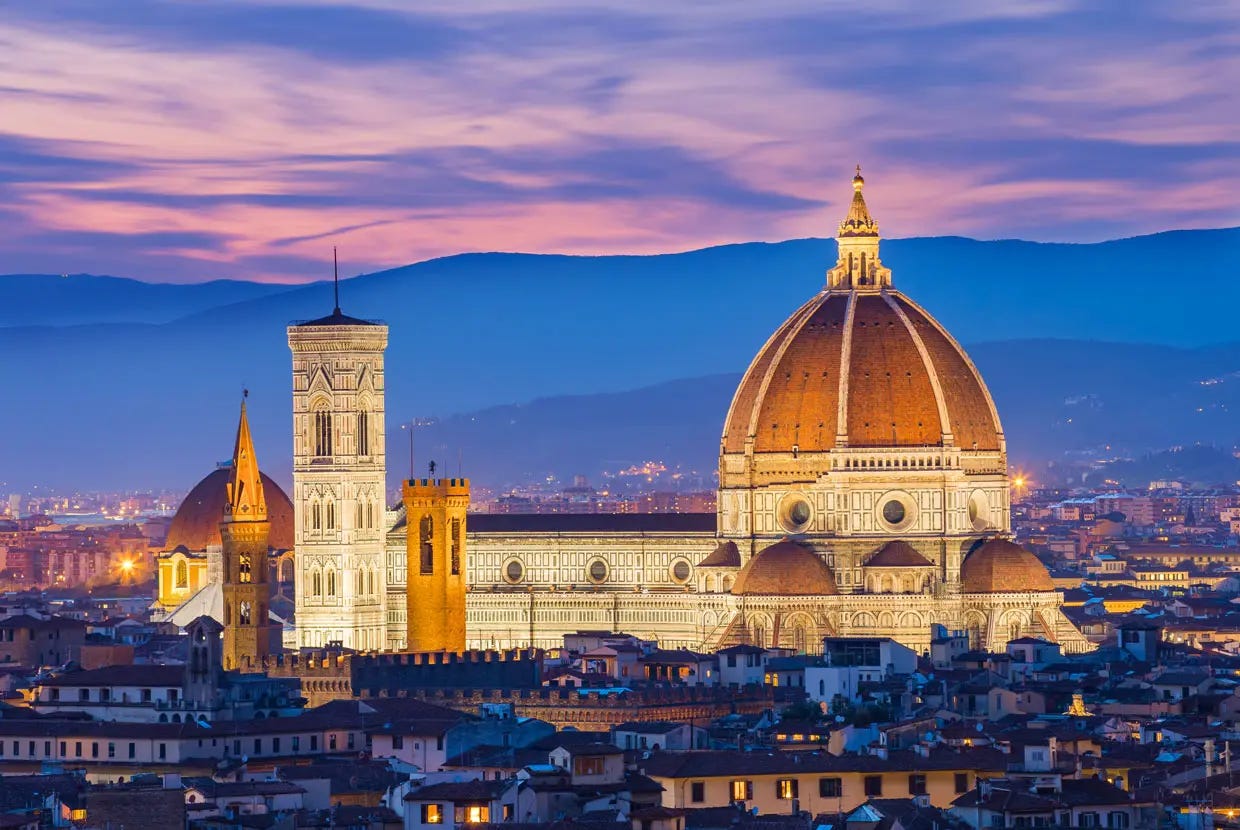
The architect that originally designed the cathedral died, and he left no solution on how to build the dome.
After a century with that hole (!) came a goldsmith (!!), Brunelleschi, who built the biggest dome the world had ever seen! And he did it without the cement used for the Roman pantheon, as its recipe had been lost in time!
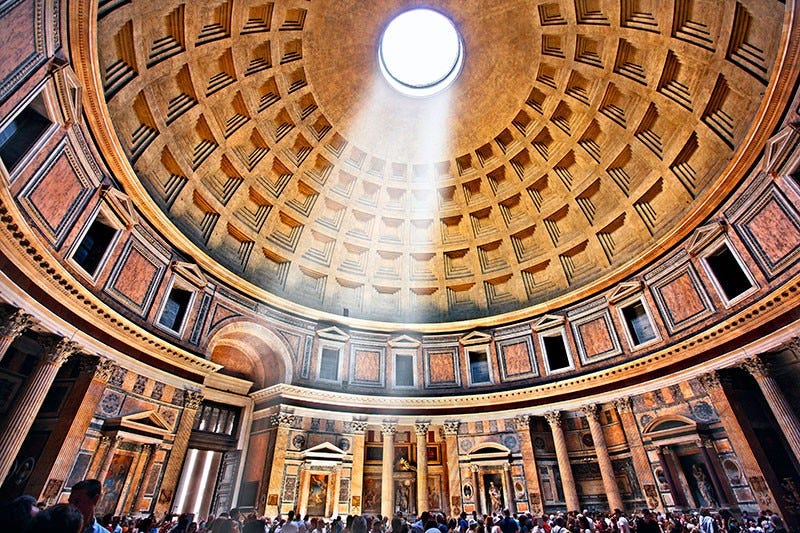
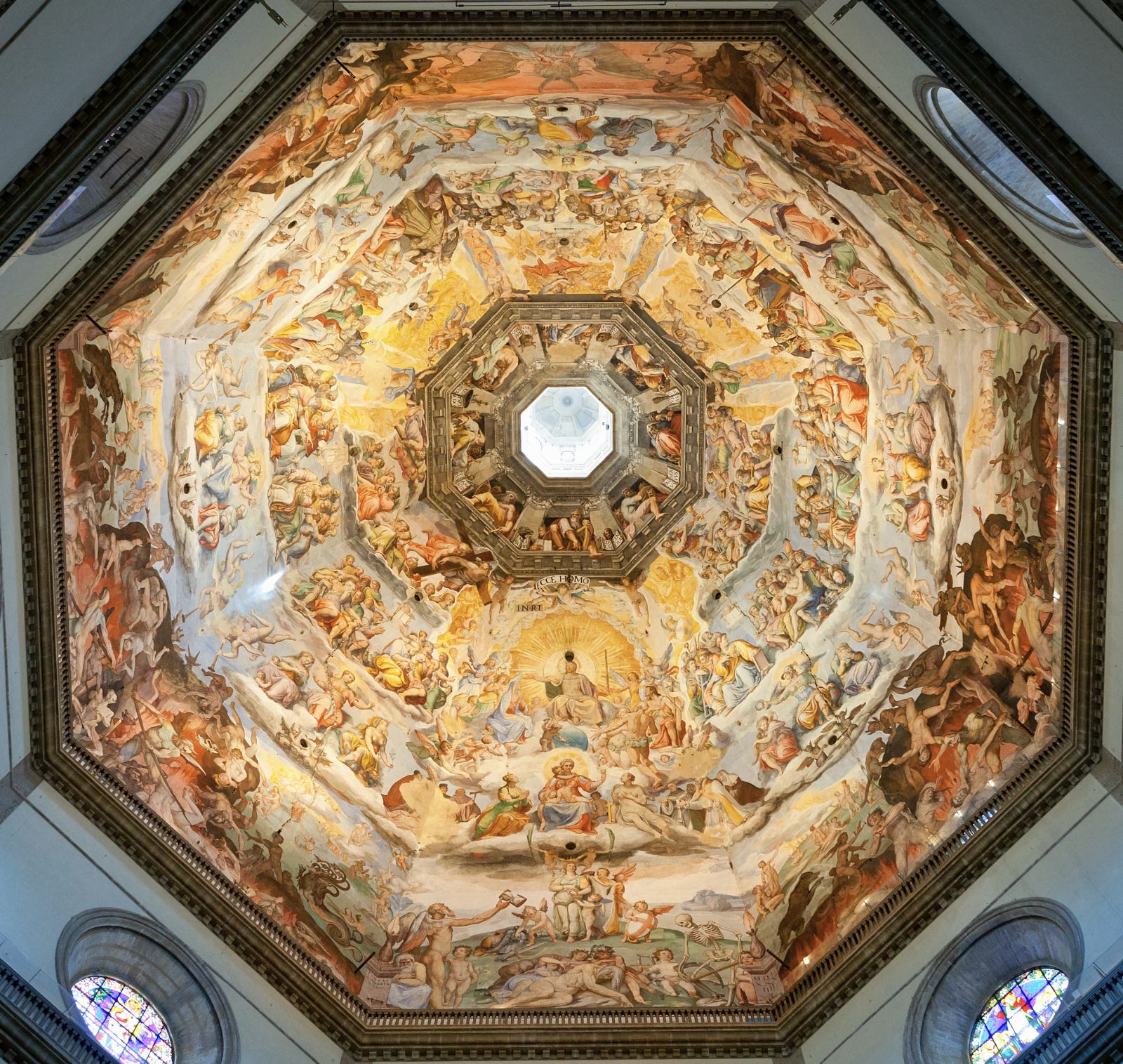
Even harder, since the rest of the cathedral was already built when he arrived, he couldn’t change the shape of its walls, reinforce them, buttress them, or anything like that. He had to work with what he had! And he did it without scaffolding! And he did it without ribs!2 This is crazy.
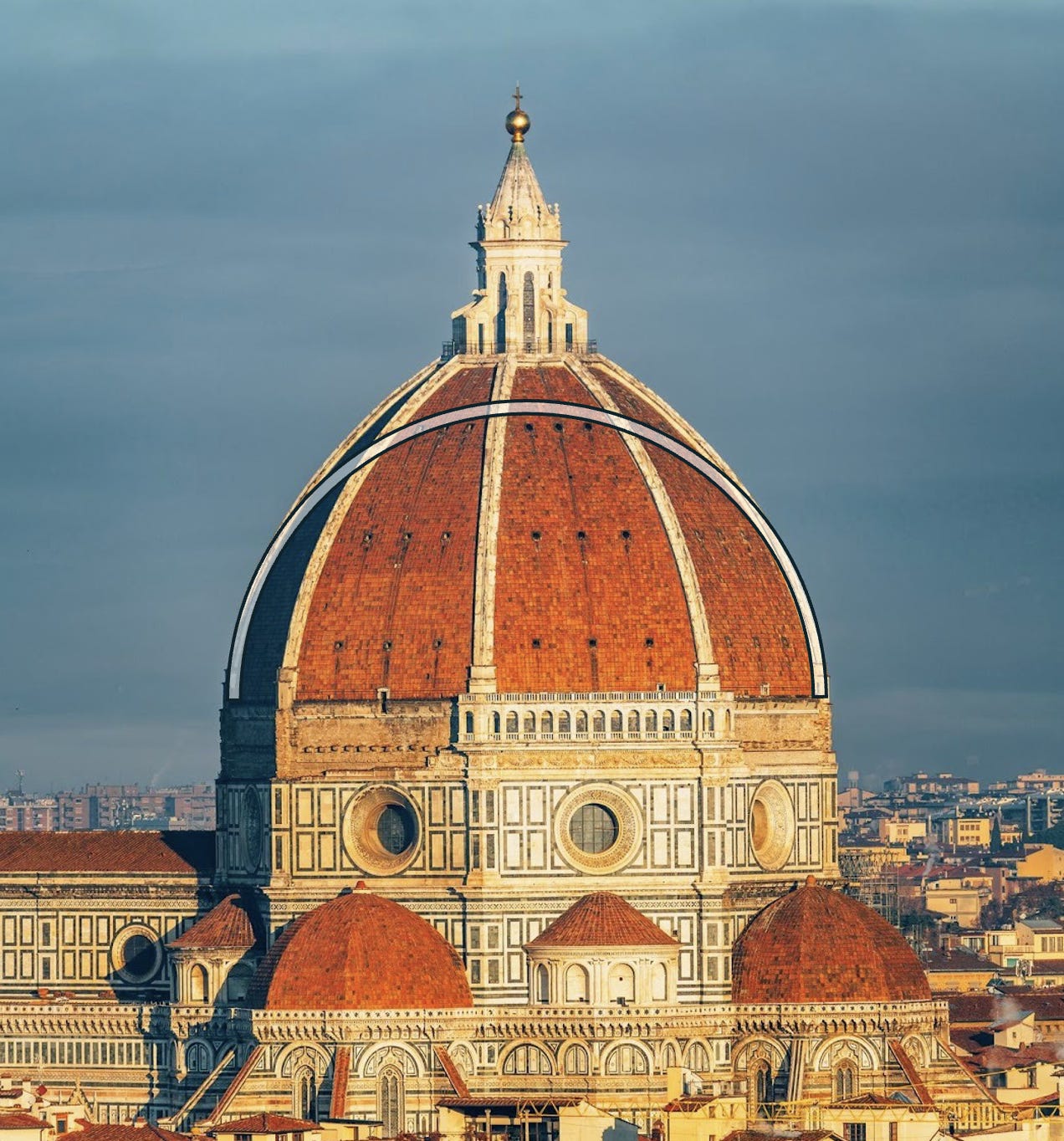
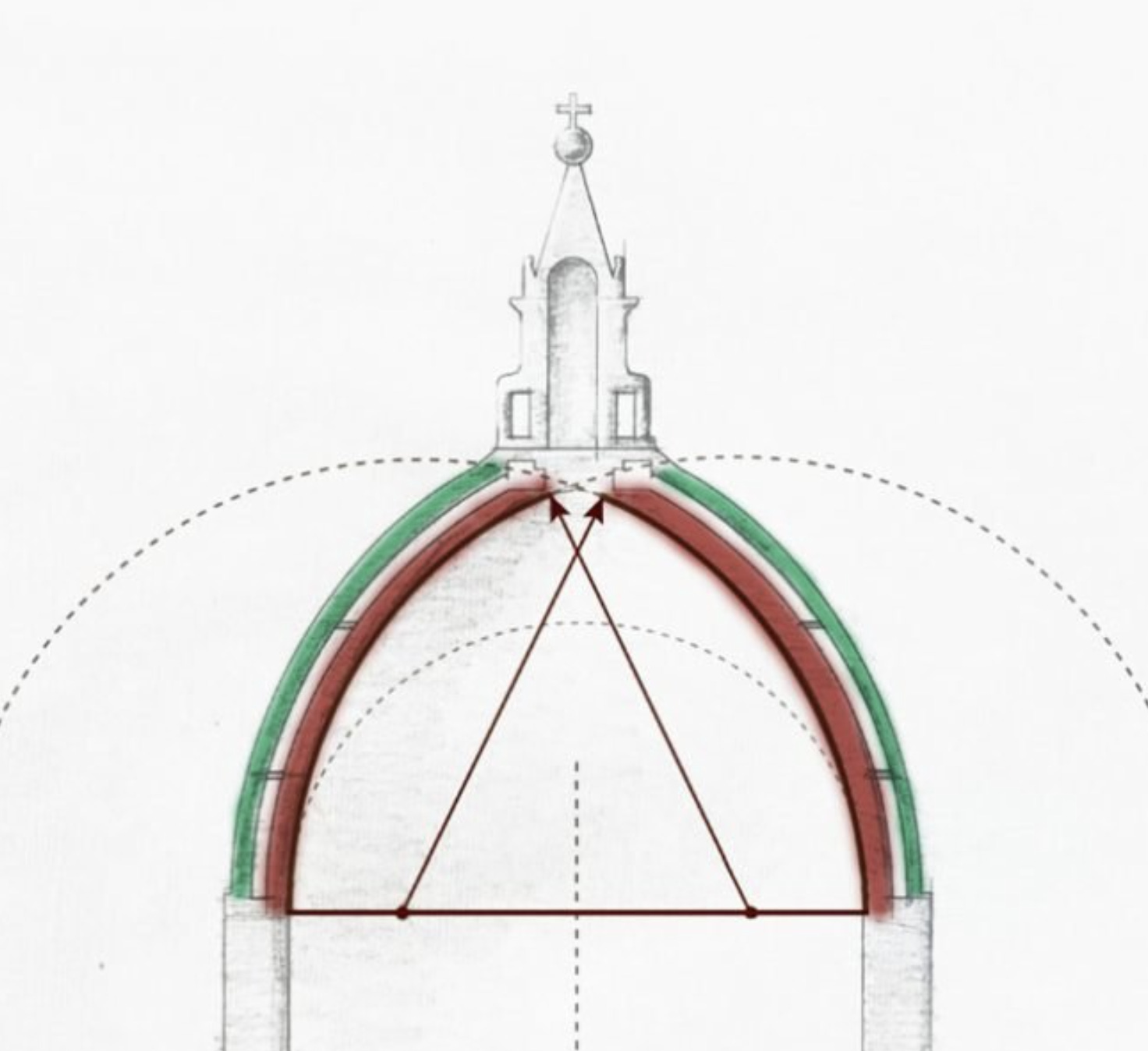
The key challenge was to prevent the dome from falling. The first thing there was to adopt the insight of Gothic architecture that taller arches are stronger than circular ones. So the dome is not a hemisphere, it’s a bit more vertical.
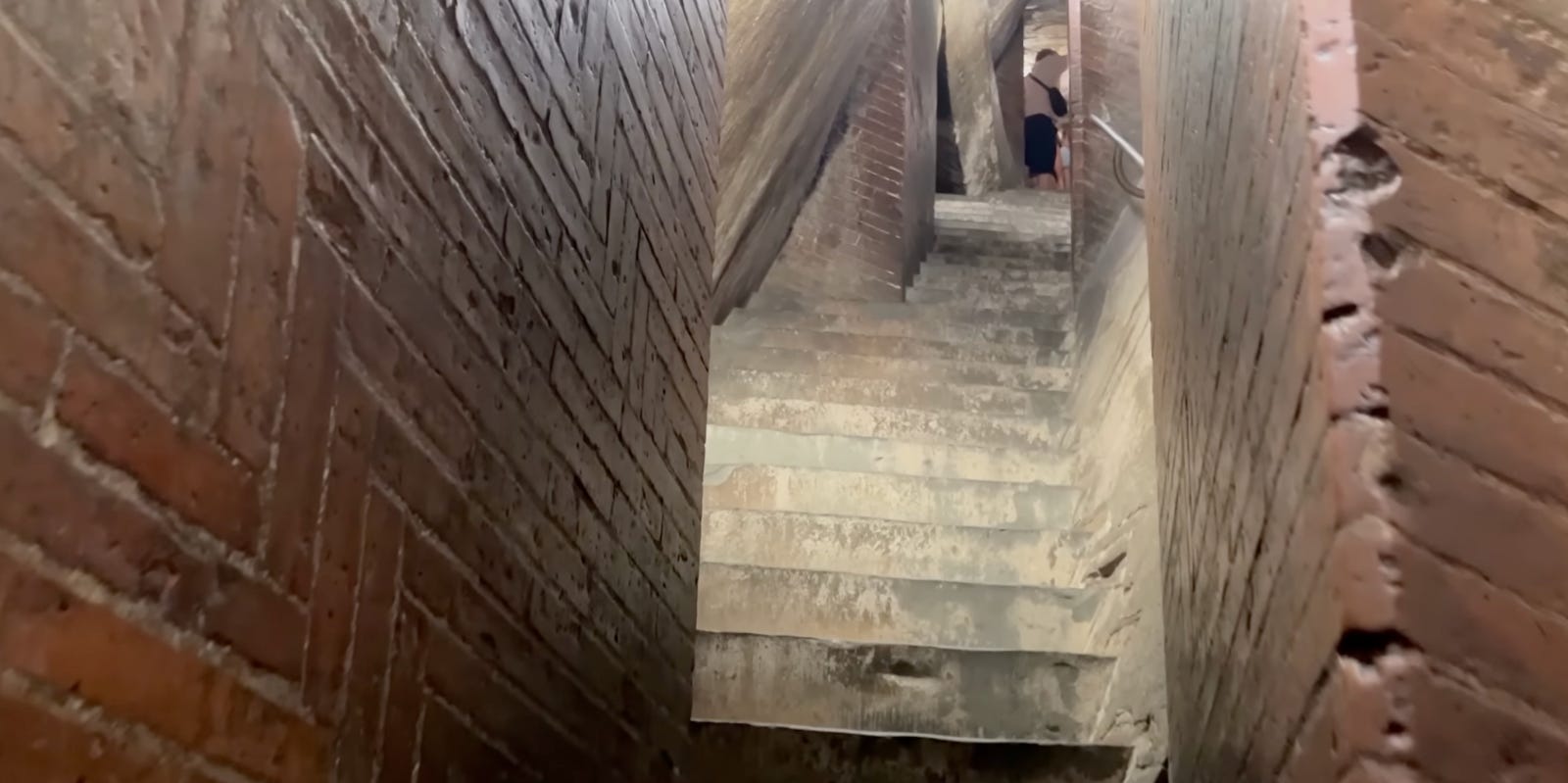
The second was to make it light by emptying it. The structural force is carried by the inner dome (red), and then there’s a space and an outer shell (green).
You can see the space between the roofs here:
Even then, it would have fallen.
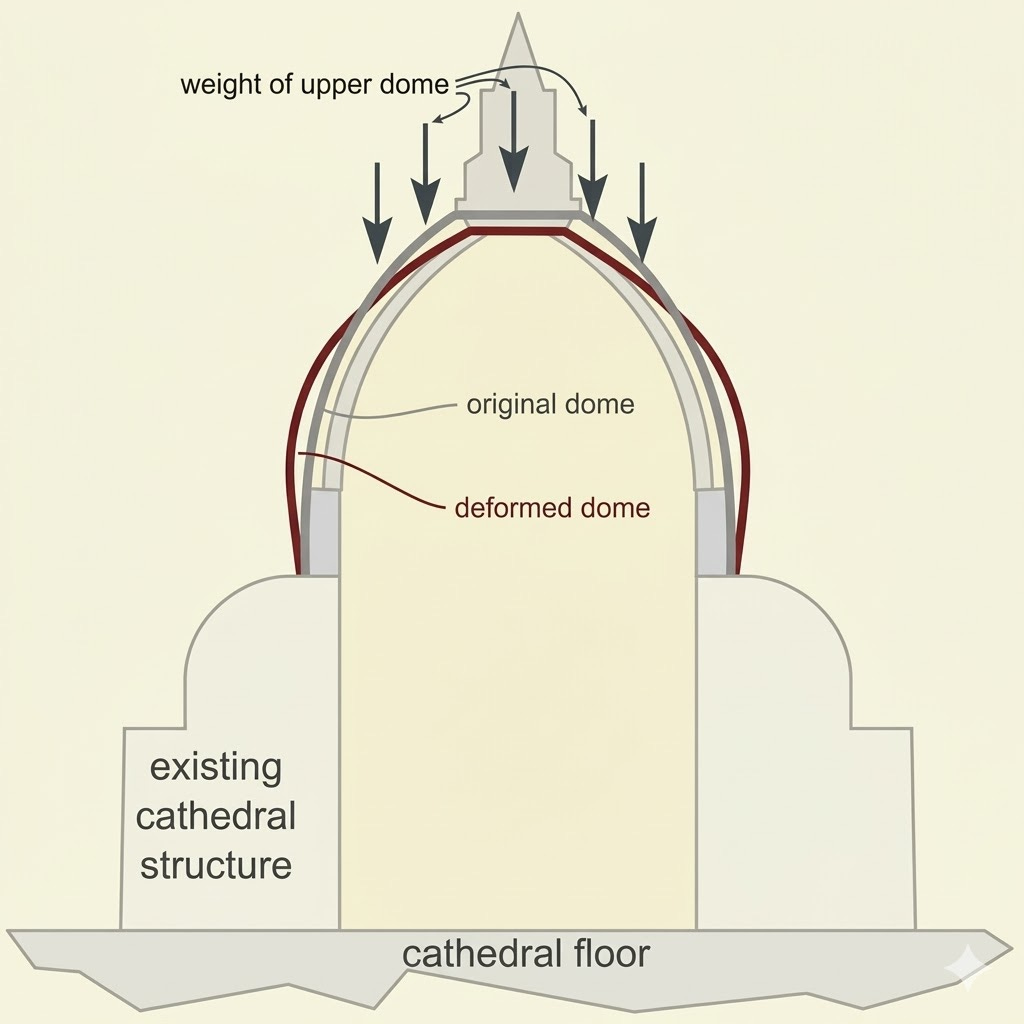
Brunelleschi needed a way to pull the top outward and push the bottom inward. He solved it with stone and wood rings around the dome!
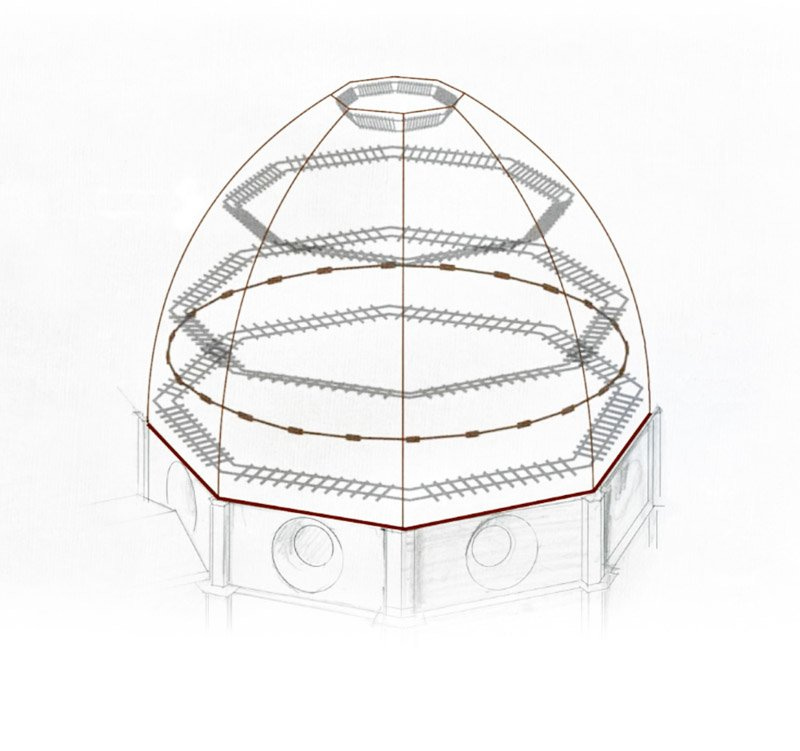
The other thing Brunelleschi had to figure out was how to build this thing without a wooden scaffolding inside (it would have required too much wood!). He solved that by building the entire structure ring by ring, using herringbone bricks, crossing the bricks so that they would support each other.
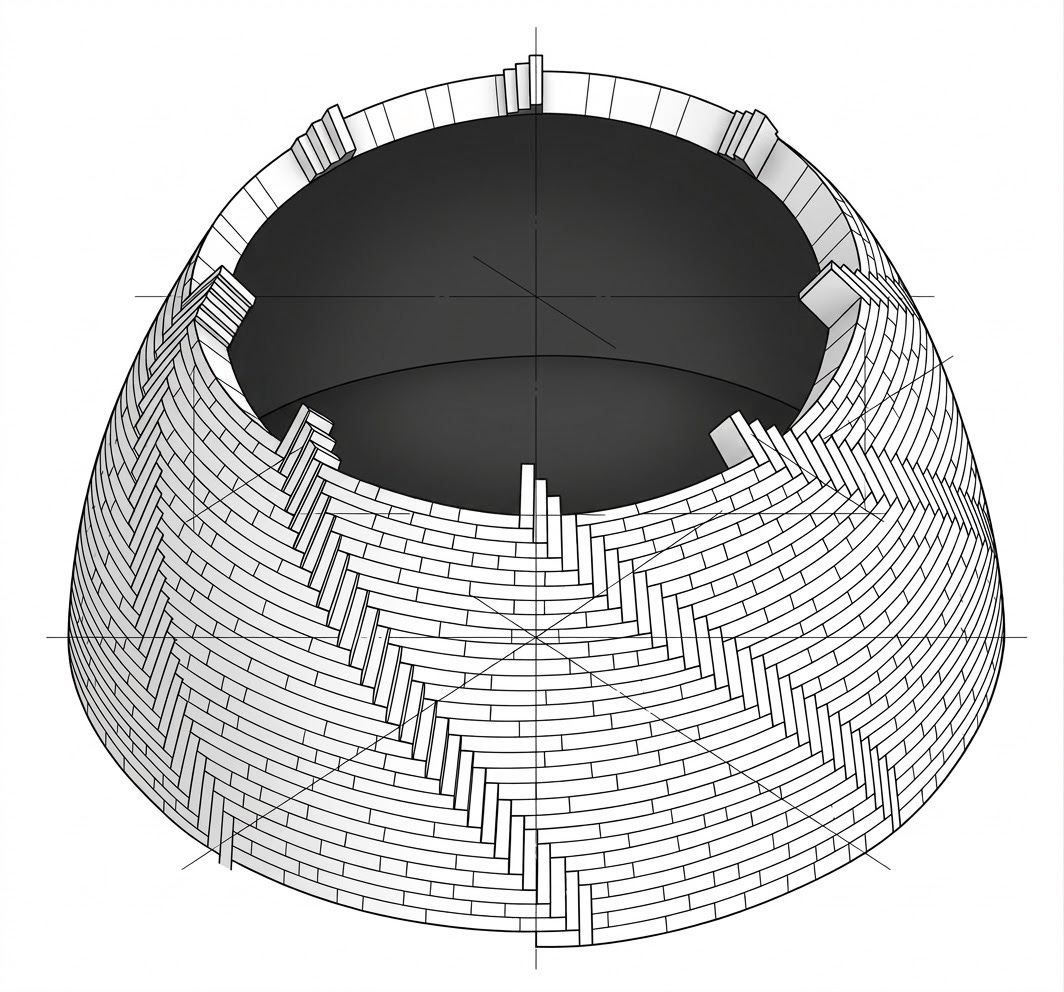
OK hold on. What’s going on here? Why, after 1300 years, out of nowhere, is a goldsmith that doesn’t even have the materials necessary for replicating the Ancient Rome Pantheon able to build a bigger one?! That we’ve never replicated?!
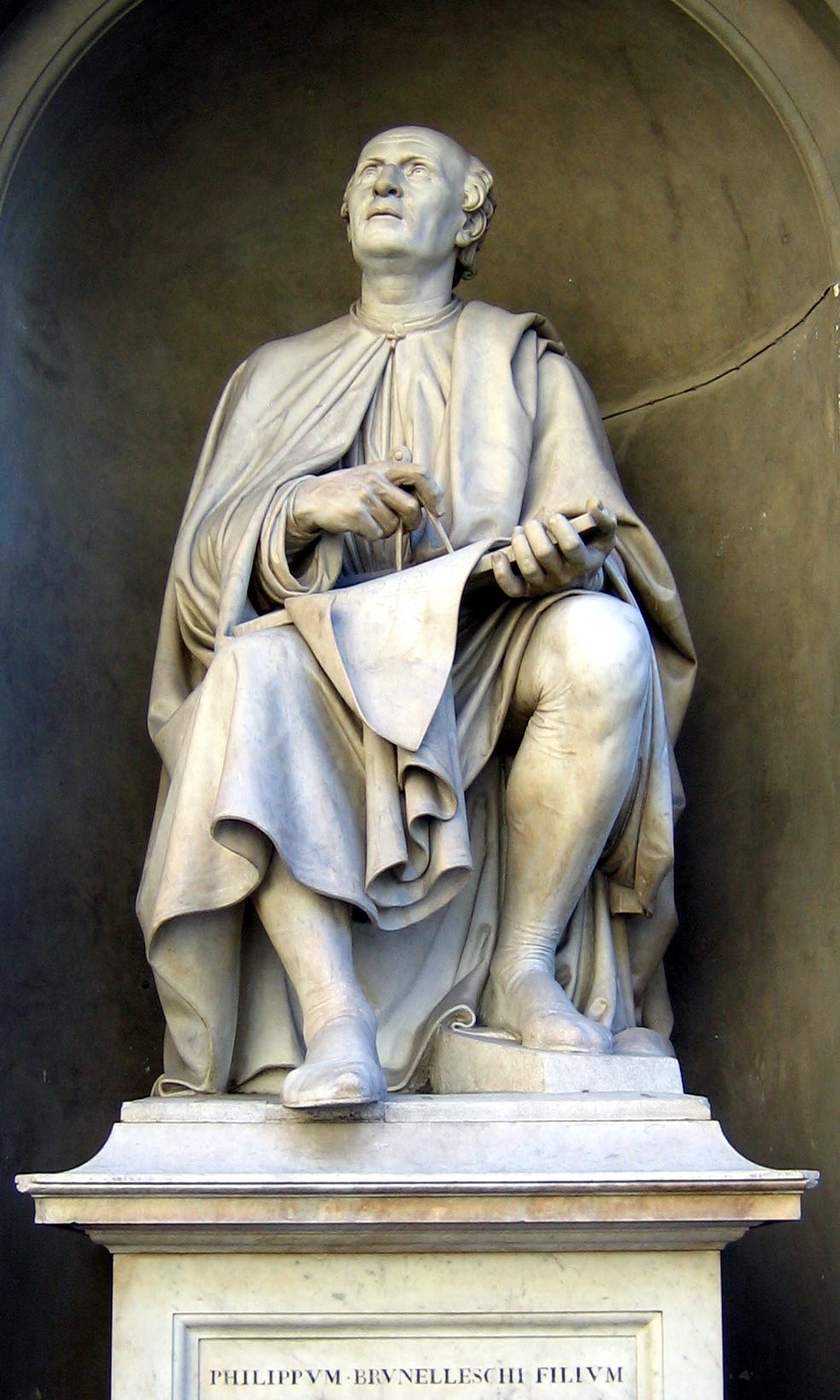
Leonardo’s Roman Proportions
Brunelleschi lived in Florence, a city with plenty of Ancient Rome ruins. I think it’s hard for us to understand what living among these vestiges of a better time felt like.
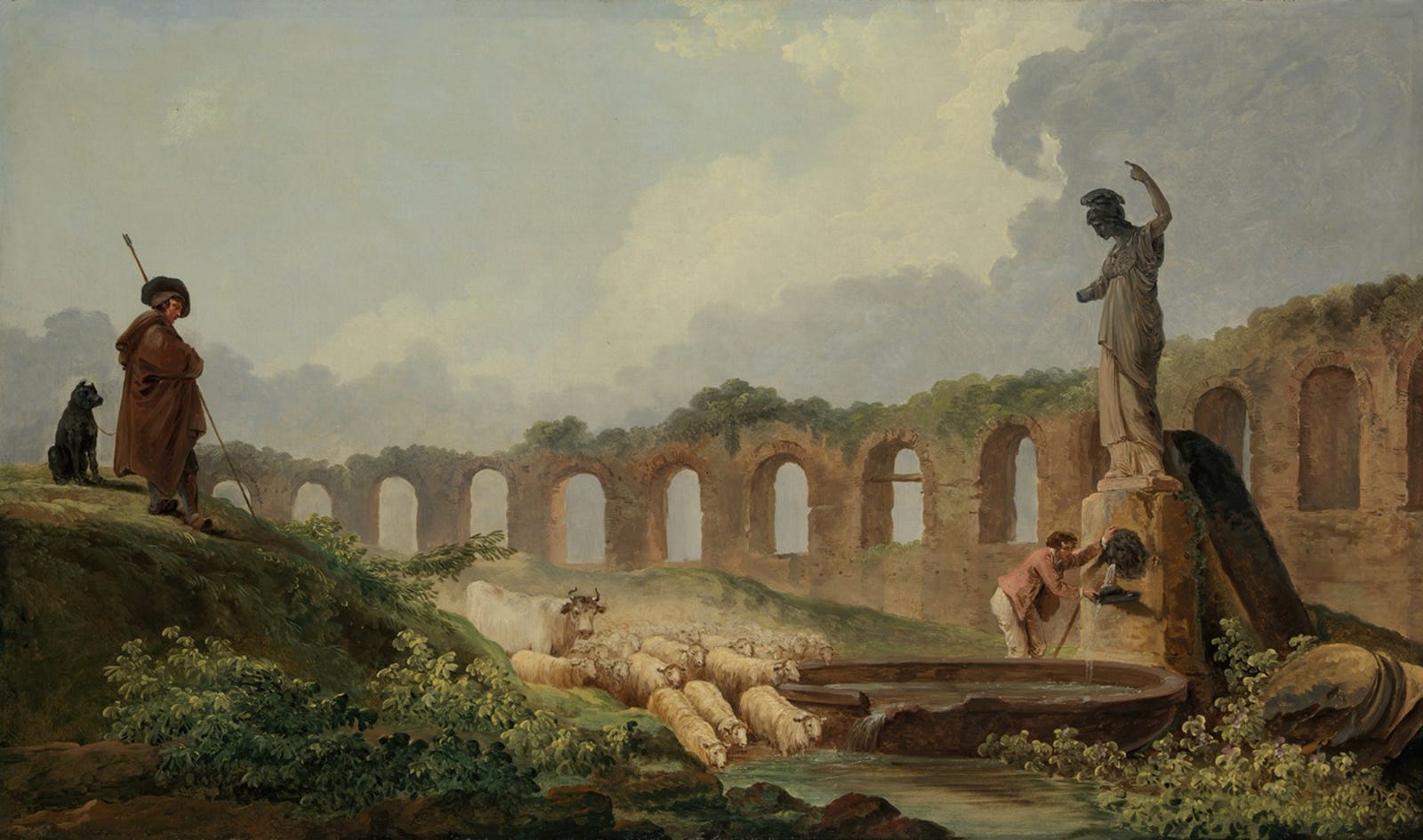
From Petrarch, a Tuscan from the neighboring city of Arezzo3 who visited Rome in the mid-1300s:
[Rome is a] broken city, the remnants of the ruins lay before our eyes. [...] Who can doubt that Rome would rise again instantly if she began to know herself?
Every day, you’d be reminded that your civilization is inferior to the one that came before.
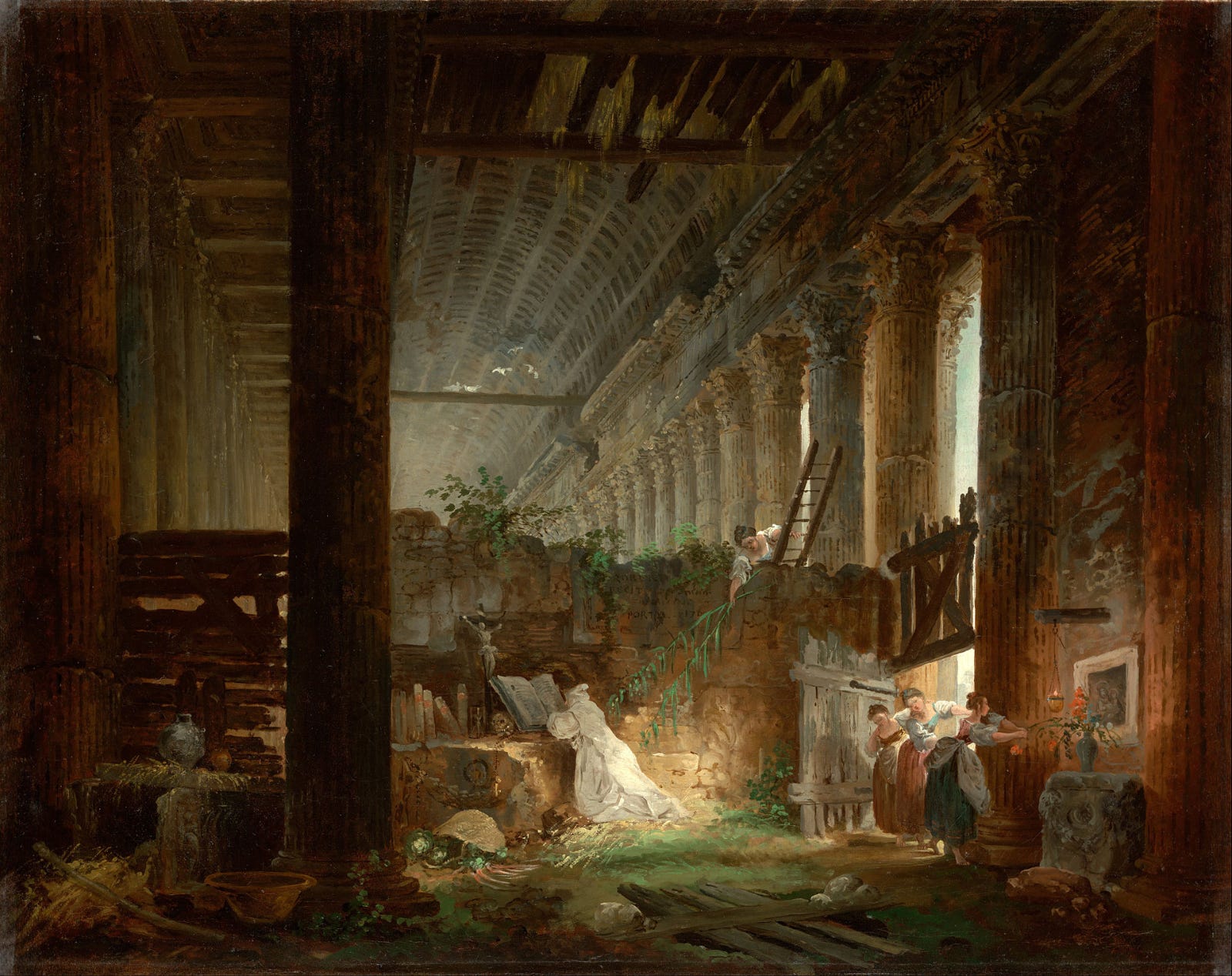
Brunelleschi, inspired by these ruins and by some people before him like Petrarch, who had visited Rome, decided to make a trip to Rome too. Ruins were everywhere. He spent two years there, studying its remaining architecture. He studied the Pantheon to replicate its dome in Florence, and got the idea for the herringbone bricks by observing brickwork there.
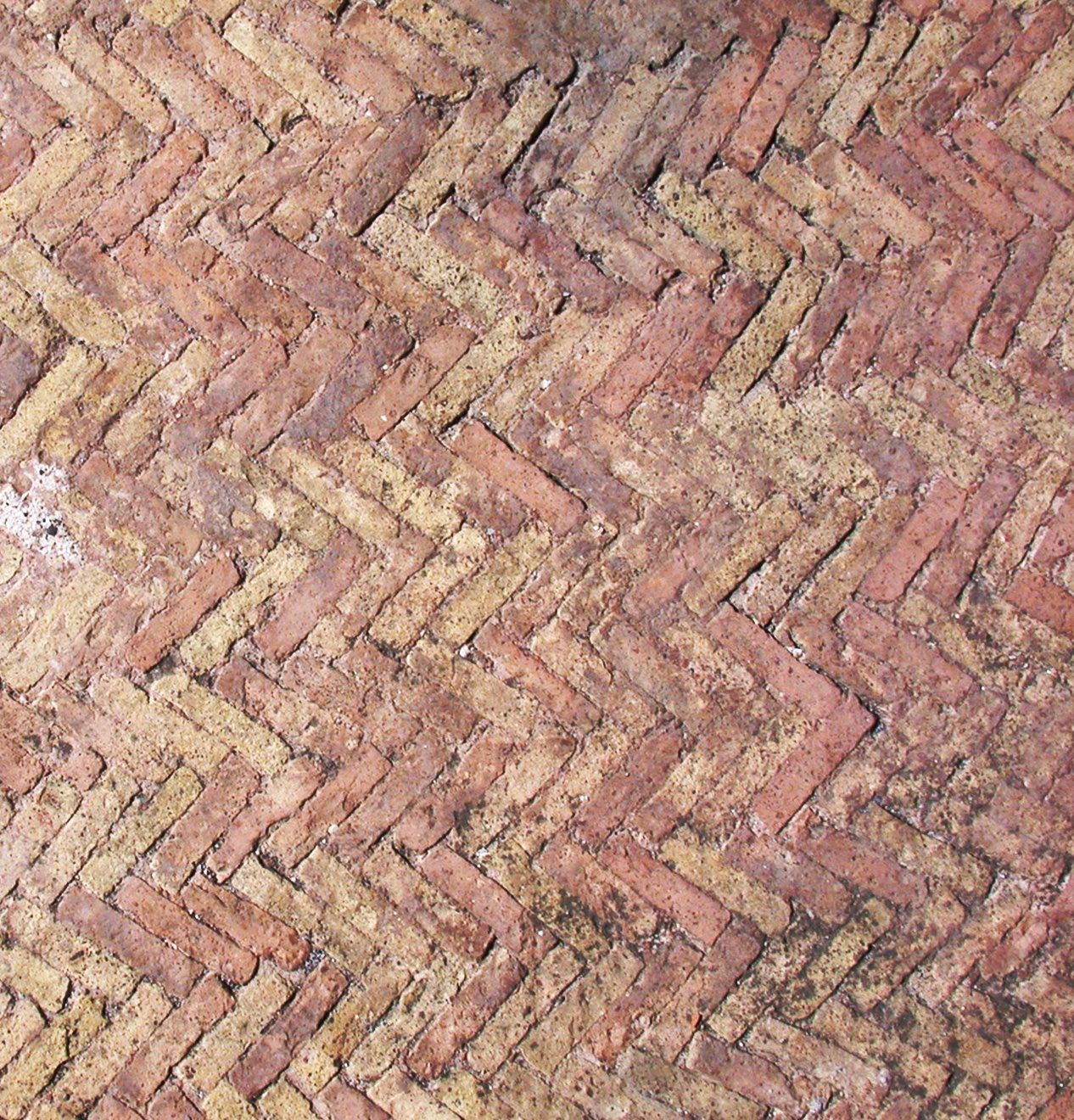
He didn’t go alone; he was accompanied by the famed sculptor, Donatello, who was inspired to sculpt a David, the first freestanding nude male sculpture since antiquity. Together, they excavated buried structures and measured monuments like the Pantheon, the Baths of Caracalla, Roman basilicas…
Around that same time, another Florentine, Bracciolini, rediscovered4 Vitruvius’s De Architectura, the only architectural treatise that has survived from antiquity to this day.
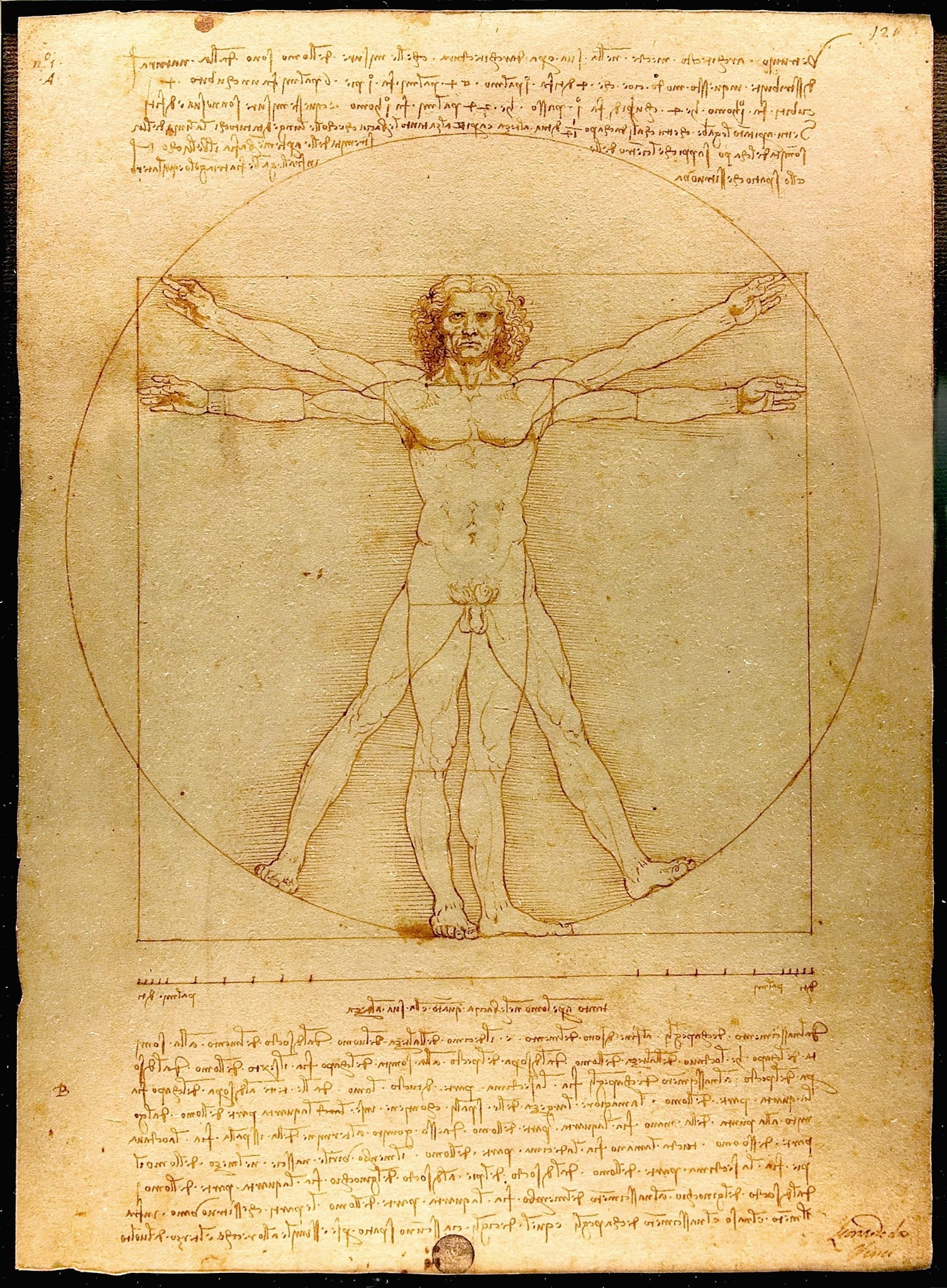
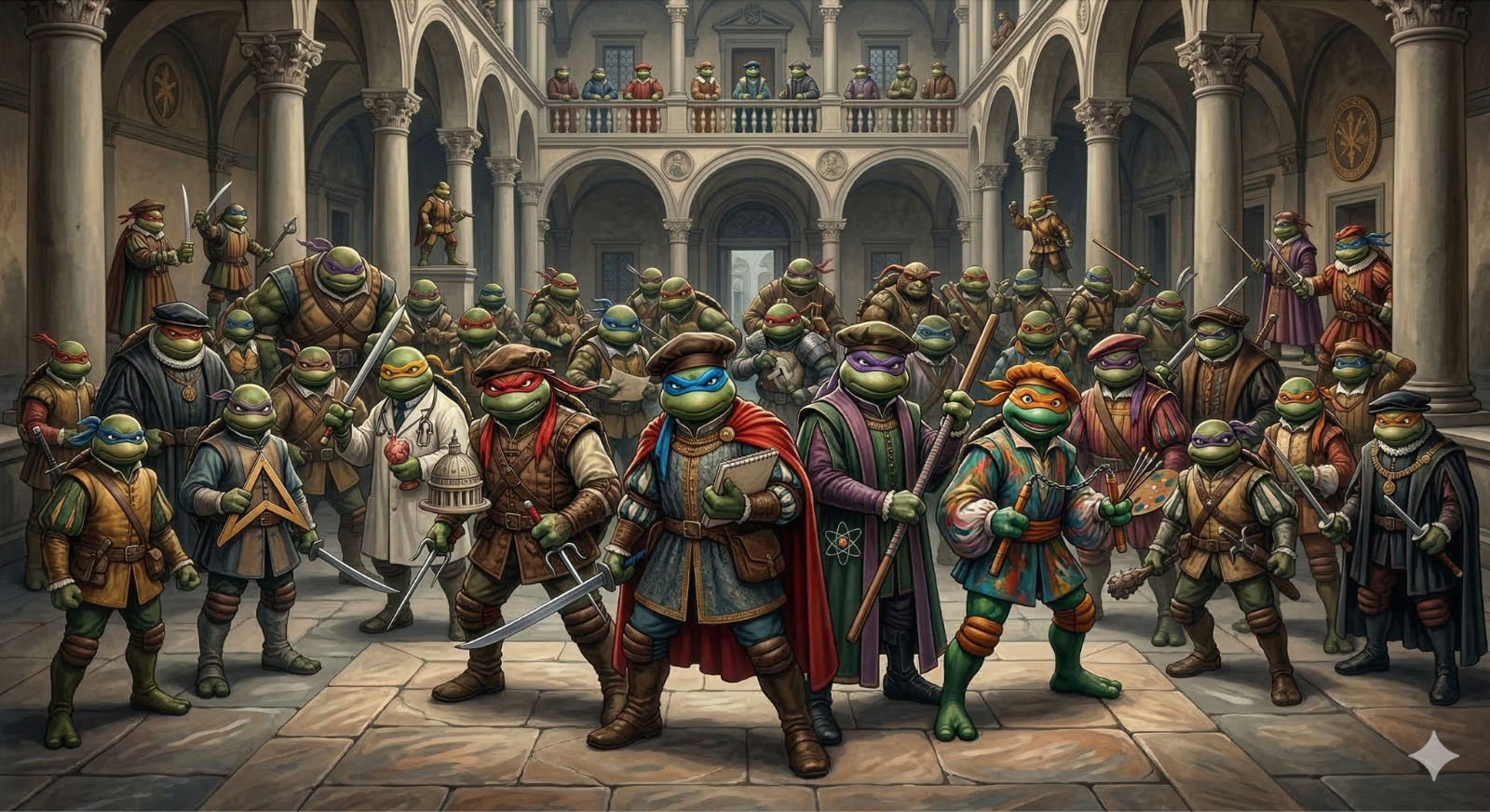
Other Florentines like Michelangelo, Raphael5, and Leonardo da Vinci traveled to Rome to form the ninja turtles squad study it.
Between De Architectura and visits to Rome, architects and artists started noticing that Roman buildings used modular, proportional systems and strict rules of geometry: harmonious numerical ratios (1:1, 1:2, 2:3, etc.), room height related to width, temple column spacing based on column diameter… These ideas gave Renaissance architects something medieval builders lacked: a theoretical mathematical framework for beauty.
Brunelleschi came back from the trip with a firm idea of what the dome should look like, and all the other Florentine visitors came back with specific ideas of proportions and classical elements.
So why did the Renaissance happen in Florence? Well, it couldn't have happened much farther from Rome. Think of the experience of these Florentines, growing up among substantial Florentine ruins from the Ancient Roman Empire, and close enough to visit Rome and witness the massive beauty that had been lost. The farther you were from Rome, the fewer the ruins, the harder it was to get to Rome, and the less inspiration Rome would have provided.
This probably explains why the Renaissance had to happen close to Rome, but not specifically in Florence. Why not Siena, Pisa, Naples, Milan, or even Rome? Why then, and not 200 or 300 years earlier or later?
Machiavellian City-States
In the Dark Ages, as the Roman Empire fell and law and order withdrew, cities decayed and many disappeared. But not so in Italy. Cities like Milan, Florence, Verona, Bologna, Ravenna, Pisa, Venice, Genoa, and Siena remained populated. By the 11th century, they had merchant classes, bishops, courts, guilds, militias… They were already institutionally capable of governing themselves. This independence of communities happened everywhere in the former Roman Empire, but it was especially true in the Holy Roman Empire, modern-day Germany and Italy.
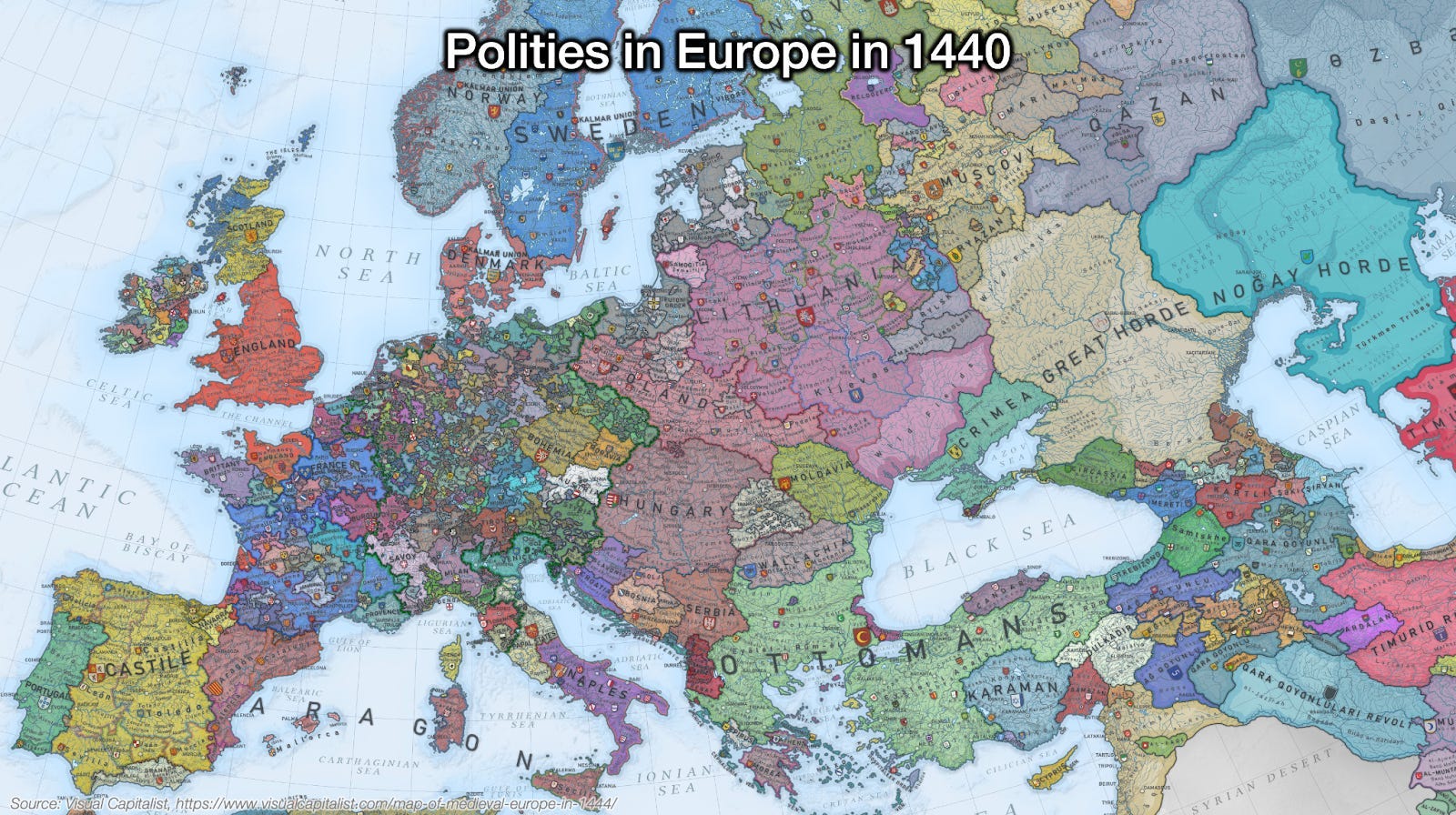
This is Italy in 1500. Chaos!
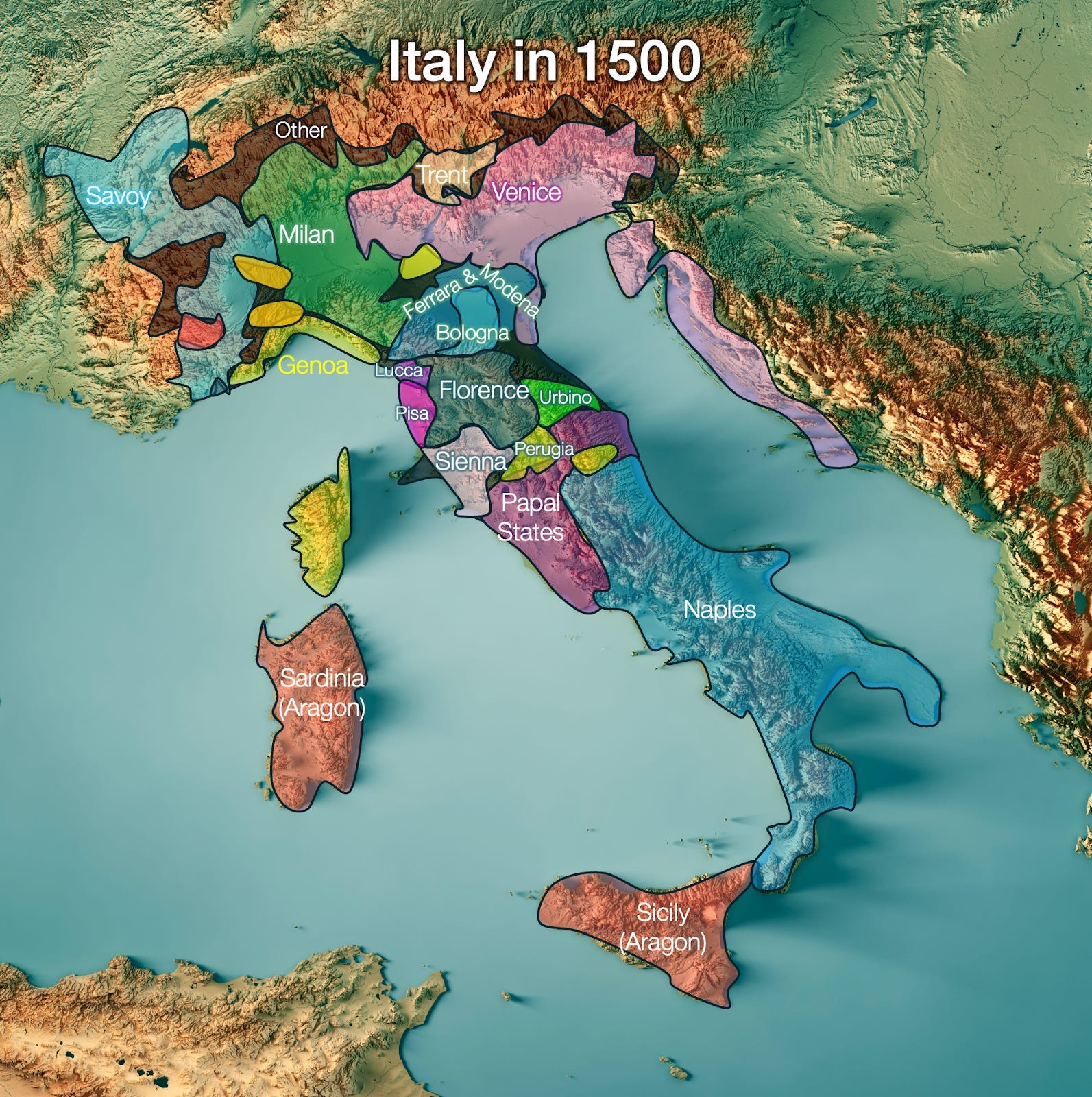
I explored why this happened in Why Were Germany and Italy the Last European Countries to Unify? The short answer is that Italy was the battleground between two dimensions of power: the temporal and the spiritual.
This was Europe around 1200 AD:
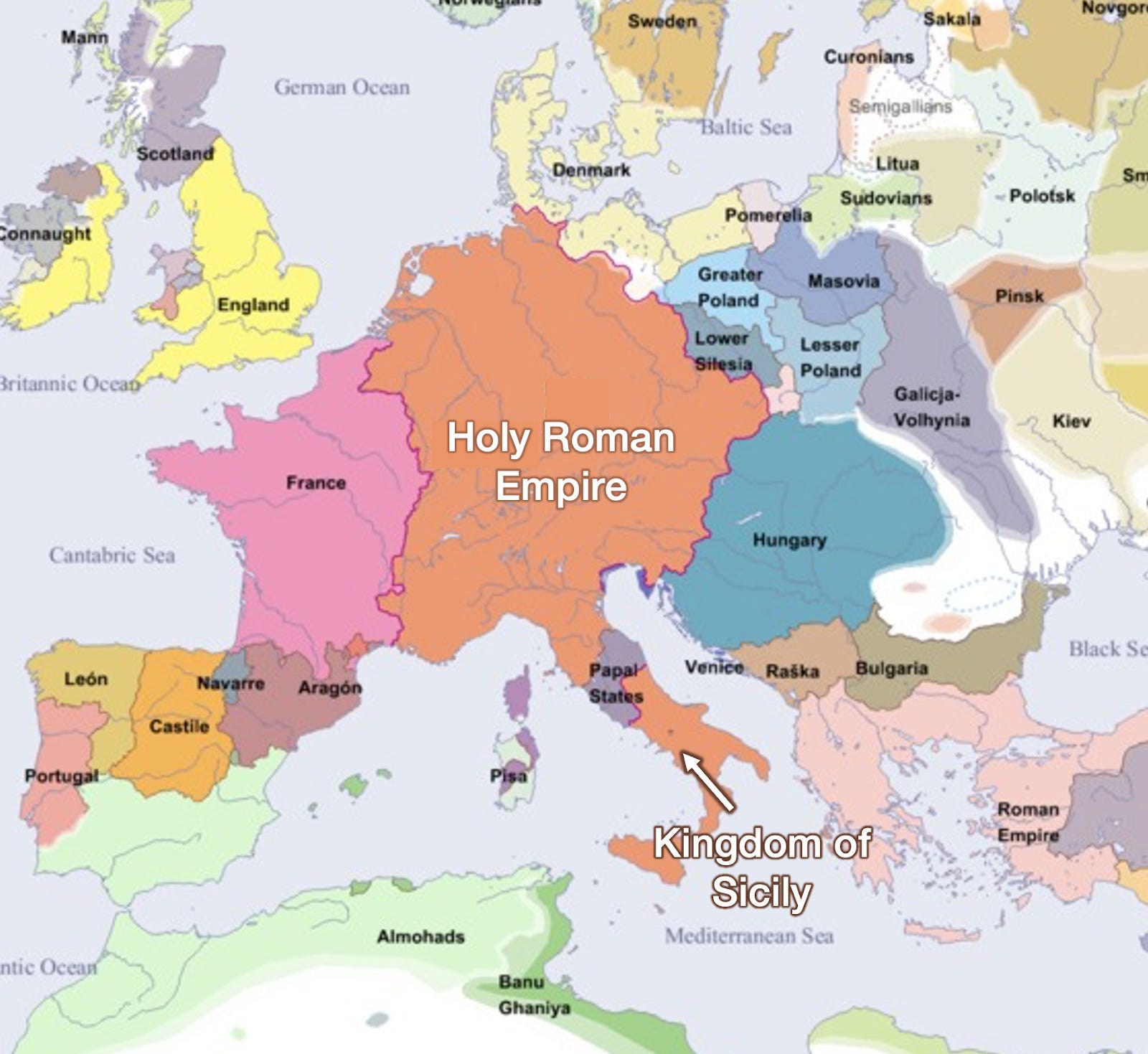
For centuries since the creation of the Holy Roman Empire in the 10th Century, the Emperor and the Pope fought for power and influence, like who would appoint the powerful bishops. Around 1200, the Holy Roman Emperor Frederick II had just united the northern part from his father with the Kingdom of Sicily to the south from his mother. The Pope logically freaked out when he saw his Papal States surrounded, and stirred up revolts everywhere he could in Italy.
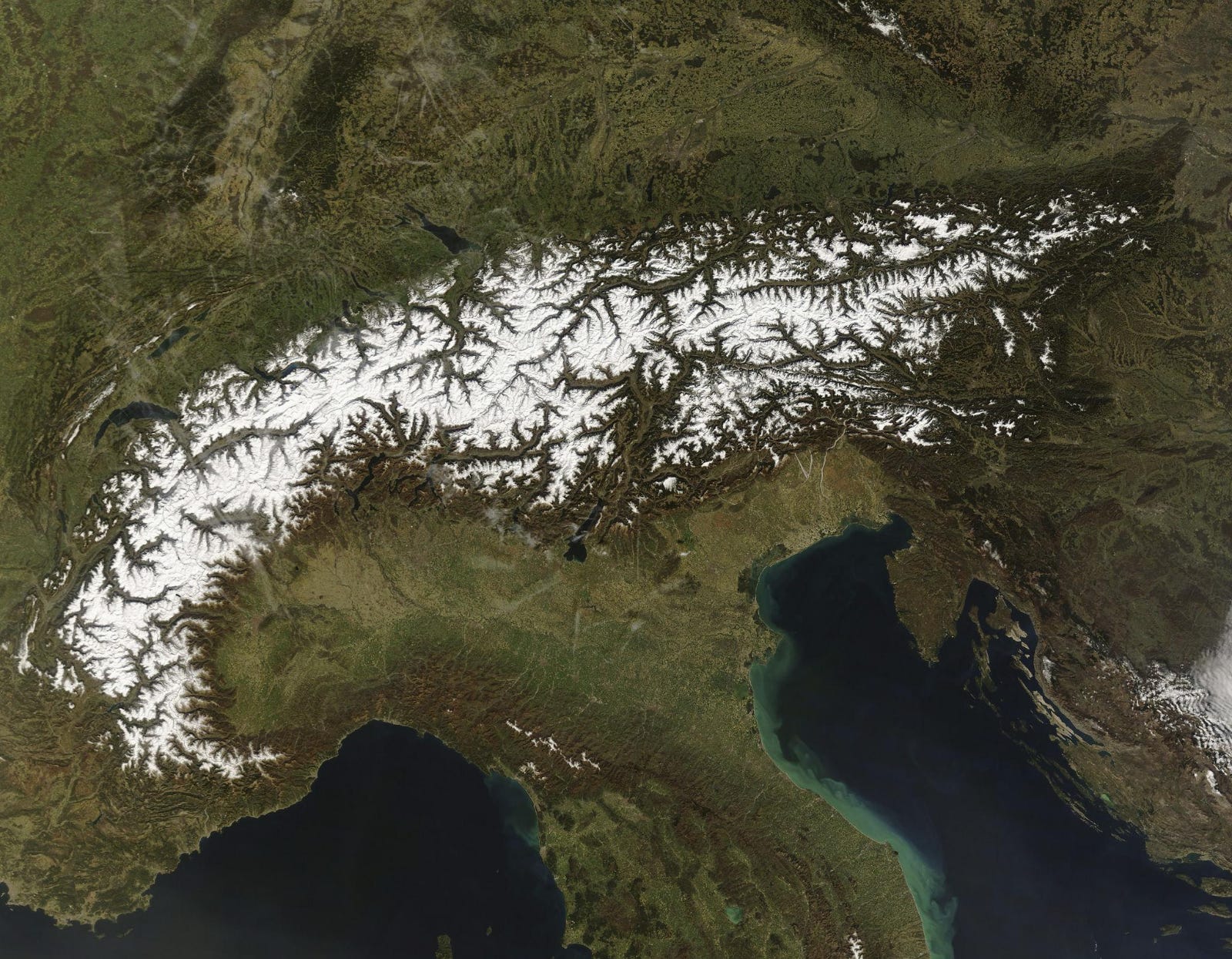
Crucially, Italy is separated from Germany by the mighty Alps, making it very hard for the Holy Roman Emperor (HRE) to have strong influence to the south.
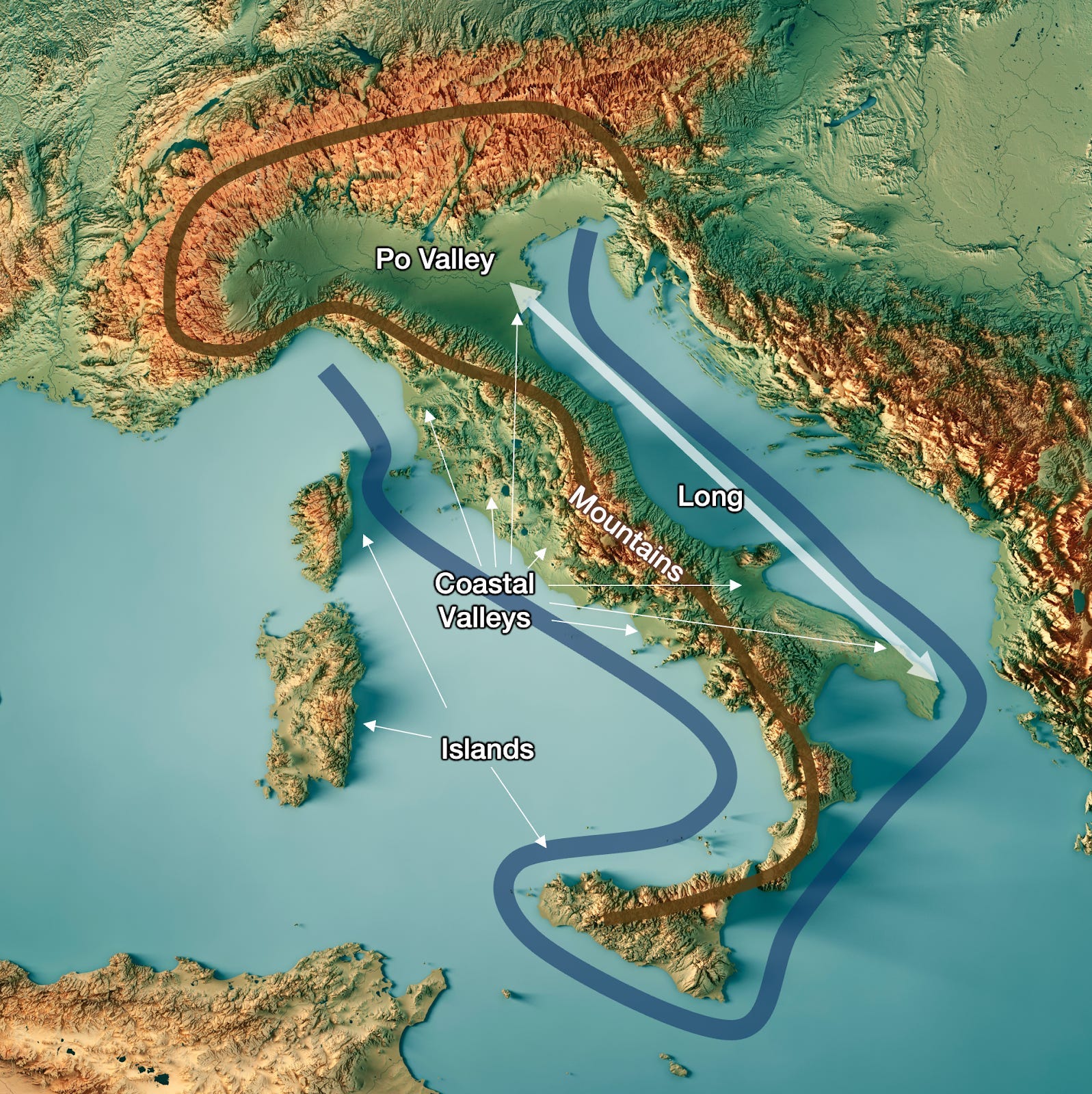
And Italy is very mountainous, with lots of secluded valleys that birthed strong, independent cities. This meant that, in practice, local cities had been quite autonomous for a very long time, even if they were nominatively under the HRE.
So when the Pope stirred revolt all over Italy, different cities decided to support different sides. This is what’s called the war of the Guelphs and Ghibellines.
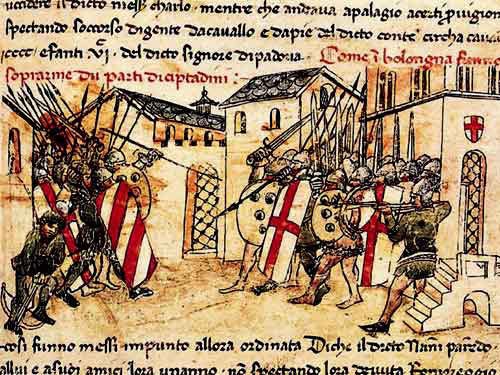
Notably, the closer you were to one of these big powers, the less likely you were to support it, because it’s better to have a distant lord than a neighboring one. This created a patchwork of alliances and counteralliances, of wars and betrayals. Over the centuries, the power of the HRE dwindled in the region, and the emperor became just a distant influence.
This is the context in which the Florentine Machiavelli thrives and writes his famous work The Prince in the early 1500s.6
So all this is why the Northern Italian region had many independent city-states:
The cities there remained inhabited since Roman times.
The area has many fertile valleys among mountains, allowing for many urban nuclei to sprout.
The region was separated from its rulers by the Alps, which meant little oversight.
This is at the border region between the HRE and the Papal States, so they became a proxy war battleground that exacerbated their differences and undermined the oversight of both on the region
Independent states were crucial to explore new styles locally and to push for their own architectural styles to differentiate from other competing city-states. But this doesn’t tell us why they were so rich, and you needed a lot of money to build such huge cathedrals.
Medici Wealth
At the time, Italy’s population was rebounding from the Black Death faster than in many other European countries.
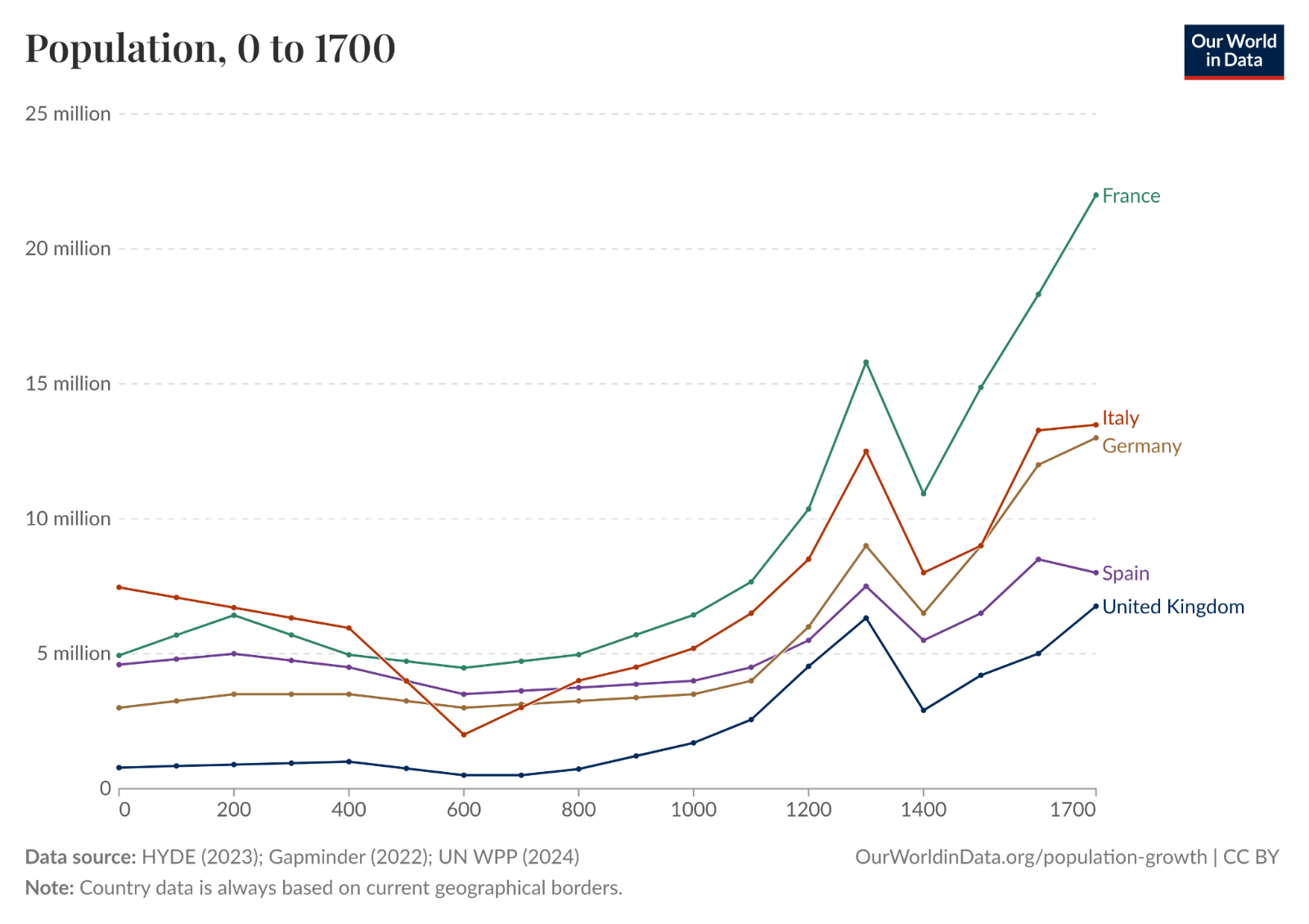
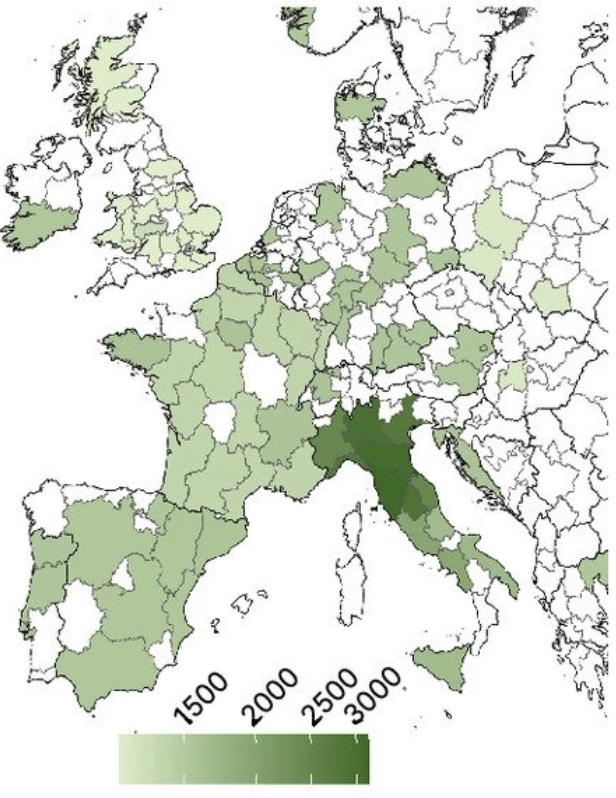
And these people were rich! In the 1300s, Northern Italy was already the richest region in Europe.
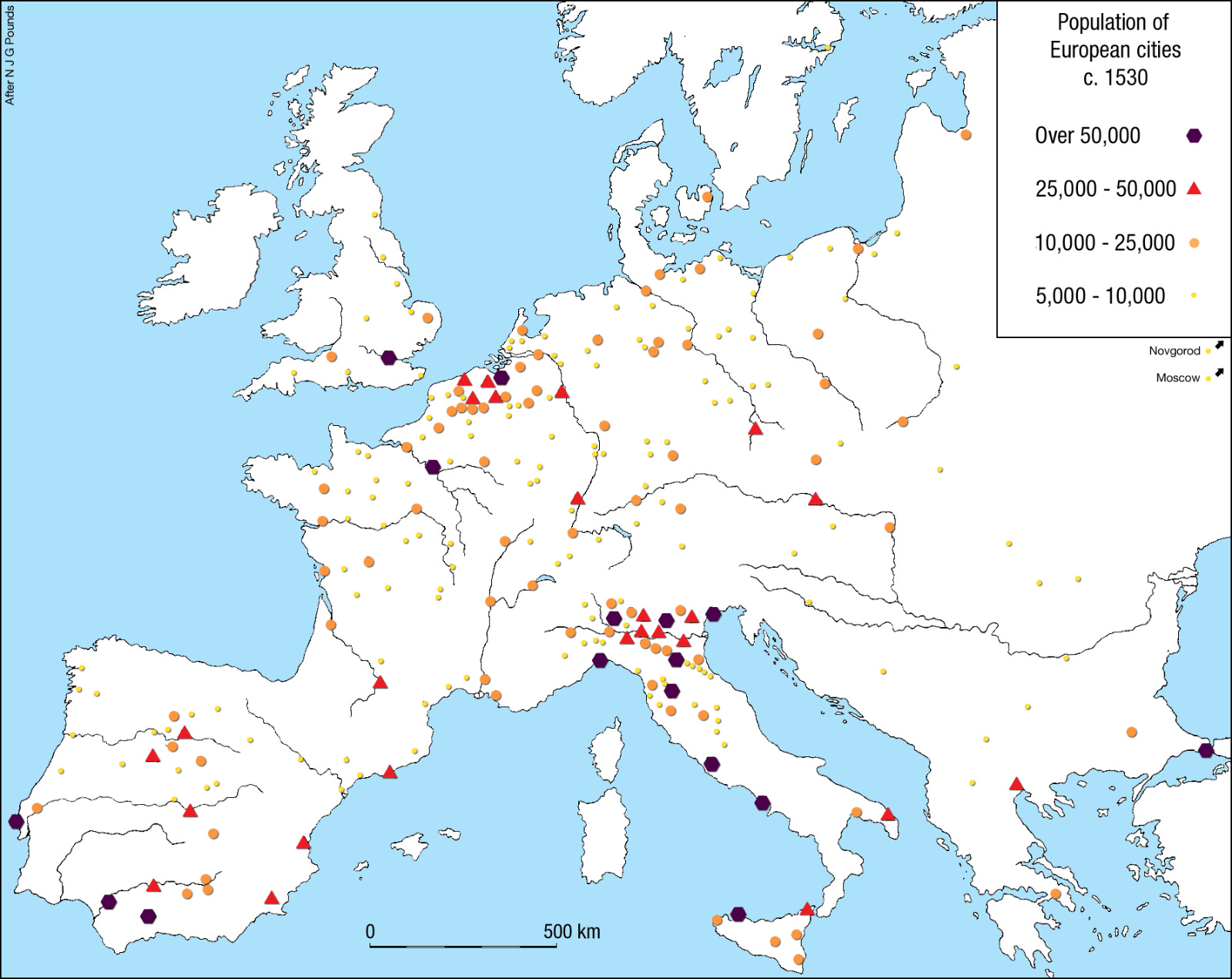
One of the main reasons was urbanization. These were the main European cities in the early 1500s. Notice how many are in northern Italy!
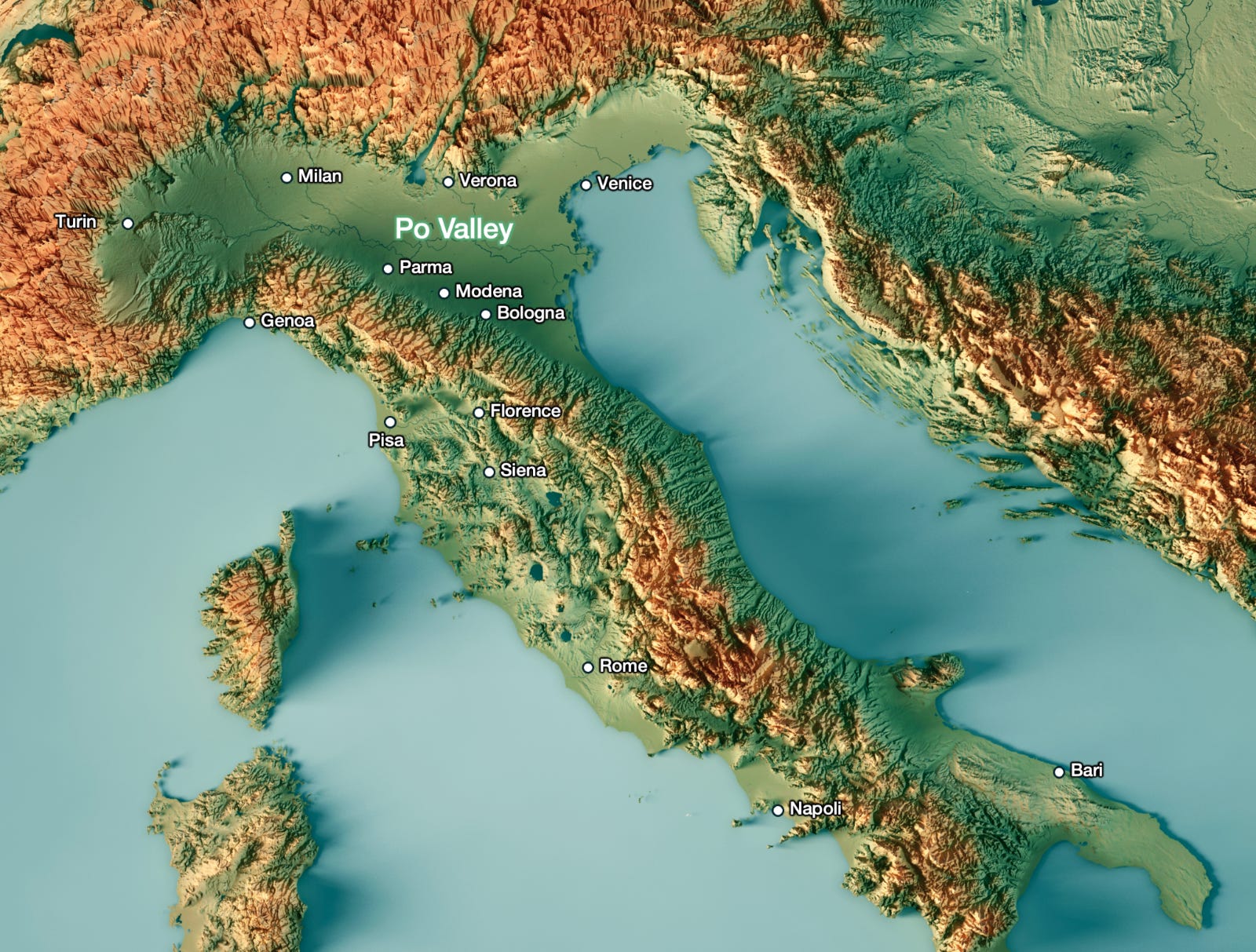
We already explained why: They were already quite populated in Roman times, and they have some of the best plains in the Mediterranean, especially in the Po Valley.
A big population that could grow fast and was already urban meant a bigger share of the population lived in cities.
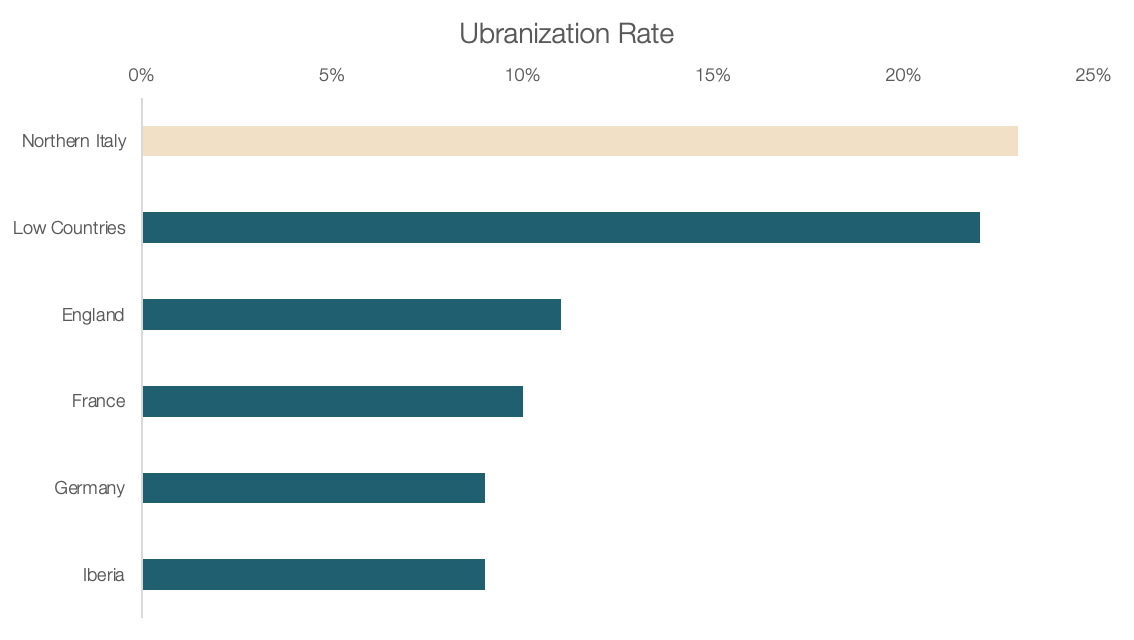
Of course, cities are more productive than rural areas due to their network effects. They become marketplaces, develop industries, invest in infrastructure, build industrial clusters…
Northern Italy also had another huge benefit: It was in the middle of global trade networks.
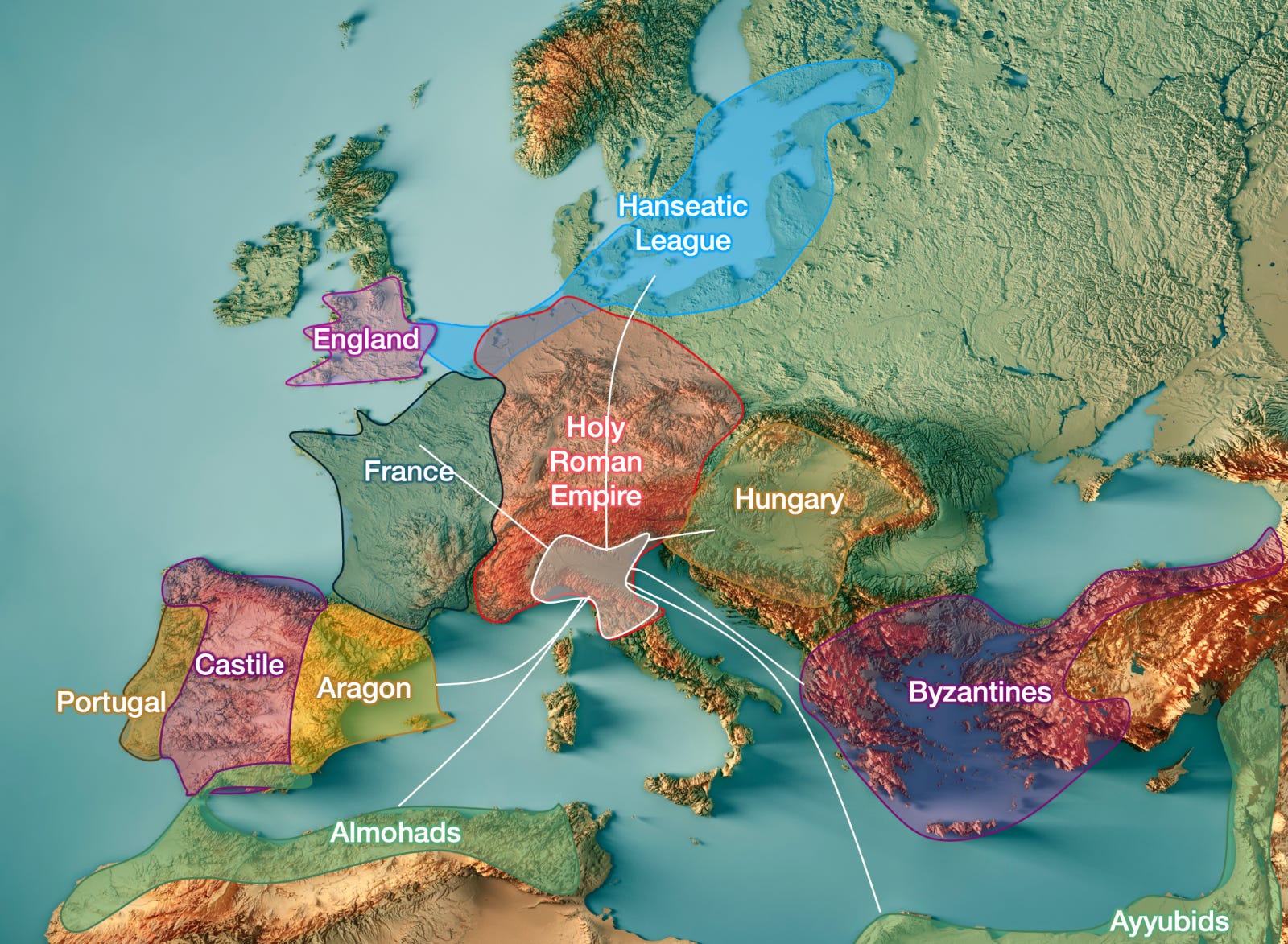
The richest regions at the time were Flanders, the Holy Roman Empire in general, the Byzantines, and the Muslims,7 and Northern Italy was in the middle of them all. This is why Venice and Genoa grew so rich as maritime trade republics.
And within Northern Italy, Florence was very well positioned.
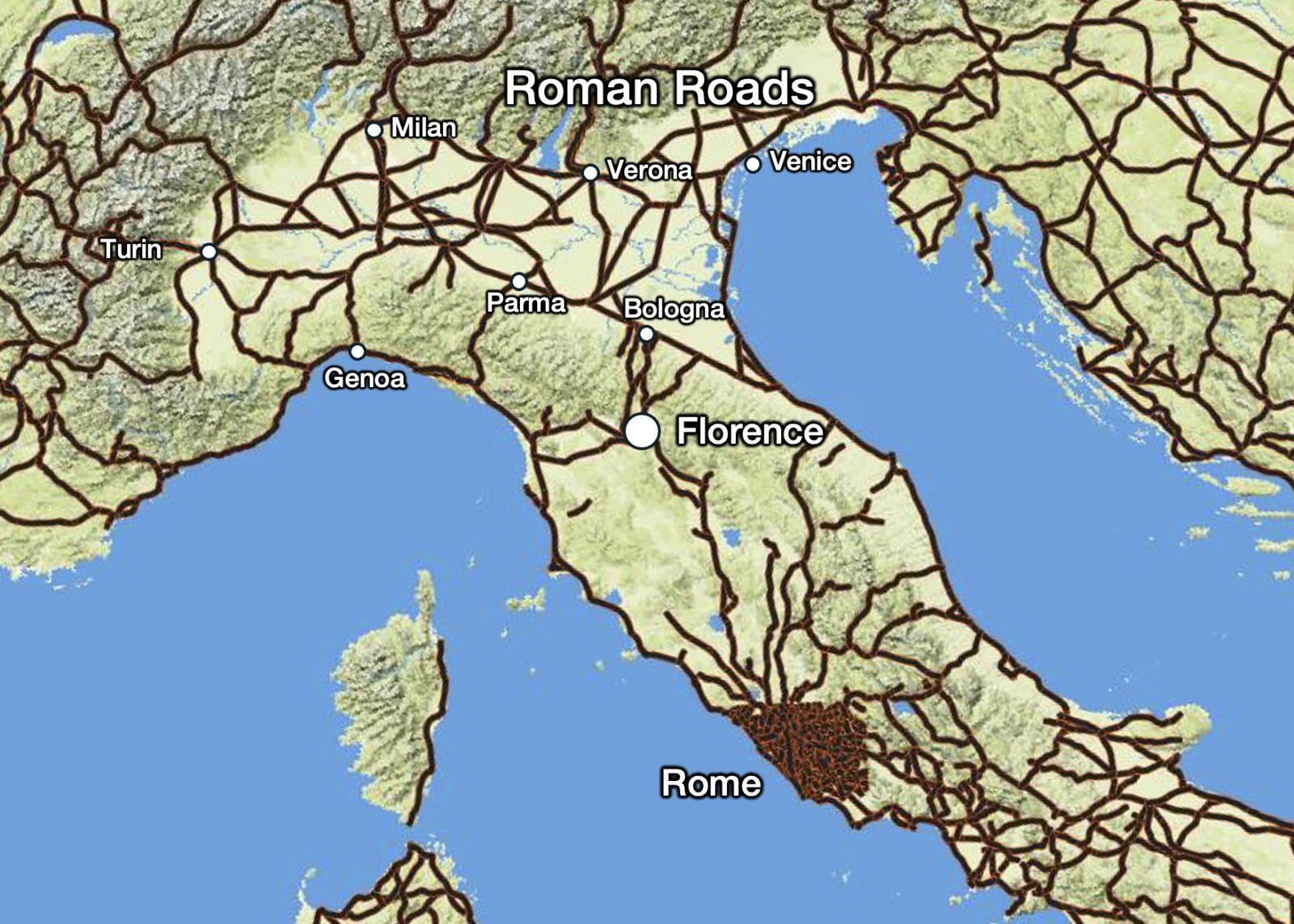
If you wanted to move between the HRE and Rome, the best path went through Florence, which is a natural crossroads because Florence and Bologna flank the Apennine mountains.
So Florence, like only a handful of other Italian cities, had a unique confluence of assets:
It was in a populated region, because it has a good climate and great agricultural plains
This was in the richest region in the world, because it was at the crossroads connecting all the main kingdoms of the time
The region also contained many cities that had remained inhabited since Roman times, and Florence was one of the big, urbanized cities in the region
Situated between the two regional powers of the HRE and the Papal States, these cities had more independence than most
It was at a crossroads for internal Italian trade, making it uniquely rich as a marketplace
Close to Rome, to receive strong architectural influence from the Roman Empire
Still, it could have been Siena, Bologna, Parma, maybe Genoa or Venice. And sure enough, all of them have beautiful architecture. But something set Florence apart.
Money.
The Origins of Florentine Wealth
The best way to know who ruled back then is to look at who funded the biggest monuments. So who funded the cathedral, Santa Maria del Fiore?
One tip is in the name: Santa Maria refers to Virgin Mary, and echoes the importance of religion. But fiore? These are flowers—like Firenze. This refers to the city: The cathedral was meant to represent both the church and the state. This was not a purely religious endeavor. In fact, it was anything but. It was the commune of Florence that financed it. And where did the money come from? The Wool Guild, Arte della Lana.
By the 1200s, the wool trade had become one of the city’s largest industries, among other things precisely because Florence was such a big city:8 Wool must be sheared, sorted, scoured, carded, drawn, spun, wound, warped, woven, fulled, sheared, pressed, dyed, sewn… There are many steps, but crucially, each step can be done by one single person or a few, with pretty basic machinery. So people across the city worked on different steps in their homes. The bigger the city, the more workers could be dedicated to each step, the more competition and learning between them, the more volume could be produced, and the bigger the industry. The bigger it is, the more it specializes, the better its products compared to the competition, the better the reputation, and you end up dominating a continent-wide market.
This industry became so big that local wool was not enough to feed it, so Florentines started buying wool abroad (in Spain, England, Flanders…), and finished it into high-quality cloth. They organized themselves into guilds, which helped them work together to promote the industry’s quality, its trade, its financing…
Financing! When you buy wool and sell cloth abroad, you need currency exchange. And when there are so many steps to the process, from so many workers, you must pay them a salary before you sell the cloth or garment, so you need a lot of working capital. So the Florentines also developed a very strong financial guild.
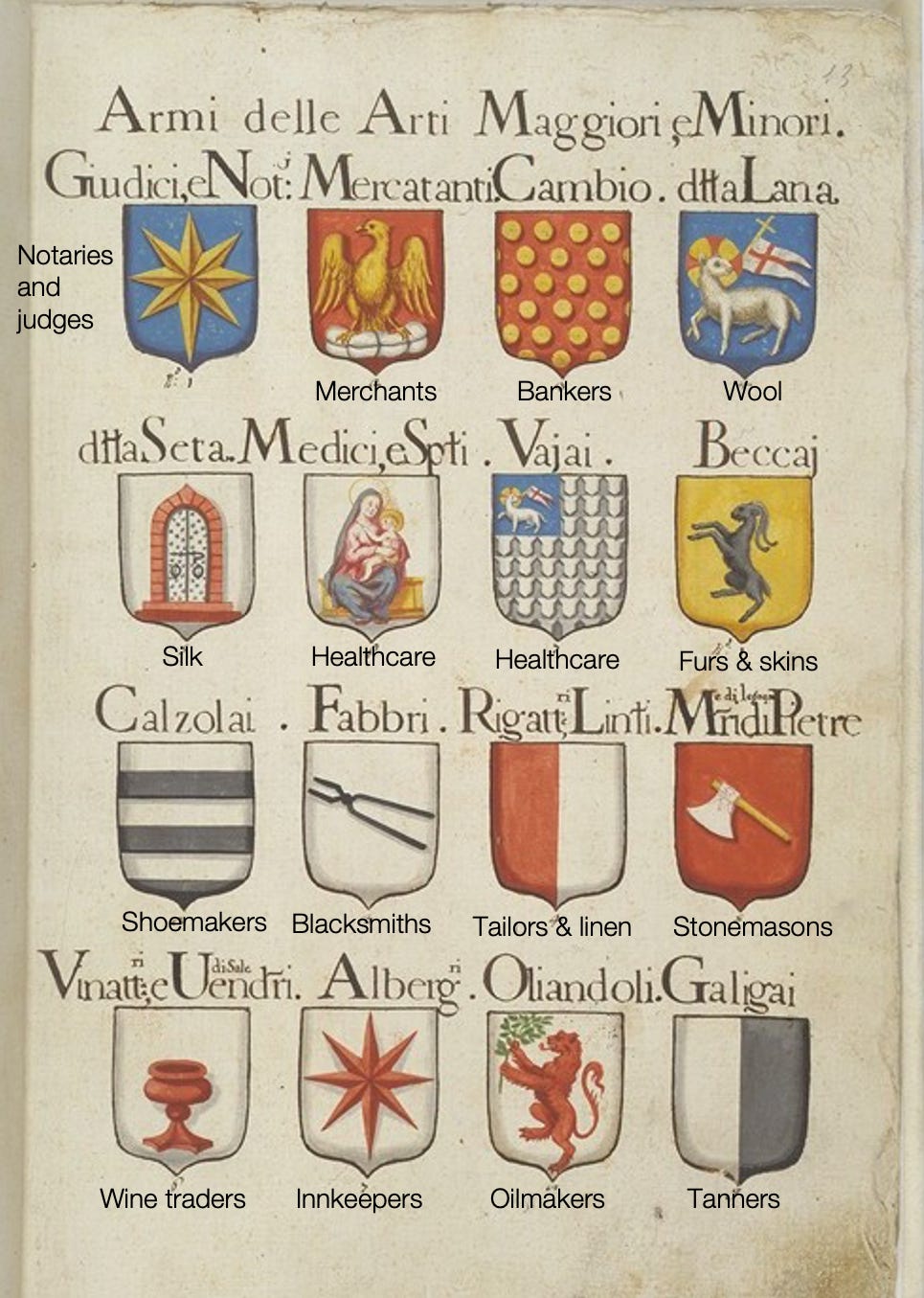
The financial guild minted the gold florin, which soon became a currency used across Europe thanks to its distribution through wool commerce and banking, and to its reliability, as ensured by the guild.
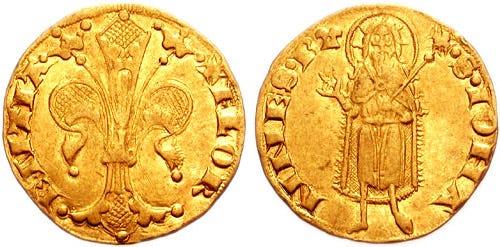
The power—and money—of the commune was concentrated in the hands of these guilds, and of course legislation favored them. Imagine what that did to the competition: Across most of Europe, industrialists, bankers, and merchants had to withstand the logic of Church and nobles. But Florence could do regulatory arbitrage, optimizing everything to support its trade; another advantage to pull forward.
Then the city had a lucky strike. Remember the Guelphs and Ghibellines? Florence supported the Guelphs (the pope), while its rival Siena supported the Ghibellines (HRE),9 and it turns out the pope won. Siena was stripped of its banking and tax collection monopolies, which went to Florentine families. Notably, the Medici created a bank that grew strongly throughout that time, was on the right side of the war, and was given the management of the Papal Treasury. Their good relationship also gave them a monopoly of alum mining, a product crucial for dyes that could only be sourced in mines near Rome.10 This is also the time when silver started flooding Europe, so banking became extremely profitable. Eventually, the Medici would take over the politics of Florence and convert it into a duchy.
Florence used this newly-found power to strengthen its position across Tuscany and conquered its neighbors one by one. When it took over Pisa, it acquired a port. When it took over Siena, it eliminated its main rival.
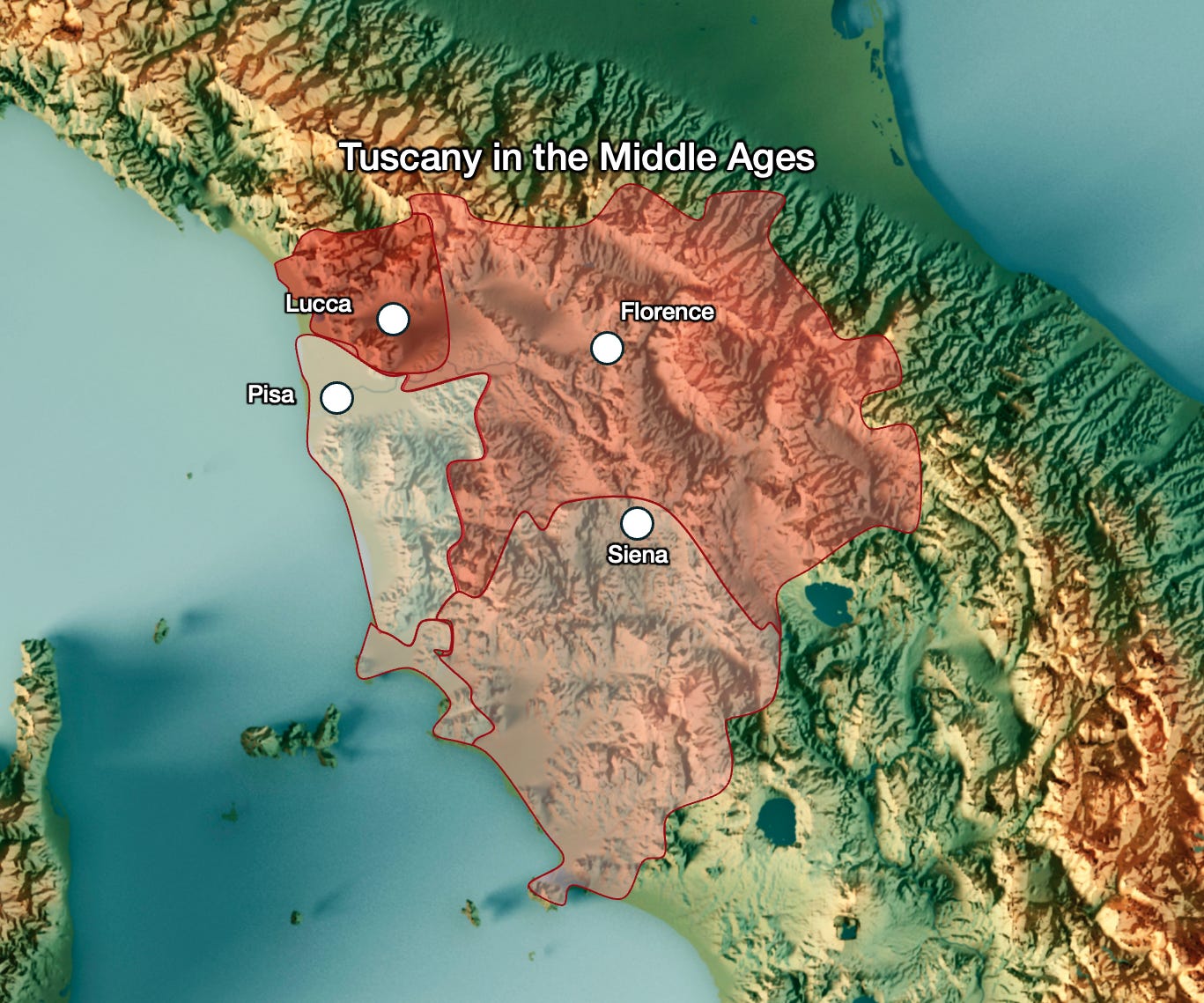
So we can add a few factors to our reasoning of how Florence became the cradle of Renaissance:
Thanks to its sizable population and perfect position at a crossroads within Northern Italy, Florence became wealthy in the pretty typical network effect of cities we’ve already seen elsewhere: first an industry developed (wool), which begat new industries (wool processing into cloth, finance). This made the city rich.
It was on the right side of a war, so it was showered with spoils, most notably lots of financial power and control over valuable commodities (alum was crucial for making colorful cloth).
But why push for a new art style? And why this one?
Florence Style
Power was conveyed through architecture. The Arte della Lana guild wanted to show its power in the city, and to other cities. Remember, there are dozens of city-states in Northern Italy, the competition was brutal! They had to stand out, establish themselves as the most successful, so they could have status and gain more business. That’s why they invested in Santa Maria del Fiore. But that cathedral is not yet Renaissance! It starts as a mix of Gothic and local Tuscan style. So what is the Renaissance style, and why does it appear here?
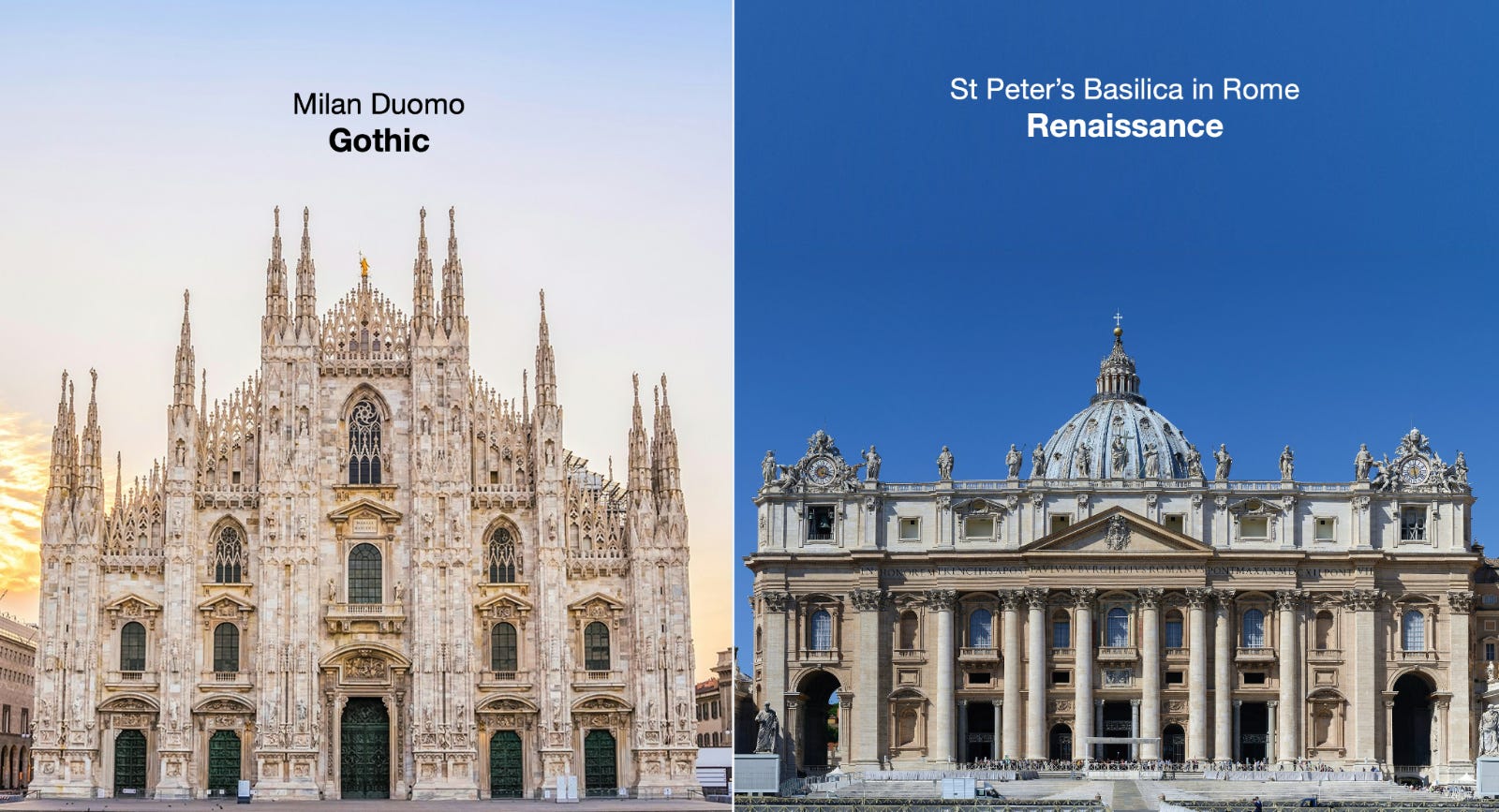
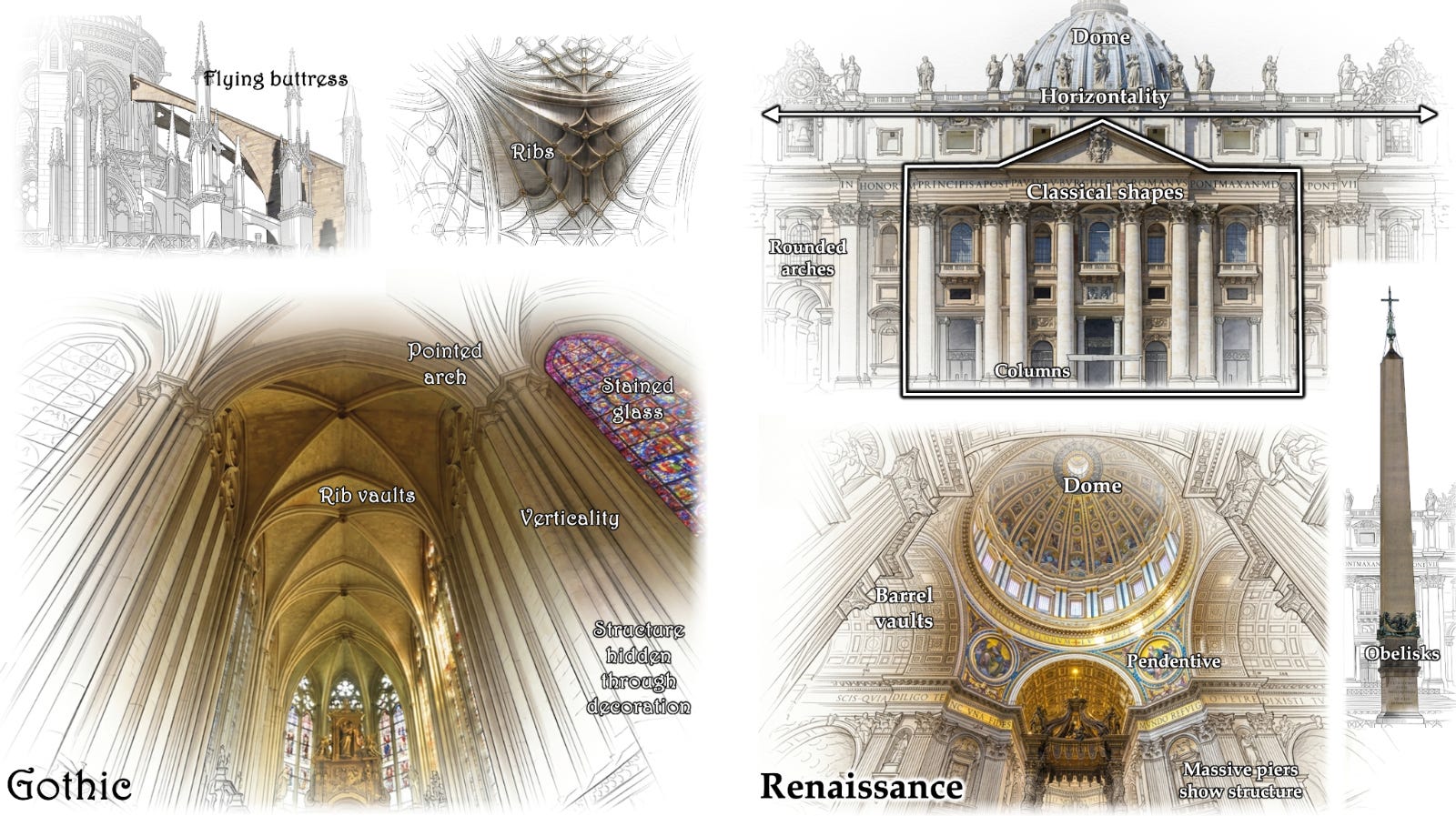
As we saw previously, the impetus behind Gothic was to go as high as possible, to reach the heavens. This pushed the boundaries of architectural technology of the time: verticality, pointed arches, rib vaults, flying buttresses, detailed decoration for mysticism, and stained glass were the methods, and I think the goal was clearly achieved.
In the Renaissance, the idea was to go back to the wisdom of the more powerful ancient Roman Empire. Studying it, architects realized they followed some rules, and they decided to decode them and apply them. They decided that space should be graspable, measured, balanced, and ordered as a coherent whole. They did that by going back to columns, round arch, domes, volumes, horizontality, visual legibility, proportions, and a return to hard-coded classicism.
The love for proportion and precision could also be seen in small details like these:
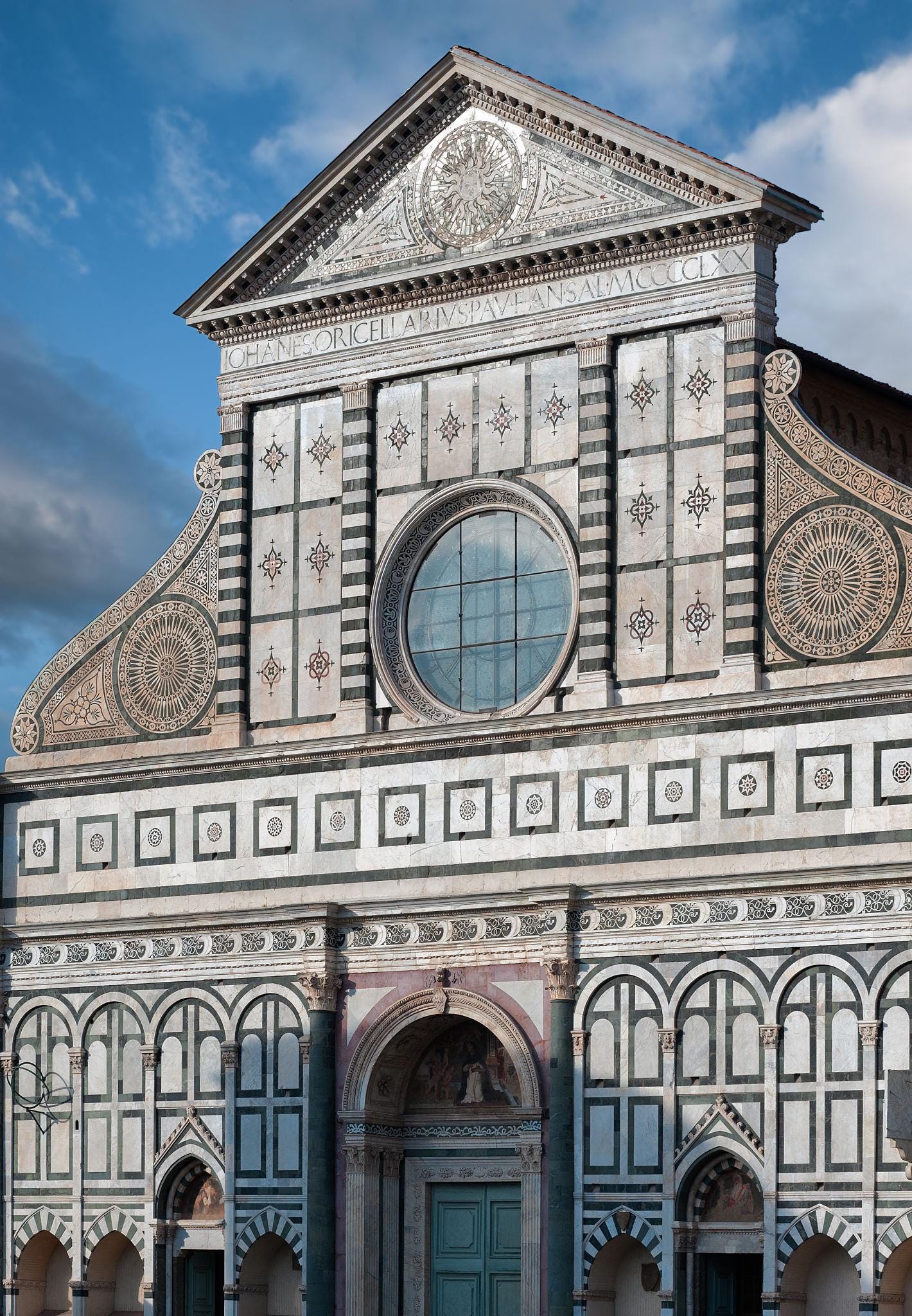
Lines, squares, circles, crosses, mathematical curves… These textures are beautiful.
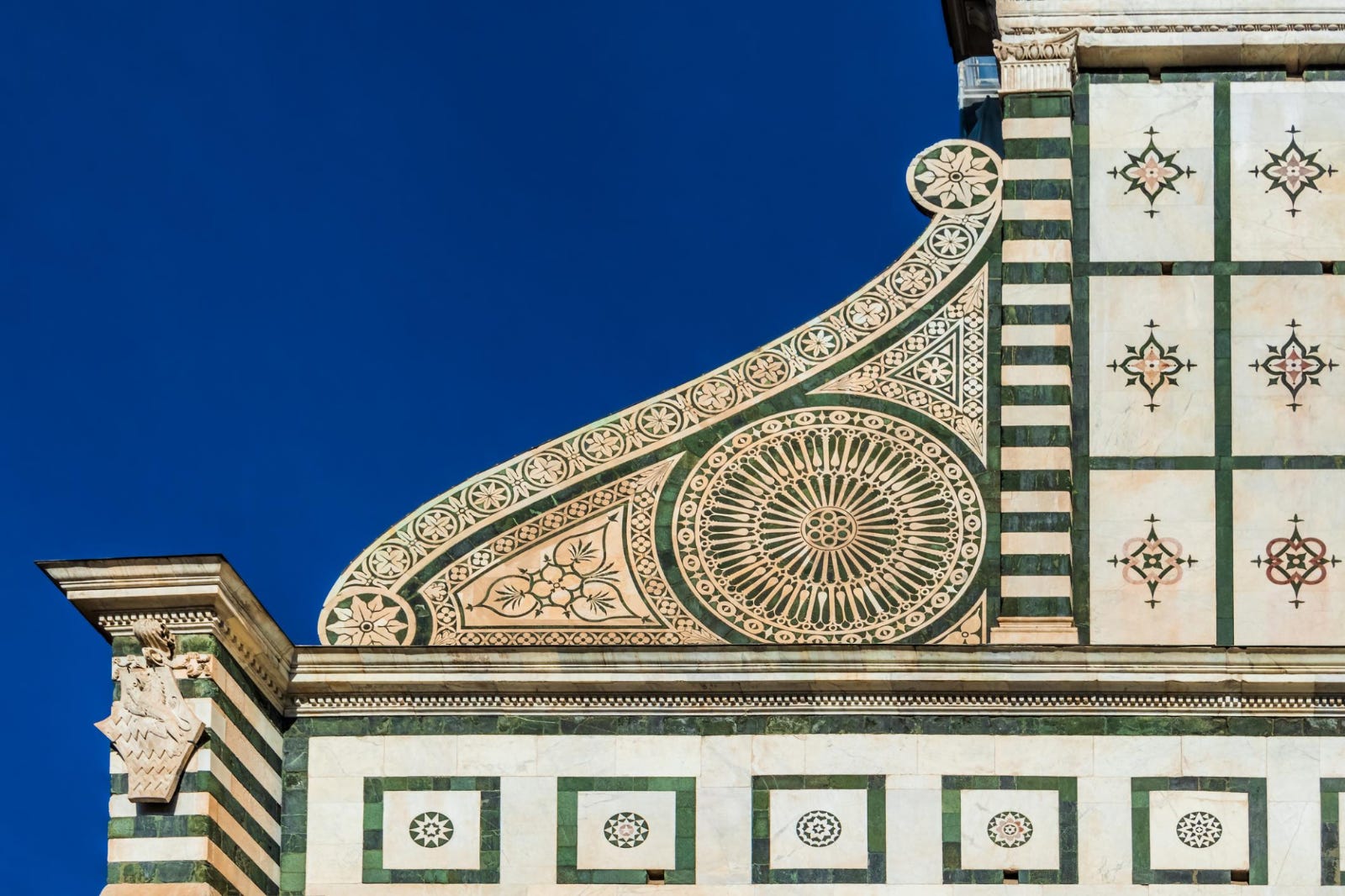
Of course, Rome and the popes loved the new architectural style based on their own city, so they funded and promoted it. They realized that Rome was a pile of ruins, but if they could rebuild it and make it even more beautiful, their power would radiate across Christendom. This is why Vatican City’s St Peter’s Basilica is of the Renaissance style, for example, and why the Renaissance became huge in general.
A Change in the Reason behind Architectural Innovation
OK here’s my ignorant and probably unpopular opinion: Renaissance churches are beautiful but… underwhelming?
With Gothic, society had a clear goal: Convey their love of God by reaching upward and pushing the technological boundaries to make it happen.
The great thing that Renaissance does is rediscover domes, which are objectively awesome. It also recovered the pendentives (which were Eastern Roman, not from Rome…), and made proportions explicit. But does that mean you have to adopt all the other Roman stuff, too? Why go back to columns and rounded arches, when we’ve seen they’re objectively inferior, since they can only allow smaller spaces? Why go for horizontality, an architectural feeling that was already so pervasive in cities because houses were not tall? Why pretend an obsession with order that your predecessor didn’t have, when in fact Gothic architecture had a similar order that you just couldn’t read?
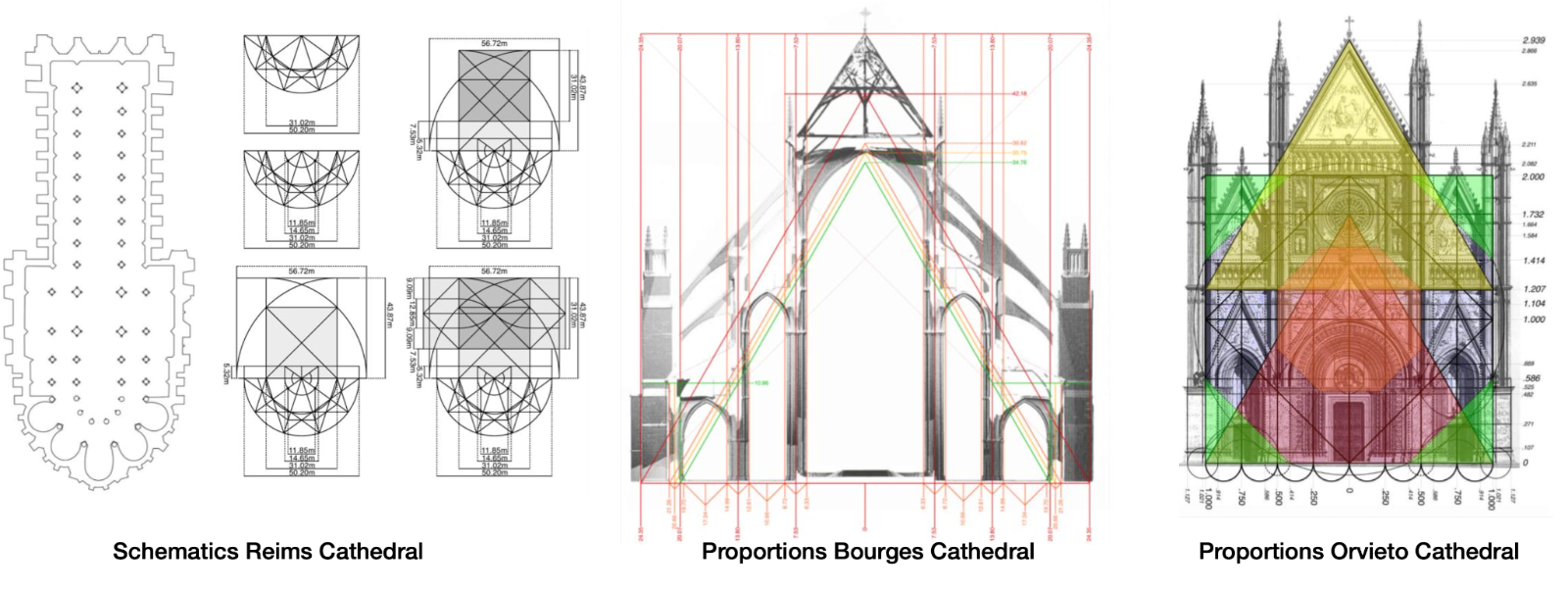
It feels like the Renaissance was trying too hard to define its path in opposition to what came before.
“Gothic” litearlly means from the Goths—the Franks and the Germans on the other side of the Alps. That style was born in France and spread to Germany. It makes sense that Florence, allied to Rome and against the German HRE, would define itself in opposition to that by getting inspiration from ancient Roman architecture. Of course, a city that is managed by merchants wants to define itself in opposition to pure religious piety too. But when you define yourself by opposition to others, how strong are your values?
It’s a bit like how Swiss handwatches tried hard to become precise and thin, and once the Japanese figured out how to do that better, most Swiss watchmakers went bankrupt and the few that recovered (and soared) did so not because their watches were better (not more precise, nor thinner), but because their cost and elaborate shapes became symbols of status.
This is the first time in all the architectural styles we’ve observed that the innovations are not done to improve, but just to be different.
Renaissance Outside of Churches
Renaissance really shines outside of churches for me. Before, it seems like most architecture of beauty was concentrated into churches, but now it appears everywhere. Compare Florence’s Palazzo Vecchio, built around 1300 just before the Renaissance, with the Medici-Riccardi, built around 1450, during the explosion of Renaissance in Florence:
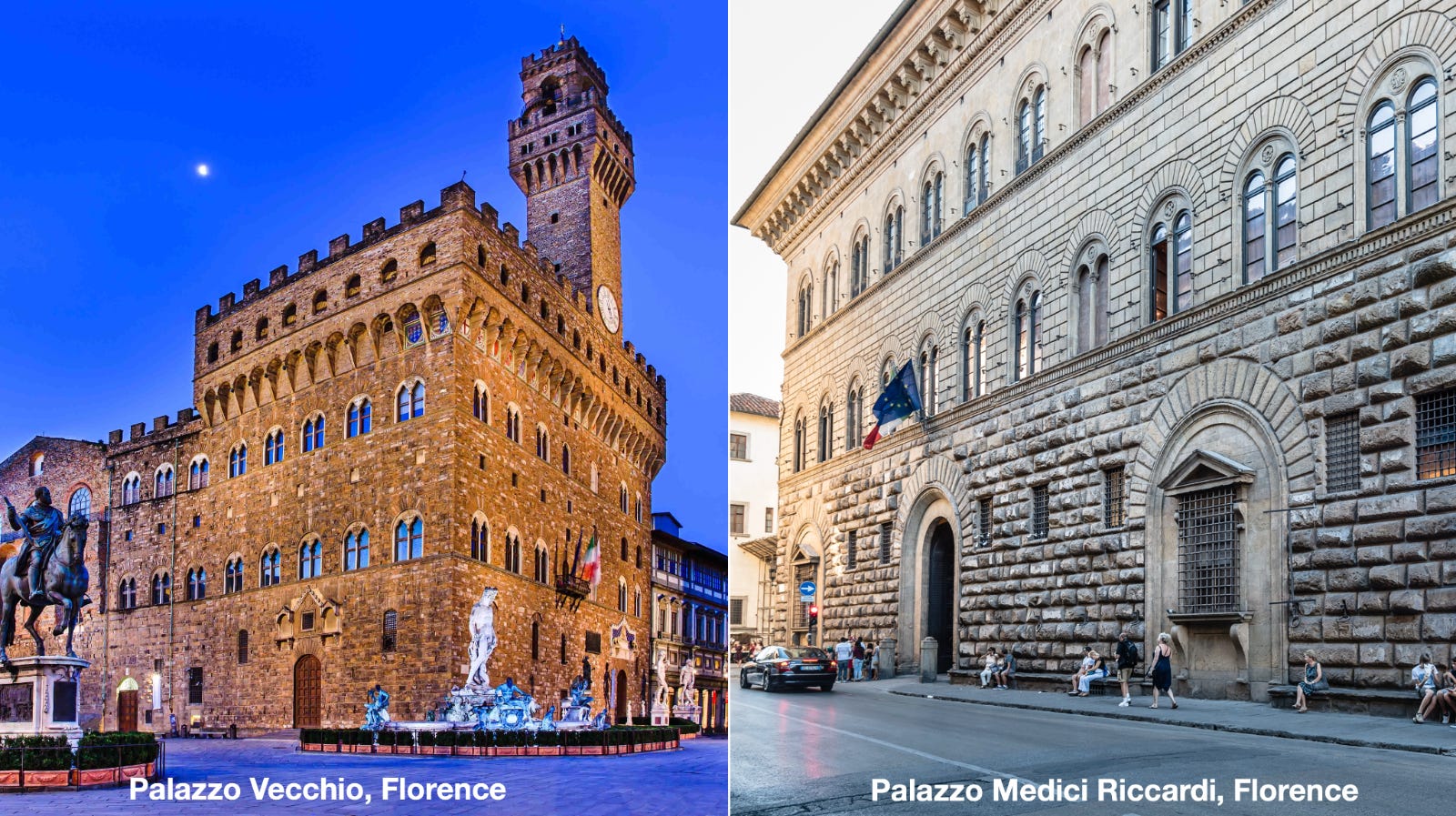
The Palazzo Vecchio is basically a fortress!11 A small unassuming door without many indications that it is even the main door, small windows, stones of different colors, no texture between windows, the crenelated roof for defence, a single tower in one corner…
Now compare that to the Medici Riccardi. Still strong, but now the round arches with voussoirs on top make them taller and much more conspicuous. There are more, bigger windows,12 external decorated marks for each floor, the roof overhang is now beautifully decorated, dimensions feel harmonious…
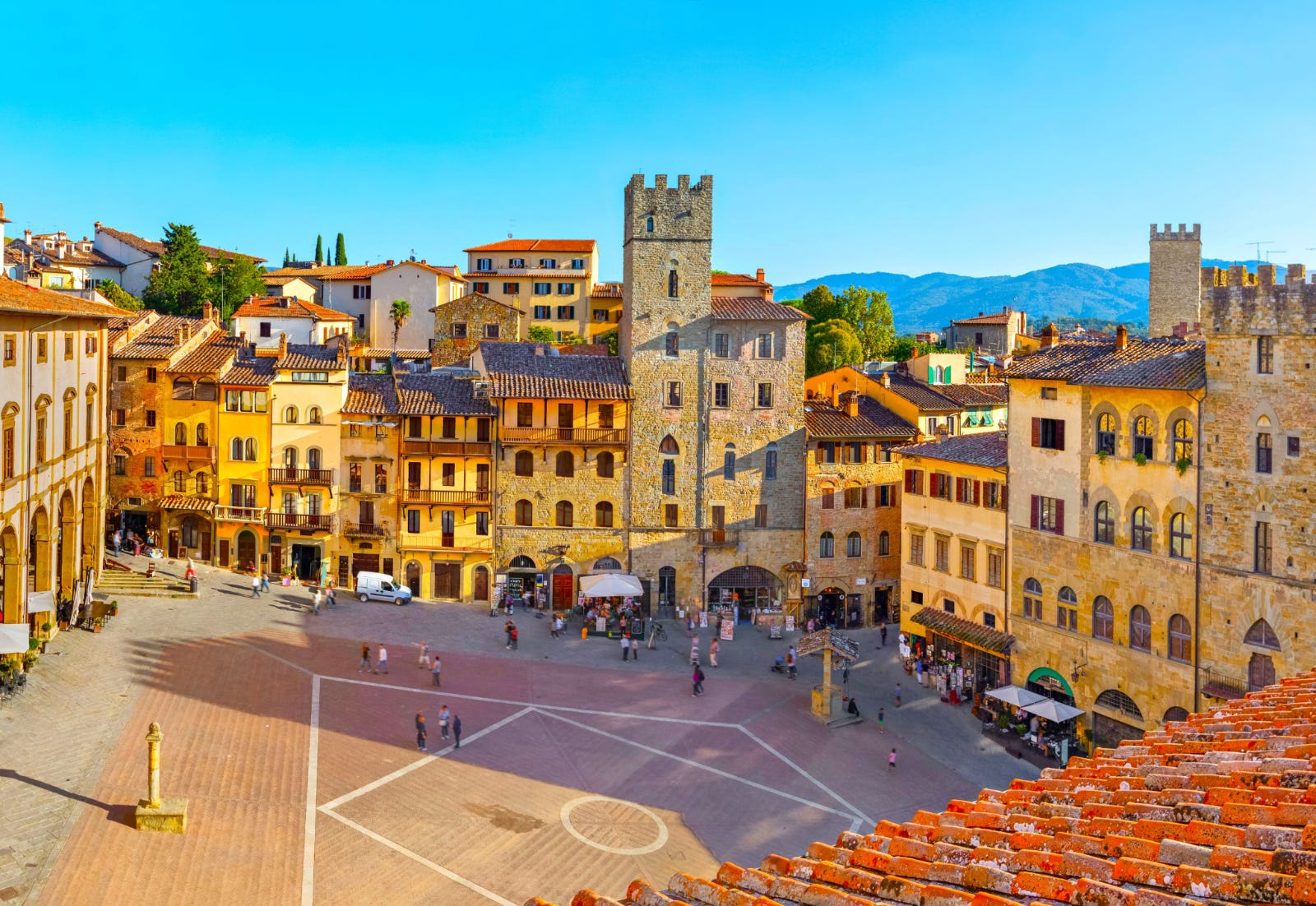
And I think this becomes even stronger when you have several houses following this style, even when some of them mix with other styles.
So Why Did Florence Birth Michelangelo, Fibonacci & Galileo?
Although I am lukewarm about Renaissance church architecture, this doesn’t take away from the improvement in non-Church architecture, and more importantly the amazing intellectual movement that emerged in Florence.
The Renaissance precursor Dante Alighieri revolutionized literature; Luca Pacioli, a collaborator of Leonardo da Vinci, became a ground-breaking figure of accounting; Piero della Francesca emphasized the divine proportions; Fibonacci13 discovered the Fibonacci sequence and popularized Indian numerals; Galileo the astronomer defended heliocentrism against the church; Botticelli, Boccaccio, and the aforementioned Michelangelo, the Medici, Da Vinci, Petrarch, Donatello, Raphael, Brunelleschi…
And now we know what the Renaissance is, and why it started in Florence:
Because of the mountainous terrain, the Alps, and the length of the Italian Peninsula, Northern Italy was distant from foreign centers of power, which gave them autonomy, especially given the contest between the HRE and the Church.
Northern Italy was rich because it was at the right spot in the Mediterranean, so it was the marketplace for Europe, the Middle East, and North Africa.
It also has highly fertile valleys, so the population grew fast.
A big share of that population was urban, which means network effects, more industry, trade, and money.
Within this region, Florence was rich as a crossroads between Rome and Northern Italy. It developed a wool industry, and from there other industries, including finance.
It was close enough from Rome to get its patronage, but not too close to be absorbed by it.
It was lucky to be on the winning side of the war between the Church and the HRE, and got a massive boost when the Church won, with financial and mining monopolies.
It was close enough to Rome to gain inspiration from Ancient Rome and be able to study it.
Once Florence had the money and the independence to go beyond the daily focus on war and survival, it could use the example of Rome to study it and replicate it. This meant massive investments in architecture, art, and all types of studies of Ancient Rome. This created a critical mass of thinkers who learned from each other, creating an explosion of knowledge across the disciplines.
In many regards, this reminds me of what I witnessed in Silicon Valley in the nearly 15 years I spent there: an incredible concentration of intelligent, ambitious people, all focused on pushing the boundaries of one new technology—the Internet. It’s difficult to get these network effects set up. Can San Francisco survive its current downfall? Where will the next Florence emerge? What type of endeavor can justify the massive investments that are concentrated in one place, to attract geniuses from everywhere? Can Dubai do it, or does it not have enough of a mission? Shenzhen fits the definition. Is it limited to manufacturing, or will it bleed into other types of innovation? What do you think?
This type of article takes blood and sweat, and they don’t leave me much more time to do other things. But I want to do even better ones! And more of them! Across more media! I hope you saw the video at the top. I want to do more of that too! But I can’t do this alone. So I am going to hire a team to help me research, write, and publish more articles, convert this content into videos, audio, and podcasts, translate them, make tools to make them interactive, and much more. But I can only do that if you help me pay for it. If you like articles like this one and you want to see more, I need you to fund it.
This claim sounded crazy to me, so I looked into it. The Florentine Duomo, built in 1436, apparently remained the biggest dome in the world for 450 years, until 1871, when it was replaced by the Royal Albert Hall dome. But all modern domes use steel somehow, either directly or as reinforced concrete. Brunelleschi’s Duomo in Florence doesn’t, it’s just masonry: a series of construction elements bound with mortar and working by compression.
Arezzo was absorbed into Florence soon after, in the 1380s.
Apparently it was already in circulation, and the original architect of Santa Maria del Fiore was inspired by it, but this rediscovery made its knowledge widespread.
The 3rd and 4th turtles. You didn’t think I had forgotten, did you? Although born in Urbino, Raphael became deeply connected with Florentine artistic circles before moving to Rome. Michelangelo was born in the Florentine village of Caprese.
There’s a fantastic write-up from Martin Sustrik about Ada Palmer’s class on Italian politics of the time. The gist of it is that this class puts the students in the skin of different characters, and they role-play the history, which is the closest thing we have to having randomized controlled tests in history, and what it finds is that some outcomes always happen, but some others change, and the details are always different. This is strong support for the theory that big parts of history are predetermined.
With Western countries like Castile, Portugal, Aragon, France, and England emerging. Flanders was part of the Holy Roman Empire and/or France depending on the moment. It’s in the area where France, the HRE, and the Hanseatic League overlap. I mean the HRE “in general” as it controlled Flanders, and many parts of HRE were rich, but not all.
I think the wool trade has not received the attention it deserves. It accounted for a massive share of GDP—I believe it was the second biggest industry after food. I hope to tackle it some day. If you know good sources, LMK.
Siena was closer to Rome than Florence, so it felt the Papal power more strongly. It made sense for it to oppose Rome, in hopes of the distant HRE suppressing Rome, which would have given Siena more autonomy.
Alum is a mordant, meaning it creates a chemical “bridge” between dye molecules and the fibre. There were no alum mines in Europe; it was all provided by the Ottomans in the 1400s, until an alum mine was discovered near Rome, in the Papal States. The Popes gave their mining rights to the Medici.
It had to be though because it wasn’t safe at the time.
Notice we’re still not very secure, as the windows had ironwork to fend off criminals.
From neighboring Pisa, which became part of Florence-controlled Tuscany.
I love that you’ve written this. I actually wrote a very similar piece for my family ahead of traveling there last year, so no one has ever seen it. (Literally, just 20 people or so). It has some slightly different emphases (commercial revolution, positive impact of some instability, need for the money makers to wash away their usurious sins, etc.), I missed the geographic factor, and I never really finished it, but it’s similar in other ways. Loved reading yours. would be curious your thoughts: https://ianrtemple.substack.com/p/the-rise-and-fall-of-florence
Thanks for the synthesis of a lot of information and history.