

Several premium or paywalled articles over the last few days:
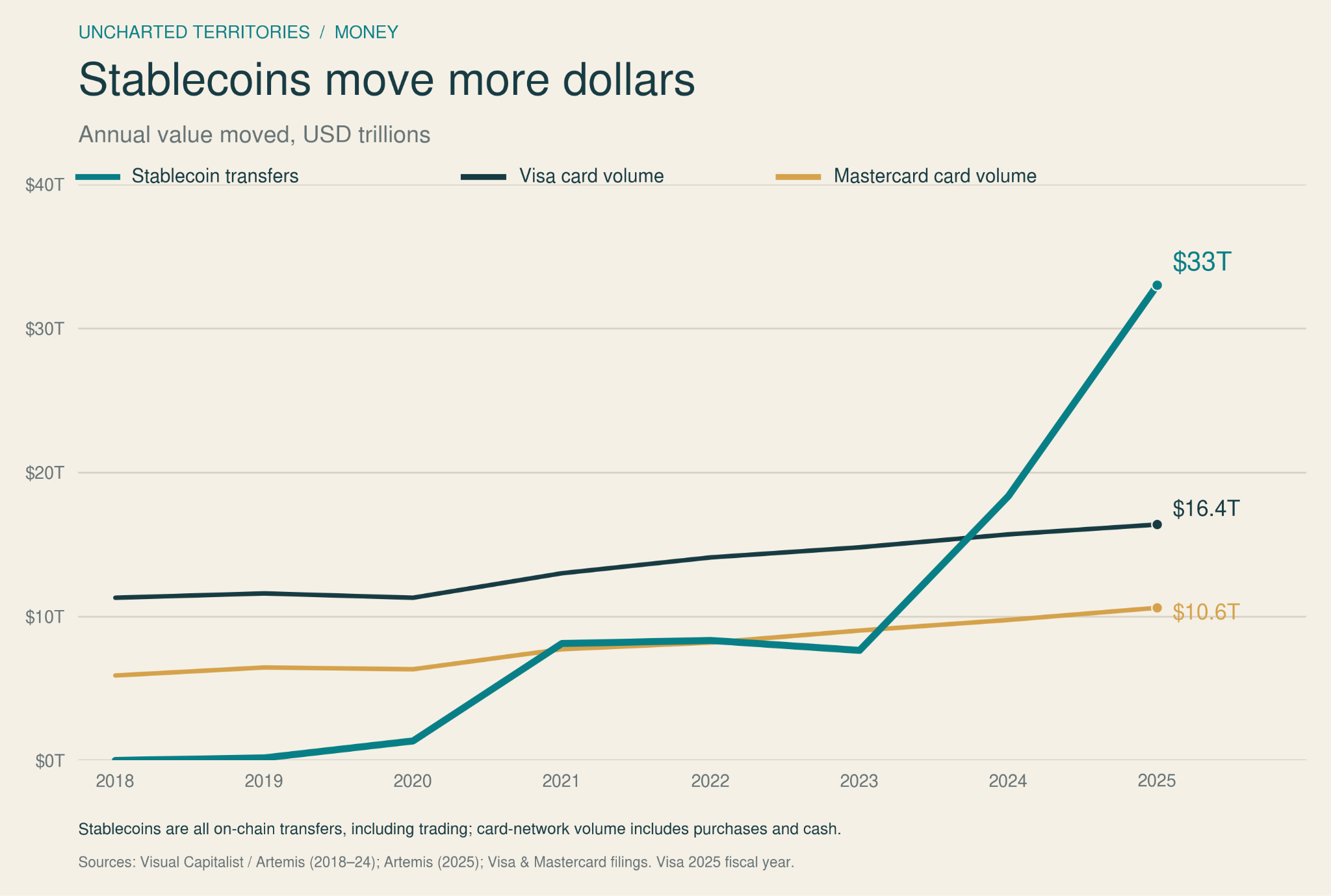
Have you seen this? There are more transfers in stablecoins than payments in Visa or Mastercard.
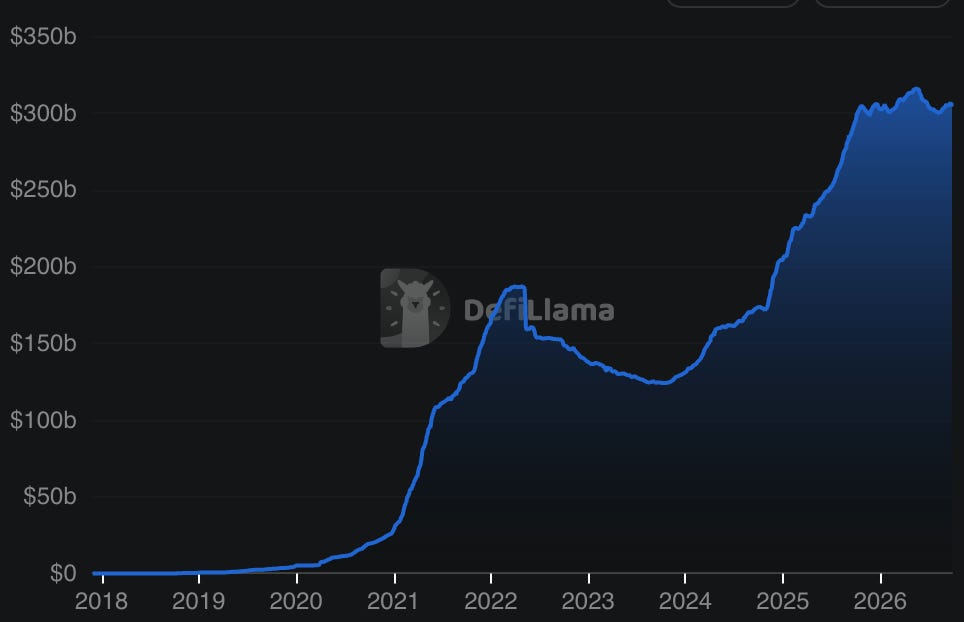
Stablecoins, cryptocurrencies designed to maintain a stable value, typically by being pegged to a traditional currency, are worth over $300B.
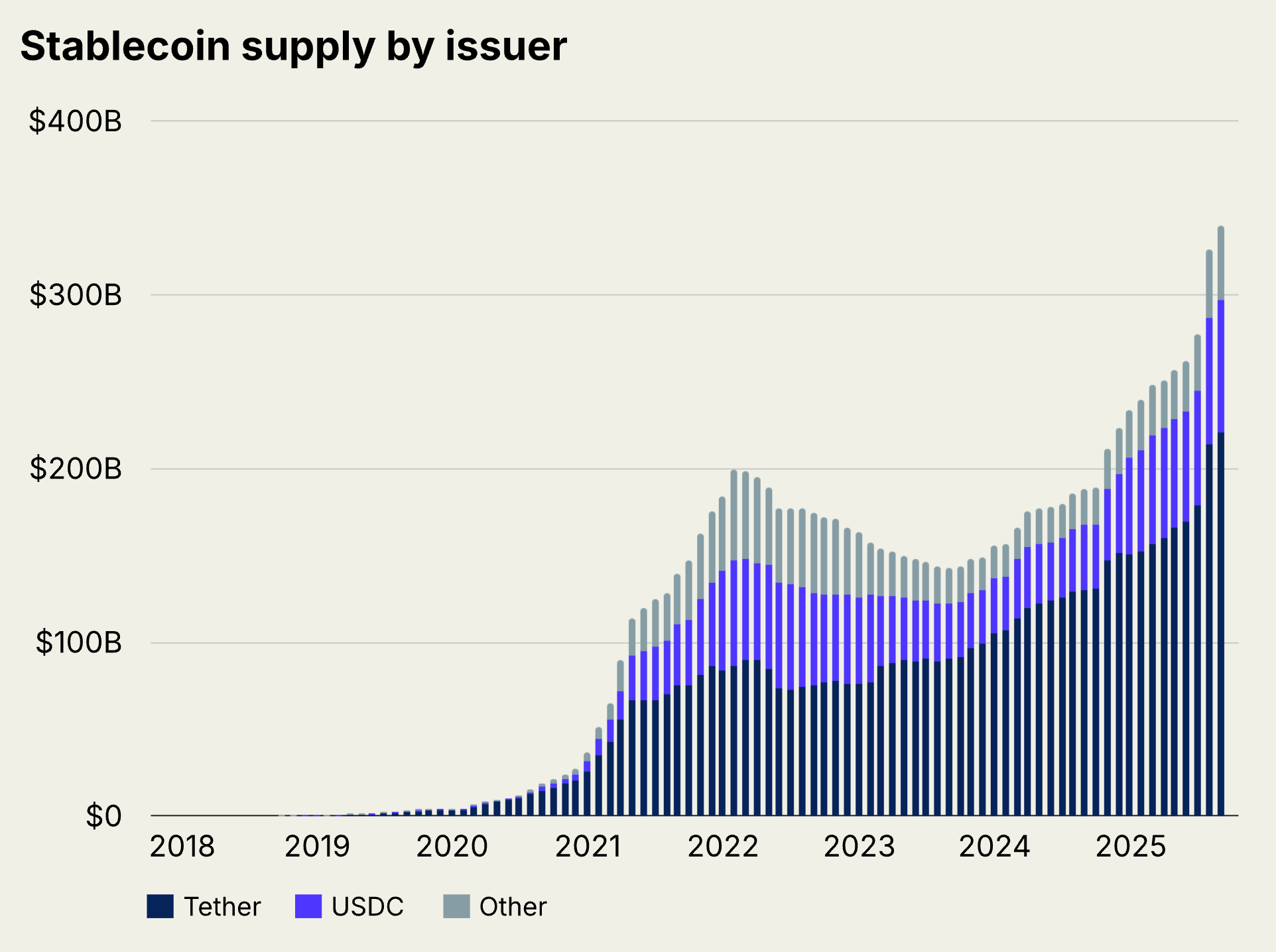
Mostly through Tether and USDC:
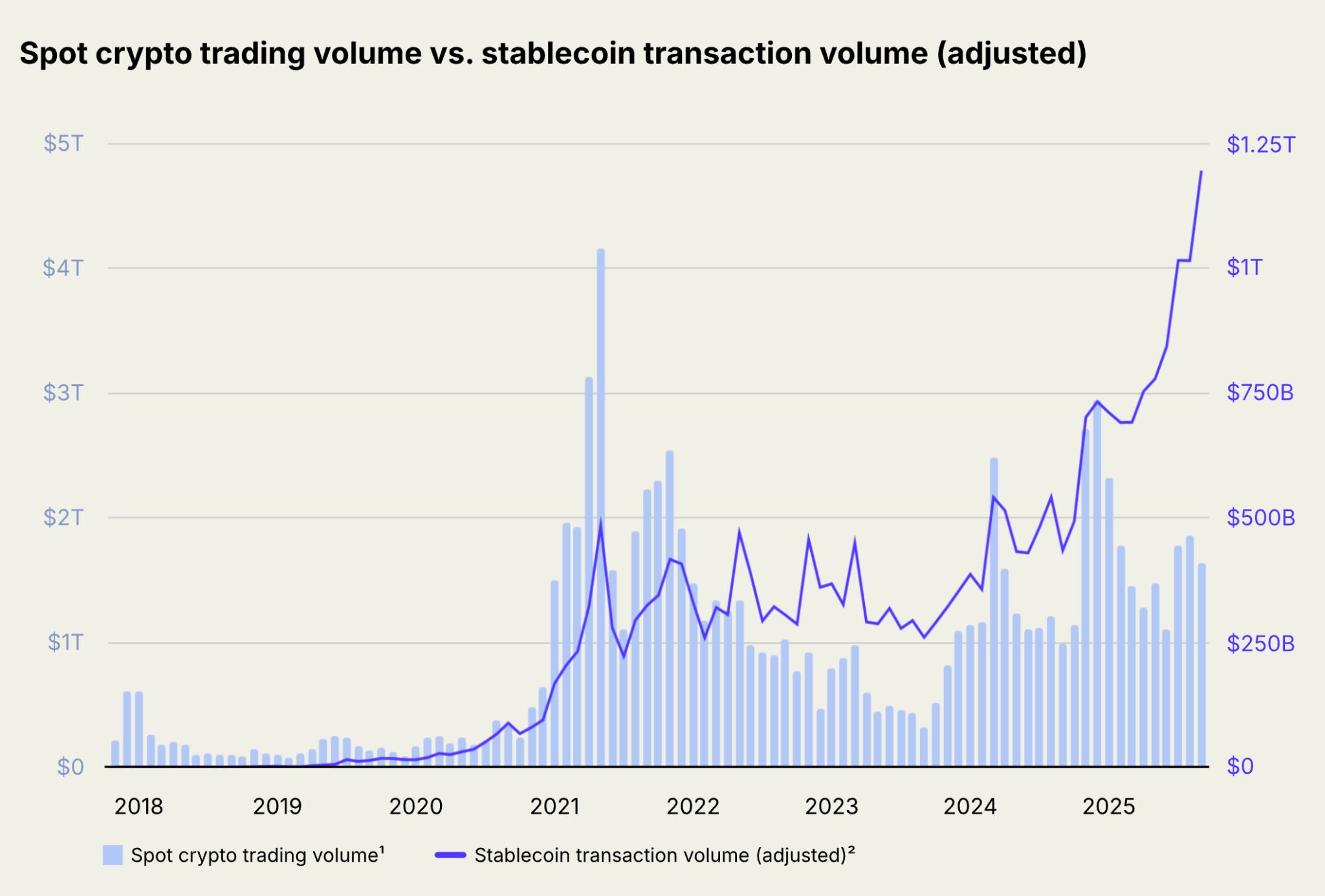
Stablecoin transfers are growing much faster than crypto trading:
Stablecoins are quickly becoming the 2nd big crypto use case after Bitcoin. Why? How big is it going to get? What’s the difference between them and Bitcoin? What’s the future of cryptocurrencies? Since the best way to predict the future is to understand the past, let’s do that with currencies to learn how we got here.
Shells, Copper, Bronze, Gold, Silver, Paper
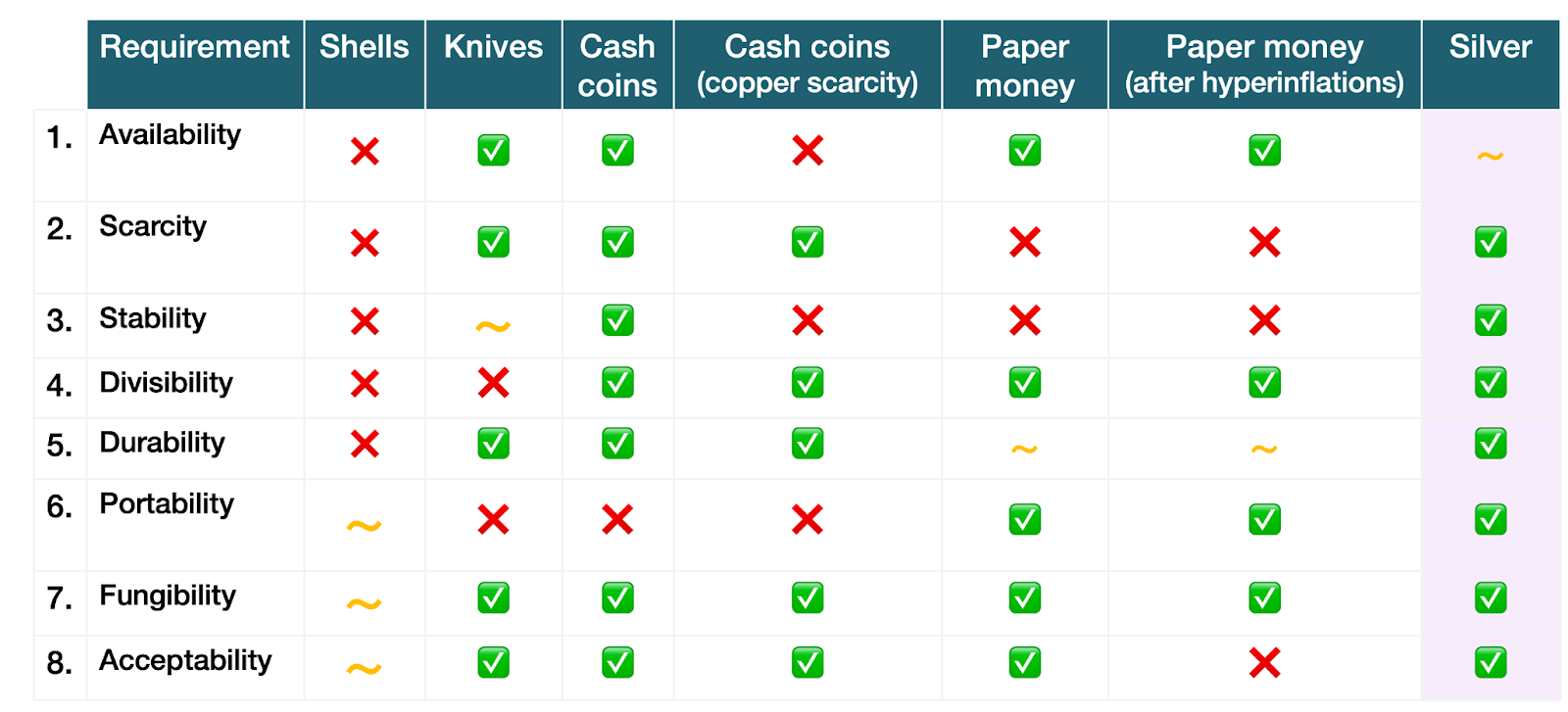
You can understand why Bitcoin has been successful when you consider the history of currencies, as we did in How Silver Made Chinese Empires and How Ancient Metals Started Civilization. Good currencies need to be:
Scarce: eg, the market can be flooded by shells
Stable: Its value can’t be changing all the time
Divisible: for big or small transactions
Durable: eg, shells or bad quality paper can break
Portable: eg, copper was so cheap that you needed to carry a lot of it to make any payment
Fungible: eg, two shells are unlike each other
Acceptable: other people must recognize it as a valid currency
Some things work better than others as currency:
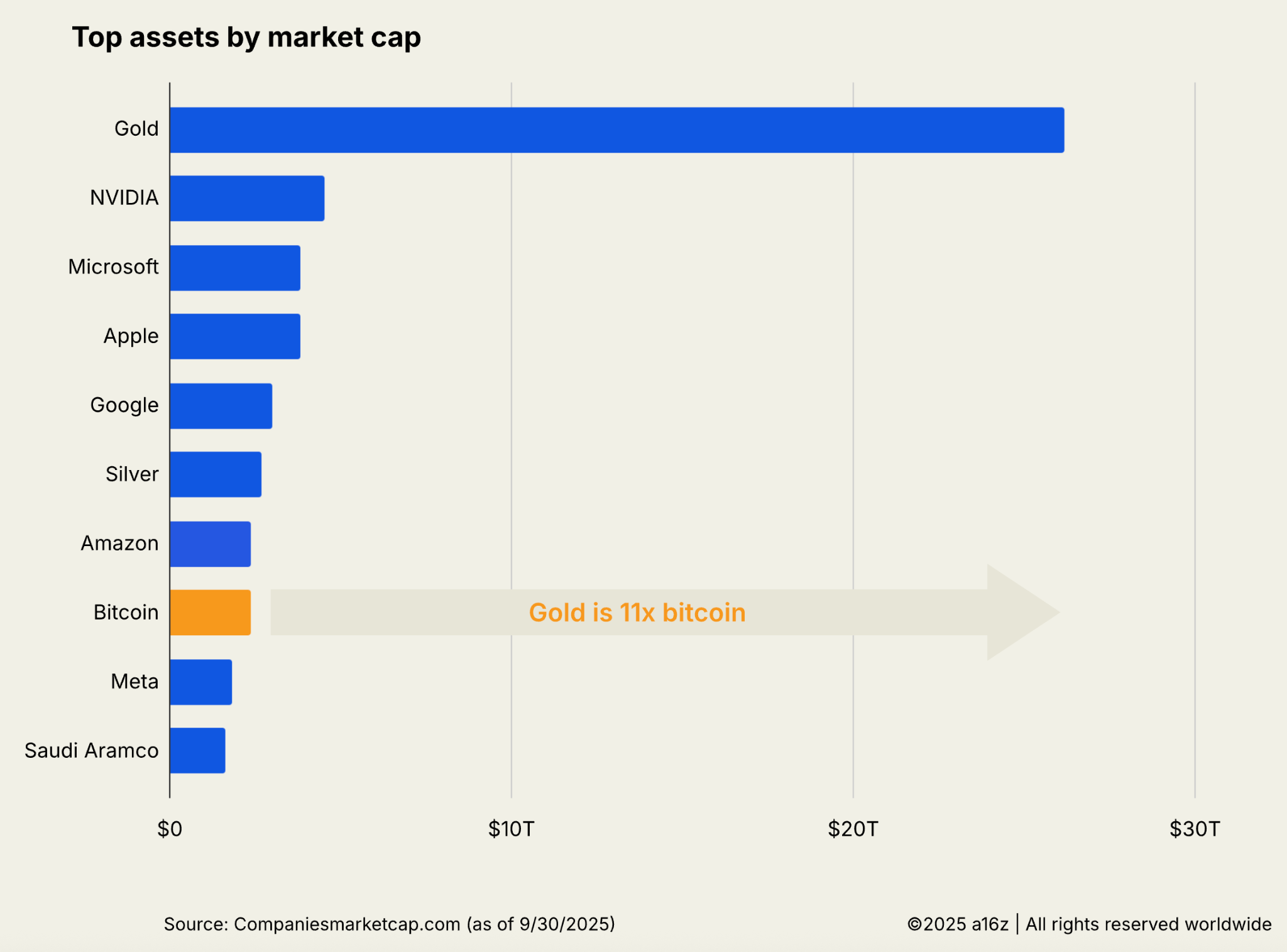
These factors explain why Bitcoin is so valuable now, worth $1.7 trillion dollars, nearly as much as silver.
Indeed, Bitcoin is:
Available: You can easily get Bitcoin wherever you are
Scarce: There will only ever be 21 million BTC
Divisible: One BTC can be divided into one hundred million pieces (0.00000001 BTC, about 0.08 cents today)
Durable: It’s going to be there as long as we see value in it, as BTC is the result of computation
Portable: You can send it anywhere with a few clicks at very little cost
Fungible: One BTC is exactly the same as another
Acceptable: Everybody that is close to crypto knows BTC and accepts it as payment. This is the core reason why BTC is one of the biggest cryptocurrencies and why it will remain so for a long time: As the first one, and one that’s well built, everyone recognizes it as the most important, and that makes it so.
I skipped one of the properties of a good currency. Did you notice which one?
Stability.
The price of BTC is volatile.
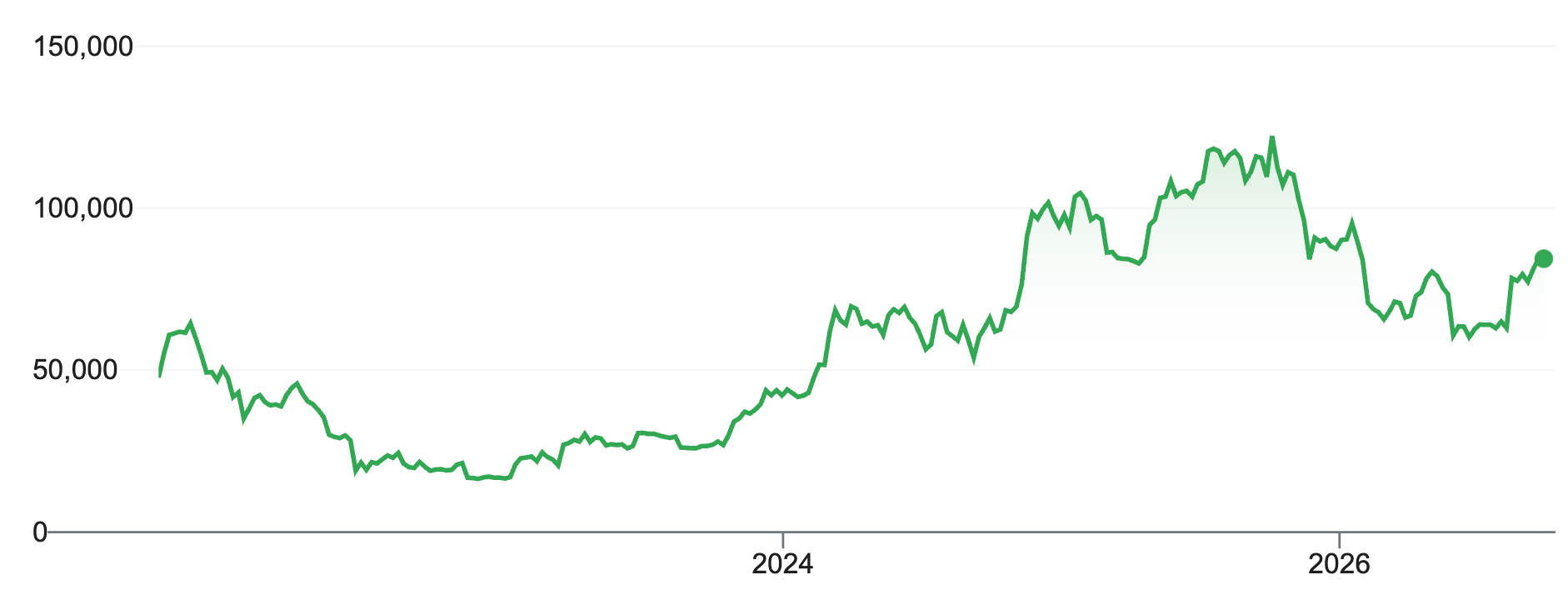
This makes it like gold, for the same reasons.
The Dullness of Gold
This is the value of gold over time:
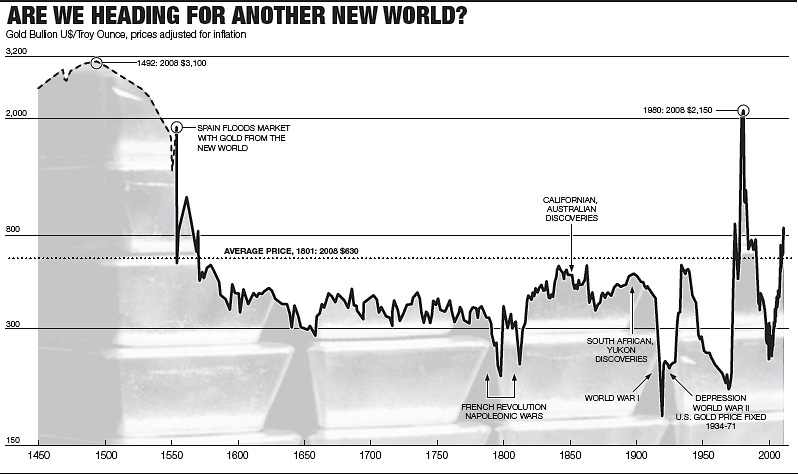
Notice this is a logarithmic graph, so gold price swings are even wilder than this. Why?
Gold is very scarce, so in moments of scarcity, people hoarded it. They squirreled it away in chests, jewelry, furniture… Which is a self-fulfilling prophecy: The more people think it’s scarce, the more they hoard it, and the scarcer it becomes.
Scarcity and stability are connected: the scarcer a currency is, the less stable it will be.
Bitcoin has the exact same problem, for the exact same reason. It has the ultimate scarcity (only 21M BTC will ever be minted), so when people think its value is high, they will hoard it, pushing its price up, and when they think its value is shrinking, they will dump it. This is why BTC prices swing so much.1
This has catastrophic consequences for an economy whose currency is gold: When the economy expands, people need more gold, so it becomes more scarce, so its price increases, people start hoarding it, and the lack of currency makes the economy cool off. In other words, a lot of the economy’s productivity increases simply translate into higher gold prices.
Shiny Silver
This is what made silver so valuable. In the 1400s, after the Black Death in Europe, the economy boomed. By the 1450s, this2 had led to a dramatic shortage of silver, which spurred technology improvements in Central Europe, which helped them discover new silver mines. A few decades later, the Spanish discovered the American ones, flooding the world with silver.3
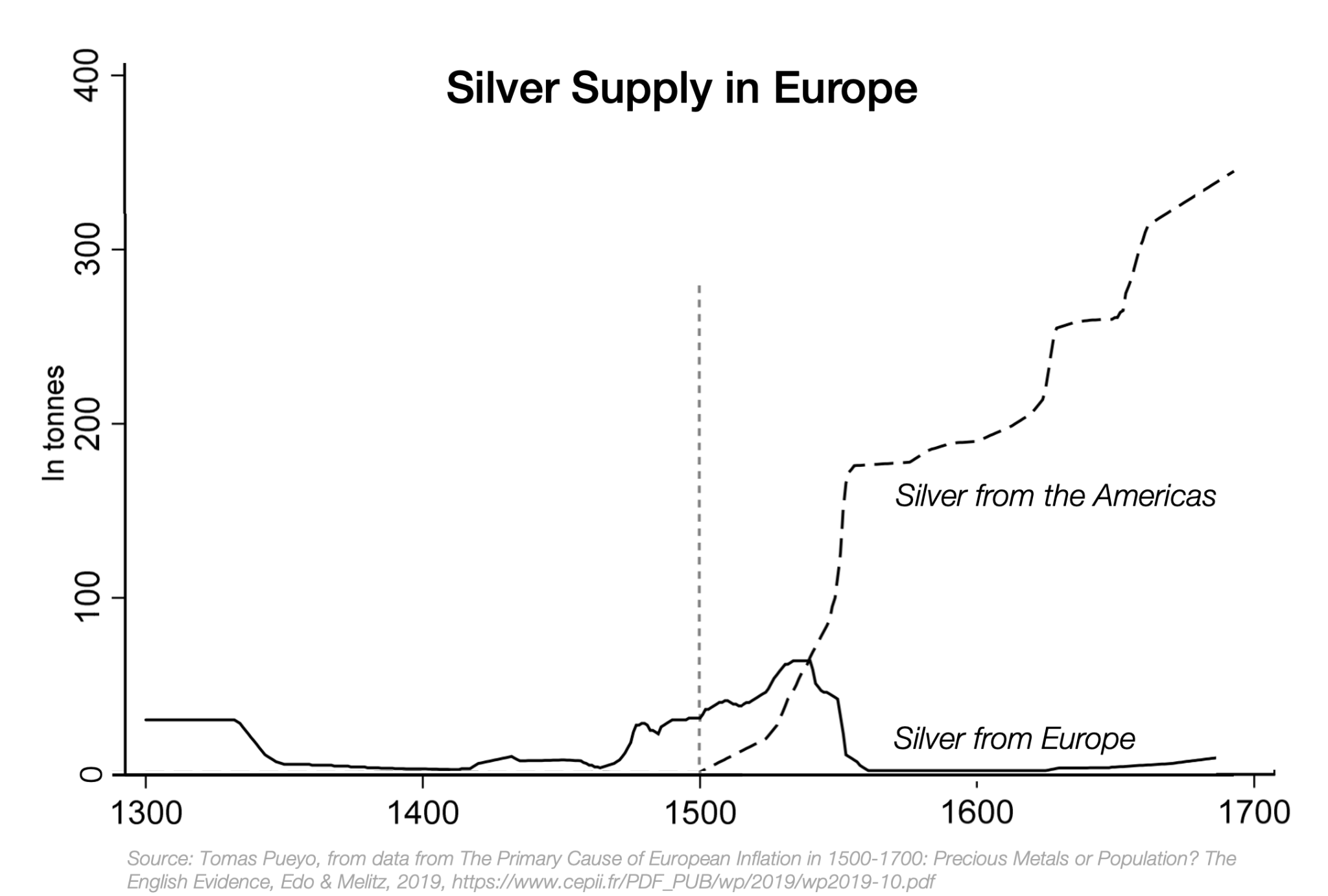
Since silver is more abundant than gold, it’s less scarce, which made it more stable as a currency.

And stability is key for a currency, because that conserves the value of the signal of prices. We all know how bad inflation is for the economy. Deflation is, too: If a currency gains in value over time, people will reduce their consumption, dragging the economy into a recession.4
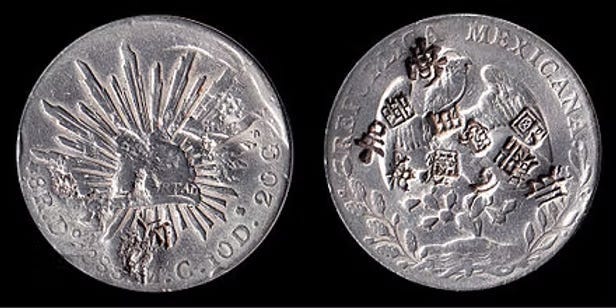
The global economy boomed, from Spain to Europe and even China. That’s why silver coins became legal tender around the world:
Hence stablecoins. Get it?
The Stability of Stablecoins
Stablecoins, like most cryptocurrencies, inherit the same benefits as a Bitcoin: availability, divisibility, durability… The main difference is the scarcity vs stability tradeoff.
Since scarcity is what makes Bitcoin like gold—too valuable, which makes its value unstable—then the next generation of successful cryptocurrencies was always going to be the one to solve this problem: Eliminate scarcity, and instead target stability.
That’s how a stablecoin works. A company like Tether tells you: “Give me one dollar, I’ll give you a digital dollar (which I’ll call USDT for United States Dollar – Tether). You can move it around as you please, and when you want, I’ll give you that dollar back.”
Each time a customer asks for one USDT, Tether just mints it, so the stability of the currency is completely tethered to its underlying currency (in this case, USD). How does Tether guarantee that one USDT is always worth one USD? Because5 it uses your dollar to buy a US Treasury security, and it makes money out of the yield on that security (or “treasury”) while you keep that USDT unredeemed. About 3/4 of Tether’s dollars are in US treasuries or equivalent assets.6
This is why the company is one of the most profitable: With interest rates around 4%, its over $200B in assets generate $10B in profits in 2025. With just 200 employees, that’s around $50M of profit per employee—10x more than NVIDIA!
A global adoption of USD stablecoins might have some pretty serious macroeconomic consequences.
A Radical Impact on the Global Economy
With people worldwide buying USD, the entire world economy might dollarize. With this ubiquity, more businesses might put their prices on USD stablecoins and accept them as currency, thereby furthering the cycle.
Lower US Inflation
This would be valuable for the US because it can keep printing dollars while inflation stays low, since it’s distributed over many more dollars around the world.
This is so useful that the US is embracing USD stablecoins, and approved the GENIUS Act as a result. Imagine: The US can print treasuries at will, and the rest of the world gobbles them up! More debt without the consequences of higher required interest rates.
Europe and China see this coming, and they’ll try to fight it with their own stablecoins. The competition will be good for customers—except when it prevents citizens from buying the competing stablecoins.
Weaker Financial Weapons
But of course, the more transactions run on stablecoins, the less they run on the US-led SWIFT system, undermining its influence on global transactions. The US would have fewer financial weapons against its enemies, but a more powerful monetary policy.
All this is not a trivial side-effect. Eliminating the power of a central node is arguably the core purpose of cryptocurrencies.
Undermine Local Currency Policy
Along the same lines, most countries wouldn’t be able to influence the economy as much through monetary policy, since many more of their citizens’ and firms’ assets would be in another currency.
Fewer Financial Crises
From here, via Tyler Cowen’s Marginal Revolution, heavily edited:
Firms and financial institutions in developing countries borrow heavily in USD while their revenues and assets are in local currency. When the US increases its interest rates, the dollar appreciates, the economy slows down, and asset prices shrink. These firms suddenly find themselves squeezed by rising dollar debts and falling asset values. This shock forces cutbacks and retrenchment. This is one of the key channels through which US monetary policy spills over globally.
But if households and firms begin holding dollar assets via stablecoins, now both sides of their balance sheet will be in dollars. A stronger dollar no longer only increases liabilities; it also raises the value of their dollar assets, helping to offset the shock. In effect, stablecoins can act as a decentralized balance sheet stabilizer, muting one of the very mechanisms that drives global financial volatility.
So these are some of the global consequences that stablecoins could have in the global economy, but first we need to get there, and that depends on individuals adopting stablecoins - and from what we can see, there’s demand. Why are so many people interested in that? Why not simply use US dollars?
The Advantages of Stablecoins over USD
We talked about the big needs of currencies in history before, but that doesn’t mean we’re done. There are still many pain points with payments today that new payment and currency systems can solve.
1. Access USD Where It’s Hard To
If you’re in Venezuela, Turkey, Iran, or Syria right now, you’re losing 15–80% of your currency value every year you hold it. If your money is in the bank, you’re watching it evaporate. It would be better to hold USD, which lose their value much more slowly.
But as a foreigner, you can’t easily access USD. You can’t get a US bank account, your local banks might not offer the service, or your government might simply ban it. Buying USD bills on the streets is at a deep discount, you need a place to store them, and people might steal them from you.
But if you can log into your crypto account and with a few clicks buy a USDT with your own currency,7 you will not lose your life savings just because you happen to live in an inflation country. You’ll have access to this money anywhere in the world.
2. Fast International Payments
“Oh I’m sorry, it’s 5:01pm on a Friday. You’ll have to wait 88h for us to process your payment—Monday is a bank holiday.”
And then on top of that, you need 1–5 business days to get your money! Are we in the Middle Ages or what? Are we carrying silver ingots by horse-pulled cart? We’re not, but traditional payment systems like SWIFT can still take day transfer your money.
3. Working Capital
During that time, the money is neither in the sender’s account nor in the receiver’s, so both need to cover that money during that time. This working capital can add up to a lot, and some companies need huge, expensive loans in the interim. An immediate settlement—which stablecoins can do—bypasses that problem.
4. Cheap Fees & Commissions
Traditional payments are expensive, too. An international wire transfer frequently costs $20–$30, and remittances cost on average over 6% of the amount! If you send home $1,000, the intermediary can shave $100 off your meager income.
Those are just fees. What about exchange commissions? Not great to lose 1-3% of the money in every transaction you make. That’s some medieval financier kind of stuff.
5. Convenient International Payouts
Imagine a company that has thousands of employees in dozens of countries around the world. How do you manage all the currencies, national banking systems, bank accounts…?
6. Programmability
A dollar is dumb. It just sits there waiting for you to do things with it. Cryptocurrencies are not.
Imagine a homeowner paying a plumber €500 to replace a water heater. The homeowner sends the money into a digital escrow. The contract releases €250 when the plumber arrives,8
then releases the rest when the homeowner confirms the heater works. If they disagree, the money stays locked until a named mediator decides what happens.
Cryptocurrencies can support smart contracts that settle and move money automatically. For example, they can release funds when certain conditions are met—subject to software, oracle, and governance risks. Trading, collateral, lending, prediction markets, decentralized exchanges, tokenization… These are all examples of things we can do with intelligent money that are hard to do with dumb money.
Takeaways
As you can see, while Bitcoin is a way to store value like gold was (and is), stablecoins are optimized specifically as currencies for payments, the way silver was in the past. All these new stablecoin-related currencies and payment processors are focusing on solving the pain points of our current ones: high costs, slow settlement, accessibility, inconvenience, and stupidity.
This also tells you how we should think about the future of stablecoins in particular, and cryptocurrencies in general: What pain points do we still suffer from existing currencies and payment systems?
Gold had another disadvantage as a currency that BTC doesn’t share: When it was a currency, it was so scarce that it was extremely valuable. This made it great for big purchases (think chests of gold paid between governments in the movies), but bad for small ones. We can say it was not divisible enough.
And some other reasons, like the exhaustion of older silver mines and the loss of silver over time.
You can see the result of that in the price of gold in the 1500s. Once silver was everywhere, the value of gold as a currency plummeted, so its value went down accordingly.
Also, of course, if a silver coin has the exact same value for centuries, you can easily notice when the price of bread goes up, and then plant more wheat, store more grain, or shift your consumption to another staple. If the price of one smith’s knife goes up faster than others’, you know to change your provider.
At some point there was a question on whether Tether was indeed doing this. Theoretically, it could take your dollar and do whatever it wants with it. It would not be the first time this happened in crypto.
The remainder includes gold, secured loans, bitcoin, shares, corporate bonds and other investments. I find that nuts TBH.
USDT and USDC are banned in countries like Syria or Iran, but people there can use VPNs and other ways to get money out of their country and into such instruments.
It can be verified by a tamper-proof geolocation timestamp that proves the plumber was there when he said he’d be there.
Some of those points are interesting, especially for foreign transactions and quicker transfers but why would I buy stablecoins when I can make that 4 percent they're making on my money in my own savings account?
I find this comparison interesting, especially because Bitcoin and stablecoins can serve quite different purposes despite both being part of the crypto world. It makes me wonder whether the real distinction is between an asset people hold as a store of value and one they use to move money. How far does the gold-and-silver analogy actually hold?