

This is the quarterly review of all the new learnings on GeoHistory topics we’ve covered.
Today:
The Future of Nation-States: How countries are overspending and trying to tax the rich, who flee, while state control is becoming flimsier by the day.
Cities: A new one, what we’ve learned about the existing ones, SF, and how specialized cities must be to thrive.
The latest on the Israeli-Palestinian conflict. Hint: Not looking good for the long term.
Later this week (premium):
Were the Dark Ages dark?
What we’ve learned about US history
When Spain wanted to conquer China
The importance of transportation
And more
The Future of Nation-States
One of the big themes of Uncharted Territories is how the entitlements that Western countries have committed to are incompatible with the wealth concentration and uprooting allowed by the Internet, AI, and crypto. Overspending states will try to tax rich people, but these are quite mobile, and therefore, hard to tax. Recent news has been confirming this thesis.
Overspending
In Europe, if a company pays €60k per year for your services, how much of that do you keep?
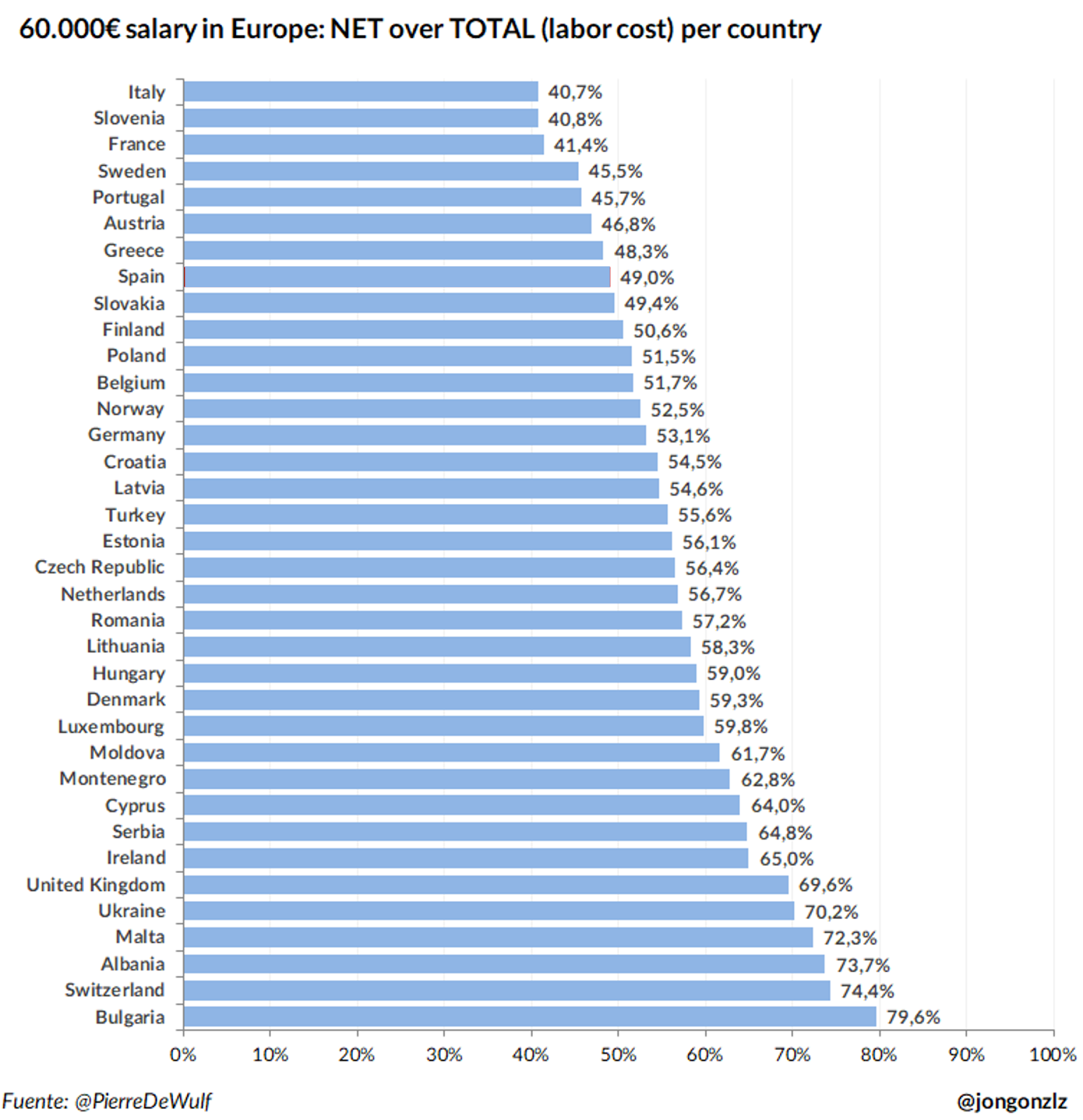
In countries like France or Italy, you barely keep 40%. Most of what you make goes to the government! How much more can they tax? I argue not that much. They’ve already maxed out what they can take.
Of course, they’ll try to get more, and the go-to victim is rich people. Alas.
Rich, Mobile People Are Hard to Tax
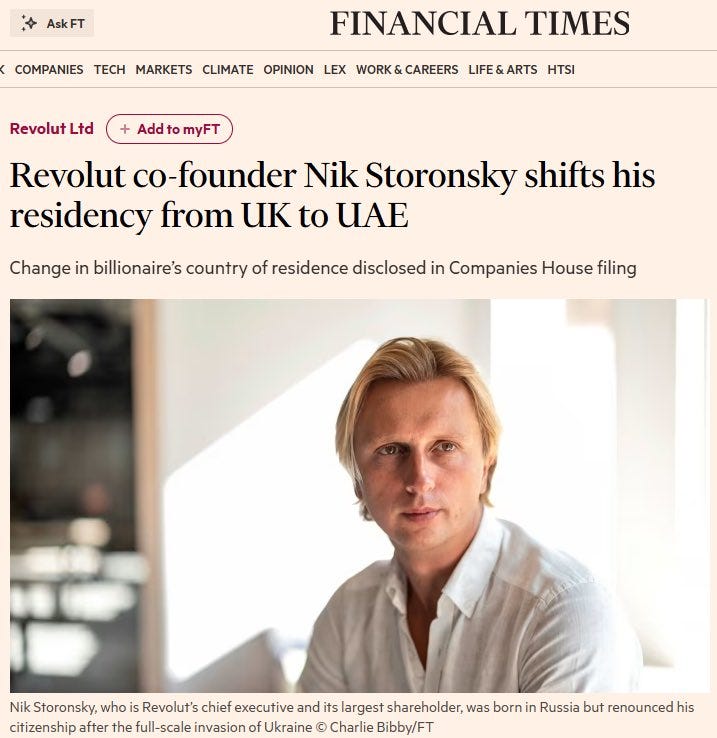
Storonsky is just one example of many.
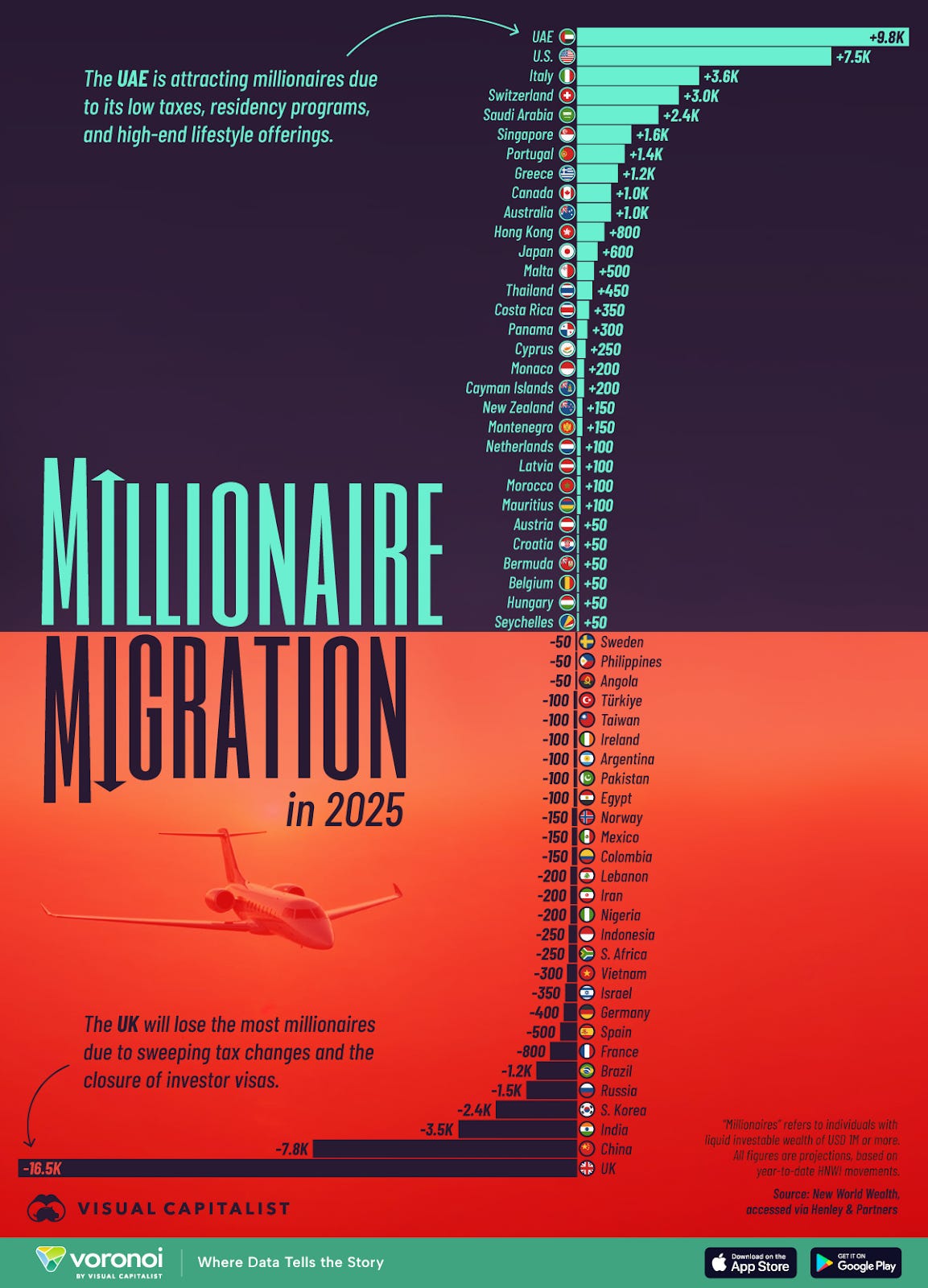
This follows a recent increase in UK capital gains taxes, from 10% to 18% for standard gains, and from 20% to 24% for high earners.
Quick back-of-the-envelope calculation of the ROI of this move:
Storonsky owns 18% of Revolut.
Say it’s worth $200B when it goes public.
That’s $36B ownership.
If he were to sell, the UK capital gains bill on this would be 24%, or $8.5BN.
In the UAE, it will be $0.
Over 8 billion dollars for a change of residence sounds like a nice ROI. For Storonsky. For the UK, it’s devastating. But it’s just the beginning of their weakening grip.
From Ground to Cloud
States control the land. If something is connected to the land, states can track it, demand payments, and send their guns to enforce their demands. So real estate, energy generation and transmission lines, airports, roads, telecom cables… All of these are their tools of power. Tools like remote work and solar energy are their enemies.
SpaceX’s Starlink is the tool that will untether communications. And they’ve recently moved one step closer to this vision: As I mentioned recently, they’ve just trademarked “Starlink Mobile” and they’ve bought a bunch of mobile spectrum to operate in the US—probably the first of many countries for which they will do this.
Can states still control telecommunications in this scenario? What if, say, a country like Iran tried to block mobile access the way they tried to block Starlink Internet?
For a direct satellite-to-cell operation to work, you need the satellites, the frequencies to emit the communication, the devices, and some land facilities like network operations centers and gateways.
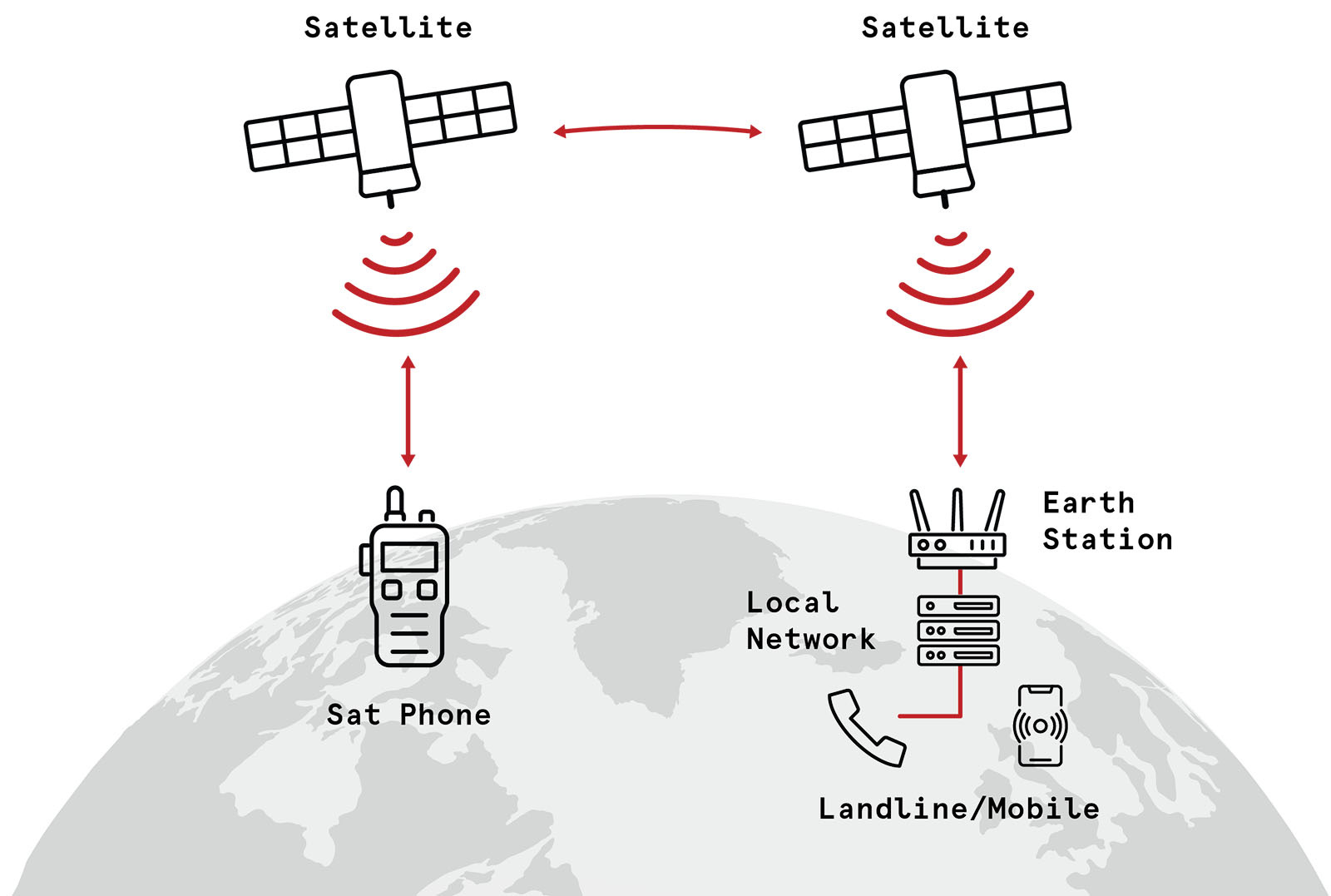
Satellites
Governments like Iran can’t control the satellites. They will be able to emit in this new spectrum (the range of frequencies Starlink just bought) in 2 years.
Mobile Phone Devices
Devices need to be able to handle the same spectrum. Today, phones don’t support the spectrum SpaceX has bought, but SpaceX is working on phone makers enabling it. Musk claims it will also be a reality in two years.
Theoretically, governments could block the sale or ownership of enabled devices, but it would take a forward-thinking government to do this. I guess China could do it, but I’m skeptical any other will.
Spectrum
Alternatively, Starlink could bypass this by illegally using spectrum it doesn’t own, if no other company is using it. I assume, as a rule of thumb, most countries have more spectrum than they’re using. If Musk is forward-thinking, he will enable satellites to handle a broad array of frequencies.
Countries could jam the frequencies Starlink uses, but that would cost billions of dollars in jammers. It would probably only be possible in big cities, so people who want to bypass their government’s control would simply live elsewhere.
Land-Based Facilities
These don’t need to be in any specific country, they can be in neighboring ones, so no control here.
Physical Control
That leaves physical control as the only tool states have to control direct-to-cell communications. It’s basically like what Iran did to suppress Starlink Internet during the war with Israel, trying to jam the satellite internet in urban areas, and spot and confiscate the devices. I’m sure they caught some people, but I doubt they suppressed it. With direct-to-cell, it’s the same thing, except there are no dishes to spot, only phones. And you have to be able to distinguish satellite connected phones from the rest. Almost impossible.
Note that none of this applies to a country like the US, though, because the US controls SpaceX, but also Apple, Google, Qualcomm… It could intervene at any of these layers. But this state capacity is not shared by most other states. Overall, it sounds to me like this will dramatically undermine the power of most1 nation-states: They won’t be able to stop their citizens from communicating anymore!
Cultural Unification
Another big consequence of the End of Nation-States is that all citizens will be able to understand each other better, so ideas will flow across countries, and people from different countries will feel much more like each other than today. A few years ago, I thought this would happen through everyone learning English, but I’m less and less sure. It looks like AI translation is becoming frictionless faster than people are learning English.

With direct-to-cell communication, people won’t even need a Starlink device to surf the web or talk to anyone, anywhere on Earth. And the grip of governments will grow even looser still.
Cities
The pattern that emerges from the 40 or so articles I’ve written about cities is that there’s a science behind the good ones, but we’re mostly unaware of it. We don’t know what makes cities appear and thrive. So every time we discover a new factor, I pay attention. Like noise.
The Cost of Noise in Cities
How do you quantify the cost of noise to society? This paper did it intelligently: It looked at how much people were willing to pay to live in a calmer area. How? They looked at the prices of homes along noisy thoroughfares before and after the construction of noise barriers.2 After they were built, prices became 7% higher than in areas with no noise barriers. In other words, people were willing to pay a 7% premium to live in less noisy areas. Researchers estimated that, considering all the real estate value across the US, the cost of noise was $110B! What would be the equivalent cost if applied to cars? Nearly $1,000 per car per year! That’s what cars should pay on average if they covered their externality, the negative impact of their noisy existence.
Luckily, electric vehicle engines barely make any noise, so their use will improve the quality of life in cities. However, that’s only true at low speeds:
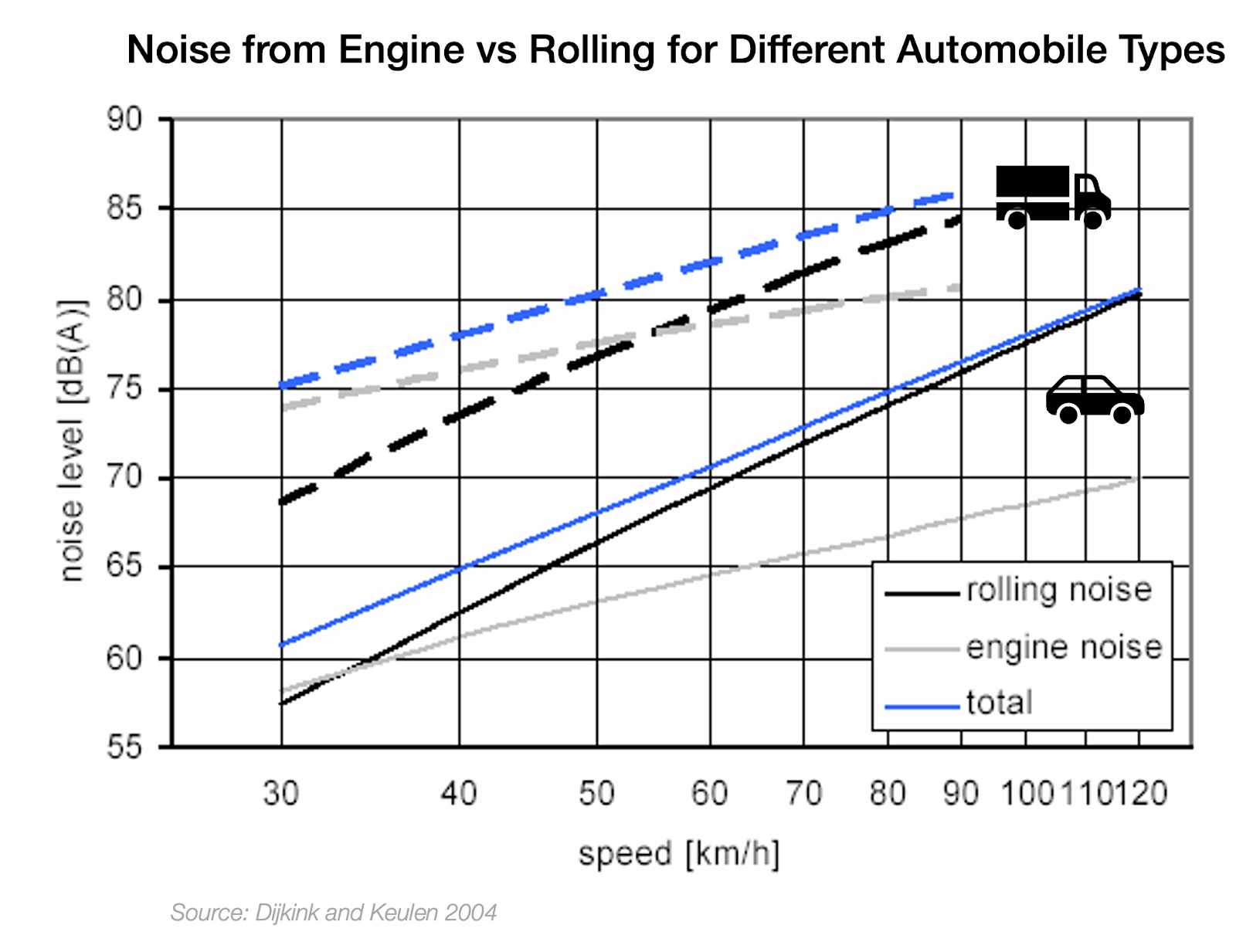
Starting at ~40-50 km/h (~25 mph), most of the noise a car makes comes from the rolling, not the engine roaring. For trucks, that comes later, at around 60 km/h (~40 mph). Which means that small roads and streets will have much less noise than today, but highways won’t.
A New Shining City on a Bay
The amazing Jan Sramek and his California Forever are building the most exciting new city in the West. They’ve just submitted concrete plans for incorporation.
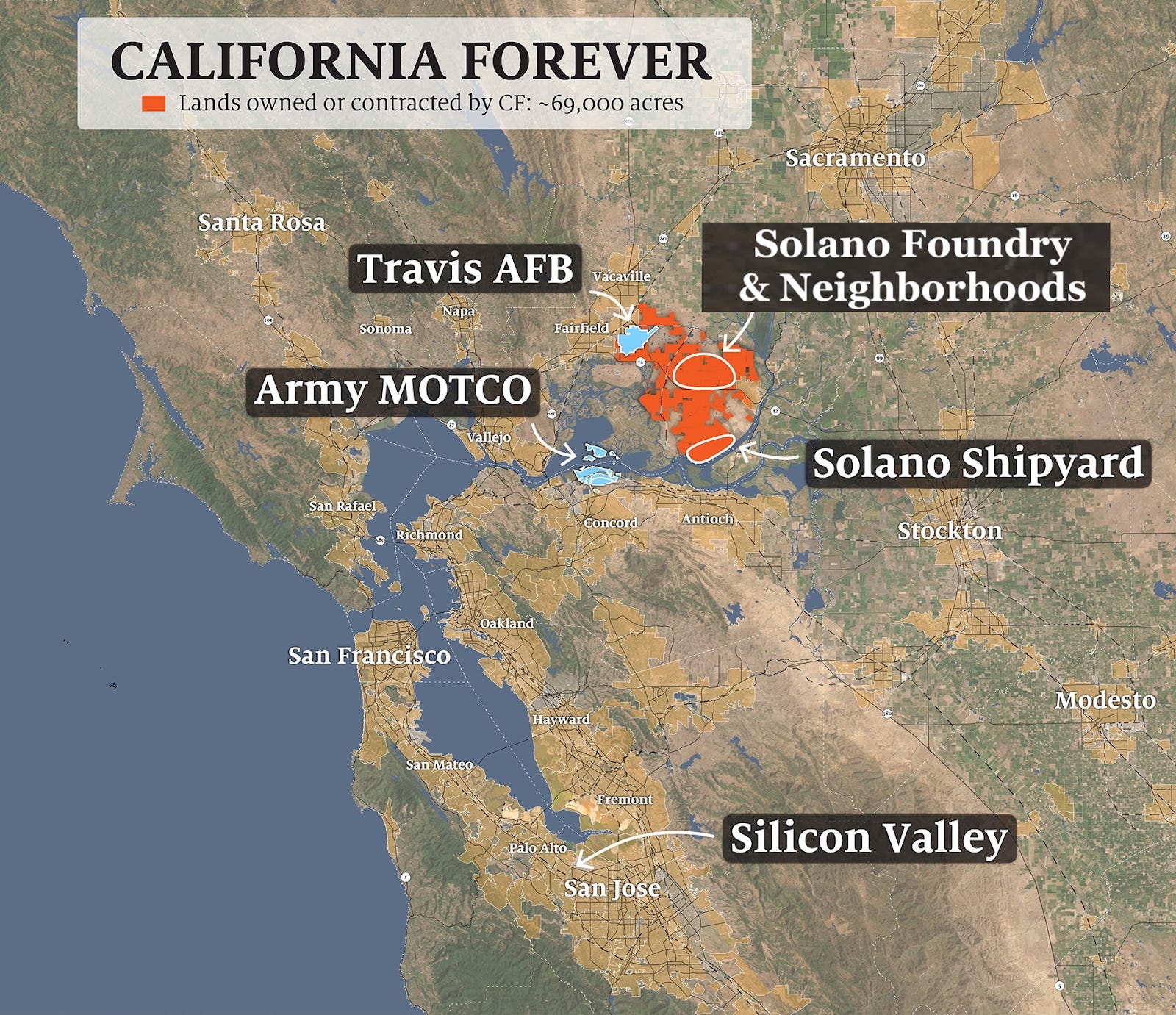
It will include Solano Foundry (America’s largest manufacturing park), Solano Shipyard (the largest shipyard3), and walkable neighborhoods for 400,000 Californians.

I’ve talked with Jan in the past. He’s one of the most joyful, optimistic, intelligent, driven founders I know. His vision is very ambitious.

More importantly, I think his plan will work. He’s been at it for a long time, and the last time we spoke, it seemed like he had finally figured out how to navigate the political side of city-building.
More on this plan here.
Big cities are all diversified; every small city is specialized in its own way
This new paper looked at a measure they called coherence: How concentrated cities’ economies are.4 They found that big cities are well diversified, but small cities’ economies are not. Those tended to be highly concentrated in one or a few industries. As cities grow, however, they diversify, for example, moving from craftsmanship to engineering and manufacturing.
This resonates strongly with everything we’ve seen in Uncharted Territories: Unmistakably, big cities today started as specialized small cities. These specializations tended to be around trade. For example, since Chicago is the trading hub between the Mississippi Basin and the Great Lakes, it specialized in the transportation and trade of the local commodities: beef, wheat, corn, and timber. From there, it started diversifying into more and more industries.
This has a lesson for new cities: You gotta have some specific industry you’re catering to, and focus all your attention on that. The more concentrated your industry cluster, the stronger you will be.
The only cities that should focus on diversification are those that are quite big, but still heavily concentrated in too few industries. Dubai went from oil to transportation, from there to trade (of the transported goods), to finance (of the trades), and from there to other industries like real estate, healthcare, and education. Detroit and Pittsburgh were not diversified enough, and they suffered when their industries collapsed.
In light of this, is California Forever’s plan a good one? I guess the manufacturing foundry and shipyard make sense, but are they similar enough to feed each other? Maybe it’s too diversified already? What makes CF unique is that it’s a satellite city (to San Francisco and Sacramento), so it could quickly attract enough people to cater to both industries. Maybe that makes the double focus sensible. What do you think?
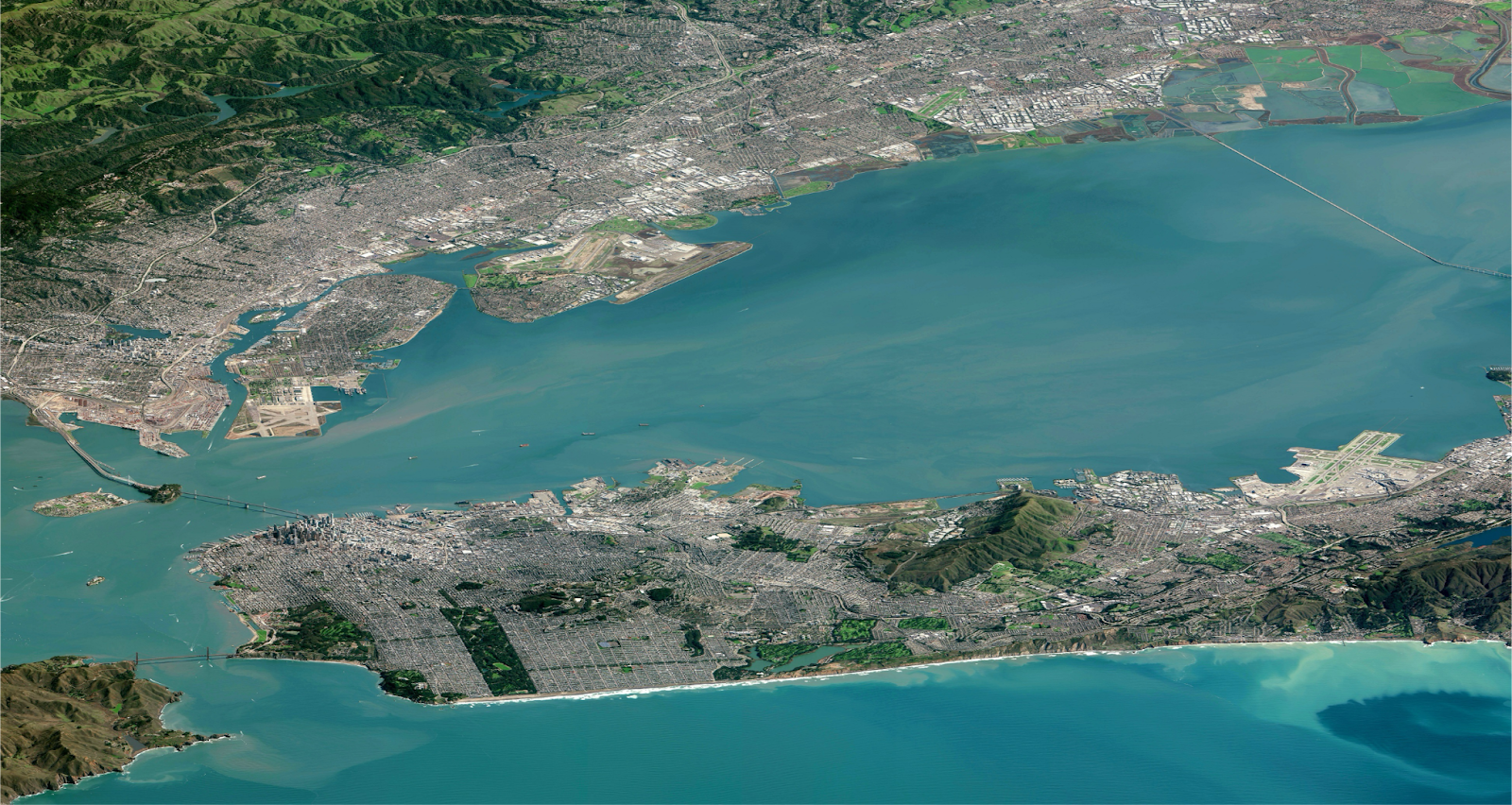
San Francisco from Space
Speaking of California cities, I love this image.
The Future of the Israeli–Palestinian Conflict
In my 10-part series on Israel and Palestine, I concluded that the conflict would only be resolved when Palestinians wanted peace. So how’s that going?
The Palestinian Center for Policy and Survey Research (PCPSR), a pretty neutral Palestinian non-profit, has just released an update to its polls.
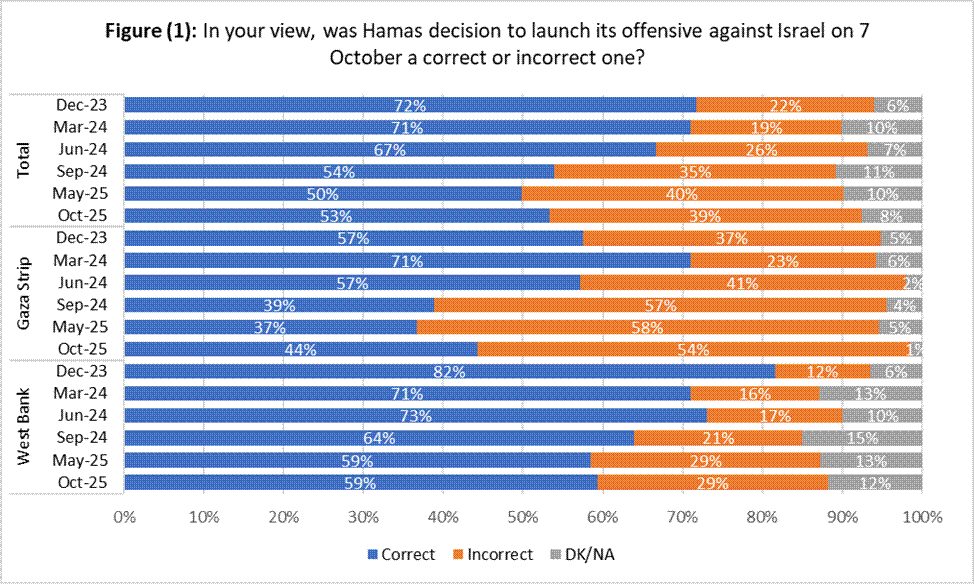
A majority of Palestinians support Hamas’s attack on Israel on October 7th 2023.
When you look at Gaza, you could see a huge support just after the events, but support cratered as Israel methodically destroyed Hamas, and with it Gaza.
It seems like support is increasing as things have calmed down.
What would you conclude from this?
One could imagine most Palestinians being against the original attack, and as Israeli destruction has rained upon them, their hatred and desire for vengeance would have increased. Instead, we’re seeing the opposite: They supported Hamas… As long as they thought it was winning. As it appeared to lose, support cratered. Now that it seems like they might survive in power, their support increases. Might makes right.
If this were true, and we took it to its logical conclusion, the end of the conflict will only come when one of the two sides fully prevails.
Let’s see more data from that report. More than half of Palestinians don’t support the two-state solution.
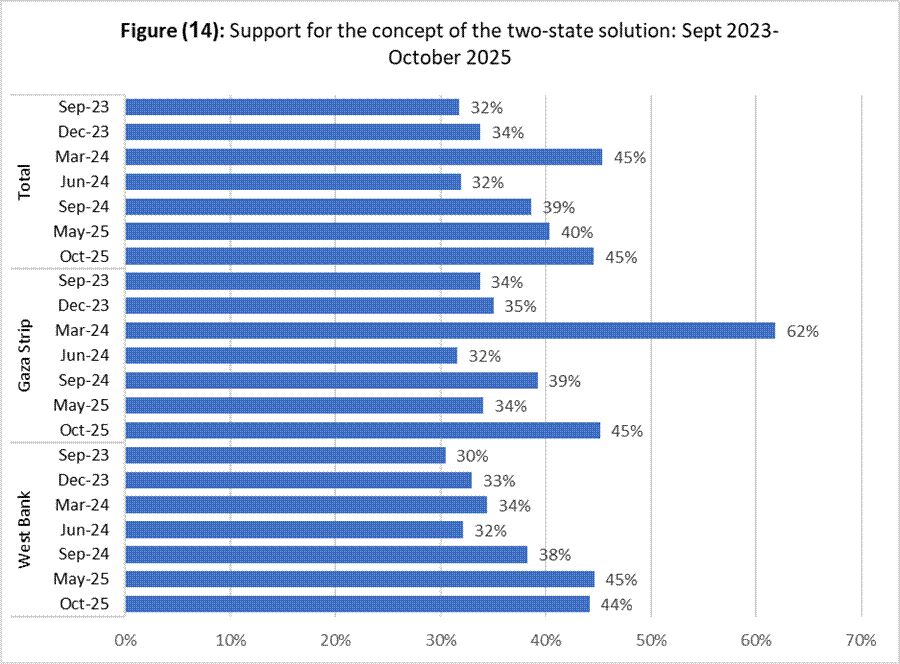
This means that what they support is Arab Palestinians controlling the entire region, as in the elimination of Israel. 40% still support armed struggle.
If that sounds radical to you, note that this is a pretty typical interview with Palestinians.5
Ergo there won’t be peace in Palestine.
The Arab / Hashemite king of Jordan, who is no friend of the Palestinian leadership—because after the country hosted them, they tried to organize a revolution—thinks no international peace troops will ever enforce non-violence in Gaza.
So my hopes on the conflict remain as high as ever: There will be no peace in Palestine in the next few years and decades.
I hope at some point, my idea of intervening in Palestinian (and Israeli) education and culture won’t seem so naive. It’s either destruction or reeducation.
China, and maybe some other high-state-capacity countries, might also be able to.
It controls for other aspects by looking at barrier construction events, and comparing the places where barriers were not erected on that road vs other places where they were. There’s obviously a small confounding factor but I think it’s probably minimal.
In terms of land surface, it will be more than twice as big as the 2nd in the US.
They measured this through data like how closely related the industries of random pairs of workers were.
This comes from The Ask Project, which has hundreds of videos like this. I’ve seen many dozens, and this is the norm, not an outlier. I don’t understand Arabic so I can’t judge that part, but the English part is quite unbiased. I’ve watched dozens of interviews with Israelis too, and the questions are usually quite similar, if not identical, and the pushback seems equivalent on both sides. It also corresponds to the interviews I carried out myself in the West Bank. So unless somebody brings evidence, I will consider The Ask Project quite unbiased, and those attacking it without data as biased.
Tomas, you really do great research, wonderful thinking and fantastic synthesis on every topic - except that of Israel.
You have in recent months highlighted the reasons that Palestinians are to be blame entirely for the conflict. Your reason? That Palestinians don't want peace. That is the only reason?
A March 2025 poll conducted by Pennsylvania State University and published in Haaretz found that 82% of Israeli Jews support the "transfer" or forced expulsion of Palestinians from the Gaza Strip.
The Penn State study also found that 47% of Jewish Israelis agreed that the IDF, when conquering an enemy city, should "act as the Israelites did in Jericho... killing all its inhabitants".
Israeli Heritage Minister Amichai Eliyahu said on Sunday that dropping an “nuclear bomb” on the Gaza Strip is “an option”. The Institute of Strategic Dialogue found that between 7 October 2023 and 7 October 2024, there were more than 513,000 English-language posts by 261,000 unique authors with ‘no innocent Palestinians’ rhetoric. The president and defence minister said they were human animals. And therefore, killing new born babies and children is fine.
Israelis were horrified by the rape and killing of Palestinian prisoners at the notorious Sde Teiman detention facility. Not because the solidiers who perpetrated these crimes should be put on trial, but that this should be considered normal and standard practice with Palestinian prisoners, and that they should be released. Which they were. Between 84 and 98 Palestinian detainees have died in Israeli jails since October 7, 2023, according to the United Nations.
In effect you are blaming the victim Tomas. Brown University estimates $21.7 billion of military aid has been provided to Israel since October 7 2023, and neither Republicans nor Democrats have put any limits on Israeli activity. Since the so-called peace plan came into effect, Israel controls more than 53% of the Gaza.
'Oh but Hamas' you say. There is no Hamas in the West Bank, and yet the same thing is happening there. Israel plans to annex 82% of the occupied West Bank to prevent the establishment of a Palestinian state, far-right Finance Minister Bezalel Smotrich said in September. “Israeli sovereignty will be applied to 82% of the territory,” Smotrich, the leader of the far-right Religious Zionism Party, told a press conference in Jerusalem. It already controls more than 70% through settlements and walls.
Bibi Netanyahu went to the UN showing a map of Israel with no Palestine. This is part of the Greater Israel project which is thinking of taking much of Lebanon, Syria and Egypt, and has already made significant inroads in that plan, with land grabs up to the Litani River in Lebanon and close to Damascus in Syria.
And this is all nothing new. One of the fathers of modern Israel, Menachim Begin, was called a terrorist by the British, and was even reported to have proudly started a speech by proudly saying he was a terrorist. In the formation of Israel, over 700,000 Palestinians were expelled from their homes. They were not compensated, there was no deal, they were driven out at gunpoint. Many of those driven out had given refuge to Jewish refugees, just as they had done to Armenian refugees before that, and just as many in Europe had to Ukrainians.
Imagine having given refuge to a Ukrainian, and then have them lock your doors and told to leave or you will be shot. That is exactly what happened to many of those Palestinians.
Tomas, you are an intelligent and well-meaning individual. You have also been fed a steady diet of Zionest propaganda, as have most people reading western media. It is time that you at least allow the possibility than not everything you have read is the complete truth, and start to do your own research into this complex subject.
Everything I have referenced is based on reported research or stories. Most of it from Israeli media, which has a much more rigorous debate on these topics than in the US or UK. I would suggest you start there.
His wealth is based on where he does business, not what his residency is. The fact that we allow rich people and corporations pull stuff like that is really annoying. I use Revolut, but the moment I found out about that stunt I started looking into zen.com. Rich people need to stop thinking they are above the society.