

Japan is extraordinary.
Why did it develop samurai?
Why did it close down to the world for 250 years?
Why did it forget how to make guns?
How did it go from feudal to industrial in a matter of decades?
How did it conquer half of East Asia?
Why did it later lose it?
You can explain all of these, and more, just by looking at its geography. We’ve started to do this in the last two articles on Japan’s population and its geopolitical priorities. Now it’s time to connect that to history.
How Geography Determined Japan’s Government
As a reminder, this is Japan:
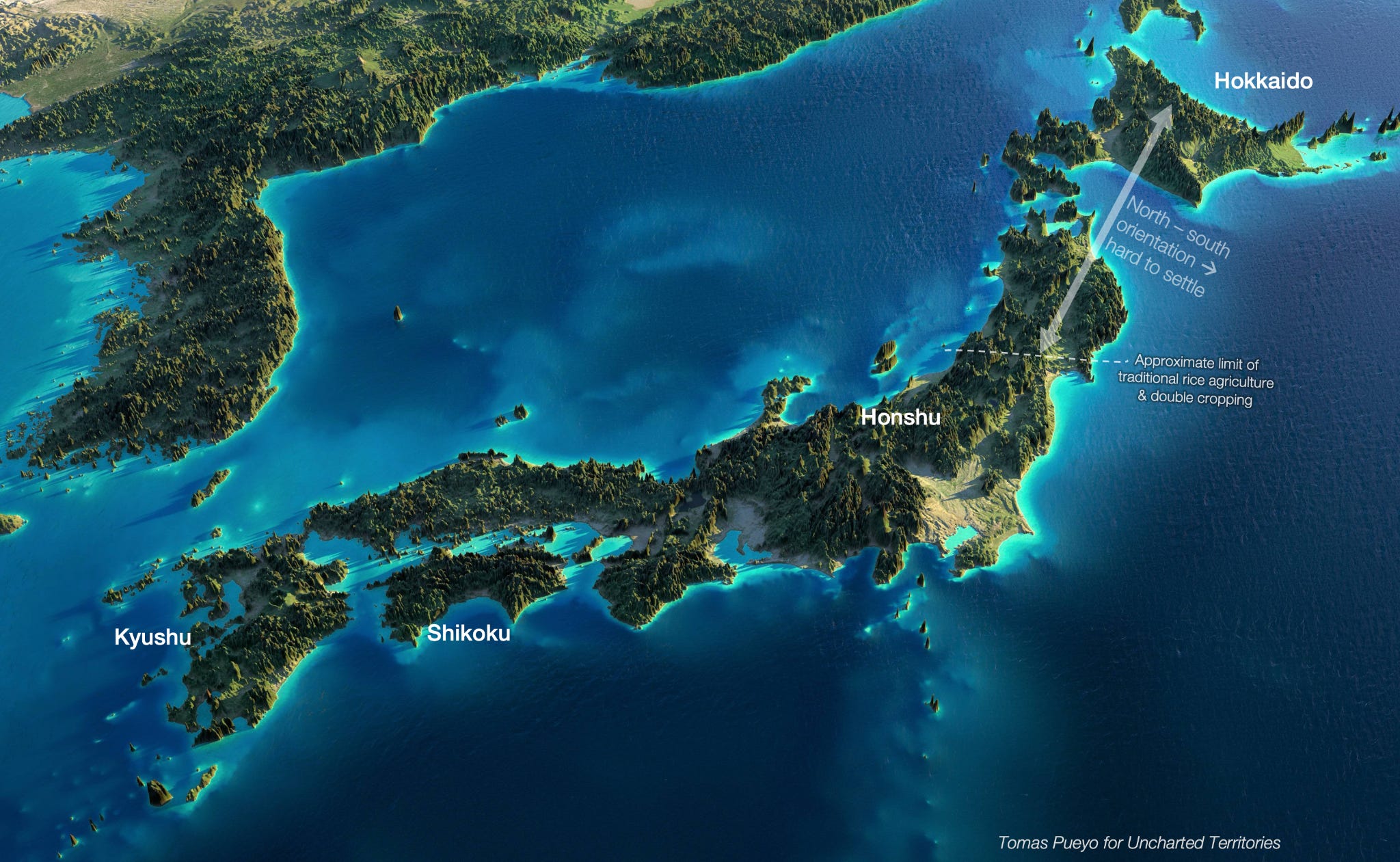
In the previous article, we saw how the #1 goal of Japan is to unify these islands, especially the three southern ones of Honshu, Kyushu, and Shikoku.
The Smaller Islands
Kyushu is so close to Korea that it’s always been the Japanese island most connected to the mainland, to new ideas and technologies, and to maritime trade, which made it one of the richest and strongest early on. But it has few plains, so with just 12M people today, it’s not very populated compared to Honshu.
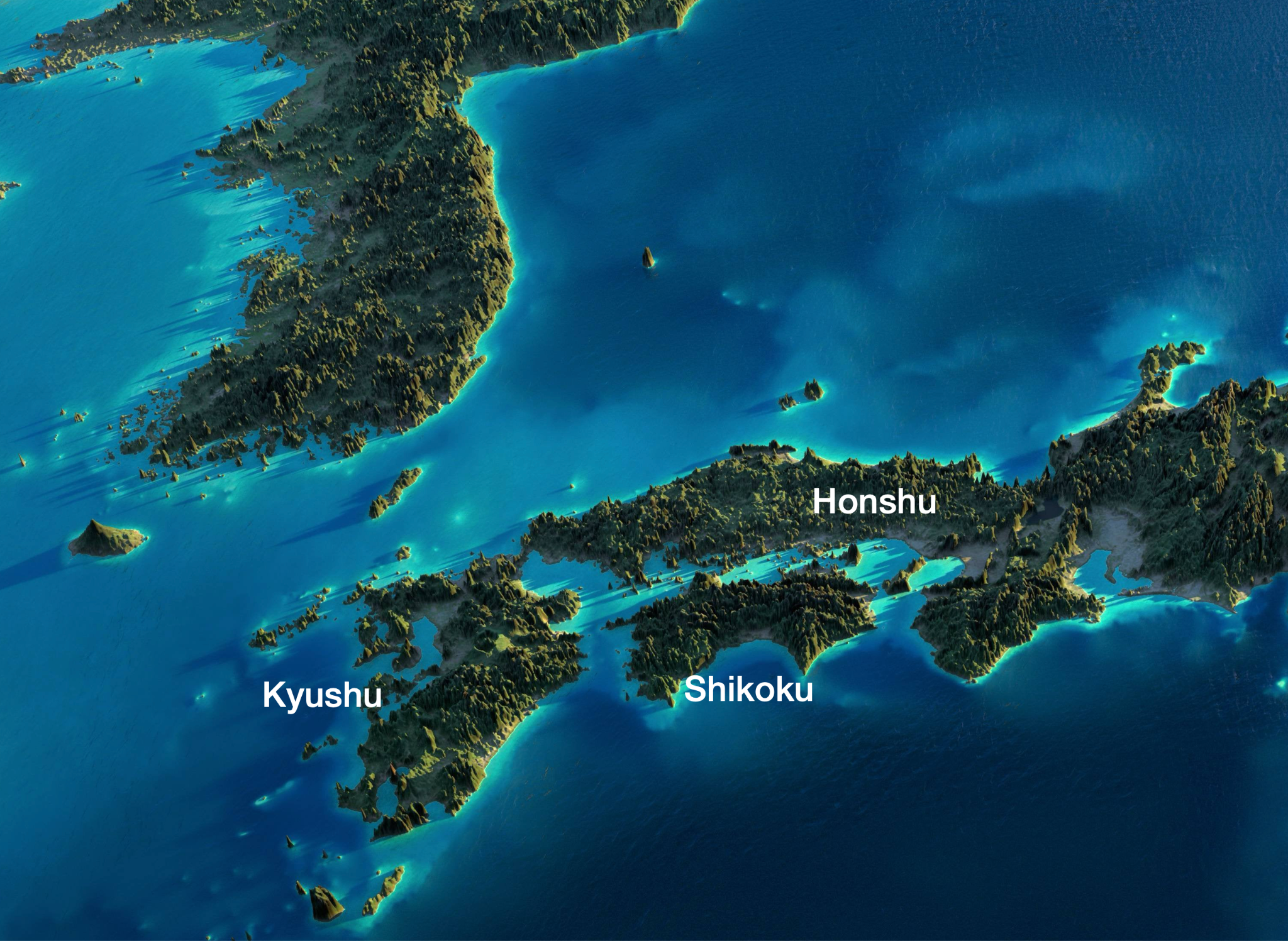
Meanwhile, Shikoku is so mountainous that it could never harbor a big population and has “just” 3.5M people today.
The Checkered Plains
All of this means that the majority of the population concentrates in southern Honshu, on the plains, because as we have seen, the north of Honshu and Hokkaido were too cold for rice agriculture and double cropping.
But look at the distribution of these plains. What can you deduce politically?
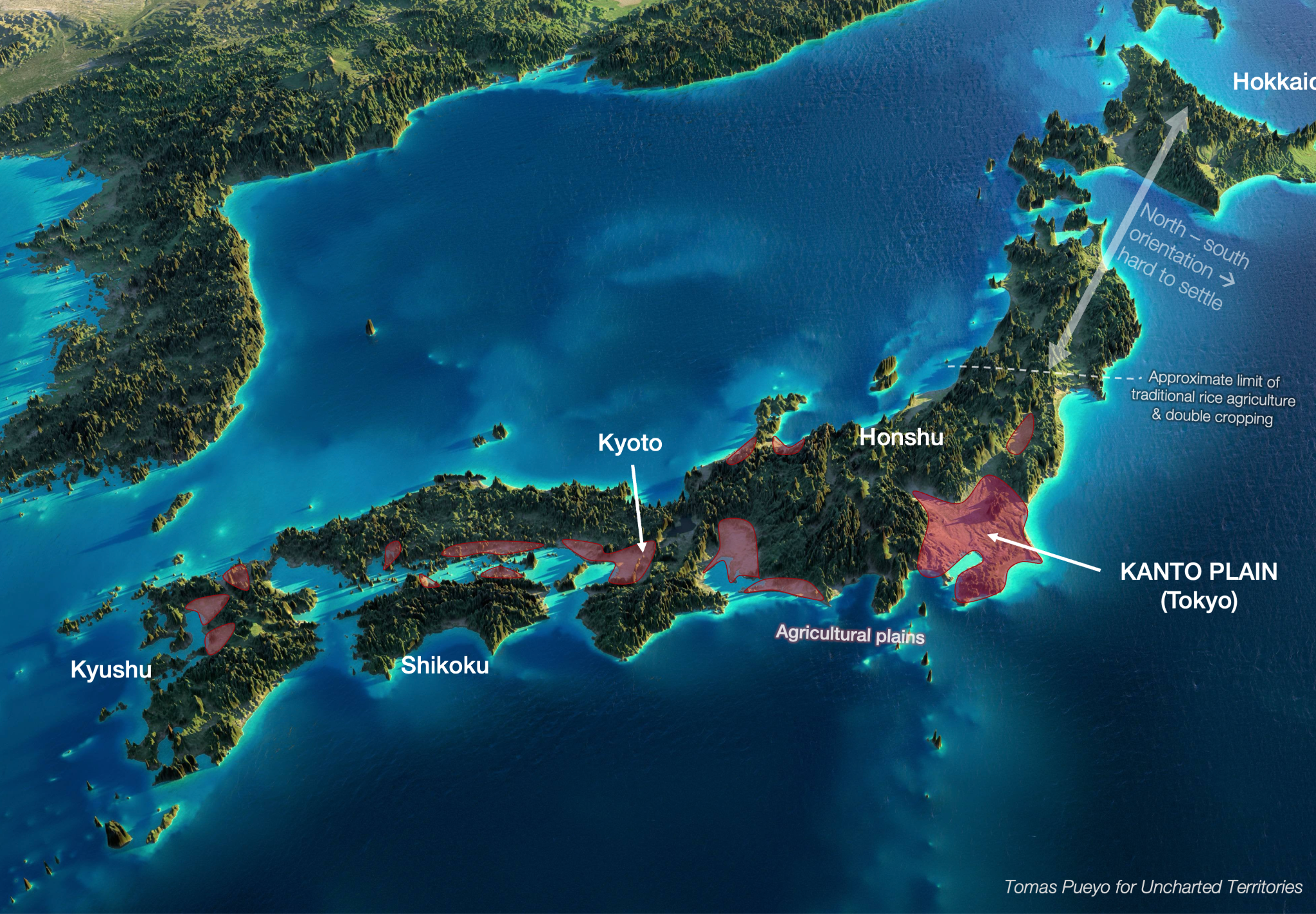
The key thing to notice is that there are scattered plains, separated by lots of tall mountains. That made transportation very challenging: In 1700, it took 15 days to go from Kyoto to Tokyo! What do you think the consequence of this was?
Feudalism.
When it’s difficult to go from one place to another, armies can’t easily move. When mountains divide them, they can use them as defense.
Information is also more time-consuming and costly to gather, so any central power had a hard time knowing how much rice each plot of land produced: There were floods, landslides, earthquakes, tsunamis, eruptions, typhoons… From the capital, it was hard to know what each paddy could actually produce. So locals could easily lowball it, making it hard to tax fully. The local lords knew exactly how much was produced though, because they could inspect the paddies personally. They pocketed the difference.
Mountains also made trade difficult, because carrying goods over them was too expensive. Normally, trade unites, since traders must cooperate and fight against bandits, so less trade meant a weaker unifying force.
But these valleys nestled between mountains were too close to each other for lords to ignore their neighbors, and they vied for each other’s land and wealth. If you think about it, all these are very similar conditions to those we find in Europe, and unsurprisingly, Japan landed on a similar political system for 1000 years.
However, Japan also had a unifying force, the Seto Inland Sea. It was a bit like Rome’s Mediterranean, allowing people and goods to travel cheaply from one seaside plain to the other.
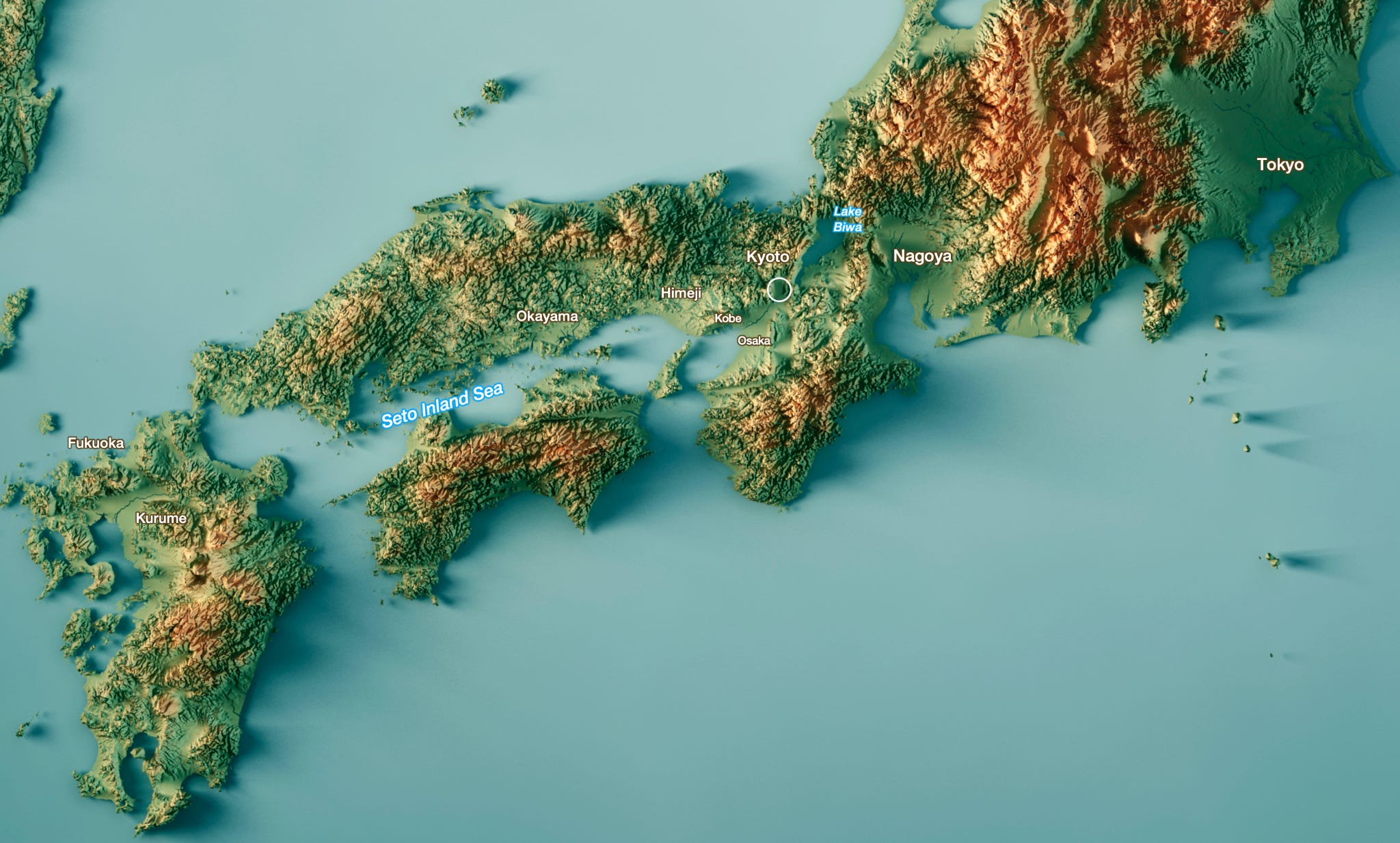
The Seto Inland Sea was not a perfect highway. All the crannies on the coast and the strong currents in the sea enabled pirates and maritime lords to flourish. The same thing happened in the Mediterranean early on, until Rome could fight pirates away. But in Japan, since no plain was strong enough to create a powerful navy to monitor it, the sea became both a unifying factor for trade and a feudal one for political power.
The Long March to Unification
The First Unification: 300 BC to ~700 AD
For about 1000 years, technology moved from Korea to Japan: rice agriculture, iron metalworking, horseback riding… The Japanese simply expanded across the islands, grew their population, and clans emerged in every valley.
As that phase progressed, new technologies from the mainland, mainly writing, Buddhism, and the Chinese-style administration, allowed the state to strengthen. A central ruler emerged in the powerful central Yamato around 600–700 AD.
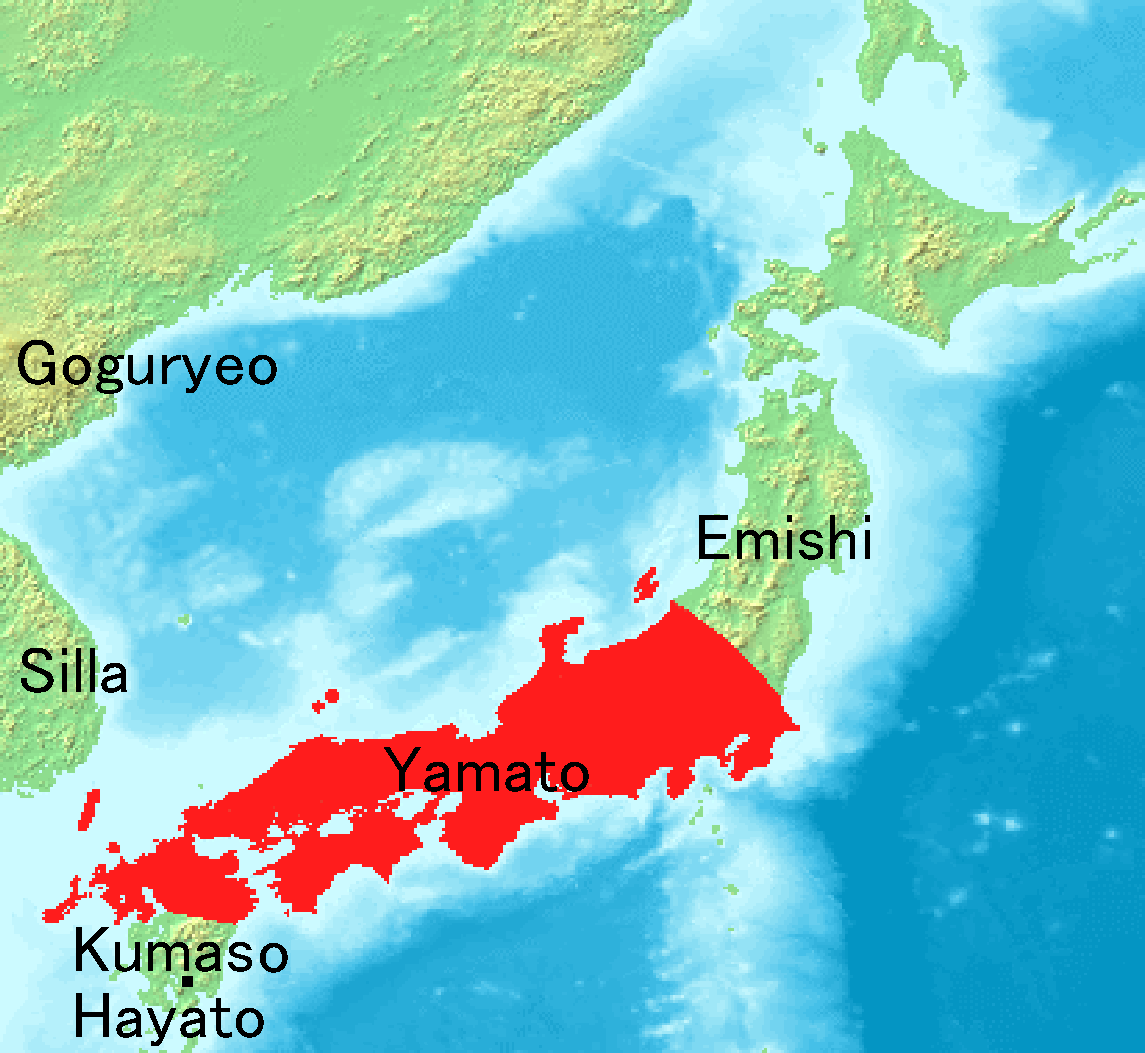
Japan meddled in Korean politics in the 600s, and when its allies lost to the Chinese, Japan feared an invasion, so they centralized vigorously to organize their defenses. The Japanese settled their original capital in Nara,1 near Osaka and Kyoto, and built a centralized system around an emperor, with a census, written laws, officials, provinces, taxation and conscription.
The Feudalization of Japan: 700 – 1600 AD
This centralization was too expensive for the time, and crumbled. Why?
Under the centralized government, every household was registered in a census, and taxes were due per household. So for example, person A owned rice paddy B, so he had to pay x% of B’s annual rice production.
We saw before how it was difficult for central leadership to know the production of a specific paddy. But also, how did you keep track of the households that had to pay you? People are born, die, marry, move… It was nearly impossible to keep up with it all. The census had to happen frequently, and all that information had to travel back to the capital, which took a very long time and was very expensive.
All of this worked while the system was still new, and while the Japanese feared a Chinese invasion. But as the fears receded, and people learned the system, it became very hard to maintain.
So little by little, power reverted to local authorities, who knew who owned each paddy, what the harvest was going to be, and were able to tax them accordingly. As more money stayed local, the emperor had less money to fund an army, but also less of a need for one, since now the local authorities were in charge of collecting the taxes and sending them to the capital. As a result, the local authorities also had to hire their own local forces to defend against bandits and neighboring clans. These would become the samurai.
Notice how similar this is to the process in Europe! The Roman Empire fell, with its centralized power, census, and administration, and in its wake appeared local lords who taxed local peasants and defended them through the figure of the knight. In fact, just like knights, samurais were also mounted! A key factor of the samurai’s strength was in fact the expensive ownership and maintenance of horses.
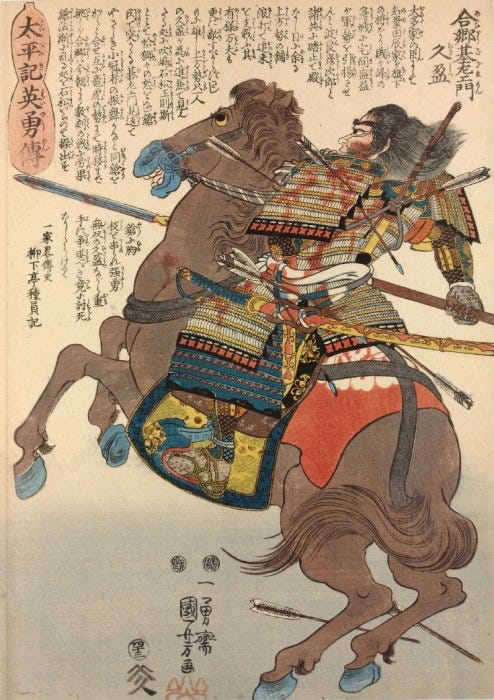
Peace and war alternated for centuries, culminating in the Warring States Period (or Sengoku Period), between ~1450 and ~1600. In the late 1500s, a series of leaders2 were able to finally unify Japan. This started the longest period of peace in Japan, the Tokugawa Shogunate, which lasted ~250 years between ~1600 and 1868, and was named after the dynasty of the last one of these leaders, Tokugawa Ieyasu.
Why did that happen then, and not, say, in 1000 AD or 1800 AD? After centuries of military action, civil administration, and new ideas from Korea and China, state capacity had dramatically improved. The only states that could survive were the rich ones that could tax their citizens efficiently and field an army effectively—so, the bigger, better-managed states.
Also, the Portuguese arrived in the 1500s and started selling firearms. This initially created a crisis, but eventually helped whoever was rich enough to buy more, had the right influence to source them, and could learn to use them better. A local lord no longer had any chance against a well-funded one. Firearms also made populous valleys more powerful: A samurai needed lots of training to fight well with his bow, his katana, and his horse, but you could give a firearm to a farmer and quickly make him lethal. So more populous lands became stronger.
Another factor of unification was the discovery of silver mines in the mid-1500s. Those who controlled them could trade with the Chinese and the Portuguese, sourcing more weapons and fielding bigger armies.
Of course, silver means more currency, so it’s easier to trade. This meant more wealth, which could be taxed to invest in war.
Unity at All Costs
Imagine you’re one of these Japanese leaders, ruling after centuries of feudalism and living your entire life in war. What would you do? Spend all your efforts to ensure that didn’t happen again, eliminating all the decentralizing forces of Japan, to be replaced by centralizing ones.
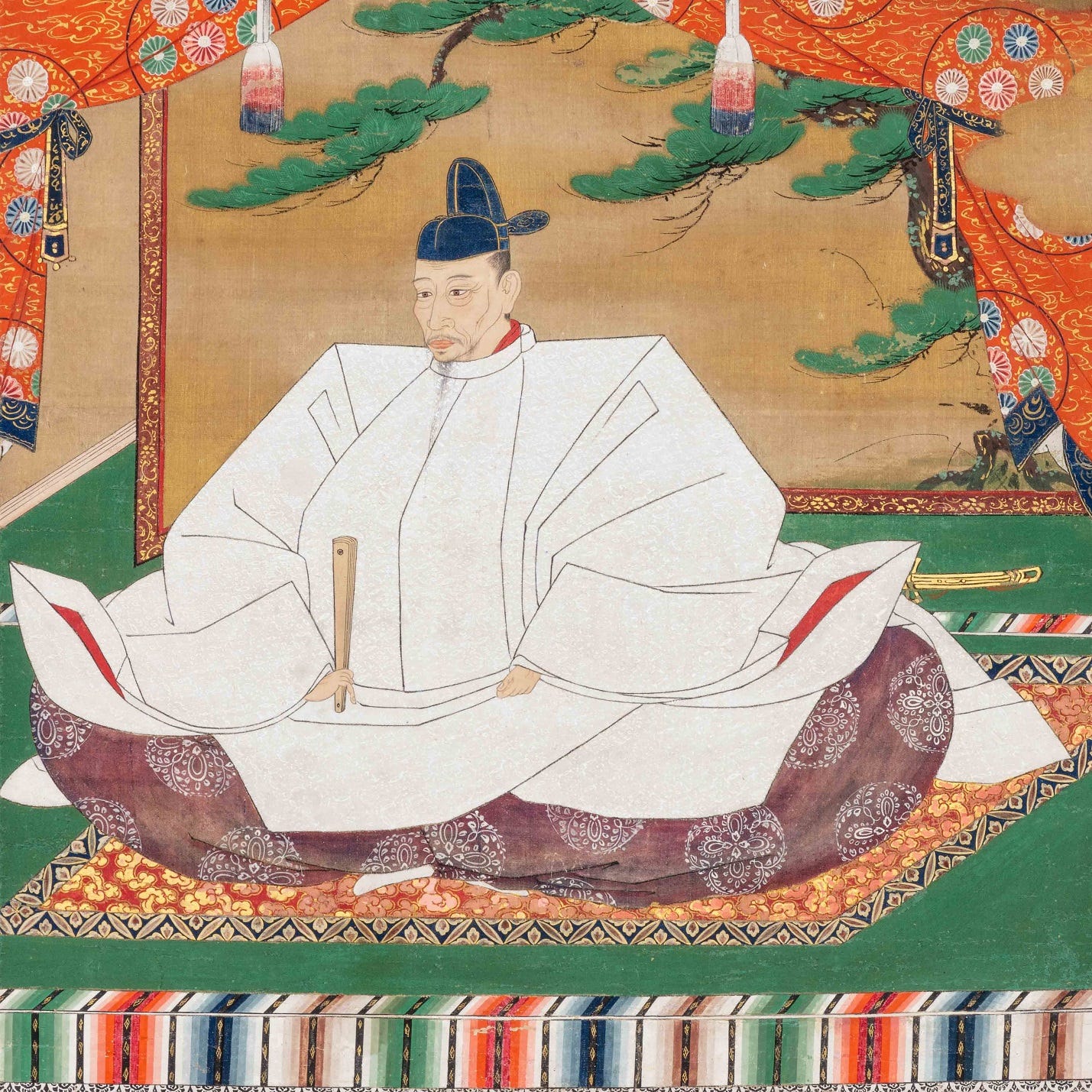
Here’s what the Japanese leaders did:
Weaken the military power of potential opponents:
They eliminated the military power of lots of competitors: Buddhist temples, warrior leagues, autonomous towns, guilds…
They forced lords to destroy their castles (except for their residence) and ask for permission to do repairs, and banned them from building more.
Local lords also lost the ownership of their lands. They were now entrusted with the land by the shogun, always on a temporary basis. They were then moved around, so as not to settle too much on a particular land and grow their control on it. This made samurai landless warriors.
The most loyal ones were granted the best lands.3
Marriages between lords required approval.
They ordered farmers to surrender swords, daggers, bows, spears, firearms, and other weapons.
Without wars to fight, the samurais’ horseback fighting became a hobby, and skills were lost.
Only a few gunmakers were licensed, and all were centralized in a single location. They could not travel to other provinces, share fabrication procedures, or sell firearms without reporting first to authorities. So lords could not buy guns domestically or from outside the country. To prevent illicit trade, gunmarkers were given a stipend, whether they sold arms or not. The reduction in volume of sales made firearms so expensive that they disappeared from Japan over the centuries as a weapon of war.4
They eliminated pirate lords in the Seto Inland Sea. Authorities had to identify ship captains, fishermen and other maritime populations, make them swear not to engage in piracy, and threatened confiscation of a lord’s lands if piracy continued within his territory.
To foster trade and reduce enemy income, they abolished many toll barriers and monopoly privileges.
Improve income
They ordered a new nationwide cadastral survey: measure fields, classify quality, estimate yield, and identify cultivators, so they knew exactly who should get taxed, and how much.
They linked taxes not to the people, but to the paddies in the village. Each parcel owed a precise amount of taxes in the form of rice every year.
Farmers were tied to the land, so the difficulty of knowing who owed what disappeared.
Control mines: silver and gold mines fell under the shogun’s direct control.
These are the actions to achieve Japan’s first geopolitical goal—unite internally—but remember Japan’s two next geopolitical goals:
Protect the five gates towards Japan (four island paths plus Korea)
Neutralize Asia’s superpowers
And here, Objective 1 was threatened by 2 and 3, because Europeans started appearing in Japan, while China and Korea had always been threats. So the Japanese leaders addressed these threats, too.
Foreign Affairs
Hideyoshi had a battle-hardened army with no more wars to fight; dangerous to have in your own backyard. And since Korea was nearby and a constant threat, he figured he might as well launch an attack.
This reminds me so much of what Portugal and Spain did after their Reconquista unified the Iberian Peninsula against the Muslims: They kept going. They invaded neighboring northwestern Africa (now Morocco) and started sailing around the world. Fortunately for Spain and Portugal, they had no strong empire nearby to throttle them. Unfortunately for Japan, they did. The land campaigns worked well in Korea, but their naval campaign suffered from a catastrophic battle where it lost a huge chunk of its fleet. The war bogged down, and Japan pulled out when Hideyoshi died in 1598.
The only option left to the Japanese was to hunker down, and that’s what they did.
The Japanese people were banned from traveling abroad, under pain of death.
Foreigners couldn’t come into Japan either, under the same threat of capital punishment.
Trade with foreigners was extremely limited. The Dutch and Chinese were limited to trading in Nagasaki, on the southwestern island of Kyushu, and the Koreans in Tsushima. This notably kneecapped Kyushu lords, who used to conduct most of the trade, but had to stop.
The Portuguese, the first to arrive in the 1500s, didn’t just bring weapons. They also brought Christianity, which spread like wildfire in Japan. During the Warring States Period, local lords would adopt Christianity to get arms and money. The Spanish landed in Japan soon after, and the Japanese learned from them what happened to the Aztecs and Incas. The Japanese leaders decided to ban Christianity, the Portuguese, and the Spanish from landing in Japan, and they prioritized Christian lords in the national cadastral survey, to suppress them.
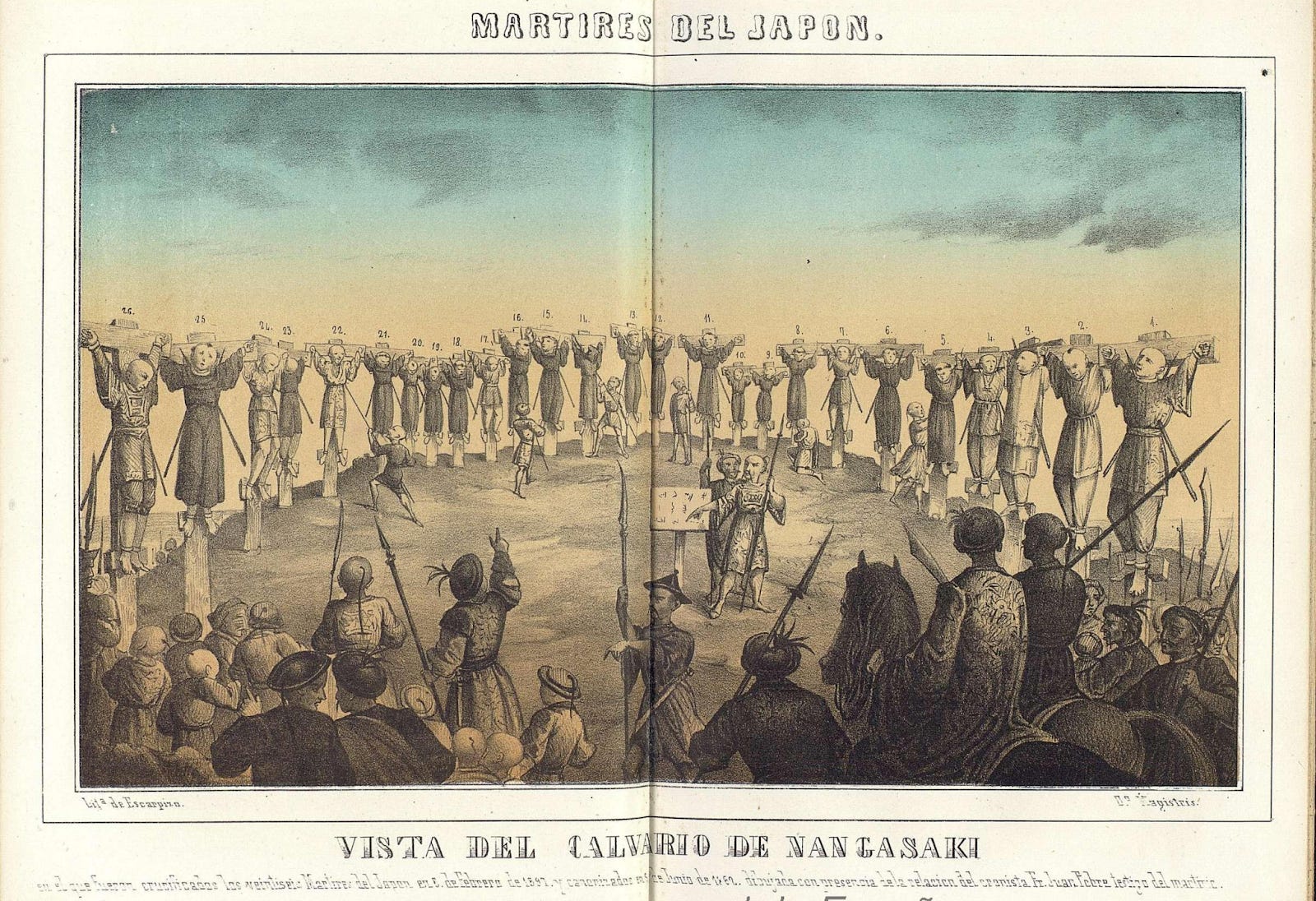
You can see how intense all the policies were to secure Japan’s main geopolitical priorities. The Tokugawa achieved it for good, and the peace lasted 250 years.
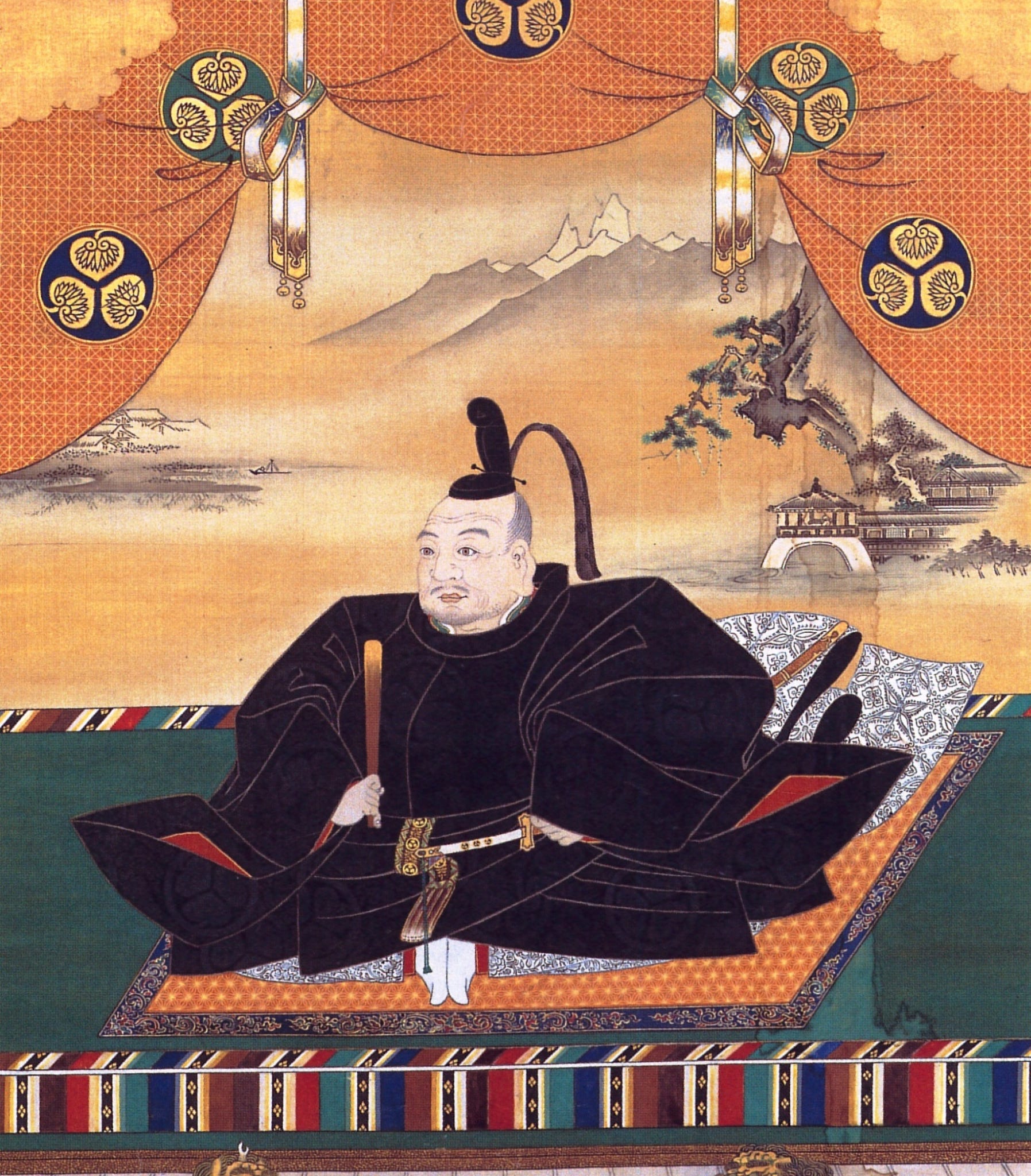
Japan’s stability came at the cost of completely isolating itself from the world. But the world didn’t want to isolate itself from Japan.
The West Hurls Japan into the Future
In the mid-1850s, Westerners had just humiliated China in war and forced it to open up to Western trade, as I explained here.5 The Japanese knew the West was coming for them, and it did, in 1853, when Commodore Perry knocked on the door of Japan’s past.
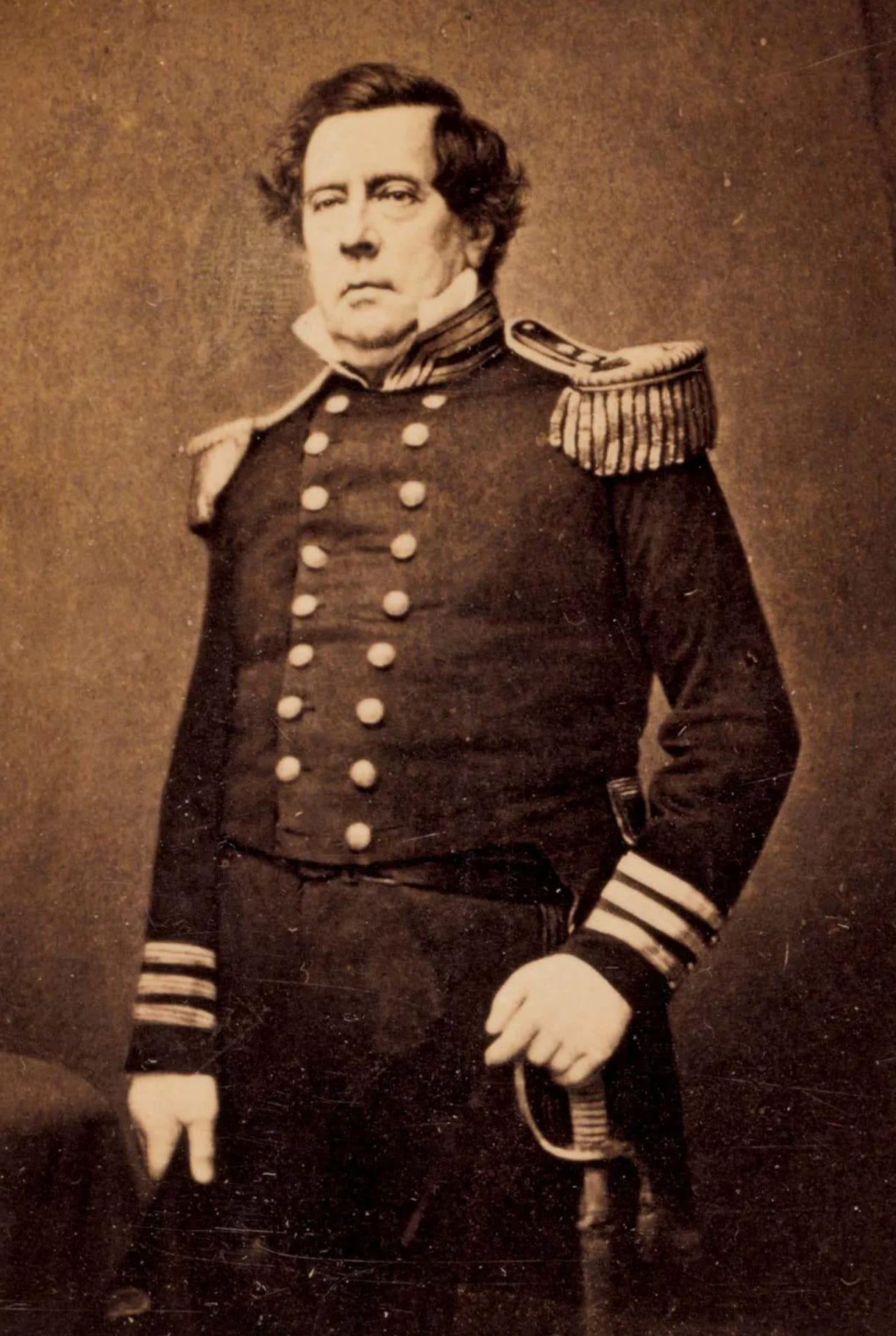
Perry entered Tokyo Bay6 with steamboats that could easily outmaneuver any Japanese sailing ship, and with guns whose violence the Japanese had only heard tales of.
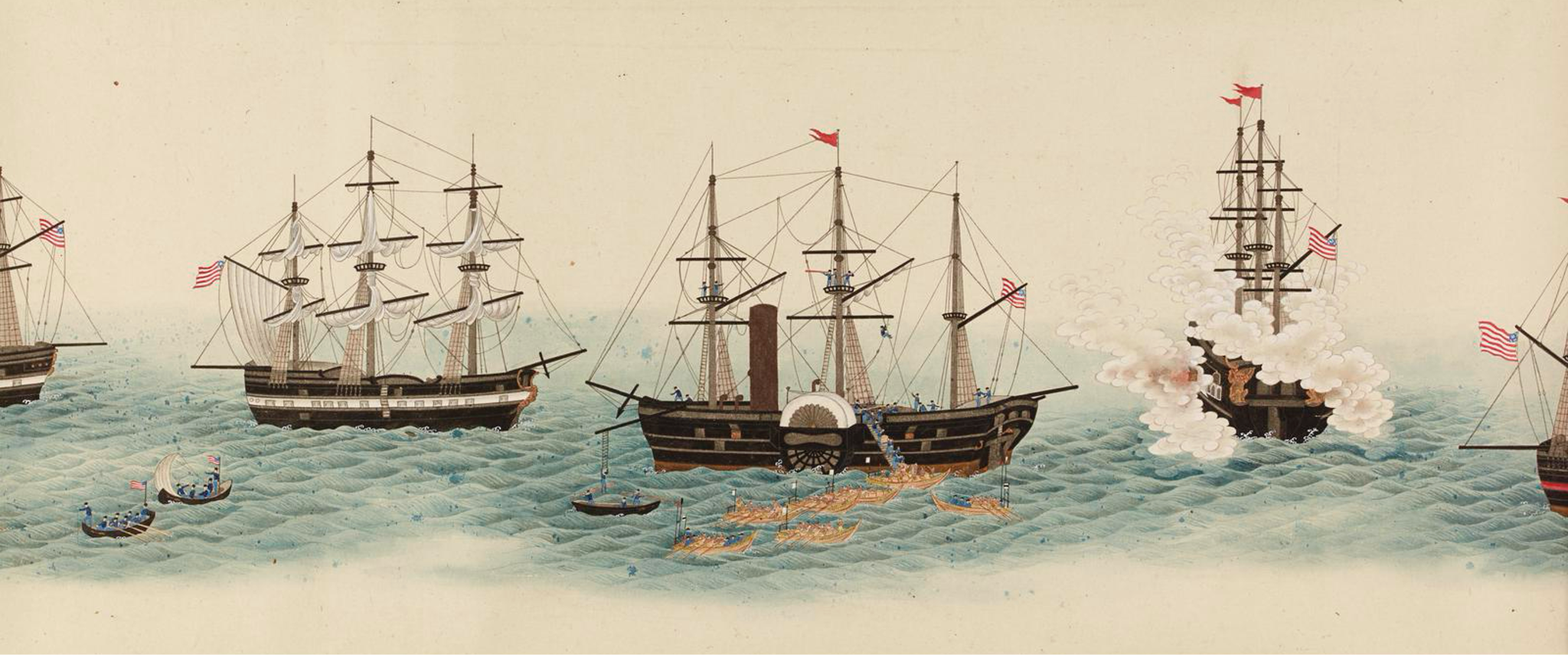
Outpowered, the Tokugawa Shogunate was forced to open up to trade with the West, and this exposed its military weakness after 250 years of isolated peace. This became the downfall of the shogunate: The Japanese split into two camps, one that wanted to expel the Westerners, the other that wanted to co-opt their technologies. How exactly did the shogunate fall?
After 250 years of mostly peace, the military force of the shoguns was diminished.
The shoguns controlled a lot of the military power, but the local management was not centralized, still belonging to local lords who knew the local conditions. So well-organized local lords, with the right strategy, could beat the Tokugawa (the feudal nature of Japan still showing up).
The right strategy was to co-opt the emperor. The same figurehead dynasty had been the emperors of Japan for centuries. It was a useful convention to legitimize the shogunate, with no real power. Seizing the emperor would weaken the shogun’s legitimacy.
It won’t surprise you to learn that Kyushu leaders (and some from the westernmost part of Honshu) were among those who wanted to Westernize: They were more open to foreigners and had already been schooled by their weapons (as Westerners arrived from the southwest and could only trade in Kyushu), so they had started sourcing them and arming up. Eventually, they marched on Kyoto, took control of the emperor Meiji, defeated the Tokugawa in a battle, and “restored” the power to the emperor. The Tokugawa side disappeared. The period that followed is called the Meiji Restoration, and it’s probably the most radical modernization a country has ever seen. The Japanese studied everything about Western powers, adopted it all, and within a decade, virtually the entire economy, military, and administration were Westernized.
This worked so well that by the end of the century, Japan could face the historical regional behemoth (China) and a Western empire (Russia)... and win.
You have to understand how absolutely crazy this was at the time. It changes the arc of history in the east: Until then, for literally thousands of years, everything in that region had become more Chinese. Suddenly, little Japan, an appendix at the end of the continent, where technologies arrived after a lag and never originated from, goes from aligned with the Chinese–Confucianist world to Westernized in a few decades, and then beats China.
As for Russia, not a single Eastern country had been able to face Western powers in a modern war and win.7 Not one! Westerners had steamrolled every other country, including India and the neighboring mighty China. Then along comes a random chain of islands at the edge of the Pacific, and it beats the behemothic Russia, which controlled an empire that extended from Europe to the Pacific. Extraordinary.
So how does all this tie to Japan’s three main geopolitical priorities?
Maintain internal unity
Control the islands that lead into Japan
Fend off rivals on the Asian continent
Japan’s Imperialism
When the Meiji Restoration begins, Japan starts wondering: To what extent can we keep our homeland united (objective 1) if we don’t control the roads that lead to it (objective 2)?
They concluded that they had to take control of all the paths to Japan. It wasn’t an overnight decision: They started with a few nearby islands. But the logic had no end: The more they took, the more buffer they thought they needed. The timeline is:
1853–1854: Commodore Perry enters Edo Bay
1868–1869: The Tokugawa Shogunate ends, the Meiji Restoration begins
1869: The Japanese take full control of Hokkaido and colonize it
1872–1879: They take over the Ryukyu island arc (it used to be a kingdom!)
1875: Russia concedes the Kuril islands, in exchange for recognizing Sakhalin island as Russian
1876: Japan forces Korea to open up trade with them, the same way Perry forced Japan to trade with the West
1894–1895: They go to war with China in the first Sino-Japanese War. They take Taiwan and push China out of Korea.
1900: Japan joins Western powers in fighting China during the anti-Western Boxer Rebellion.
1904–1905: War with Russia. The Japanese take southern Sakhalin and Russia's lease on the tip of the Liaodong Peninsula, just north of Korea.
1910: Korea is annexed.
1914–1919: During WW1, Japan joins the Allies to seize Germany’s colonies in the east: its Pacific islands and Chinese concessions.
1931: Japan invades the Chinese province of Manchuria, near Korea.
1937–1945: 2nd Sino-Japanese War. Japan takes a bunch of territory in China.
Now we’re going to take a pause, because something subtle changes here that reveals Japan’s 4th and last geopolitical goal.
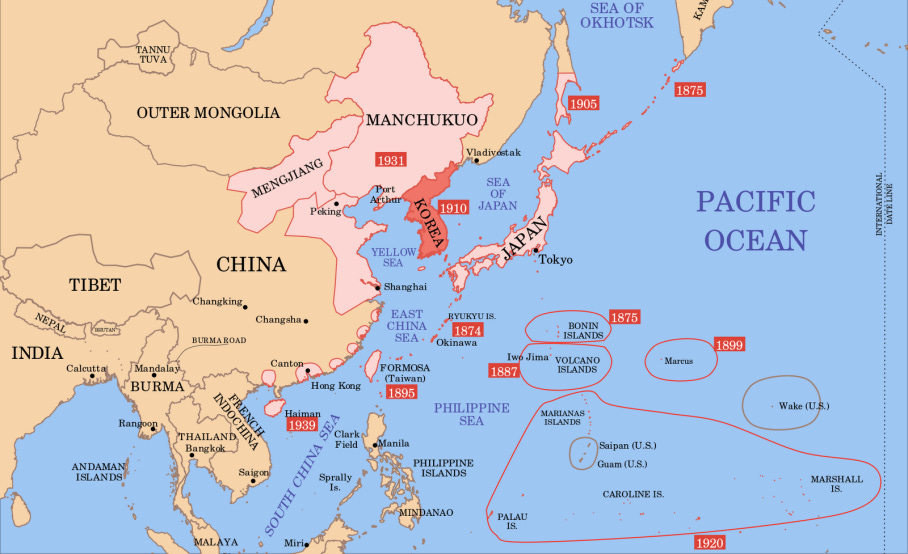
Japan’s 4th Geostrategic Goal: Resources
If you’ve followed up till now, you recognize exactly the problem here. One of these territories is unlike the others.
Controlling all the islands that lead to Japan is one thing. It’s an entirely different thing to take on the continent. The peninsula of Korea, you can maybe justify: It’s close enough to Japan and secluded enough from Asia. But that’s the slippery slope right there, and the Japanese knew it. If you take Korea, you are exposed to Manchuria. So you take it. And that exposes Manchuria to Mongolia, Russia, and China, so you try to get them, too. Japan gets locked into a catastrophic confrontation with not one, but two land empires (it goes to war with Russia and the USSR a couple of times, too), which it can’t win. Big mistake.
Since Japan can’t conquer China outright, it tries something different: Strangling it by taking French Indochina (Vietnam, Laos, Cambodia) in ~1940 to cut land supply routes to China.
Now let’s zoom out for a minute here. WW2 is now underway. France and the UK have declared war with the expansionist Germany, which is allied with similarly-expansionist Japan. Both are conquering land at breakneck speed. The US sees this and concludes:
Japan is about to take the Malacca Strait to stop Chinese maritime supplies.
The Philippines are right there, close to Japan. They might well take them.
Japan is like Nazi Germany in Asia: If we let them continue, they will continue taking over lands until they split the world between them.
So the US does what it can to kneecap Japan: It stops selling it oil. Since 80% of Japan’s oil came from the US, this effectively meant losing the war. Japan could not operate without oil.
You can see the slippery slope from Korea, to China, to Indochina, to oil. It’s now forced to either abandon China—and acknowledge it f***ed up and wasted thousands of Japanese lives for an impossible goal—or keep going, which meant taking the Strait of Malacca (British) to control trade, and Indonesia (Dutch East Indies, a Dutch colony) to take its oil. But Japan knew the US wouldn’t like this and might enter the war.
So it decided to preemptively bomb the US’s navy in Hawaii, at Pearl Harbor.
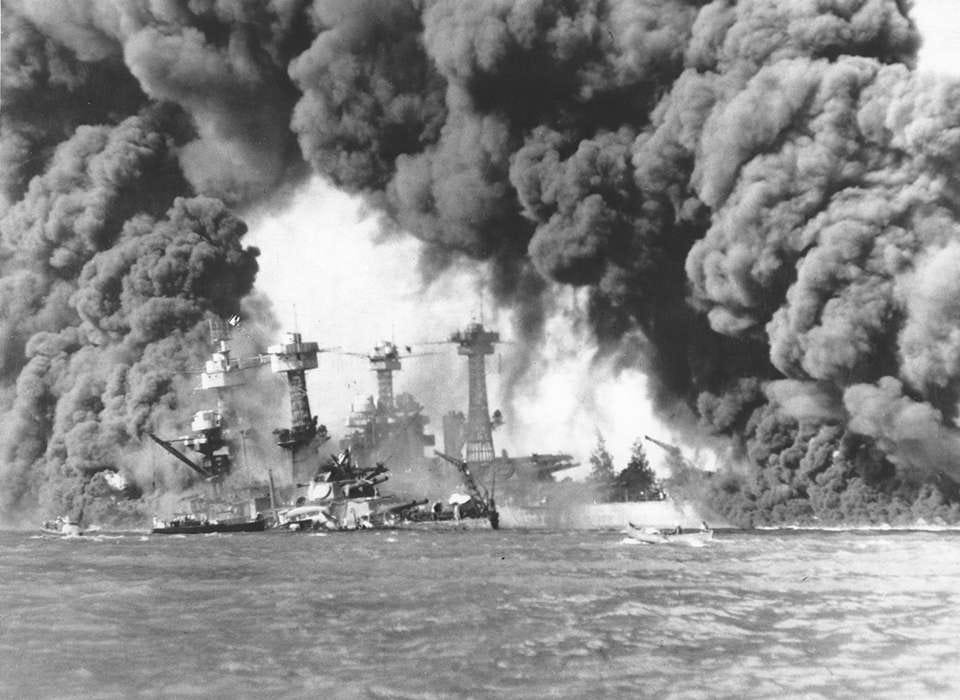
Immediately after that, it took what are today the Philippines (US colony at the time), Malaysia (UK colony), and Indonesia (Dutch colony), allied with Thailand, and fought the British in Burma. This is how they got to this point:
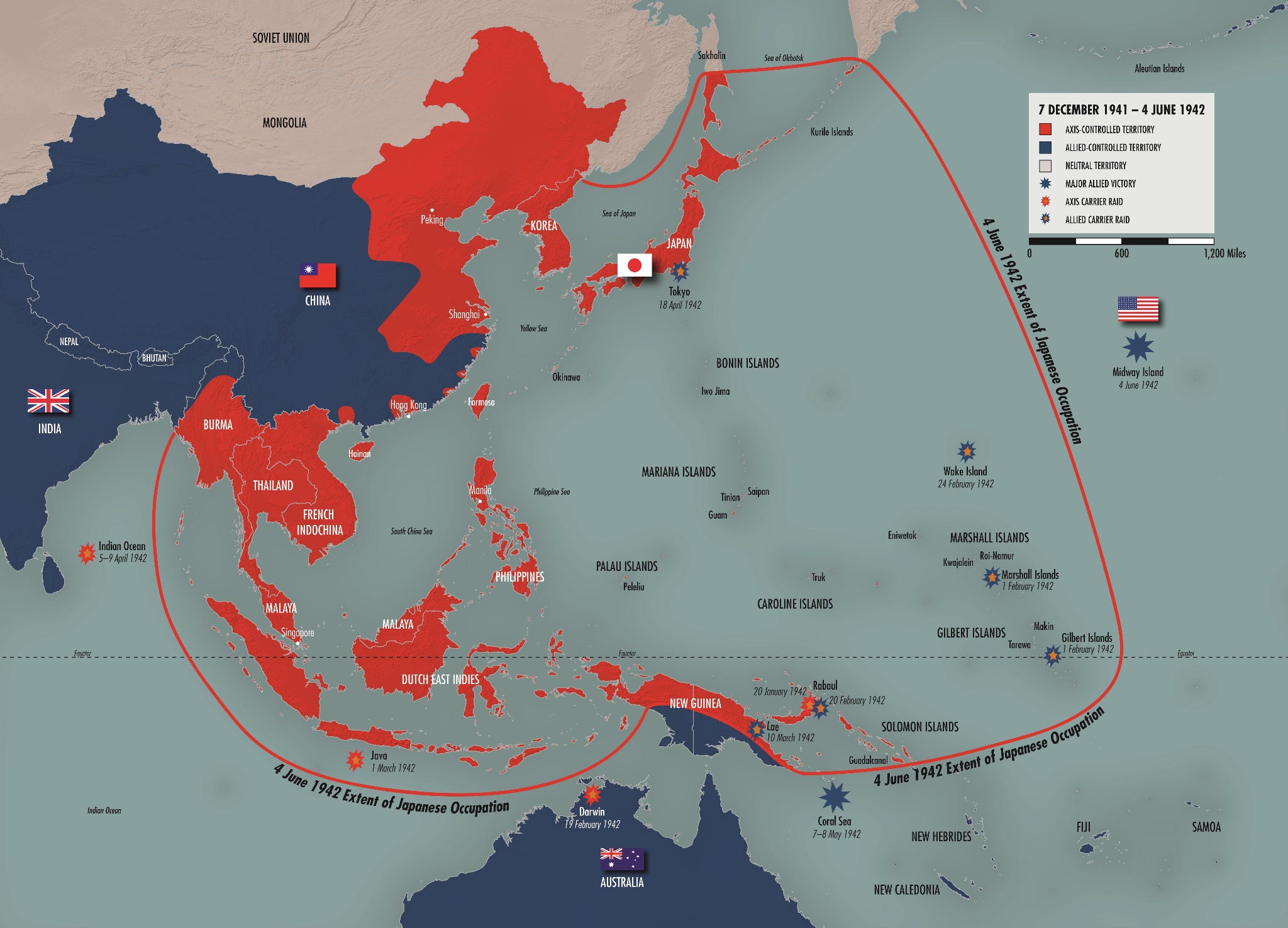
If you have been following my GeoHistory articles, you know this is a nightmare of an empire. You need a massive navy to oppose two global powers (the US and the British), and an army to oppose three land ones (the Russians, the Chinese, and the British), along with guerilla wars from dozens of different nations.
Japan reached the end of the slide and fell into the mud.
Of course, the US proceeded to beat the s**t out of Japan, because Japan is a series of tiny islands while the US is a continent. And all because of the 4th geopolitical priority: resources.
Japan was small, but had a huge industrialized population and economy. It couldn’t produce everything it needed, so it had to take it from abroad—and prevent its enemies from getting the same resources.
This is why Japan invaded Southeast Asia: to cut China’s resource supplies.
This is why Japan attacked the US: to secure oil.
And this is why the US followed the Pacific strategy it did.
The US didn’t need to conquer every tiny island. It just needed to break the network. Stop the resupplies, and you neutralize every island.
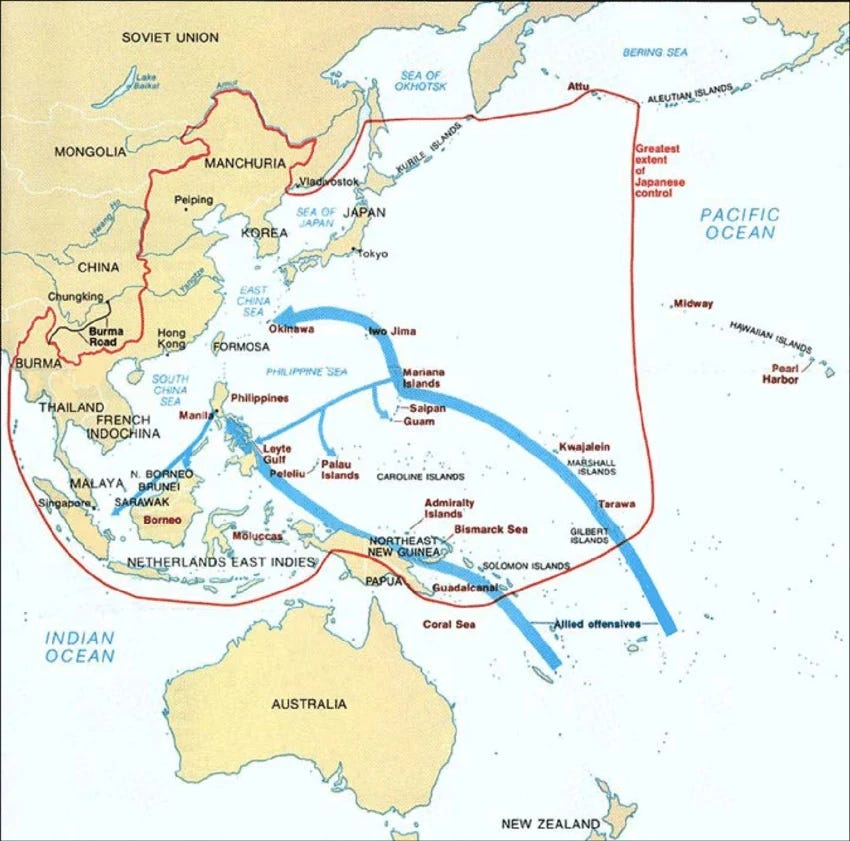
This is why the US invested heavily in a navy here, why its submarines focused on destroying the Japanese merchant fleet (resources!), and why it bypassed countless Japanese islands full of soldiers who were left useless and stranded.8 It only took enough islands (like the Philippines, Iwo Jima, Guam, and Okinawa) to build bases to control the areas and fly over Japan to drop bombs.
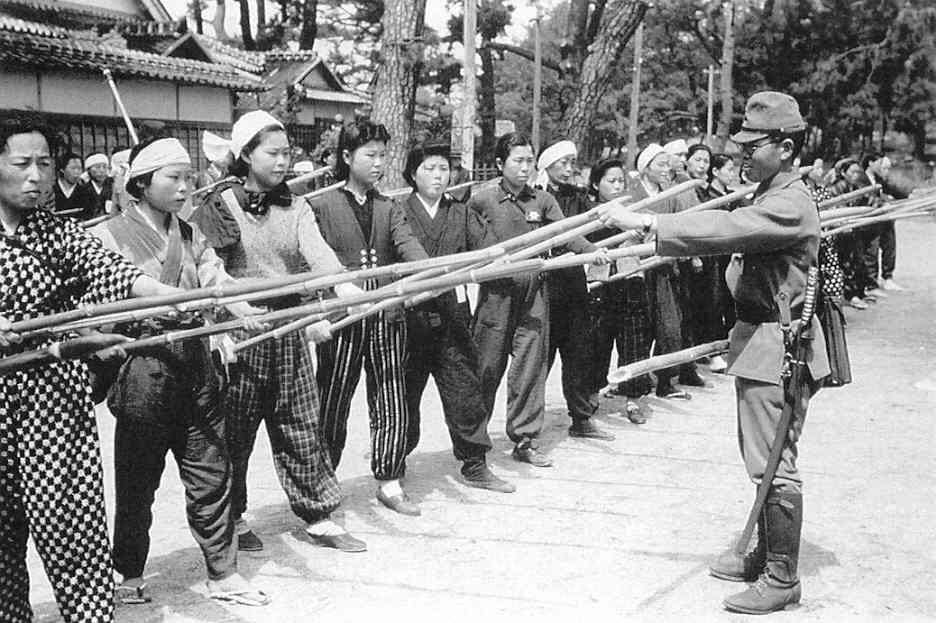
By 1945, Japan was out of oil and food. Its navy could not operate. Its population was starving. But it was also pretty fundamentalist. It was never going to give in to foreigners and was ready to fight to the death, literally sending women civilians to fight the enemy with bamboo spears if that’s what it took.
The US would have lost potentially millions of soldiers conquering Japan. That’s precisely what Japan wanted: Not to lose millions of people, but to make the invasion so costly to the US that they would force a settlement, with better peace terms for Japan.
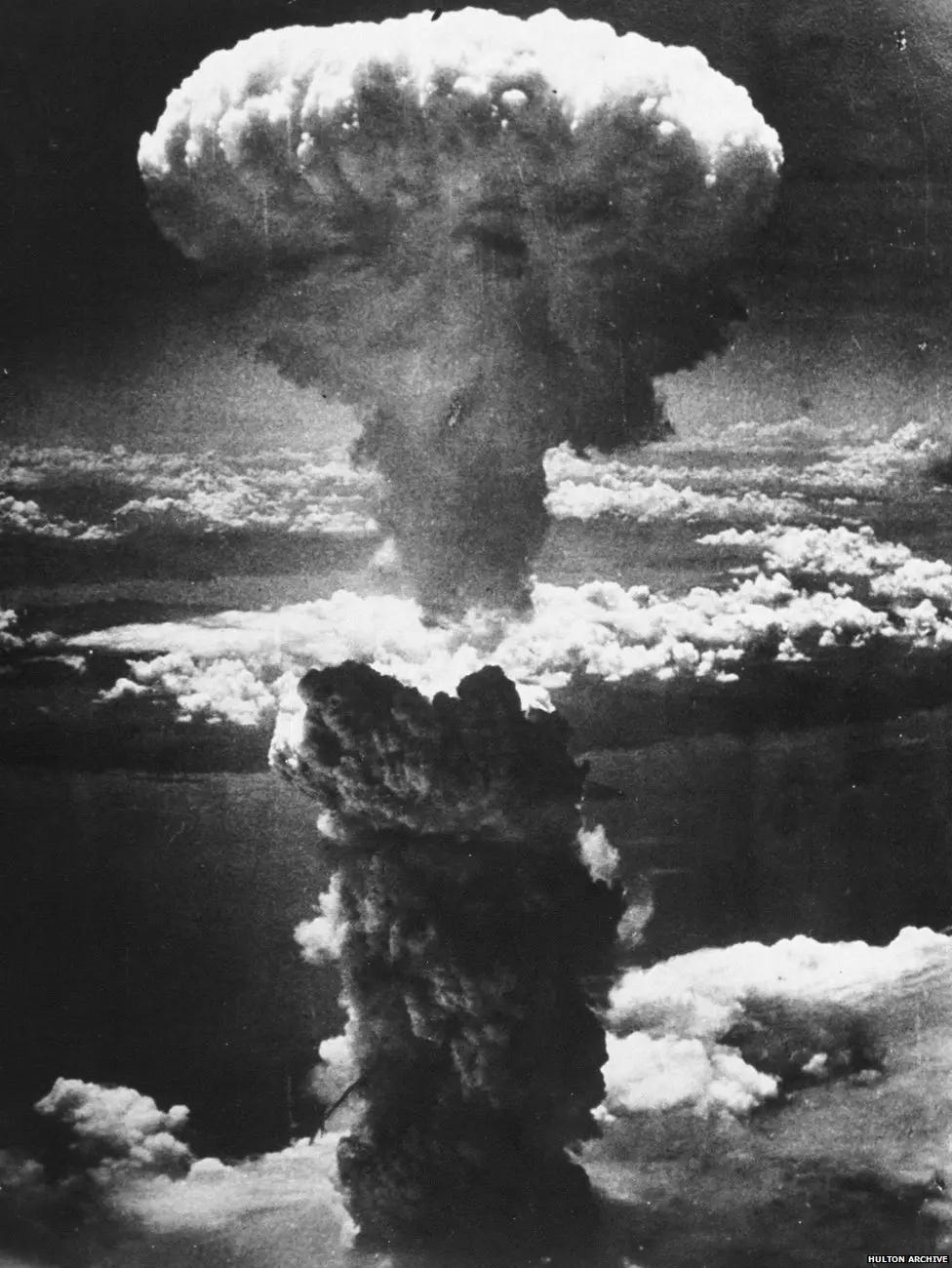
That’s why the US dropped nuclear bombs on Hiroshima and Nagasaki instead. For the 2nd time in one century, the US forced Japan to realize its technological inferiority and fold.
How Japan’s 4 Geopolitical Priorities Drove Its History
So in summary, now you know how Japan’s geography determined its four geopolitical priorities, and how these have driven its history.
Goal 1: Unite the Main Islands
Because Japan is a series of big connected islands, but with flat valleys separated by mountains, it wants to be united, but it can’t easily do that. So Japan’s unity took about 2000 years, from 300 BC when the first Yayoi arrived, to 1600 AD, when Hideyoshi and Tokugawa finally united Japan. In the middle, they had a first attempt around 700 AD, but it was too early and it fell apart. The conditions were only right in 1600, and today, this goal has been fully achieved.
Goal 2: Control the Five Gates to Japan
This only started being important when foreigners from overseas started bothering Japan. The five gates are the Ryukyu Arc ending in Taiwan, the Izu-Bonin Arc, the Kuril Islands, Sakhalin Island, and Korea.
The Izu-Bonin Arc is fully achieved (except Guam, but the US is an ally).
The Ryukyu Arc and Taiwan were taken over at the end of the 1800s. Today, Taiwan is not Japan anymore, but it’s an ally via the US. Threatening Taiwan threatens Japan through the Ryukyu Arc, so it has a vested interest in protecting it from China.
The Kuril Islands and Sakhalin were far north. Even Hokkaido is. So it took until the 1800s for Japan to fully take control of Hokkaido, and several conflicts with Russia to decide who owns the others. Right now, it’s Russia, but that might change in the future. They haven’t signed a peace treaty because of that.
Korea: Japan invaded three times, and succeeded only once. This is a massive slippery slope for Japan, so I doubt it will try again. Better to have an ally there, so South Korea is super important for Japan.
Goal 3: Neutralize the Big Continental and Oceanic Powers
In the past, Japan tried to do this through war:
Two Sino-Japanese wars, in the late 1800s and 1930s-40s
The Russo-Japanese War in 1904-05, and WW2
The war with the US in WW2
Very very bad idea. Japan is too small to be a comparable superpower. So it must ally with these powers instead. Today, it’s a US ally, so the ocean is covered. The instability of its relationship with its Russian and Chinese neighbors is very worrisome, and that becomes Japan’s main unachieved goal: How to ensure peace with them (or ensure their relative weakness).
Russia is weak today, that is good for Japan. In fact, bogging it down in the Ukrainian front is useful: While Russia focuses its attention and resources there, it can’t bother on the other side.
So Japan’s main concern is China. In the last few decades, Japan tried to become friends via trade, but it has learned (like the US), that China takes advantage of this to increase its power and might abuse it, so it’s become more cautious.
China’s crazy appendage, North Korea, is even more worrying, especially now that it has nuclear weapons. So Japan must manage it.
One thing few people know is that Japan is always only months away from developing a nuclear weapon. That’s their trump card.
Goal 4: Secure Resource Supplies through the Sea
Either to achieve Goal 3 (prevent its enemies from getting supplies) or for itself. It tried the war path, and that did not go well. It then tried the trade path, and that has worked extremely well. Japan can get everything through shipping and has established commercial ties and investments across all of Southeast Asia, which allows it to obtain everything it needs.
In summary, for Japan, the future of its geopolitics means remaining friends with the US, making sure it’s strong, containing North Korea, and managing China so that it never again becomes the threatening behemoth next door, and all of it can be seen from its geography.
In the next few articles on Japan, we’re going to answer a lot of fascinating questions on the country:
How did Japan redraw the map of Asia?
Why was it the only non-Western country that built an empire during the Industrial Revolution?
How did it become the 2nd richest country on Earth?
Why has it stagnated in the last three decades?
Why is it so indebted, but pays so little in interest?
Why is it one of the first countries to shrink its population due to a lack of children?
Why was Kyoto the capital at one point?
Asuka and Fujiwara before that, but all three are in the same plain as Nara.
Oda Nobunaga, Toyotomi Hideyoshi, and Tokugawa Ieyasu. Nobunaga was the temperamental lord who started it all, Hideyoshi his vassal, and Ieyasu was Hideyoshi’s.
This is how Tokugawa Ieyasu ends up in what’s now Tokyo, and develops it so much that it would quickly grow into the biggest city in Japan, eventually becoming the capital.
Although farmers continued using them.
They were losing a lot of silver in their trade for Chinese tea, so they forced China to open up to the opium trade: basically, Britain would sell opium in exchange for tea. This got millions of Chinese people addicted and sunk China into their Century of Humiliation. Then the UK took India and introduced tea cultivation there to avoid buying it from China.
Edo Bay at the time
The Afghanis did face down the British in the First Anglo-Afghan War, but that was a more traditional war, and one where the Afghans rebuffed Brits in their home mountains rather than facing them as equals in a war of expansion.
Some remained there for decades!
thank you for writing this!
Outsiders look at the geography and believe the main demarcation would be North and South. Far from it. No, nowhere does the article mention the Japanese thinking of their country principally in terms of East & West. The east is Nara, Kyoto, Osaka, and Kobe. The west is Nagoya and Tokyo. The reason is because most of the population lives in the corridor plains stretching from east to west. The article does in a roundabout way make this point.